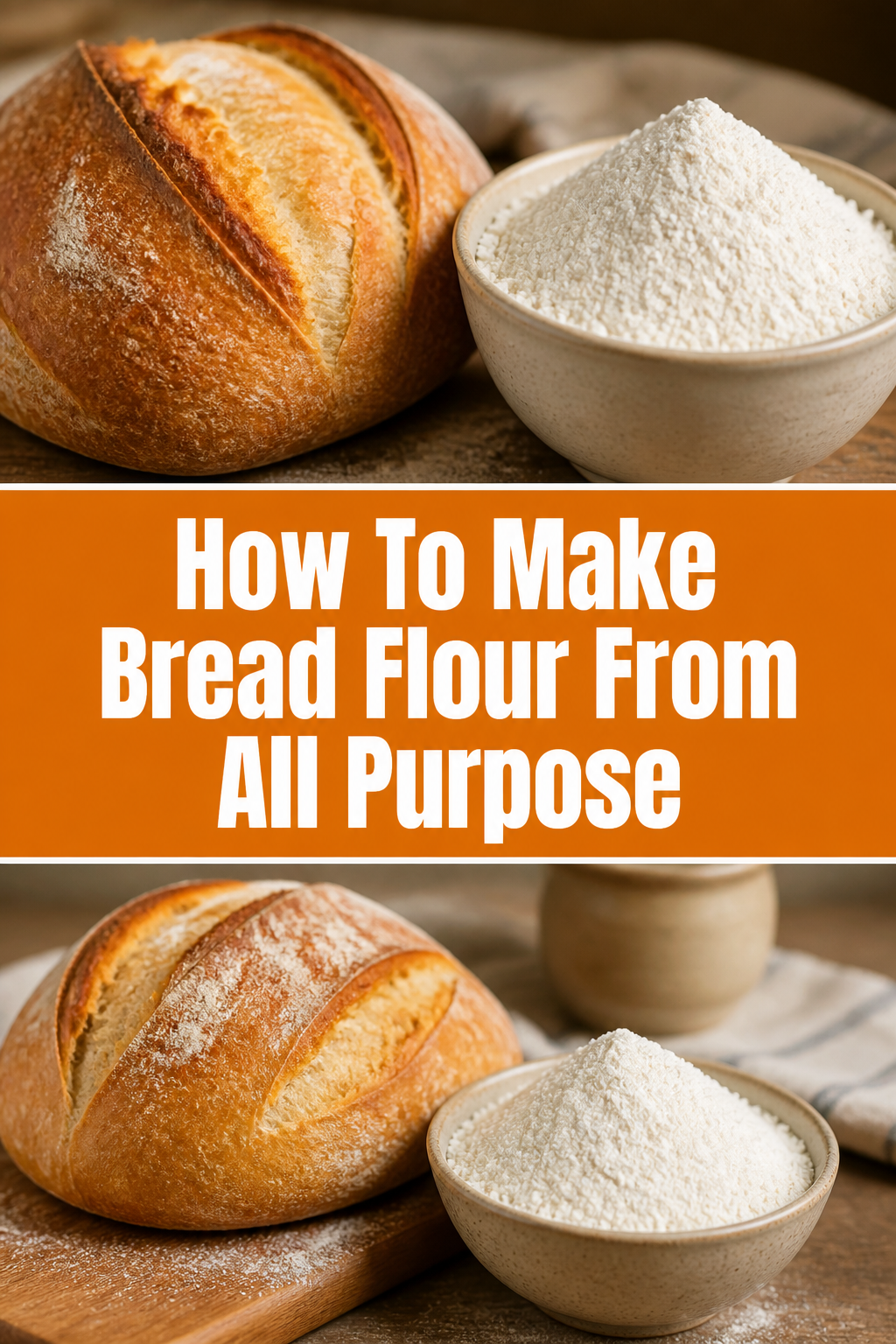
🍞 How To Make Bread Flour From All Purpose
I have spent years perfecting my home bakery setup, often finding myself halfway through a sourdough recipe only to realize I ran out of high-protein flour.
Through trial and error, I discovered that you don’t need to run to the store every time a recipe calls for bread flour.
This guide shares my reliable method for transforming standard all-purpose flour into a professional-grade bread flour substitute using one simple pantry staple.
Quick Overview
Transforming your flour is a simple chemical adjustment that changes the protein structure of your dough.
- Time needed: 5 minutes
- Difficulty: Beginner
- What you’ll need: All-purpose flour, Vital Wheat Gluten, a fine-mesh sifter, and a digital scale or measuring spoons.
Step 1: Understand Your Protein Percentages
Before you start mixing, you need to understand what you are trying to achieve with your flour conversion.
All-purpose flour typically contains between 10% and 12% protein, which is great for cookies or muffins but lacks the strength for chewy bread.
Bread flour usually sits between 12.5% and 14% protein, providing the structural integrity needed to trap gases during fermentation.
By adding vital wheat gluten, you are manually increasing that protein percentage to mimic the characteristics of commercial bread flour.
Pro Tip: Check the side of your flour bag; King Arthur All-Purpose is already 11.7%, while brands like Gold Medal are closer to 10.5%.
Knowing your starting point helps you decide exactly how much “boost” your flour needs for the specific recipe you are tackling.
If you are making a delicate sandwich bread, you might want a lower protein boost than if you are making a high-hydration artisan boule.
Step 2: Gather Your Vital Wheat Gluten
The secret ingredient for this transformation is vital wheat gluten, which is essentially flour that has had the starch removed.
It looks like a fine, beige powder and is almost entirely made of the proteins glutenin and gliadin.
You can find this in the baking aisle of most grocery stores or in the bulk bins of health food stores.
It is a highly concentrated product, so a small bag will last you through dozens of batches of homemade bread flour.
Make sure your gluten is fresh, as older packages can sometimes develop a slightly musty smell that affects the flavor of your bread.
Store your vital wheat gluten in the refrigerator or freezer to keep the natural oils from going rancid over time.
Step 3: Measure Your All-Purpose Flour
Start by measuring out the amount of flour your specific bread recipe requires.
If you are using a kitchen scale, place your bowl on the scale and tare it to zero before adding the flour.
For those using measuring cups, use the “spoon and level” method rather than scooping directly from the bag.
Scooping packs the flour down, which can lead to using up to 25% more flour than the recipe actually intends.
Spoon the flour into the cup until it overflows, then sweep the excess off with the back of a flat knife.
Accuracy at this stage ensures that your final protein-to-starch ratio is perfectly balanced for a successful rise.
Step 4: Remove a Small Portion of Flour
To keep your measurements exact, you need to make physical room for the vital wheat gluten you are about to add.
For every cup of all-purpose flour you are using, remove exactly one and a half teaspoons of the flour from your bowl.
If you are working by weight, remove about 4 to 5 grams of flour for every 130 grams of all-purpose flour.
This step prevents you from ending up with “too much” dry ingredient, which can make your dough overly stiff and difficult to knead.
You can save the removed flour in a small jar for dusting your work surface later during the shaping process.
Pro Tip: Using a dedicated set of measuring spoons for this task helps maintain consistency across different baking sessions.
Step 5: Add the Vital Wheat Gluten
Now it is time to add the protein boost that turns your flour into a bread-making powerhouse.
Add one and a half teaspoons of vital wheat gluten back into the bowl for every cup of flour you originally measured.
If you are measuring by weight, add back the same amount of gluten as the flour you removed in the previous step.
This 1.5-teaspoon-per-cup ratio is the gold standard for reaching a protein content of roughly 13%.
It provides enough strength to support heavy inclusions like seeds, nuts, or dried fruit without the loaf collapsing.
Be careful not to overdo it, as too much gluten can result in a bread that is rubbery or excessively tough to chew.
Step 6: Sift the Mixture Thoroughly
Simply stirring the two powders together with a spoon is not enough to ensure an even distribution of protein.
Vital wheat gluten has a tendency to clump, and if those clumps remain, you will have “hot spots” of protein in your dough.
Pass the mixture through a fine-mesh sifter at least two or three times to fully integrate the ingredients.
Sifting also aerates the flour, making it easier to incorporate water and preventing dry pockets in your final dough.
You will notice the flour feels lighter and fluffier after it has been sifted several times.
This mechanical mixing is what guarantees that every inch of your bread has the same structural integrity and rise.
Step 7: Whisk for Final Integration
After sifting, give the mixture a final whisking in a large bowl to ensure the gluten is perfectly dispersed.
Use a balloon whisk and move in a circular motion, reaching the bottom and sides of the bowl.
This step acts as a final fail-safe against any remaining small clusters of gluten protein.
If you are making a large batch to store for later, you can also place the mixture in a large container and shake it vigorously.
Just make sure the container is tightly sealed before you start shaking to avoid a flour cloud in your kitchen.
Your homemade bread flour is now ready to be used in any recipe, from bagels to artisan sourdough.
Common Mistakes to Avoid
Eyeballing the Measurements
Baking is a science of ratios, and guessing the amount of vital wheat gluten can ruin your results. If you add too little, your bread will lack the height and chew you desire. If you add too much, the dough will become so elastic that it shrinks back during shaping and creates a dense, rubbery crumb.
Using the Wrong Base Flour
This method is specifically designed for white all-purpose flour. Trying to use this same ratio with cake flour or pastry flour will not work because those flours have a much lower starting protein and a different starch structure. Always start with a standard, unbleached all-purpose flour for the most predictable and successful results.
Skipping the Sifting Process
Many bakers assume a quick stir with a fork is sufficient to mix the gluten into the flour. However, vital wheat gluten is much denser than all-purpose flour and will settle at the bottom of the bowl if not properly integrated. Sifting is the only way to ensure the protein is evenly distributed so the entire loaf rises uniformly.
Troubleshooting
The Dough is Extremely Difficult to Knead
If your dough feels like a workout and keeps snapping back when you try to stretch it, you may have added too much vital wheat gluten. You can fix this by letting the dough rest for an extra 30 minutes to allow the gluten bonds to relax. In future batches, try reducing the gluten by half a teaspoon per cup until you find the perfect balance for your brand of flour.
The Bread Still Looks Flat
If your bread isn’t rising despite the flour conversion, the issue might not be the protein content. Check the expiration date on your yeast or ensure your sourdough starter is active and bubbly. Also, ensure you are sifting the flour correctly, as clumps of gluten won’t contribute to the overall structure of the loaf if they aren’t integrated.
The Texture is Gritty or Lumpy
This usually happens when the vital wheat gluten wasn’t sifted or was exposed to moisture before mixing. Always store your gluten in an airtight container in a cool, dry place to prevent clumping. If you see lumps in your dry mixture, continue sifting until the powder is completely uniform and smooth.
Key Takeaways
- The Golden Ratio: Use 1.5 teaspoons of vital wheat gluten for every 1 cup of all-purpose flour.
- Displacement Matters: Always remove an equal amount of flour before adding the gluten to keep your recipe’s hydration levels accurate.
- Sift Repeatedly: Passing the mixture through a sieve 2-3 times is essential for even protein distribution and aeration.
- Weight is King: For the most professional results, use a digital scale to measure by grams rather than volume.
- Quality Ingredients: Use fresh vital wheat gluten and unbleached all-purpose flour for the best flavor and rise.
- Versatility: This homemade blend can be used for pizza dough, bagels, pretzels, and all types of yeasted breads.
Frequently Asked Questions
Can I use this method for gluten-free baking?
No, this method is specifically for increasing the protein in wheat-based flours. Vital wheat gluten is pure gluten and is not safe for anyone with celiac disease or gluten sensitivities. For gluten-free bread, you would need a completely different set of binders like xanthan gum or psyllium husk.
How long can I store my homemade bread flour?
You can store this mixture for as long as the original all-purpose flour remains fresh, which is typically 6 to 12 months in a cool, dry pantry. If you live in a humid climate, it is best to store it in an airtight container in the refrigerator to prevent the natural oils from spoiling. Always give the container a good shake before using it to redistribute any settled particles.
Is homemade bread flour exactly the same as store-bought?
It is very close, but commercial bread flour is often milled from hard red spring wheat, which has a naturally higher protein content. Your homemade version uses vital wheat gluten added to softer wheat, which creates a slightly different texture. Most home bakers find the results nearly indistinguishable in finished loaves of bread.
Can I use cornstarch instead of vital wheat gluten?
No, cornstarch does the exact opposite of vital wheat gluten. Adding cornstarch to all-purpose flour lowers the protein content to create a substitute for cake flour. To make bread flour, you must use a high-protein additive like vital wheat gluten to strengthen the dough.
Our Top Recommended Finds
- Bob’s Red Mill Vital Wheat Gluten: This is a highly reliable brand that is widely available and provides a consistent protein boost for all your baking needs.
- Digital Kitchen Scale: A scale that measures in 0.1-gram increments is invaluable for measuring small amounts of gluten and ensuring your flour weights are perfect.
- Fine Mesh Stainless Steel Sifter: A sturdy sifter with a handle makes the process of integrating your flour and gluten much faster and less messy.
Elevate Your Home Baking Today
Now that you know how to manipulate the protein content of your flour, a whole new world of baking possibilities is open to you.
You no longer have to worry about specialty flour shortages or keeping multiple bulky bags of flour in your pantry.
Try using this converted flour in a high-hydration focaccia or a batch of chewy bagels to see the difference for yourself.
Start with a small batch today and watch how your crust and crumb improve with just a few teaspoons of the right ingredient.