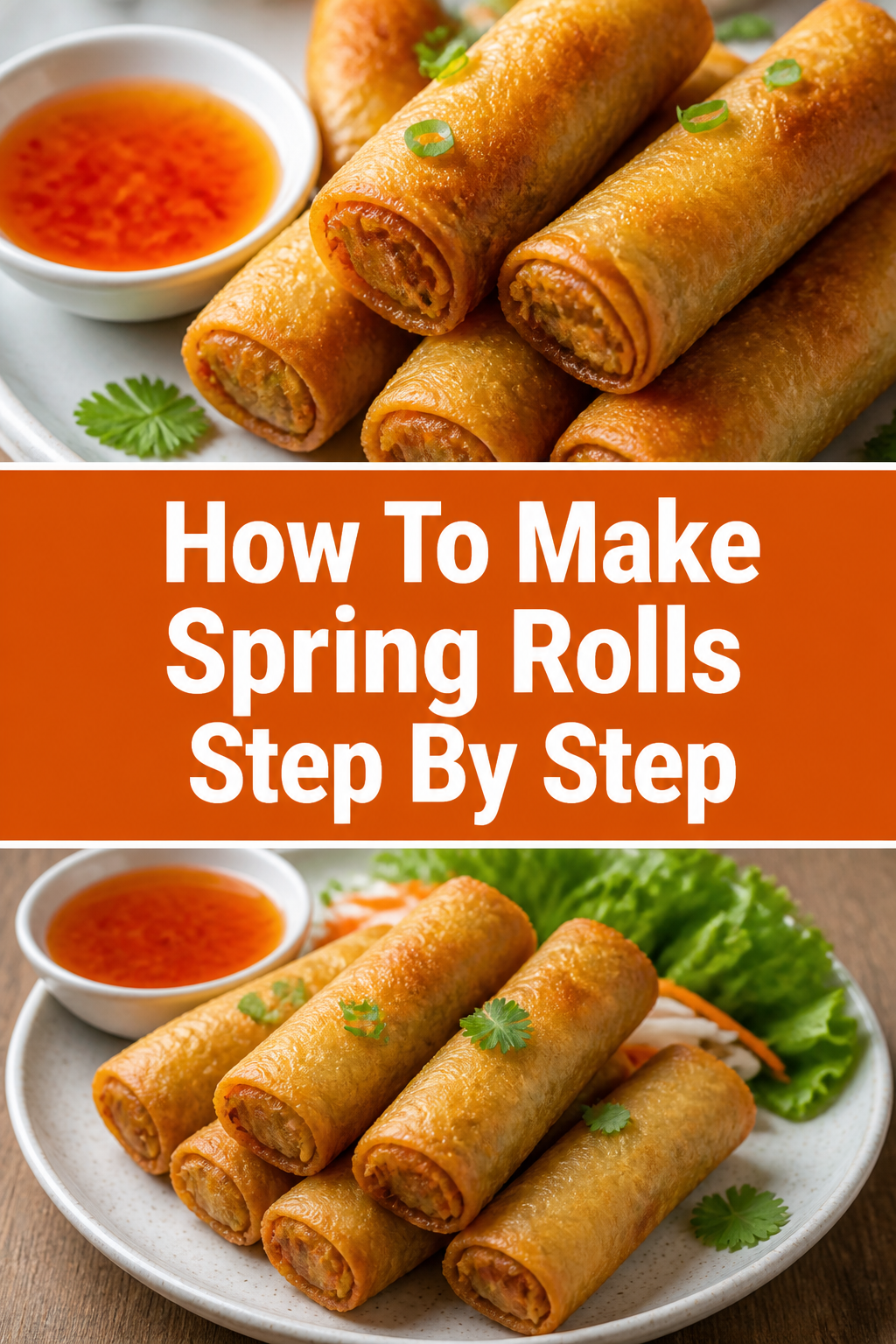
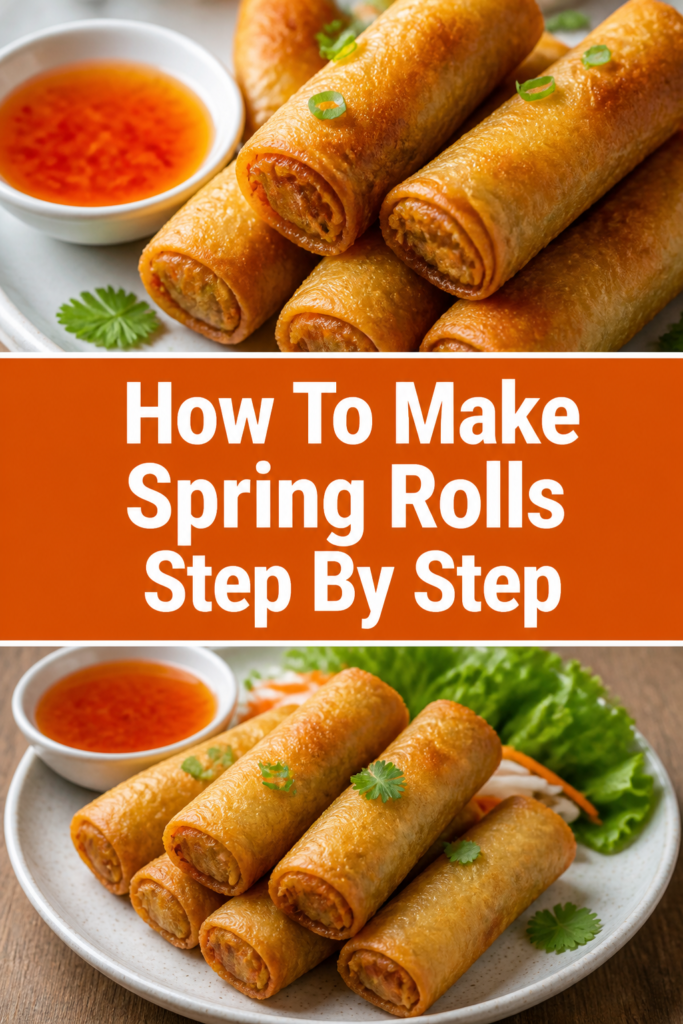
🥢 How To Make Spring Rolls Step By Step
There’s nothing quite like the vibrant freshness of a perfectly made spring roll.
I’ve spent countless afternoons in my kitchen perfecting the art of rolling these delightful parcels, learning the nuances of texture and flavor.
This guide shares all my best tips and tricks, ensuring your homemade spring rolls are a delicious success from your very first attempt.
Quick Overview
You’re about to embark on a culinary journey to create fresh, flavorful spring rolls right in your own kitchen.
This process is wonderfully rewarding and results in a dish that’s both healthy and incredibly satisfying.
- Time needed: 60-90 minutes (includes prep and rolling)
- Difficulty: Intermediate
- What you’ll need: Fresh vegetables, cooked protein, rice vermicelli, rice paper wrappers, a large shallow dish, and a sharp knife.
Step-by-Step Instructions
Step 1: Gather and Prepare Your Ingredients
The foundation of a great spring roll lies in fresh, colorful ingredients.
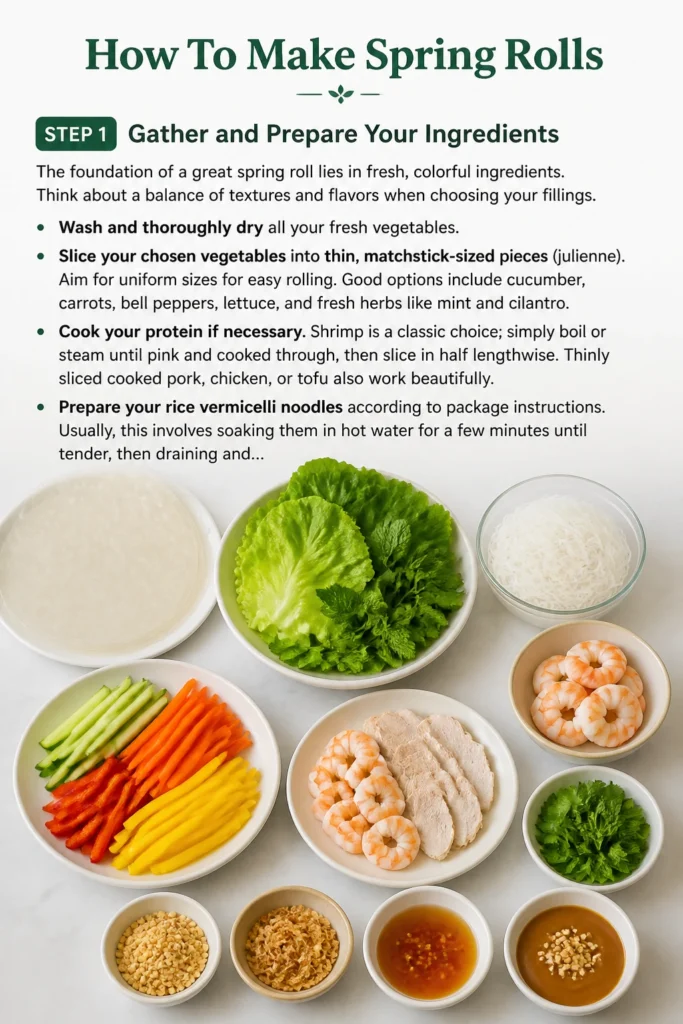
Think about a balance of textures and flavors when choosing your fillings.
- Wash and thoroughly dry all your fresh vegetables.
- Slice your chosen vegetables into thin, matchstick-sized pieces (julienne). Aim for uniform sizes for easy rolling. Good options include cucumber, carrots, bell peppers, lettuce, and fresh herbs like mint and cilantro.
- Cook your protein if necessary. Shrimp is a classic choice; simply boil or steam until pink and cooked through, then slice in half lengthwise. Thinly sliced cooked pork, chicken, or tofu also work beautifully.
- Prepare your rice vermicelli noodles according to package instructions. Usually, this involves soaking them in hot water for a few minutes until tender, then draining and rinsing with cold water to prevent sticking.
- Arrange all your prepared ingredients neatly on a large platter or cutting board. This “assembly line” setup makes the rolling process much smoother.
Pro Tip: Don’t overcrowd your ingredient platter. Keep similar items together for easy grabbing and visual appeal. Having everything ready before you start rolling is key to a stress-free experience.
Step 2: Set Up Your Rolling Station
A well-organized rolling station is crucial for efficiency and preventing messes.
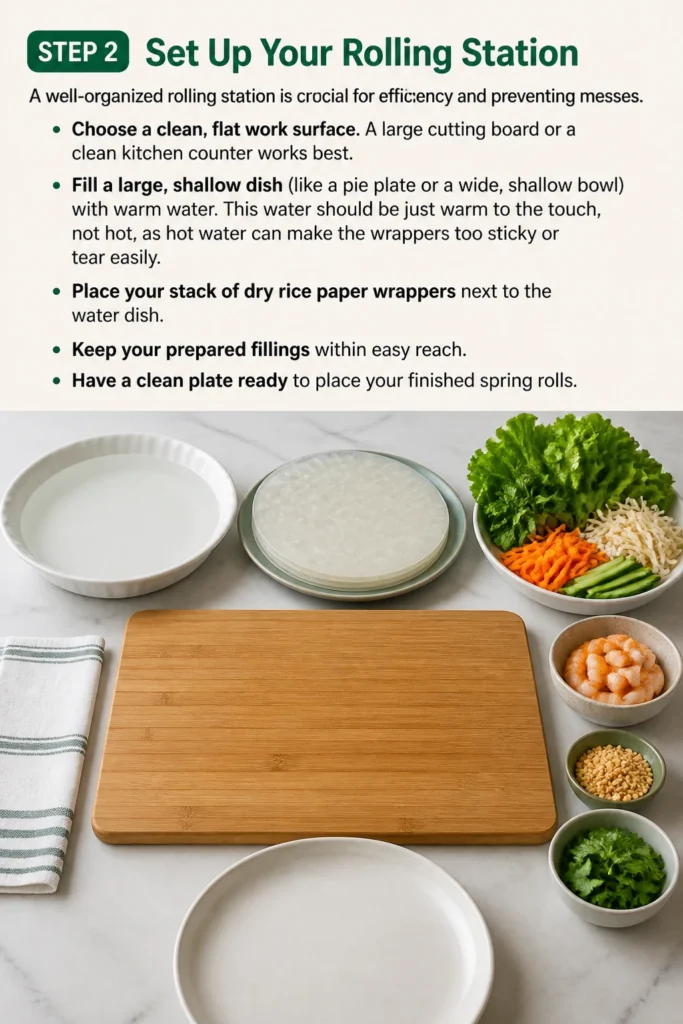
You’ll need a clean, flat surface and a dedicated dish for softening your wrappers.
- Choose a clean, flat work surface. A large cutting board or a clean kitchen counter works best.
- Fill a large, shallow dish (like a pie plate or a wide, shallow bowl) with warm water. This water should be just warm to the touch, not hot, as hot water can make the wrappers too sticky or tear easily.
- Place your stack of dry rice paper wrappers next to the water dish.
- Keep your prepared fillings within easy reach.
- Have a clean plate ready to place your finished spring rolls.
Step 3: Soften the Rice Paper Wrapper
This step requires a light touch and attention to timing.
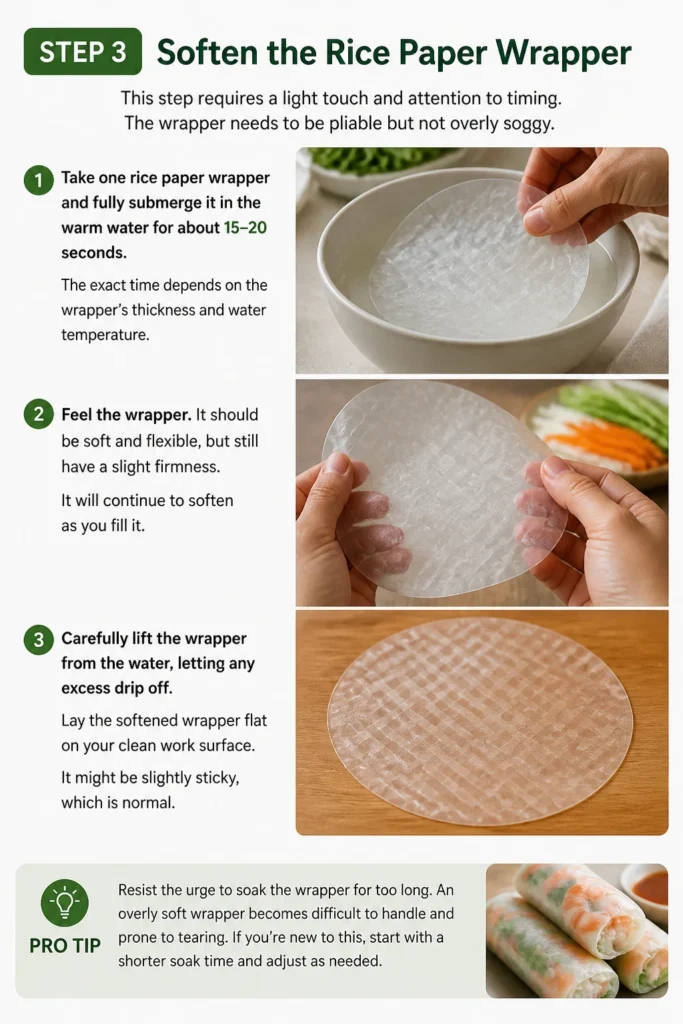
The wrapper needs to be pliable but not overly soggy.
- Take one rice paper wrapper and fully submerge it in the warm water for about 15-20 seconds. The exact time depends on the wrapper’s thickness and water temperature.
- Feel the wrapper. It should be soft and flexible, but still have a slight firmness. It will continue to soften as you fill it.
- Carefully lift the wrapper from the water, letting any excess drip off.
- Lay the softened wrapper flat on your clean work surface. It might be slightly sticky, which is normal.
Pro Tip: Resist the urge to soak the wrapper for too long. An overly soft wrapper becomes difficult to handle and prone to tearing. If you’re new to this, start with a shorter soak time and adjust as needed.
Step 4: Arrange Your Fillings
Strategic placement of your ingredients makes for a beautiful and structurally sound roll.
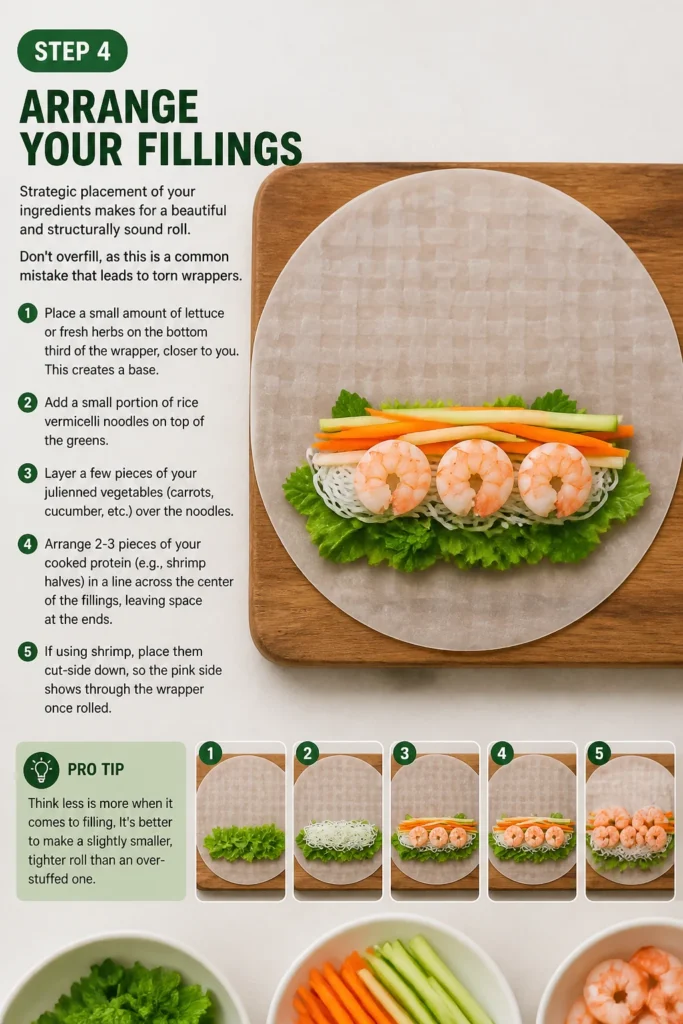
Don’t overfill, as this is a common mistake that leads to torn wrappers.
- Place a small amount of lettuce or fresh herbs on the bottom third of the wrapper, closer to you. This creates a base.
- Add a small portion of rice vermicelli noodles on top of the greens.
- Layer a few pieces of your julienned vegetables (carrots, cucumber, etc.) over the noodles.
- Arrange 2-3 pieces of your cooked protein (e.g., shrimp halves) in a line across the center of the fillings, leaving space at the ends. If using shrimp, place them cut-side down, so the pink side shows through the wrapper once rolled.
Pro Tip: Think “less is more” when it comes to filling. It’s better to make a slightly smaller, tighter roll than an overstuffed, bursting one. You can always make more rolls!
Step 5: Fold and Roll the Spring Roll
This is the moment of truth! The rolling technique is similar to burritos or egg rolls.
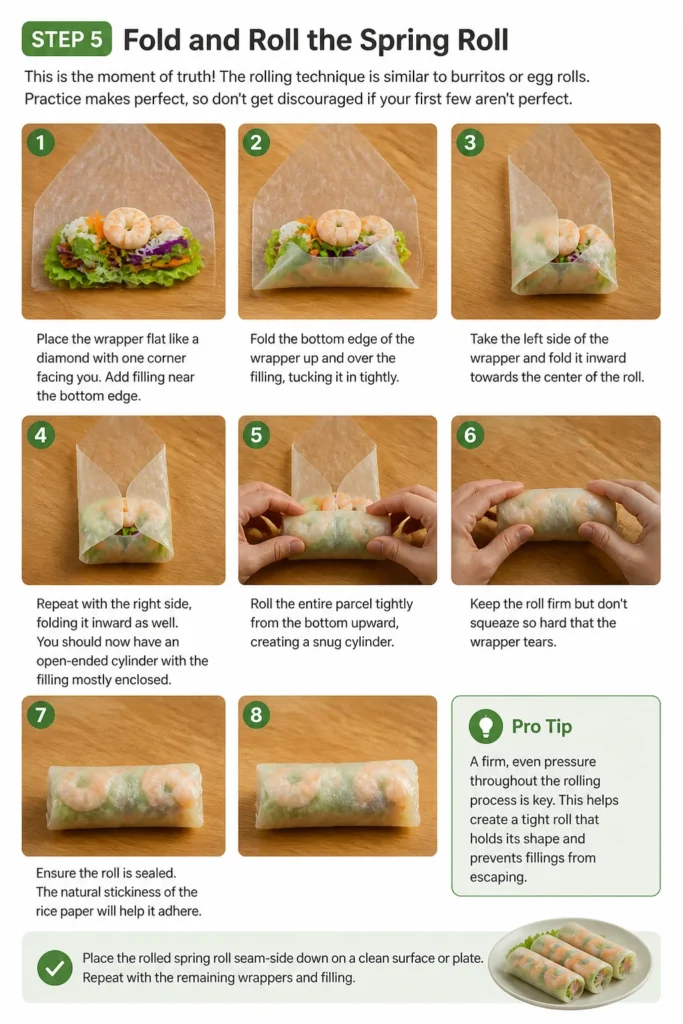
Practice makes perfect, so don’t get discouraged if your first few aren’t perfect.
- Fold the bottom edge of the wrapper up and over the filling, tucking it in tightly.
- Take the left side of the wrapper and fold it inward towards the center of the roll.
- Repeat with the right side, folding it inward as well. You should now have an open-ended cylinder with the filling mostly enclosed.
- Roll the entire parcel tightly from the bottom upward, creating a snug cylinder. Keep the roll firm but don’t squeeze so hard that the wrapper tears.
- Ensure the roll is sealed. The natural stickiness of the rice paper will help it adhere.
Pro Tip: A firm, even pressure throughout the rolling process is key. This helps create a tight roll that holds its shape and doesn’t unravel when dipped.
Step 6: Repeat and Serve
Continue rolling until all your ingredients are used or you’ve made enough rolls.
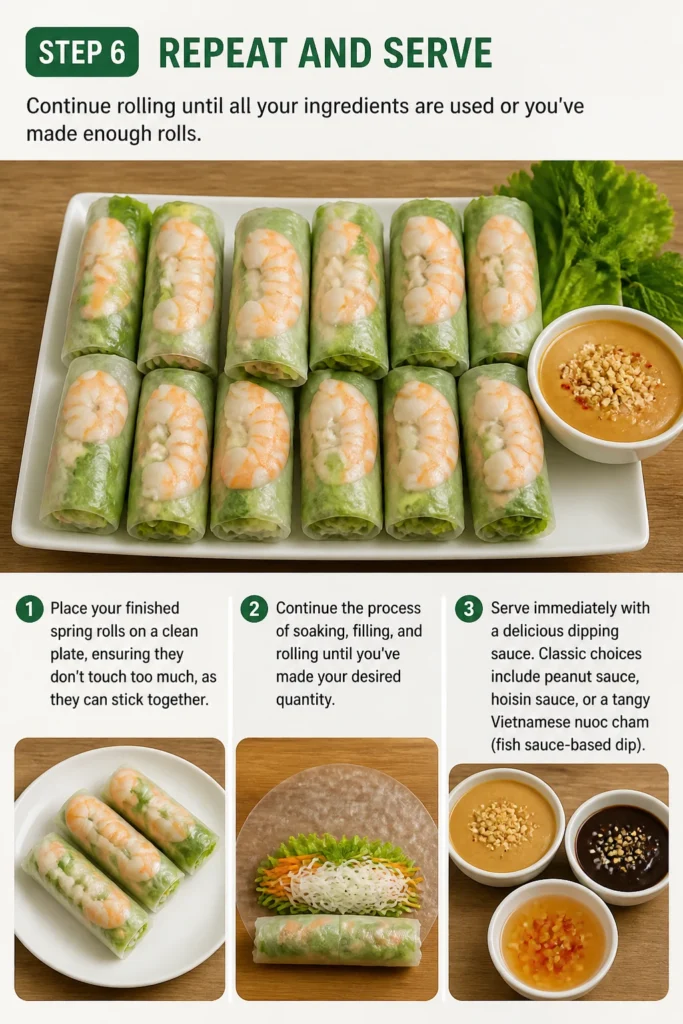
Serve them fresh with your favorite dipping sauce.
- Place your finished spring rolls on a clean plate, ensuring they don’t touch too much, as they can stick together.
- Continue the process of soaking, filling, and rolling until you’ve made your desired quantity.
- Serve immediately with a delicious dipping sauce. Classic choices include peanut sauce, hoisin sauce, or a tangy Vietnamese nuoc cham (fish sauce-based dip).
Common Mistakes to Avoid
Overfilling the Wrapper
Trying to cram too many ingredients into one wrapper is a recipe for disaster. It makes the roll impossible to fold neatly, leads to tearing, and results in a messy eating experience. Always use a moderate amount of filling, ensuring you can comfortably fold the wrapper over and tuck the sides in.
Soaking Wrappers for Too Long
An over-soaked rice paper wrapper becomes excessively sticky and delicate, making it prone to tearing and incredibly difficult to handle. It will also feel gummy. Aim for a quick dip—just enough to make it pliable but still slightly firm—as it will continue to soften as you add fillings.
Not Prepping Ingredients Uniformly
If your vegetables are cut into large, uneven chunks, your spring rolls will be bulky and difficult to roll tightly. They’ll also have an uneven texture. Take the time to julienne your vegetables into thin, consistent strips for easier rolling and a more pleasant mouthfeel.
Using Cold Water for Soaking
Cold water will not soften rice paper wrappers effectively or quickly. This leads to a frustratingly stiff wrapper that cracks when you try to fold it. Always use warm water for soaking; it activates the starch in the rice paper, making it perfectly pliable.
Troubleshooting
My Wrappers Are Tearing Constantly
This usually happens for one of two reasons: either the wrapper was soaked for too long, making it too delicate, or you are overfilling the roll. Try reducing your soaking time by a few seconds. Also, reduce the amount of filling you are using per roll to allow for easier, less strenuous folding. Gentle handling is also key.
The Spring Rolls Are Falling Apart
If your rolls unravel, they likely weren’t rolled tightly enough. The trick is to maintain a firm, consistent pressure throughout the rolling process, especially when tucking in the sides and rolling upward. The natural stickiness of the rice paper should help seal the roll, but if it’s too loose, it won’t hold.
My Spring Rolls Taste Bland
A lack of flavor often comes from under-seasoned protein or not enough fresh herbs. Ensure your cooked protein has some seasoning, even if it’s just salt and pepper. Don’t skimp on fresh mint, cilantro, or basil, as these herbs provide crucial aromatic brightness. A good dipping sauce also makes a huge difference, so ensure yours is flavorful.
Key Takeaways
- Always prioritize fresh, high-quality ingredients for the best flavor and texture.
- Properly prep all your fillings by cutting them into uniform, thin pieces.
- Use warm water for soaking rice paper wrappers, but avoid over-soaking.
- Practice a firm, consistent rolling technique to create tight, structurally sound rolls.
- Don’t be afraid to experiment with different fillings and dipping sauces.
- Serving immediately ensures the freshest taste and best wrapper texture.
Frequently Asked Questions
Can I make spring rolls ahead of time?
While spring rolls are best enjoyed fresh, you can prepare them a few hours in advance. Store them in an airtight container in the refrigerator, separated by parchment paper to prevent sticking. They might firm up slightly, but a quick dip in warm water can sometimes help soften the wrapper just before serving.
How do I store leftover spring rolls?
Place leftover spring rolls in an airtight container, preferably with a damp paper towel to maintain moisture, and refrigerate for up to 1-2 days. The wrappers may become a bit chewier or harder over time, but they are still edible. They are not suitable for freezing.
What are some popular dipping sauces?
Classic dipping sauces include a sweet and savory peanut sauce, a tangy Vietnamese nuoc cham (fish sauce, lime juice, sugar, garlic, chili), or a simple hoisin sauce often mixed with a little sriracha. You can also find sweet chili sauces or make your own custom blend.
Can I make vegetarian or vegan spring rolls?
Absolutely! Spring rolls are incredibly versatile. For vegetarian or vegan options, simply omit meat and shrimp. Fillings like pan-fried tofu or tempeh, avocado, extra vegetables, and mushrooms work wonderfully. Ensure your dipping sauce is also vegan-friendly (e.g., a peanut sauce without fish sauce).
Our Top Recommended Finds
- Large Shallow Dish: Essential for easily soaking your rice paper wrappers without folding or cracking them.
- Sharp Chef’s Knife: Makes quick work of julienning vegetables into perfect, thin strips for beautiful fillings.
- Large Cutting Board: Provides ample space for preparing all your ingredients and a clean surface for rolling.
Roll Your Way to Culinary Success Today
Crafting your own fresh spring rolls is a delightful journey, blending simple ingredients into an explosion of taste and texture.
With this guide, you have all the knowledge and confidence to create beautiful, delicious rolls that will impress everyone.
Gather your ingredients, set up your station, and experience the joy of making these vibrant parcels yourself.