🦀 How To Cook Frozen Crab Legs At Home
Dreaming of a delicious seafood feast without the restaurant price tag? Cooking frozen crab legs at home is simpler than you might imagine. I’ve spent countless evenings perfecting this process, transforming icy clusters into succulent, buttery delights right in my own kitchen. This guide shares all the secrets I’ve learned, ensuring your crab leg experience is nothing short of fantastic.

Quick Overview
This guide will walk you through the entire process, from thawing to serving, making you a pro at preparing frozen crab legs. You’ll achieve perfectly cooked, tender crab meat ready for dipping.
- Time needed: 25-40 minutes (plus thawing time)
- Difficulty: Beginner
- What you’ll need: Large pot, steamer basket (optional), tongs, butter, seasoning
Step-by-Step Instructions
Step 1: Thaw Your Crab Legs Properly
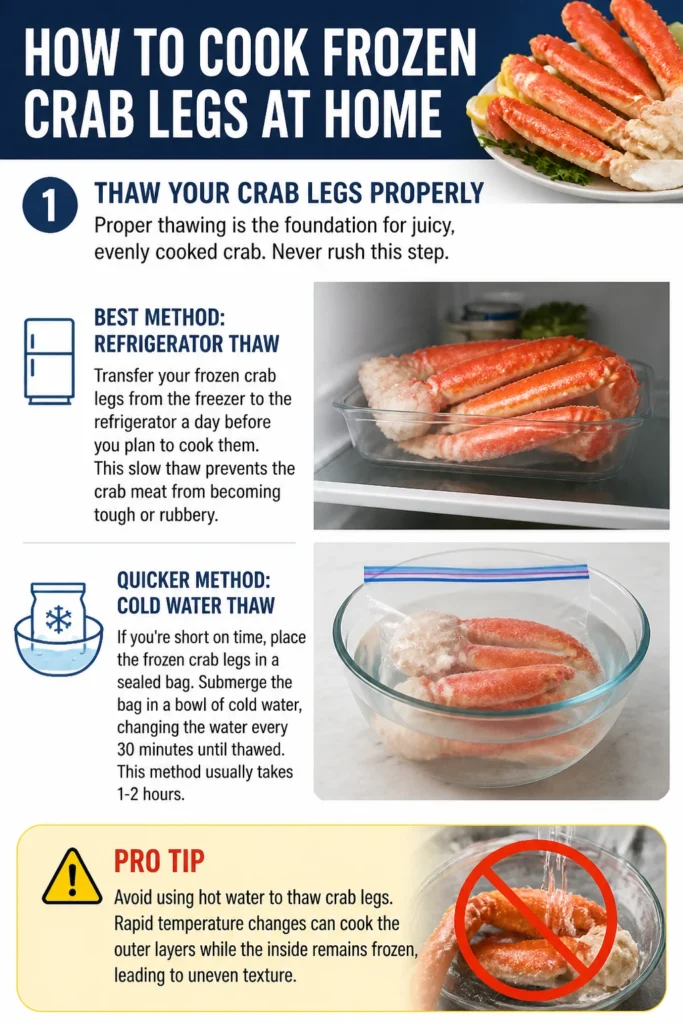
Proper thawing is the foundation for juicy, evenly cooked crab. Never rush this step.
Transfer your frozen crab legs from the freezer to the refrigerator a day before you plan to cook them. This slow thaw prevents the crab meat from becoming tough or rubbery.
If you’re short on time, place the frozen crab legs in a sealed bag. Submerge the bag in a bowl of cold water, changing the water every 30 minutes until thawed. This method usually takes 1-2 hours.
Pro Tip: Avoid using hot water to thaw crab legs. Rapid temperature changes can cook the outer layers while the inside remains frozen, leading to uneven texture.
Step 2: Gather Your Tools and Ingredients
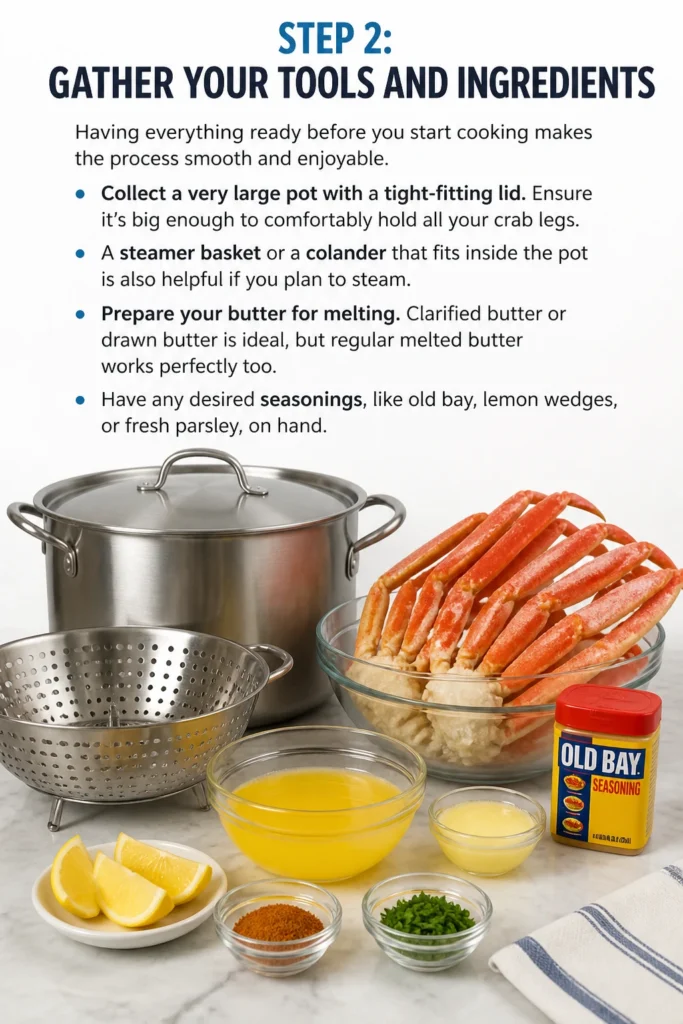
Having everything ready before you start cooking makes the process smooth and enjoyable.
Collect a very large pot with a tight-fitting lid. Ensure it’s big enough to comfortably hold all your crab legs. A steamer basket or a colander that fits inside the pot is also helpful if you plan to steam.
Prepare your butter for melting. Clarified butter or drawn butter is ideal, but regular melted butter works perfectly too. Have any desired seasonings, like old bay, lemon wedges, or fresh parsley, on hand.
Step 3: Choose Your Cooking Method
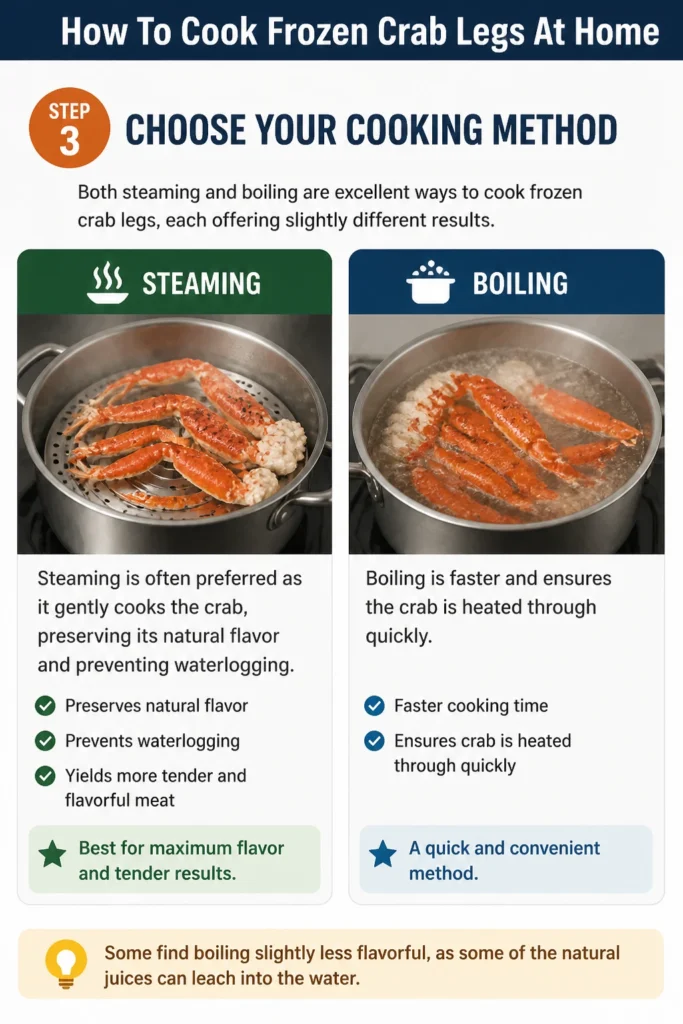
Both steaming and boiling are excellent ways to cook frozen crab legs, each offering slightly different results.
Steaming is often preferred as it gently cooks the crab, preserving its natural flavor and preventing waterlogging. This method yields more tender and flavorful meat.
Boiling is faster and ensures the crab is heated through quickly. Some find it slightly less flavorful, as some of the natural juices can leach into the water.
Step 4: Prepare for Steaming or Boiling
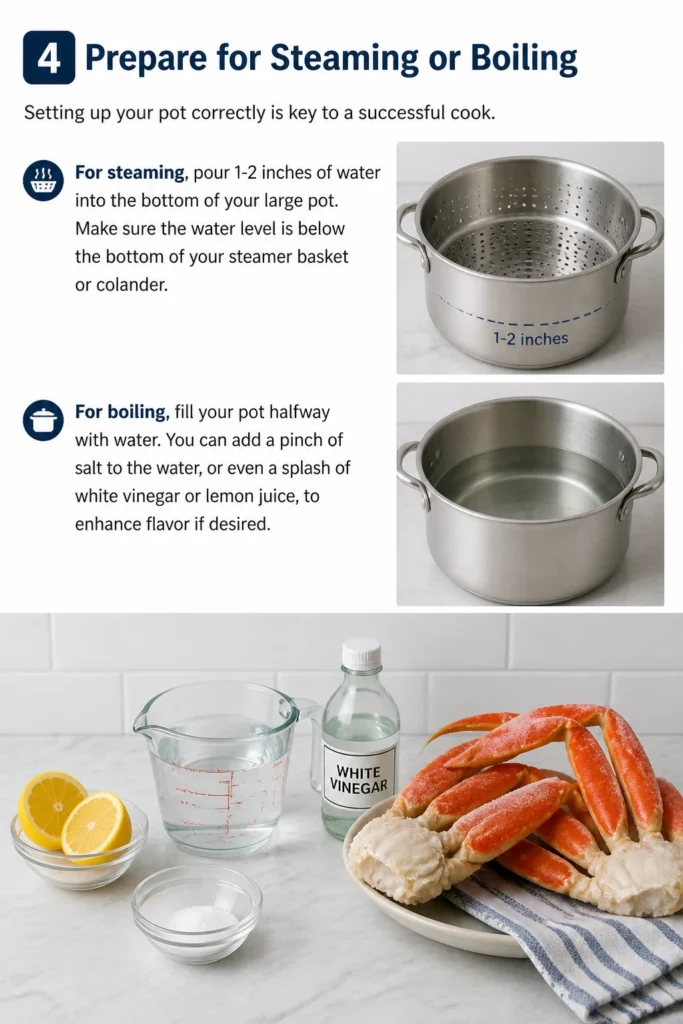
Setting up your pot correctly is key to a successful cook.
For steaming, pour 1-2 inches of water into the bottom of your large pot. Make sure the water level is below the bottom of your steamer basket or colander.
For boiling, fill your pot halfway with water. You can add a pinch of salt to the water, or even a splash of white vinegar or lemon juice, to enhance flavor if desired.
Step 5: Cook the Crab Legs
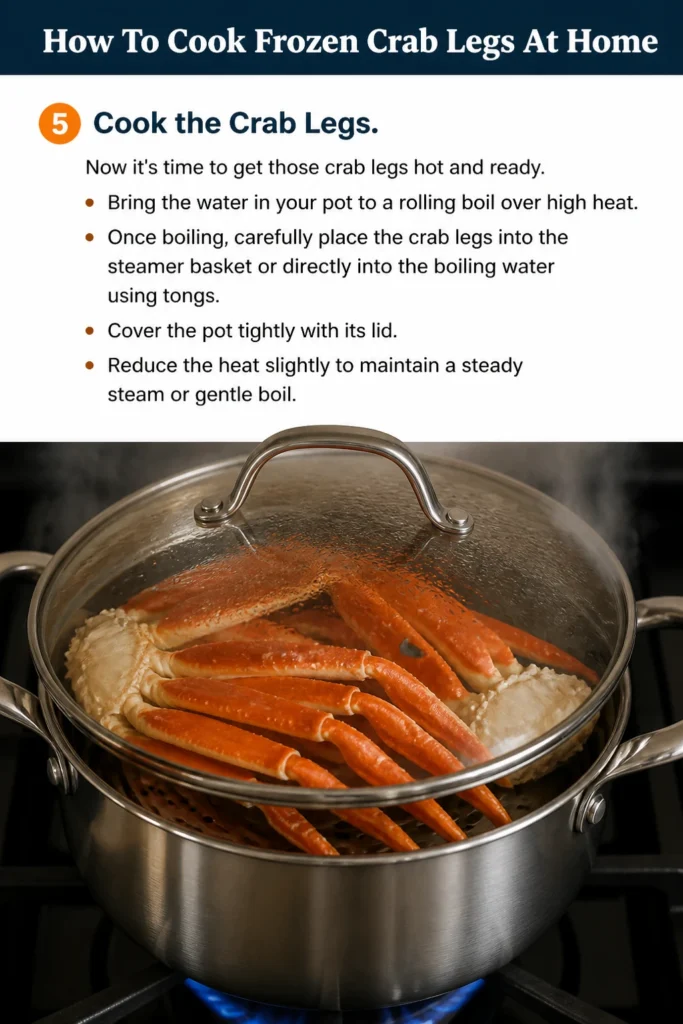
Now it’s time to get those crab legs hot and ready.
Bring the water in your pot to a rolling boil over high heat. Once boiling, carefully place the crab legs into the steamer basket or directly into the boiling water using tongs.
Cover the pot tightly with its lid. Reduce the heat slightly to maintain a steady steam or gentle boil.
Step 6: Check for Doneness
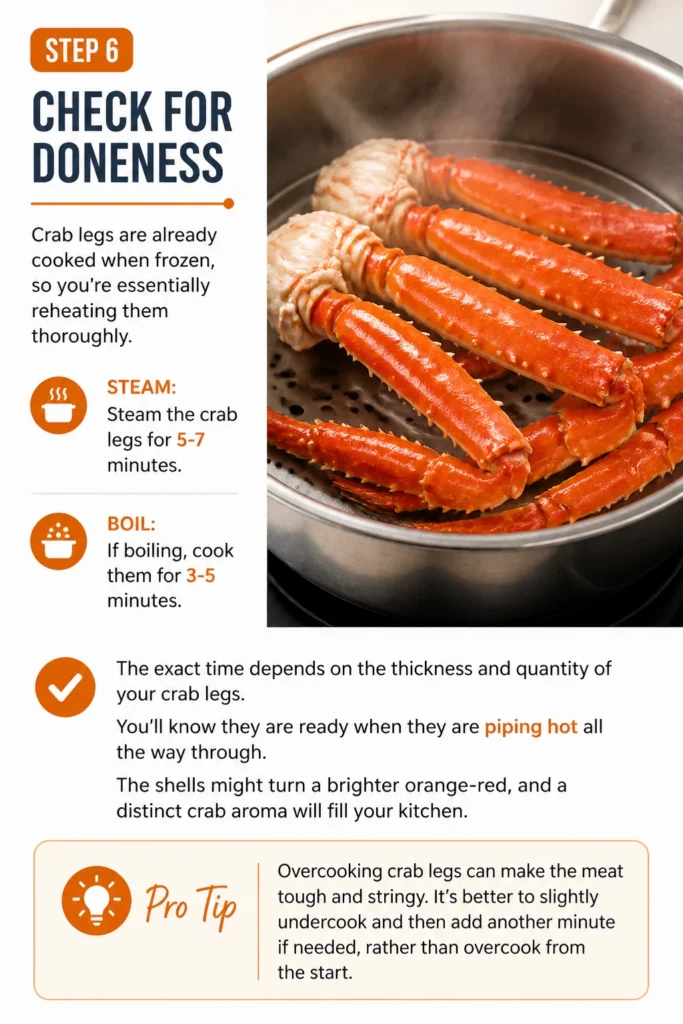
Crab legs are already cooked when frozen, so you’re essentially reheating them thoroughly.
Steam the crab legs for 5-7 minutes. If boiling, cook them for 3-5 minutes. The exact time depends on the thickness and quantity of your crab legs.
You’ll know they are ready when they are piping hot all the way through. The shells might turn a brighter orange-red, and a distinct crab aroma will fill your kitchen.
Pro Tip: Overcooking crab legs can make the meat tough and stringy. It’s better to slightly undercook and then add another minute if needed, rather than overcook from the start.
Step 7: Serve and Enjoy
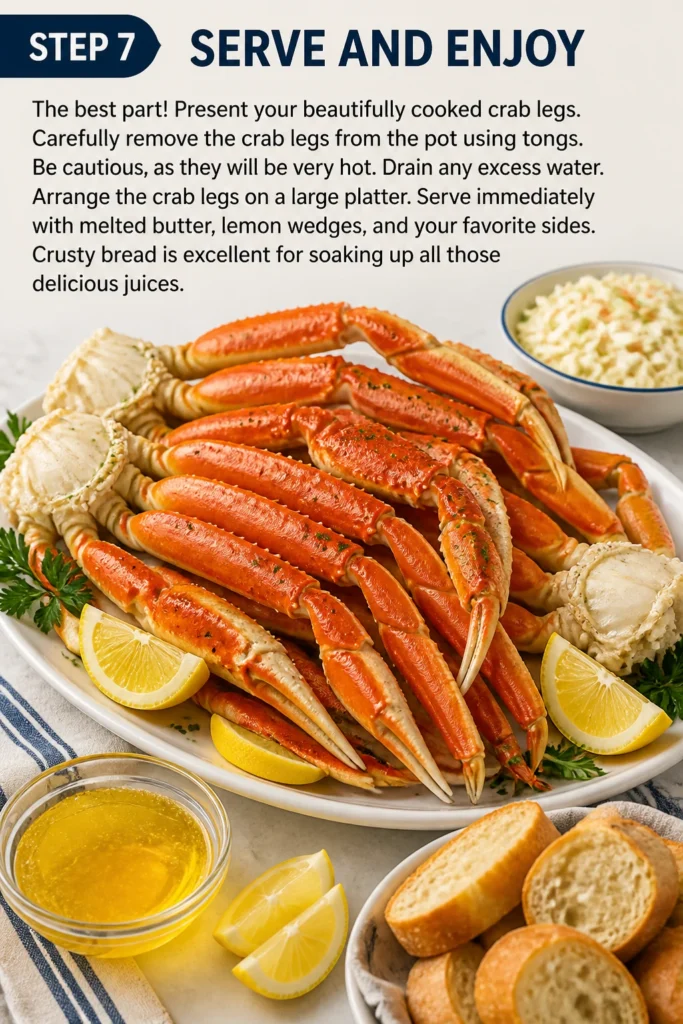
The best part! Present your beautifully cooked crab legs.
Carefully remove the crab legs from the pot using tongs. Be cautious, as they will be very hot. Drain any excess water.
Arrange the crab legs on a large platter. Serve immediately with melted butter, lemon wedges, and your favorite sides. Crusty bread is excellent for soaking up all those delicious juices.
Common Mistakes to Avoid
Not Thawing Completely
Trying to cook crab legs directly from frozen often results in uneven heating. The outside can overcook and become tough, while the inside remains cold. Always ensure your crab legs are fully thawed before they hit the heat.
Overcrowding the Pot
Putting too many crab legs into a pot at once can drastically lower the water temperature, prolonging cooking time. This leads to uneven cooking and can make some pieces tough. Cook in batches if necessary to ensure even heat distribution.
Overcooking
Since frozen crab legs are already pre-cooked, you are essentially reheating them. Overcooking is a common mistake that dries out the delicate crab meat, turning it rubbery and unappetizing. Stick to the recommended cooking times and check for doneness.
Using Cold Water for Steaming/Boiling
Adding crab legs to cold water and then bringing it to a boil means the crab sits in gradually warming water for too long. This slow heating can toughen the meat. Always add crab legs once the water has reached a full boil or a steady steam.
Troubleshooting
Crab Legs Are Rubbery
If your crab meat feels tough and rubbery, it’s almost always a sign of overcooking. The delicate proteins in crab tighten up when exposed to heat for too long. For your next batch, reduce the cooking time by a minute or two and check for doneness sooner.
Crab Legs Are Cold in the Middle
This indicates undercooking, or that the crab legs weren’t fully thawed before cooking. If you encounter this, simply return them to the pot for another 1-2 minutes. Ensure they are completely thawed next time to prevent this issue.
Crab Meat Tastes Bland
Sometimes, if too much water is used for boiling, or if the crab legs are cooked for too long, some of their natural flavor can leach out. To combat this, try steaming instead of boiling. You can also add aromatics like garlic cloves, bay leaves, or lemon slices to the steaming water to infuse a subtle flavor.
Key Takeaways
- Always thaw frozen crab legs completely before cooking for best results.
- Steaming is generally preferred for tender, flavorful crab meat.
- Ensure your pot is large enough and not overcrowded to allow for even cooking.
- Crab legs are pre-cooked; you are merely reheating them to piping hot.
- Avoid overcooking at all costs to prevent rubbery, dry crab meat.
- Serve immediately with melted butter and lemon for the freshest taste.
Frequently Asked Questions
Can I cook frozen crab legs in the oven?
Yes, you can cook frozen crab legs in the oven. Preheat your oven to 375°F (190°C). Place the thawed crab legs in a shallow baking dish with about half an inch of water. Cover tightly with foil and bake for 10-15 minutes until heated through.
How do I know if the crab legs are fully cooked?
Since they are pre-cooked, you are looking for them to be thoroughly heated. The shells will often turn a vibrant orange-red, and the meat inside will be opaque and flaky. The best indicator is that they are piping hot all the way to the center.
Can I refreeze cooked crab legs?
It’s generally not recommended to refreeze crab legs that have already been thawed and cooked. Refreezing can degrade the quality and texture of the meat. It’s best to cook and consume them fresh, or refrigerate leftovers for up to two days.
Our Top Recommended Finds
- Large Stock Pot with Lid: Essential for both steaming and boiling, ensuring even heat and preventing steam from escaping.
- Stainless Steel Steamer Basket: A versatile accessory that fits into most pots, perfect for gently steaming crab legs and other vegetables.
- Long-Handled Tongs: Crucial for safely handling hot crab legs when transferring them to and from the pot.
Your Next Delicious Meal Awaits
You now have all the knowledge to confidently prepare frozen crab legs at home. Imagine the satisfaction of cracking into those sweet, succulent shells, dipped in rich, melted butter. This isn’t just a meal; it’s an experience. Don’t wait for a special occasion. Grab a pack of frozen crab legs and transform your next dinner into a memorable feast.