🥚 How To Tell If An Egg Is Still Good
I’ve spent years in professional kitchens where wasting food is a cardinal sin, yet food safety is the highest priority.
There is nothing more frustrating than reaching for an egg only to realize the date on the carton passed three days ago.
This guide draws on culinary science and food safety standards to help you confidently decide whether to crack that egg or toss it in the bin.
Quick Overview
Checking egg freshness is a simple skill that combines basic physics with your natural senses.
- Time needed: 2–5 minutes
- Difficulty: Beginner
- What you’ll need: A bowl of water, a flat plate, and your sense of smell.
Step-by-Step Instructions
Step 1: Decode the Carton Dates
Look closely at the numbers printed on the side of your egg carton to understand the difference between marketing and safety.
The “Sell By” or “Expiration” date is often just a guideline for retailers to ensure they are rotating their stock properly.
Most eggs remain perfectly safe and delicious for three to five weeks beyond the date stamped on the package if they are kept refrigerated.
Locate the three-digit Julian date, which represents the exact day of the year the eggs were packed into the carton.
For example, a code of 001 means the eggs were packed on January 1st, while 365 means December 31st.
Pro Tip: Knowing the Julian date is the most accurate way to track the true age of your eggs regardless of the “Best By” label.
Step 2: Perform the Float Test
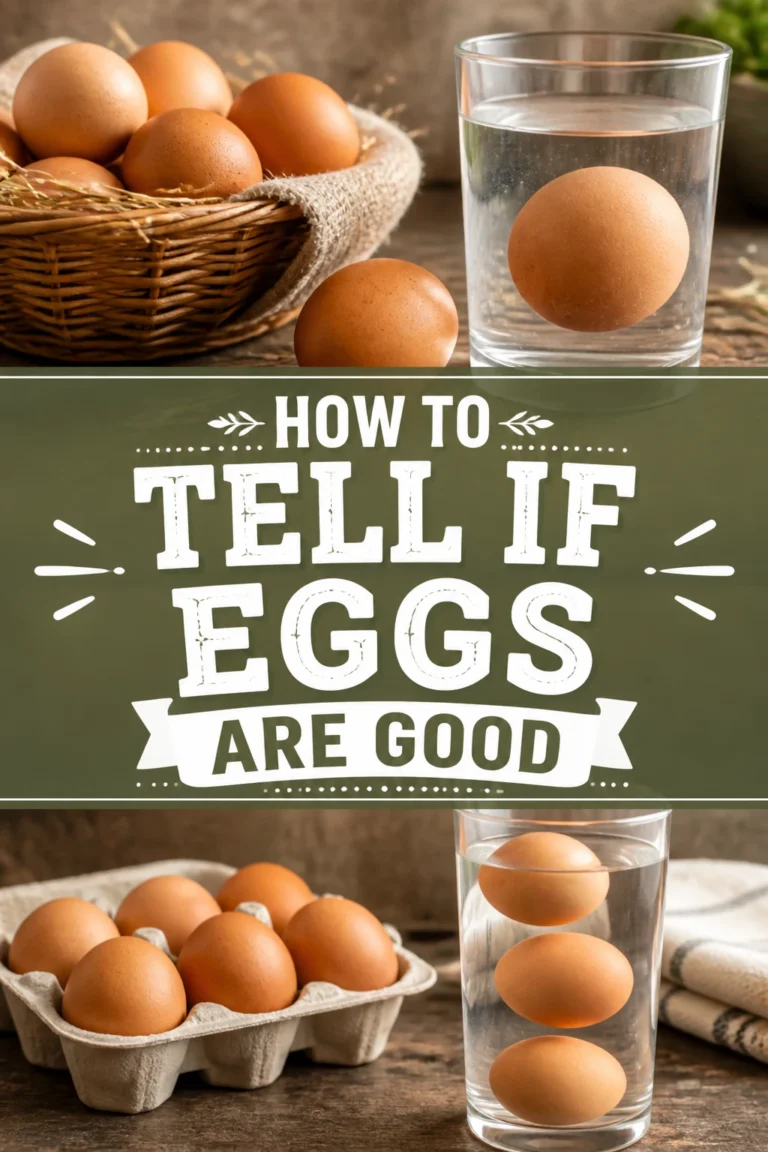
Fill a deep bowl or a tall glass with cold water and gently lower the egg into the liquid to check its buoyancy.
This test works because eggshells are porous, meaning they allow air to pass through the shell over time.
As an egg ages, the liquid inside evaporates and the internal air cell grows larger, making the egg more buoyant.
Observe how the egg rests at the bottom; if it lies flat on its side, it is at the peak of freshness.
If the egg stands upright on one end but stays on the bottom, it is older but still safe to eat and perfect for hard-boiling.
Discard the egg if it floats completely to the surface, as this indicates a very large air pocket and potential spoilage.
Step 3: Conduct a Sniff Test
Trust your nose as the ultimate tool for detecting an egg that has truly gone bad.
A fresh egg has a neutral scent, while a spoiled egg will emit a sharp, unmistakable odor of sulfur the moment it is opened.
Crack the egg into a small, separate bowl rather than directly into your pan or mixing bowl with other ingredients.
This prevents a single bad egg from ruining an entire batch of batter or a complex omelet.
If you detect any “off” or funky smell, wash the bowl thoroughly and move on to the next egg.
Step 4: Inspect the Shell Integrity
Examine the exterior of the shell for any hairline cracks, slimy residue, or powdery spots.
Cracks can allow bacteria like Salmonella to enter the egg, while sliminess can indicate the presence of bacterial growth.
Check for a powdery appearance on the shell, which is often a sign of mold growing on the surface.
If the shell looks compromised in any way, it is safer to throw the egg away even if it passes the float test.
Step 5: Analyze the White and Yolk
Pour the egg onto a flat, white plate to get a clear view of its internal structure and consistency.
A fresh egg will have a yolk that stands tall and round, while the white (albumen) will be thick and cling closely to the yolk.
Note if the egg white is thin and watery, spreading out across the plate like a puddle.
This “spreading” is a sign that the proteins have started to break down, which happens as the egg ages.
While a watery white is safe to eat, it won’t perform as well for poaching or frying where structure is important.
Step 6: Check for Discoloration
Look for any unusual colors in the yolk or the white that might suggest bacterial contamination.
While a bright orange yolk is a sign of a healthy chicken diet, a pink, iridescent, or green-tinted white is a major red flag.
Identify a specific bacteria called Pseudomonas, which can cause the egg white to turn a pearly or pinkish hue.
If you see these colors, do not taste the egg; dispose of it immediately and wash your hands.
Pro Tip: Blood spots on the yolk are not a sign of spoilage; they are simply caused by a ruptured blood vessel during the egg’s formation and are safe to eat.
Step 7: The Shake Test
Hold the egg up to your ear and give it a very gentle shake to listen for any internal movement.
In a fresh egg, the internal components are held tightly in place by the chalazae (the white stringy bits) and a small air cell.
Listen for a sloshing sound, which occurs when the air cell has become large and the watery white moves freely inside the shell.
This method is less reliable than the float test but can be a quick indicator when you don’t have a bowl of water handy.
Common Mistakes to Avoid
Relying Solely on the Carton Date
Many people throw away perfectly good eggs the day after the “Best By” date passes. This leads to massive food waste and unnecessary spending at the grocery store. Always use the float or sniff test before deciding a date on a box is the final word.
Washing Eggs Before Storing Them
Commercial eggs in the United States are washed before they reach the store, which removes the natural protective “bloom.” If you wash them again at home, you risk pushing bacteria through the porous shell into the egg itself. Only wash eggs immediately before you plan to use them if they are visibly dirty.
Storing Eggs in the Refrigerator Door
Most refrigerators have a built-in egg rack in the door, but this is the worst place to keep them. The temperature in the door fluctuates every time you open the fridge, which can cause the eggs to age faster. Keep them in their original carton on a shelf in the back of the fridge where the temperature stays constant.
Troubleshooting
The Egg Floats but Does Not Smell
If an egg floats, it simply means it is old, not necessarily rotten. If you crack it open and it smells neutral and looks normal, it is safe to consume. These eggs are actually the best choice for hard-boiling because the larger air pocket makes them much easier to peel.
The Egg White is Cloudy
A cloudy egg white can be alarming if you are used to clear ones, but it is actually a sign of extreme freshness. The cloudiness is caused by high levels of carbon dioxide that haven’t had time to escape through the shell yet. As the egg ages, the white will become clearer.
The Yolk Breaks Immediately Upon Cracking
When a yolk breaks as soon as it hits the pan, it usually means the vitelline membrane has weakened over time. While this is a sign of an older egg, it does not mean the egg is spoiled. You can still use these eggs for baking or scrambled eggs where the yolk and white are mixed anyway.
Key Takeaways
- The sniff test is the most reliable way to identify a truly spoiled egg.
- The float test measures the age of the egg but not necessarily its safety.
- Julian dates provide the most accurate information about when an egg was packed.
- Store eggs in the main body of the refrigerator rather than the door for longevity.
- Discoloration like pink or iridescent whites is a sign of dangerous bacteria.
- Most eggs remain edible for weeks past their printed expiration date.
Frequently Asked Questions
Can I freeze eggs that are about to go bad?
Yes, you can freeze eggs to extend their life, but you must never freeze them in the shell. Crack the eggs into a bowl, whisk them together, and store them in an airtight container or ice cube tray for up to a year. This is a great way to save eggs if you know you won’t use them before they spoil.
How long do hard-boiled eggs stay good?
Hard-boiled eggs have a much shorter shelf life than raw eggs because the boiling process removes the protective coating on the shell. You should consume hard-boiled eggs within one week of cooking them. Always keep them refrigerated and leave the shells on until you are ready to eat them to maintain freshness.
Is it safe to eat an egg with a small crack in the shell?
If you find an egg that is already cracked in the carton at the store, do not buy it. If an egg cracks on the way home, you should crack it into a clean container, seal it, and use it within two days. Bacteria can enter the egg through even the smallest crack, so it should be handled with extra caution.
What does a green ring around a hard-boiled yolk mean?
A green or grayish ring around the yolk of a hard-boiled egg is not a sign of spoilage. It is a chemical reaction between the sulfur in the white and the iron in the yolk, usually caused by overcooking. The egg is perfectly safe to eat, though the texture might be a bit chalky.
Our Top Recommended Finds
- Digital Refrigerator Thermometer: This helps you ensure your fridge stays at the ideal 40°F (4°C) to keep eggs fresh as long as possible.
- Clear Glass Mixing Bowls: These are essential for the “crack-and-sniff” method so you can see the egg white and yolk clearly from all angles.
- Stackable Egg Storage Bin: A sturdy, BPA-free plastic bin protects your eggs better than a cardboard carton and allows you to see how many you have left.
Mastering Your Kitchen Confidence
Learning to trust your senses over a printed date is a major step in becoming a more efficient and sustainable cook.
Now that you know the science behind the float test and the Julian calendar, you can stop guessing and start cooking.
The next time you find a stray egg in the back of the fridge, put these tests to work and enjoy your breakfast with total peace of mind.