🍩 How To Make Donuts At Home Easy Recipe
There’s something uniquely comforting about a warm, freshly made donut. For years, I believed they were a treat best left to professional bakeries. My kitchen felt too small for such magic.
Then, I tried making them myself, and discovered the joy of soft, pillowy dough, fragrant with yeast and fried to golden perfection. This guide shares my tried-and-true method, ensuring your first homemade batch is a delicious success. You’re about to create bakery-quality donuts right in your own home.

Quick Overview
Making donuts at home is a rewarding culinary adventure. You’ll transform simple ingredients into a delightful, airy treat that will impress everyone. Get ready for some delicious kitchen fun.
- Time needed: Approximately 3-4 hours (including proofing and cooling)
- Difficulty: Intermediate (requires patience with yeast and frying)
- What you’ll need: Basic kitchen tools, common pantry staples, a deep pot for frying
Step-by-Step Instructions
Step 1: Gather Your Ingredients and Tools
Before you start, make sure everything is at hand. This prevents last-minute scrambling and helps the process flow smoothly. Having all your ingredients measured out is a baker’s best friend.
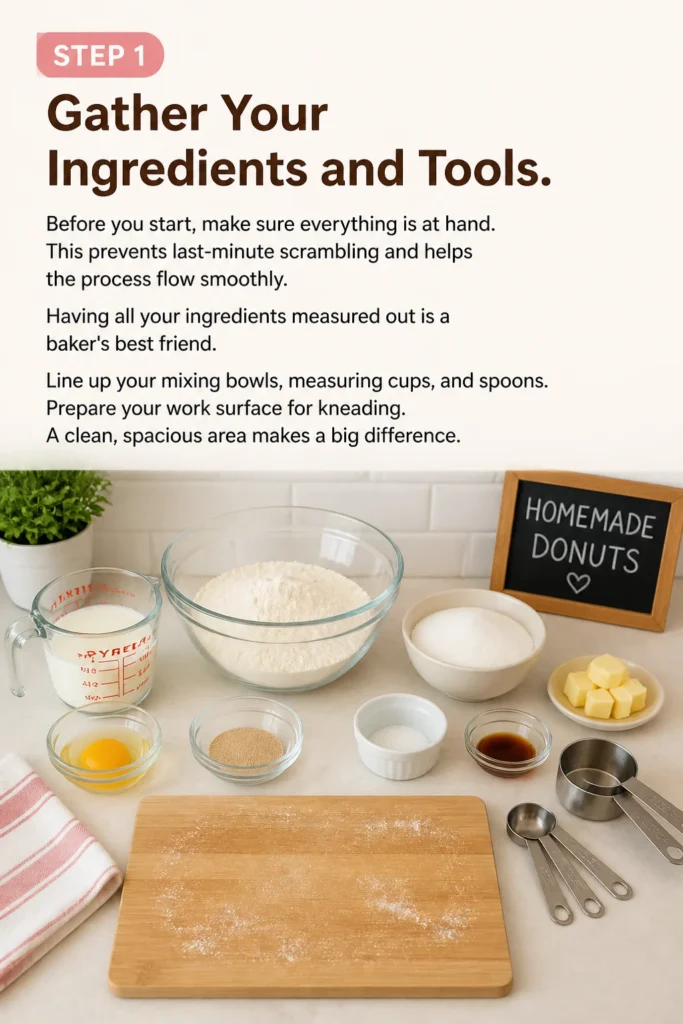
Line up your mixing bowls, measuring cups, and spoons. Prepare your work surface for kneading. A clean, spacious area makes a big difference.
Step 2: Activate the Yeast
Yeast is the heart of light, fluffy donuts. It needs warmth and sugar to wake up and do its job. This initial step is crucial for a successful rise.
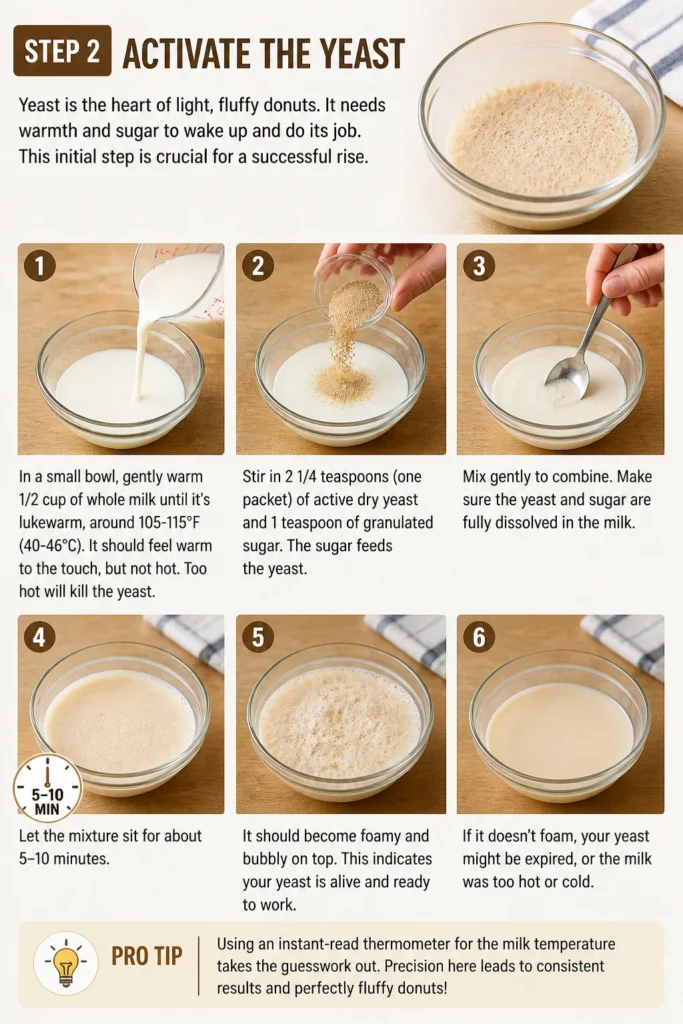
In a small bowl, gently warm 1/2 cup of whole milk until it’s lukewarm, around 105-115°F (40-46°C). It should feel warm to the touch, but not hot. Too hot will kill the yeast.
Stir in 2 1/4 teaspoons (one packet) of active dry yeast and 1 teaspoon of granulated sugar. The sugar feeds the yeast.
Let the mixture sit for about 5-10 minutes. It should become foamy and bubbly on top. This indicates your yeast is alive and ready to work. If it doesn’t foam, your yeast might be expired, or the milk was too hot or cold.
Pro Tip: Using an instant-read thermometer for the milk temperature takes the guesswork out. Precision here leads to consistent results.
Step 3: Mix the Dough Ingredients
Now it’s time to bring all the wet and dry elements together. The goal is to form a shaggy, cohesive dough before kneading. Don’t worry if it looks a bit messy at first.
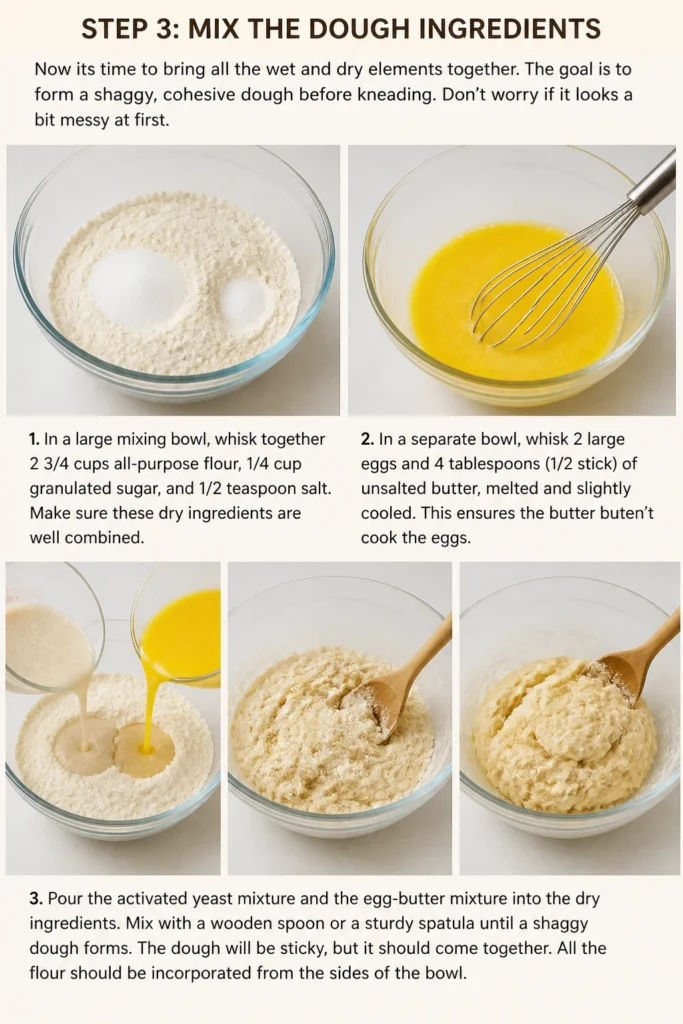
In a large mixing bowl, whisk together 2 3/4 cups all-purpose flour, 1/4 cup granulated sugar, and 1/2 teaspoon salt. Make sure these dry ingredients are well combined.
In a separate bowl, whisk 2 large eggs and 4 tablespoons (1/2 stick) of unsalted butter, melted and slightly cooled. This ensures the butter doesn’t cook the eggs.
Pour the activated yeast mixture and the egg-butter mixture into the dry ingredients. Mix with a wooden spoon or a sturdy spatula until a shaggy dough forms.
The dough will be sticky, but it should come together. All the flour should be incorporated from the sides of the bowl.
Step 4: Knead the Dough
Kneading develops the gluten in the flour, which gives donuts their characteristic chewiness and structure. This step requires a bit of muscle and patience.
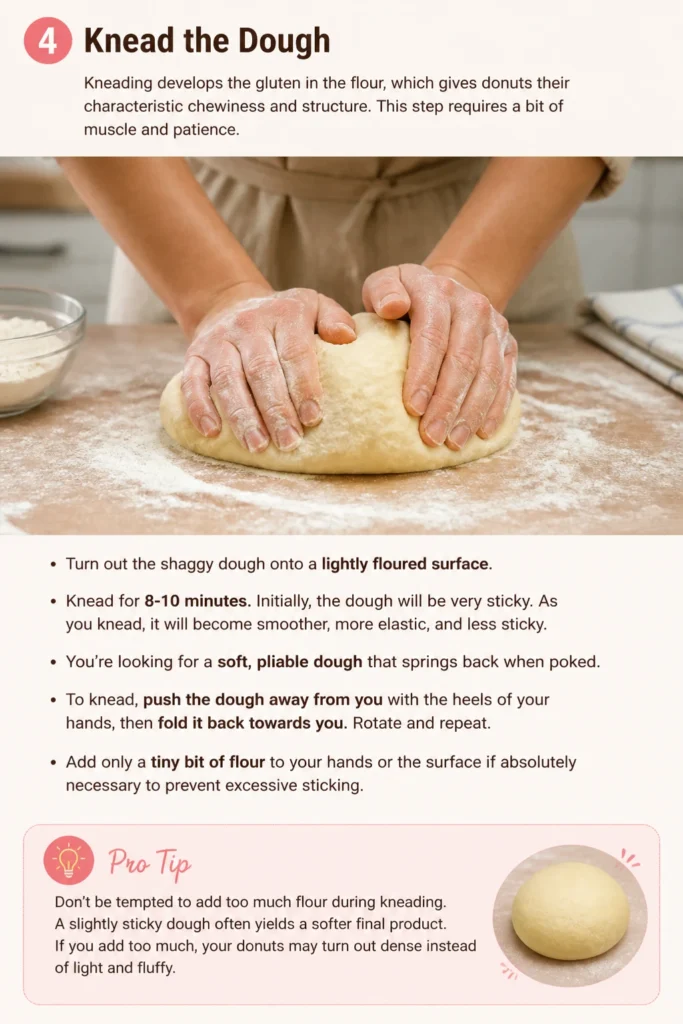
Turn out the shaggy dough onto a lightly floured surface. Knead for 8-10 minutes.
Initially, the dough will be very sticky. As you knead, it will become smoother, more elastic, and less sticky. You’re looking for a soft, pliable dough that springs back when poked.
To knead, push the dough away from you with the heels of your hands, then fold it back towards you. Rotate and repeat. Add only a tiny bit of flour to your hands or the surface if absolutely necessary to prevent excessive sticking.
Pro Tip: Don’t be tempted to add too much flour during kneading. A slightly sticky dough often yields a softer final product. If you add too much, your donuts will be tough.
Step 5: First Rise (Bulk Fermentation)
This is where the yeast does its magic, causing the dough to double in size. A warm, draft-free environment is key for a good rise. This step builds flavor and texture.
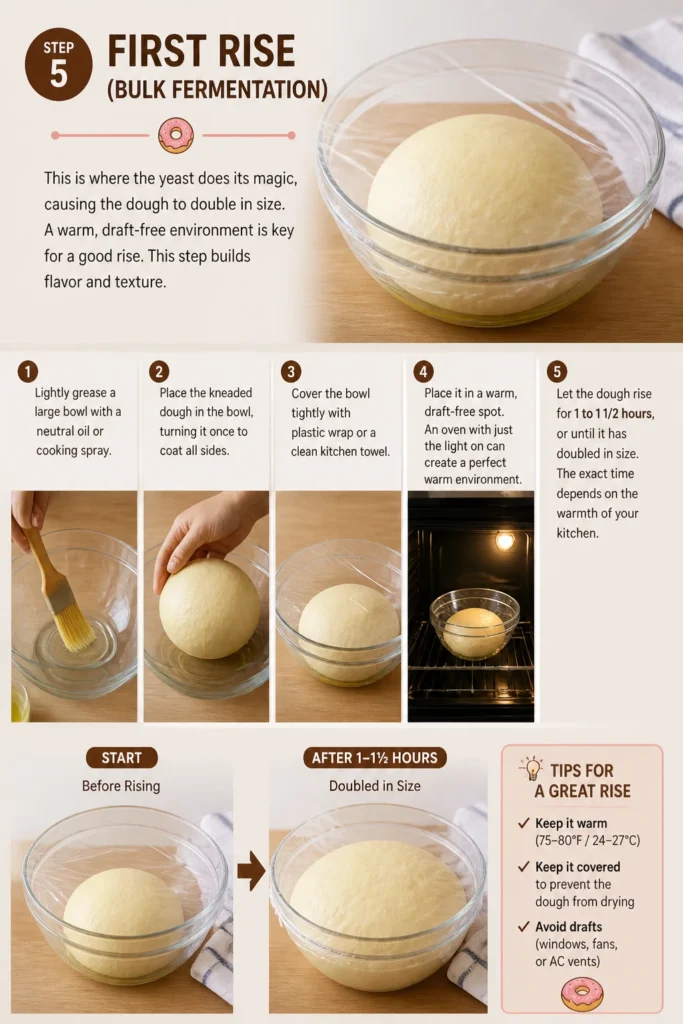
Lightly grease a large bowl with a neutral oil or cooking spray. Place the kneaded dough in the bowl, turning it once to coat all sides.
Cover the bowl tightly with plastic wrap or a clean kitchen towel. Place it in a warm, draft-free spot. An oven with just the light on can create a perfect warm environment.
Let the dough rise for 1 to 1 1/2 hours, or until it has doubled in size. The exact time depends on the warmth of your kitchen.
Step 6: Shape the Donuts
Once the dough has risen, it’s time to transform it into the familiar donut shape. Handle the dough gently to avoid deflating it too much.
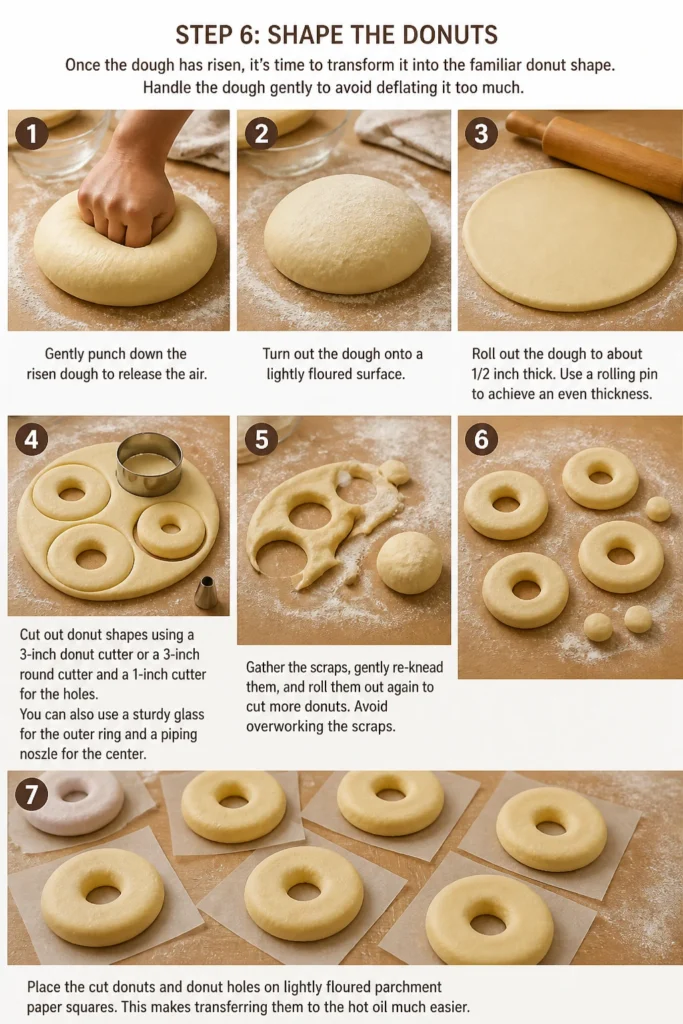
Gently punch down the risen dough to release the air. Turn out the dough onto a lightly floured surface.
Roll out the dough to about 1/2 inch thick. Use a rolling pin to achieve an even thickness.
Cut out donut shapes using a 3-inch donut cutter or a 3-inch round cutter and a 1-inch cutter for the holes. You can also use a sturdy glass for the outer ring and a piping nozzle for the center.
Gather the scraps, gently re-knead them, and roll them out again to cut more donuts. Avoid overworking the scraps.
Place the cut donuts and donut holes on lightly floured parchment paper squares. This makes transferring them to the hot oil much easier.
Step 7: Second Rise (Proofing)
A second, shorter rise makes the donuts extra airy and light. This is their final chance to puff up before frying. Don’t rush this step.
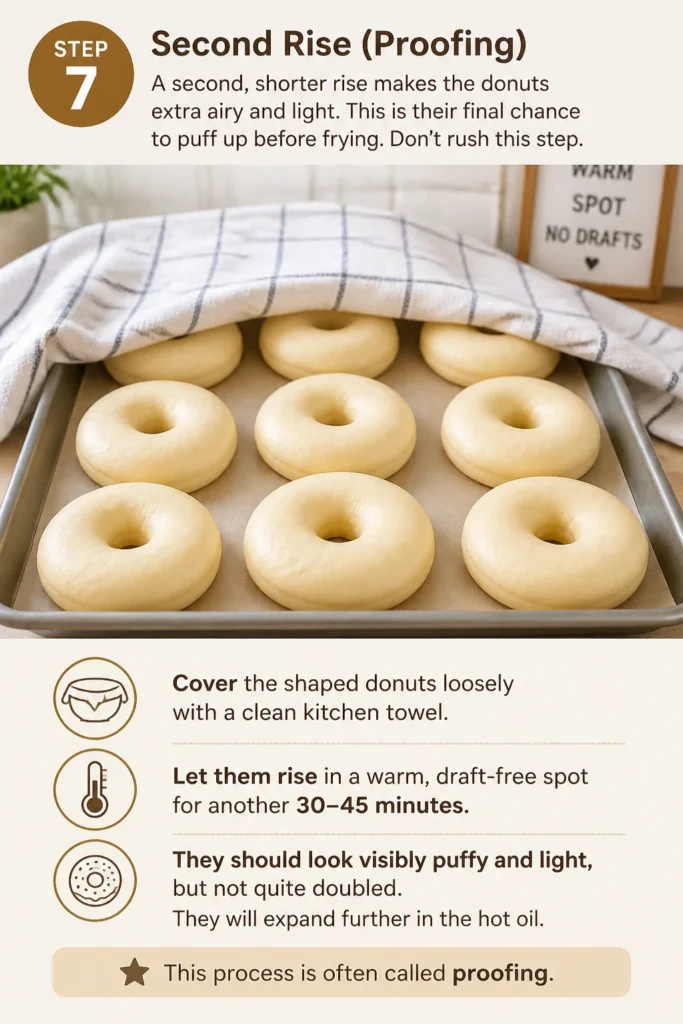
Cover the shaped donuts loosely with a clean kitchen towel. Let them rise in a warm, draft-free spot for another 30-45 minutes.
They should look visibly puffy and light, but not quite doubled. They will expand further in the hot oil. This process is often called proofing.
Step 8: Heat the Frying Oil
The correct oil temperature is vital for perfectly cooked donuts. Too cool, and they’ll be greasy; too hot, and they’ll burn outside before cooking inside.
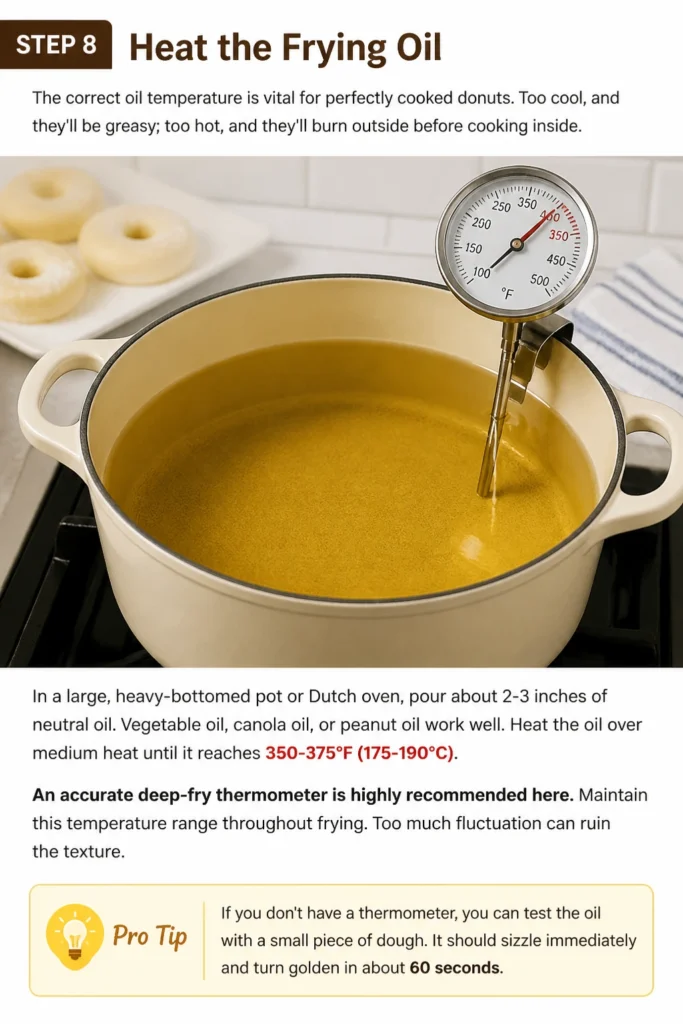
In a large, heavy-bottomed pot or Dutch oven, pour about 2-3 inches of neutral oil. Vegetable oil, canola oil, or peanut oil work well.
Heat the oil over medium heat until it reaches 350-375°F (175-190°C). An accurate deep-fry thermometer is highly recommended here.
Maintain this temperature range throughout frying. Too much fluctuation can ruin the texture.
Pro Tip: If you don’t have a thermometer, you can test the oil with a small piece of dough. It should sizzle immediately and turn golden in about 60 seconds.
Step 9: Fry the Donuts
This is the moment of truth! Frying transforms the dough into golden, fluffy donuts. Work in small batches to avoid overcrowding the pot and dropping the oil temperature.
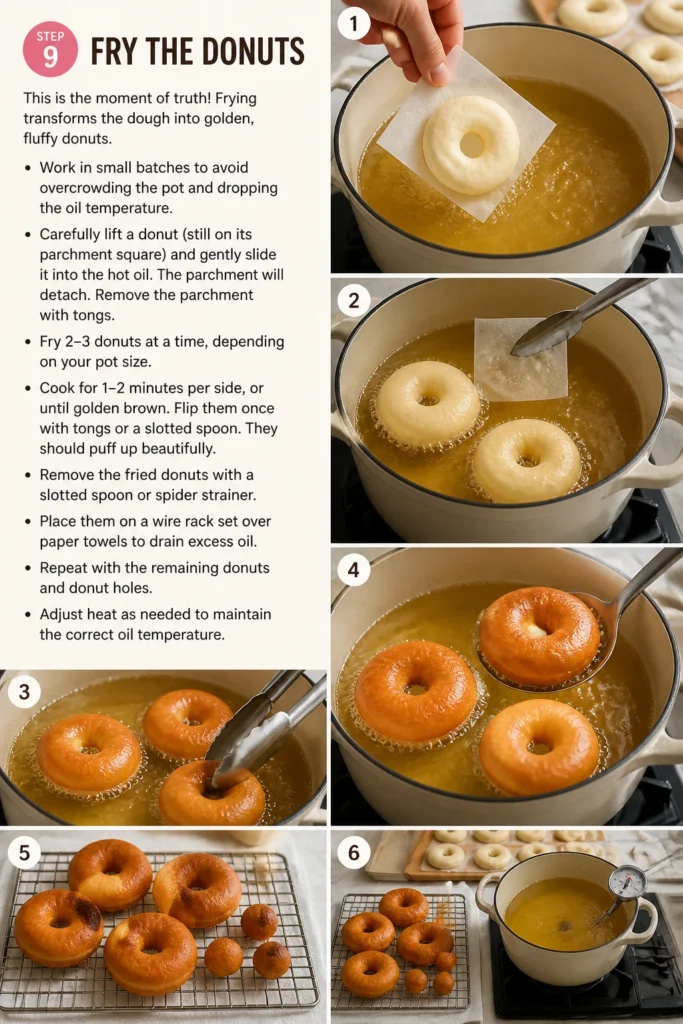
Carefully lift a donut (still on its parchment square) and gently slide it into the hot oil. The parchment will detach. Remove the parchment with tongs.
Fry 2-3 donuts at a time, depending on your pot size. Cook for 1-2 minutes per side, or until golden brown.
Flip them once with tongs or a slotted spoon. They should puff up beautifully.
Remove the fried donuts with a slotted spoon or spider strainer. Place them on a wire rack set over paper towels to drain excess oil.
Repeat with the remaining donuts and donut holes. Adjust heat as needed to maintain the correct oil temperature.
Step 10: Glaze or Decorate
Now for the fun part – making your donuts irresistible. Glazing them while they are still warm allows the glaze to set beautifully.
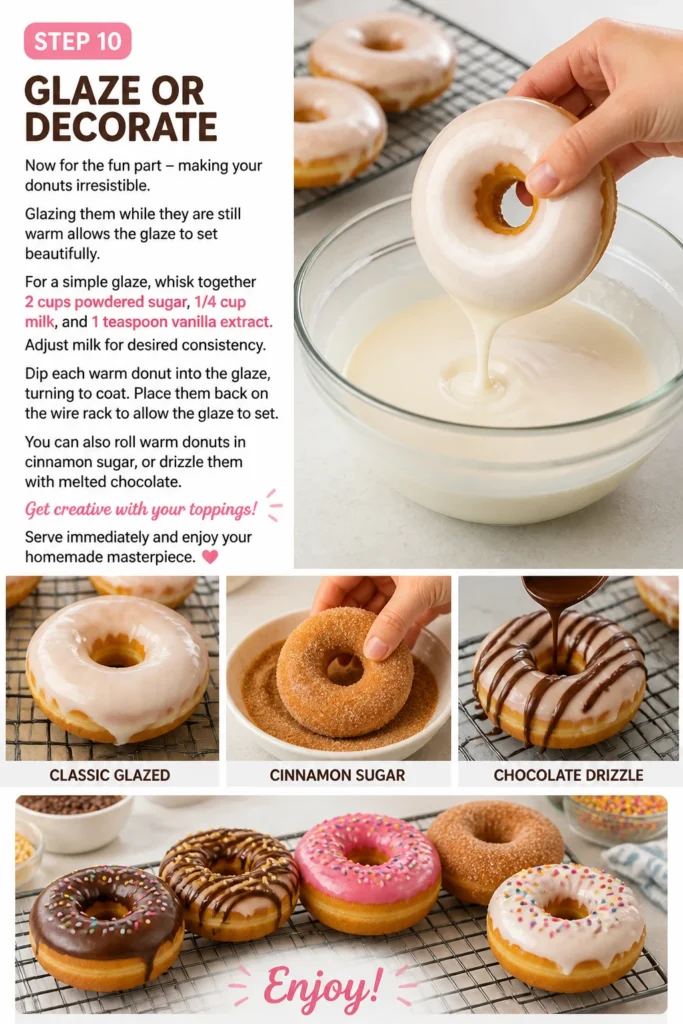
For a simple glaze, whisk together 2 cups powdered sugar, 1/4 cup milk, and 1 teaspoon vanilla extract. Adjust milk for desired consistency.
Dip each warm donut into the glaze, turning to coat. Place them back on the wire rack to allow the glaze to set.
You can also roll warm donuts in cinnamon sugar, or drizzle them with melted chocolate. Get creative with your toppings!
Serve immediately and enjoy your homemade masterpiece.
Common Mistakes to Avoid
Overheating or Underheating the Oil
Frying oil temperature is paramount. If the oil is too hot, the donuts will burn quickly on the outside, leaving the inside raw and doughy. If the oil is too cool, the donuts will absorb too much oil, becoming greasy and heavy instead of light and airy. Always use a thermometer and adjust the heat as you fry.
Adding Too Much Flour
When kneading the dough, it’s easy to keep adding flour if the dough feels sticky. However, too much flour will result in a dry, tough, and dense donut. Aim for a dough that is slightly sticky but manageable. A little stickiness is a good sign of a tender crumb.
Not Letting the Dough Rise Enough
Patience is a virtue in donut making. Rushing the rising process, or proofing, will lead to dense, heavy donuts. The yeast needs time to produce enough gas to create that light, airy texture. Ensure your dough doubles in size for the first rise and looks visibly puffy for the second.
Overcrowding the Frying Pot
Frying too many donuts at once will significantly drop the oil temperature. This leads to greasy donuts that don’t cook evenly. Fry in small batches, giving each donut enough space. This helps maintain a consistent oil temperature and ensures even cooking.
Troubleshooting
Donuts are Greasy
If your donuts turn out oily, the most common culprit is oil that wasn’t hot enough. When the oil is too cool, the dough absorbs it rather than cooking quickly. Ensure your oil is consistently within the 350-375°F (175-190°C) range using a thermometer. Frying too many donuts at once can also drop the oil temperature, leading to the same issue.
Donuts are Dense and Heavy
Dense donuts often indicate insufficient rising or too much flour. Make sure your yeast is active and the dough has fully doubled in size during its first rise. The second rise should also yield noticeably puffy donuts. Additionally, avoid adding excessive flour during kneading, as this can make the dough tough and inhibit its ability to rise lightly.
Donuts are Burnt Outside, Raw Inside
This problem points to oil that is too hot. The high temperature rapidly cooks and darkens the exterior before the heat has a chance to penetrate and cook the interior. Use a thermometer to keep the oil temperature in the ideal range. If the oil gets too hot, remove the pot from the heat briefly to let it cool down before continuing to fry.
Key Takeaways
- Always activate your yeast first to ensure it’s alive and ready to make your donuts fluffy.
- Knead your dough thoroughly to develop gluten, leading to a chewy, satisfying texture.
- Patience with both rises is essential for light, airy donuts; don’t rush the proofing process.
- Maintain the correct oil temperature (350-375°F) for perfect frying – use a thermometer.
- Fry in small batches to prevent the oil temperature from dropping and making your donuts greasy.
- Glaze or decorate your donuts while they are still warm for the best flavor and appearance.
Frequently Asked Questions
Can I make the donut dough ahead of time?
Yes, you can. After the first rise, you can punch down the dough, cover the bowl tightly with plastic wrap, and refrigerate it overnight. The next day, let the dough come to room temperature for about 30-60 minutes before rolling and shaping. This slow fermentation can even enhance the flavor.
What kind of oil is best for frying donuts?
Neutral-flavored oils with a high smoke point are best. Canola oil, vegetable oil, peanut oil, or sunflower oil are excellent choices. Avoid olive oil or butter, as they have lower smoke points and will burn easily, imparting an off-flavor to your donuts.
How do I store leftover homemade donuts?
Homemade donuts are best eaten fresh on the day they are made. If you have leftovers, store them in an airtight container at room temperature for up to 1-2 days. They tend to lose their freshness and become a bit stale quickly. Avoid refrigerating, as this can dry them out.
Can I bake these donuts instead of frying?
This specific recipe is designed for frying, which gives donuts their characteristic texture and crisp exterior. While you can technically bake a donut-shaped dough, it will result in a much different product, more akin to a sweet roll or cake. For baked donuts, it’s best to use a recipe specifically formulated for baking.
Our Top Recommended Finds
- Deep-Fry Thermometer: Essential for precise oil temperature control, preventing greasy or burnt donuts.
- Donut Cutter Set: Makes shaping uniform donuts and holes quick and easy, saving time and effort.
- Spider Strainer: Perfect for safely removing fried donuts from hot oil, allowing excess oil to drain quickly.
Your Donut Adventure Awaits
There’s a unique satisfaction that comes from creating something truly delicious from scratch. Making donuts at home is more than just baking; it’s an experience, a journey into the heart of comfort food. You’ve got all the steps, tips, and tricks to ensure your success.
So, why wait? Gather your ingredients, clear your counter, and get ready to fill your home with the irresistible aroma of freshly made donuts. Dive in, experiment with glazes, and savor every bite of your homemade creations. The joy of a warm, fluffy donut is just a few steps away.