🎂 How To Make Cake Flour From All Purpose
Baking a truly tender cake often hinges on one key ingredient: cake flour. Its low protein content creates a delicate crumb that all-purpose flour simply can’t match on its own. I’ve spent countless hours in my kitchen perfecting cake recipes, and learning to make my own cake flour from everyday ingredients was a game-changer.
This guide will show you exactly how to achieve that professional-quality flour right at home, ensuring your cakes are always light and airy. Trust me, once you master this simple trick, your baking will reach new heights.
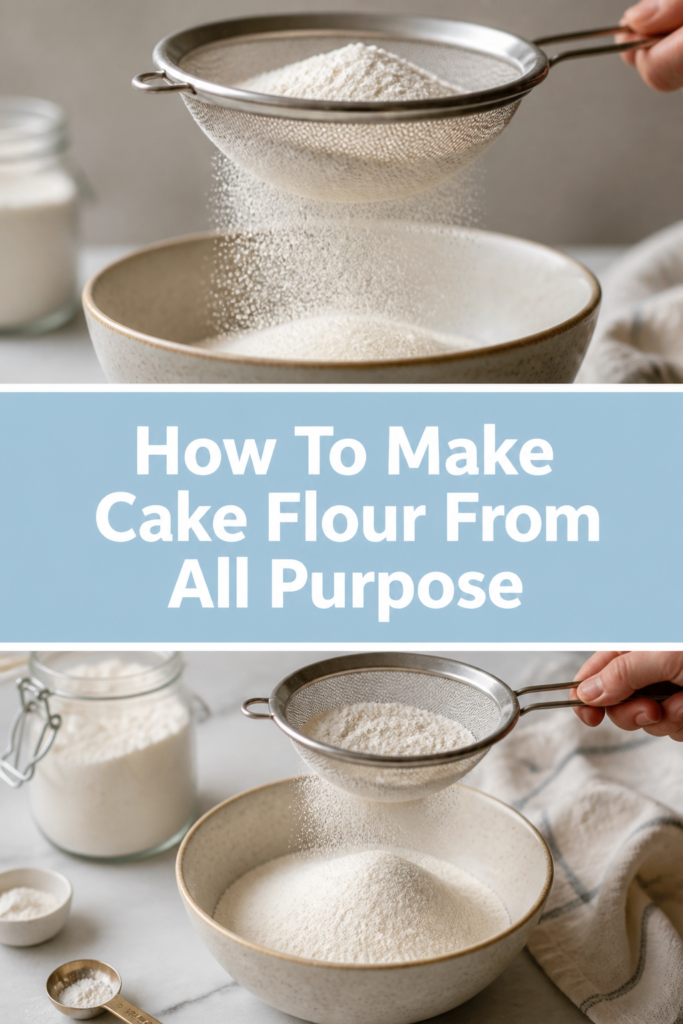
Quick Overview
You’re about to transform standard all-purpose flour into a specialized ingredient perfect for delicate baked goods. This process is straightforward and yields excellent results.
- Time needed: 5-10 minutes
- Difficulty: Beginner
- What you’ll need: All-purpose flour, cornstarch, a fine-mesh sieve, and a measuring cup.
Step-by-Step Instructions
Making your own cake flour is a simple two-ingredient process. Precision and thorough mixing are your best friends here.
Step 1: Gather Your Ingredients and Tools
Before you begin, ensure you have everything within reach. This makes the process smooth and efficient.
You will need all-purpose flour, cornstarch, a clean measuring cup, and a fine-mesh sieve. A mixing bowl is also essential to contain your flour mixture.
Step 2: Measure Your All-Purpose Flour
Accurate measurement is crucial for the best results. For every 1 cup of cake flour you want to make, start with 1 cup of all-purpose flour.
Measure your all-purpose flour by spooning it into a measuring cup and then leveling it off with a straight edge. Do not pack the flour.
Step 3: Remove a Portion of All-Purpose Flour
To reduce the protein content of your all-purpose flour, you need to replace some of it with starch. This mimics the composition of commercial cake flour.
For every 1 cup of all-purpose flour you measured, remove two tablespoons of flour. Place this removed flour back into its container or discard it.
Pro Tip: Removing the flour first ensures your final volume remains approximately one cup. This helps maintain recipe ratios.
Step 4: Measure Your Cornstarch
Cornstarch is the magic ingredient that lowers the overall protein percentage of your flour. It also interferes with gluten development, leading to a tender crumb.
Measure exactly two tablespoons of cornstarch. Ensure your measurements are level for accuracy.
Step 5: Combine Flour and Cornstarch
Now it’s time to bring your two ingredients together. This step is where the transformation truly begins.
Add the measured cornstarch directly into the measuring cup containing the slightly reduced all-purpose flour. Make sure all of the cornstarch goes in.
Step 6: Sift the Mixture Thoroughly
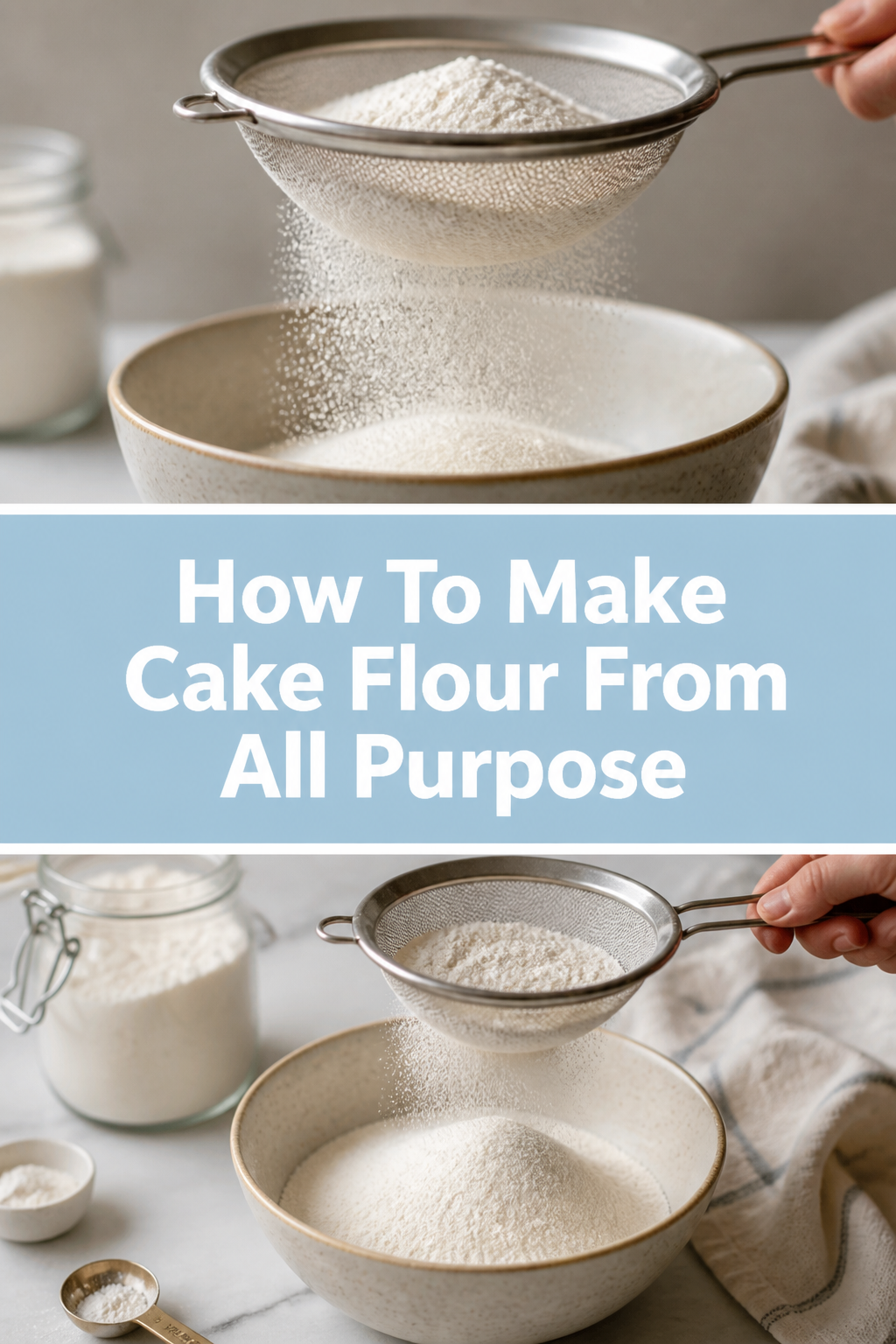
Sifting is the most critical step in creating homemade cake flour. It evenly distributes the cornstarch and aerates the mixture.
Sift the flour and cornstarch mixture into a clean bowl. Repeat this sifting process at least 4-5 times.
Each sifting pass helps to break up any clumps and thoroughly blend the cornstarch with the flour. This ensures a consistent texture and even distribution of the starch.
Pro Tip: Sifting multiple times isn’t just about mixing; it also aerates the flour, making it lighter and contributing to a more tender cake crumb.
Step 7: Store Your Homemade Cake Flour (If Not Using Immediately)
If you’re not using your freshly made cake flour right away, proper storage is important. This keeps it fresh for future baking projects.
Transfer your homemade cake flour to an airtight container. Store it in a cool, dry place, just as you would with regular all-purpose flour.
Step 8: Use in Your Recipes
Your homemade cake flour is now ready to be used in any recipe that calls for cake flour. It will help you achieve wonderfully light and tender baked goods.
Measure your homemade cake flour as you would any other flour, typically by spooning and leveling. Enjoy the delightful results in your next cake!
Common Mistakes to Avoid
Even a simple process like making cake flour can have pitfalls. Being aware of these common mistakes will help you achieve perfect results every time.
Not Sifting Enough
Many home bakers underestimate the importance of thorough sifting. Simply mixing the flour and cornstarch with a spoon isn’t enough.
Insufficient sifting means the cornstarch won’t be evenly distributed throughout the flour. This can lead to pockets of concentrated starch or areas where the flour’s protein content remains too high, resulting in an inconsistent texture in your final baked good. Always sift at least 4-5 times.
Incorrect Ratio of Cornstarch to Flour
The precise ratio of cornstarch to all-purpose flour is key to mimicking commercial cake flour. Deviating from this can impact your results.
Using too much cornstarch can make your cake overly dry or crumbly, as it dilutes the gluten too much. Too little cornstarch means the flour won’t be sufficiently tenderized, leading to a denser cake. Stick to the recommended two tablespoons of cornstarch per cup of flour.
Measuring Flour Incorrectly
Baking is a science, and accurate measurement is fundamental. How you measure your flour can significantly affect the final outcome.
Scooping flour directly from the bag with a measuring cup can compact it, leading you to use too much flour by weight. This extra flour can make your cake dense and dry. Always spoon flour into your measuring cup and then level it off for the most accurate volume measurement.
Using the Wrong Type of Starch
While other starches exist, cornstarch is specifically recommended for its properties in baking. Substituting it without understanding can lead to unexpected results.
Using starches like potato starch or tapioca starch might work in some contexts, but they behave differently than cornstarch. Cornstarch provides the ideal balance of protein dilution and gluten interference for a tender cake crumb. Stick to cornstarch for reliable results.
Troubleshooting
Even with the best intentions, sometimes things don’t go exactly as planned. Here are solutions to common issues you might encounter.
Cake Still Feels Dense or Chewy
If your cake still lacks the desired lightness and tenderness, the issue likely lies with the flour’s protein content. It might not have been sufficiently reduced.
The most common cause is not sifting the flour and cornstarch enough times. Sifting ensures the cornstarch is evenly dispersed, effectively diluting the protein. Try sifting your homemade cake flour an additional 2-3 times next time, or ensure you remove the full two tablespoons of AP flour before adding cornstarch.
Flour Mixture Appears Lumpy or Uneven
A lumpy or uneven flour mixture before baking indicates that the ingredients haven’t been properly combined. This can lead to inconsistent results in your cake.
This problem is almost always due to insufficient sifting. The cornstarch needs to be thoroughly integrated with the all-purpose flour. Continue sifting the mixture until it is light, airy, and uniform in appearance, with no visible clumps of either ingredient.
Cake Tastes Starchy or Dry
If your cake has an unusual starchy taste or feels excessively dry, it could be a sign of an incorrect ratio in your homemade cake flour.
This usually means too much cornstarch was added relative to the all-purpose flour. Double-check your measurements carefully next time. Ensure you remove two tablespoons of AP flour for every one cup you start with, and then add precisely two tablespoons of cornstarch.
Key Takeaways
- Making cake flour at home is a simple, cost-effective way to improve your baking.
- The core process involves replacing a small amount of all-purpose flour with cornstarch.
- Accurate measurement of both flour and cornstarch is absolutely essential for success.
- Sifting the mixture multiple times (4-5 times) is crucial for even distribution and aeration.
- Homemade cake flour helps achieve a wonderfully tender, light, and airy cake crumb.
- Store your homemade cake flour in an airtight container just like regular flour.
Frequently Asked Questions
Here are answers to some common questions about making and using homemade cake flour.
Can I use this homemade cake flour in any recipe that calls for cake flour?
Yes, absolutely. This homemade version is designed to mimic the properties of commercial cake flour. It performs beautifully in most recipes, from delicate sponge cakes to fluffy cupcakes, providing that signature tender crumb.
How long does homemade cake flour last?
Homemade cake flour, when stored properly in an airtight container in a cool, dry pantry, will last as long as your all-purpose flour. The cornstarch acts as a stable ingredient and does not significantly reduce the shelf life.
Is homemade cake flour as good as store-bought cake flour?
For most home baking applications, homemade cake flour is an excellent substitute and performs very well. While commercial cake flour undergoes specific milling processes and bleaching that can result in a slightly finer texture and whiter color, the tenderness and crumb achieved with the homemade version are remarkably close.
Can I make a large batch of cake flour to store?
You certainly can prepare a larger batch for future use. Simply scale up the ratio: for every cup of cake flour needed, start with 1 cup of AP flour, remove 2 tablespoons, and add 2 tablespoons of cornstarch. Remember to sift thoroughly and store it in an airtight container.
Our Top Recommended Finds
Having the right tools makes all the difference in the kitchen. These items will help you perfect your homemade cake flour and other baking endeavors.
- Fine-Mesh Sieve: Essential for thoroughly blending your flour and cornstarch, ensuring an even, aerated mixture.
- Digital Kitchen Scale: For ultimate precision in baking, a scale allows you to measure ingredients by weight, which is more accurate than volume.
- Airtight Storage Containers: Perfect for keeping your homemade cake flour fresh and dry, ready for your next baking project.
Elevate Your Baking Today
You now hold the secret to creating incredibly tender and moist cakes, right in your own kitchen. This simple technique transforms an everyday staple into a specialized ingredient, opening up a world of baking possibilities. No longer will you need to search for specialty flours or compromise on texture.
Take these steps and put them into practice. Bake that dream cake you’ve always wanted to make, confident that your homemade cake flour will deliver exceptional results. Your journey to becoming a more accomplished baker starts with this fundamental skill.