🥣 How To Make Kraft Mac And Cheese Better
We have all been there, staring at that iconic blue box at 11 PM when the cravings hit.
After making thousands of these boxes over two decades, I have learned that the instructions on the back are merely suggestions.
This guide will show you how to turn a pantry staple into a meal that tastes like it came from a high-end bistro.

Quick Overview
The goal here is to improve the texture, richness, and depth of flavor without spending an hour in the kitchen.
- Time needed: 15 minutes
- Difficulty: Beginner
- What you’ll need: One box of Kraft Mac and Cheese, high-quality butter, heavy cream (or whole milk), extra sharp cheddar, and a few pantry spices.
Step-by-Step Instructions
Step 1: Salt the water like the sea
Begin by filling a large pot with more water than you think you need. Most people use too little water, which leads to gummy, over-starched noodles.
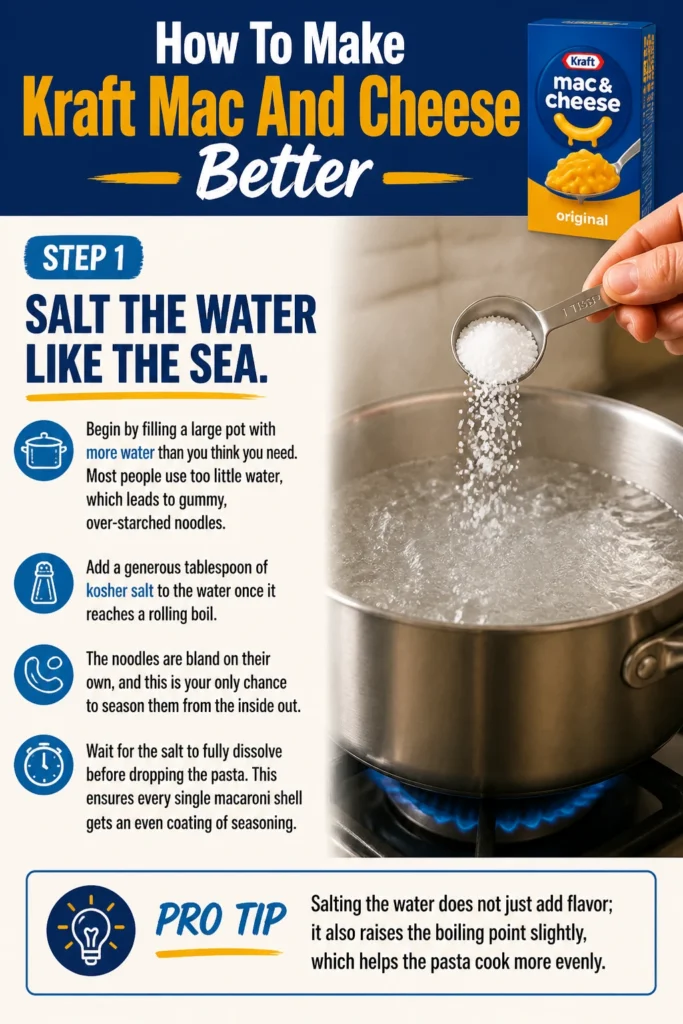
Add a generous tablespoon of kosher salt to the water once it reaches a rolling boil. The noodles are bland on their own, and this is your only chance to season them from the inside out.
Wait for the salt to fully dissolve before dropping the pasta. This ensures every single macaroni shell gets an even coating of seasoning.
Pro Tip: Salting the water does not just add flavor; it also raises the boiling point slightly, which helps the pasta cook more evenly.
Step 2: Under-boil the noodles
Set your timer for two minutes less than the “al dente” instructions on the box. If the box says seven minutes, pull them out at five.
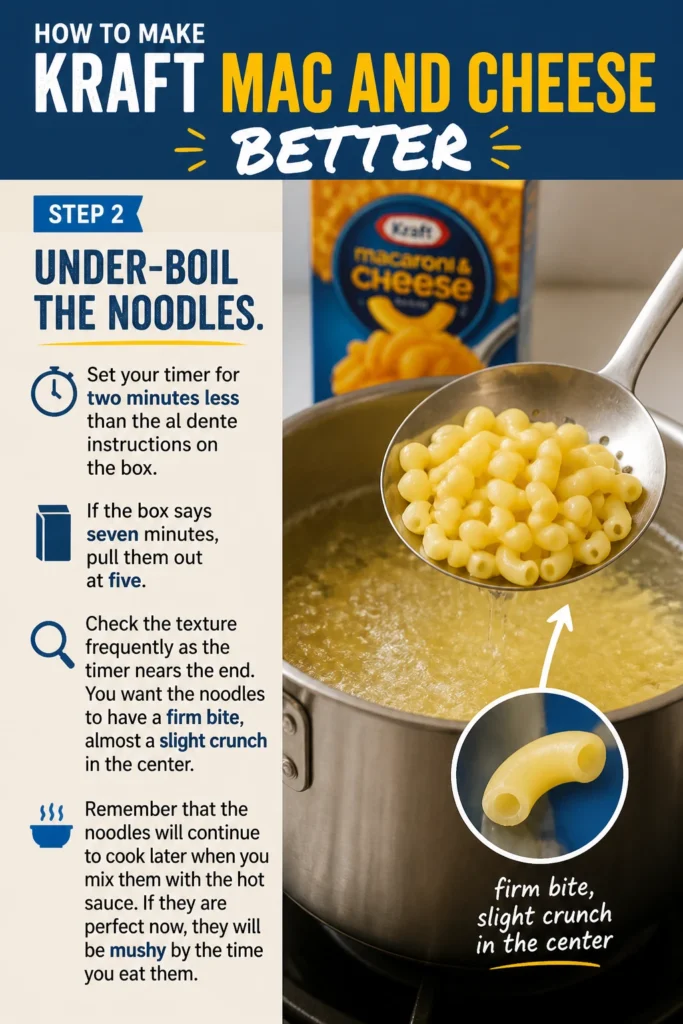
Check the texture frequently as the timer nears the end. You want the noodles to have a firm bite, almost a slight crunch in the center.
Remember that the noodles will continue to cook later when you mix them with the hot sauce. If they are perfect now, they will be mushy by the time you eat them.
Step 3: Reserve the pasta water
Scoop out about half a cup of the starchy pasta water before you drain the noodles. This liquid is “liquid gold” for sauce consistency.
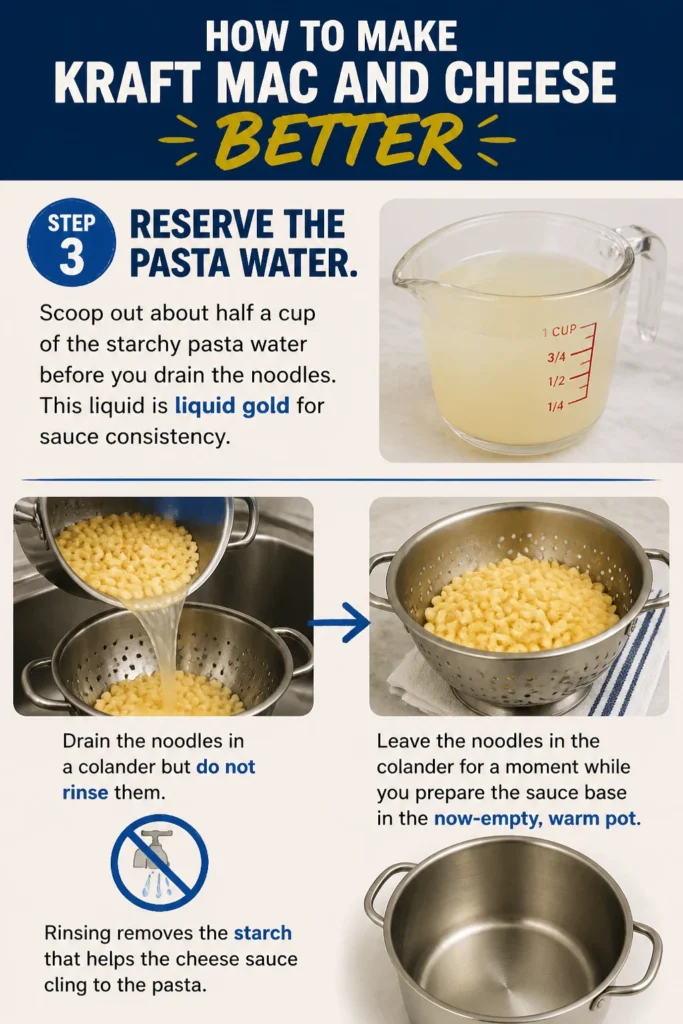
Drain the noodles in a colander but do not rinse them. Rinsing removes the starch that helps the cheese sauce cling to the pasta.
Leave the noodles in the colander for a moment while you prepare the sauce base in the now-empty, warm pot.
Step 4: Create a butter emulsion
Place the empty pot back on the stove over low heat. Add four tablespoons of high-quality, European-style butter instead of the standard sticks.
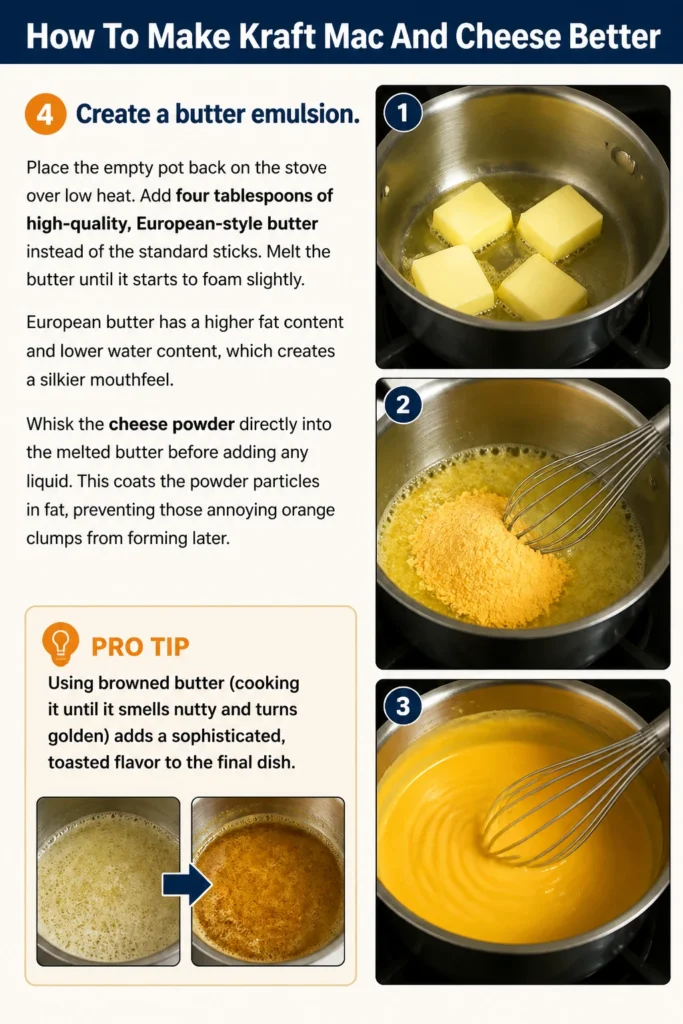
Melt the butter until it starts to foam slightly. European butter has a higher fat content and lower water content, which creates a silkier mouthfeel.
Whisk the cheese powder directly into the melted butter before adding any liquid. This coats the powder particles in fat, preventing those annoying orange clumps from forming later.
Pro Tip: Using browned butter (cooking it until it smells nutty and turns golden) adds a sophisticated, toasted flavor to the final dish.
Step 5: Upgrade your liquid gold
Swap out the standard 2% milk for heavy cream or half-and-half. This is the single most effective way to make the sauce taste “homemade.”
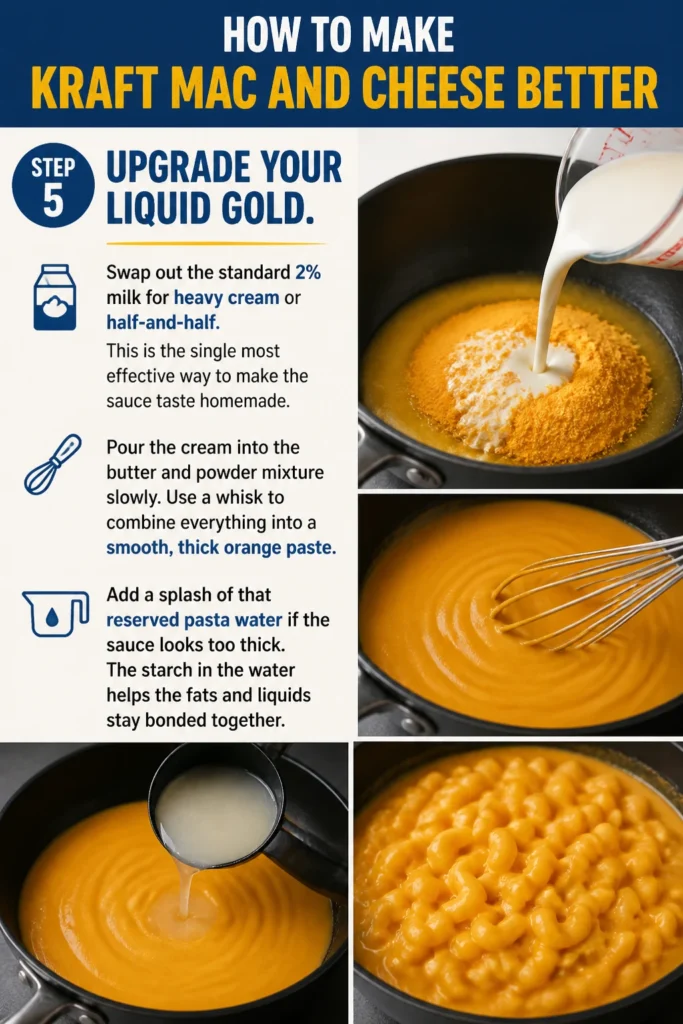
Pour the cream into the butter and powder mixture slowly. Use a whisk to combine everything into a smooth, thick orange paste.
Add a splash of that reserved pasta water if the sauce looks too thick. The starch in the water helps the fats and liquids stay bonded together.
Step 6: Incorporate real cheese
Grate about half a cup of extra sharp cheddar or Gruyere. Never use the pre-shredded stuff in a bag, as it is coated in potato starch that prevents smooth melting.
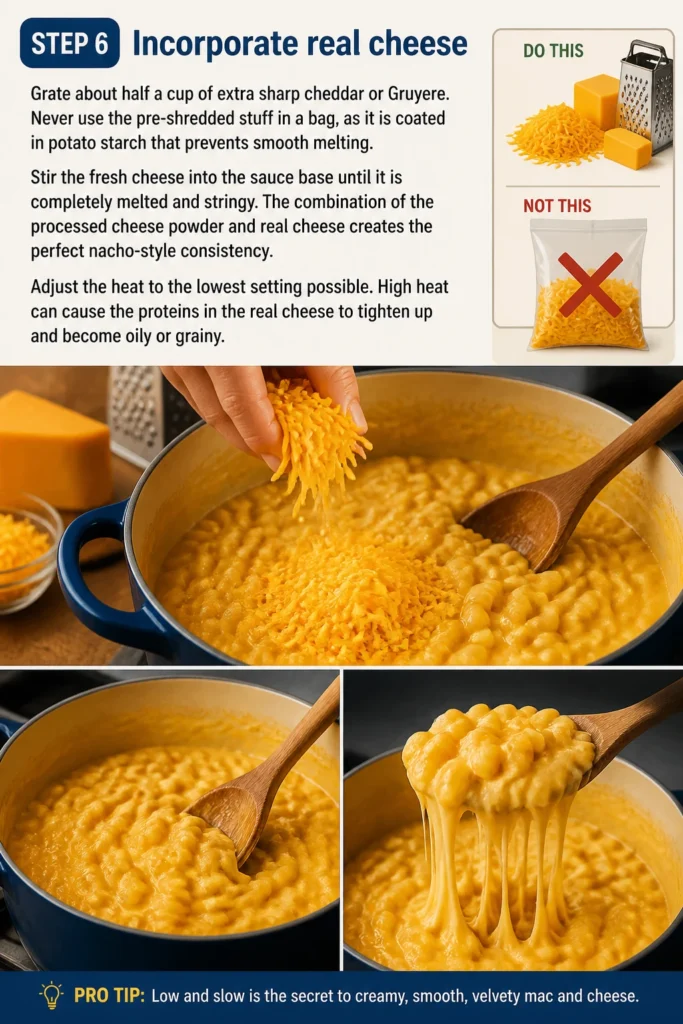
Stir the fresh cheese into the sauce base until it is completely melted and stringy. The combination of the processed cheese powder and real cheese creates the perfect “nacho-style” consistency.
Adjust the heat to the lowest setting possible. High heat can cause the proteins in the real cheese to tighten up and become oily or grainy.
Step 7: Balance the flavors with acid and spice
Add a teaspoon of Dijon mustard or a tiny splash of white vinegar. You won’t taste the mustard, but the acid cuts through the heavy fat and makes the cheese flavor “pop.”
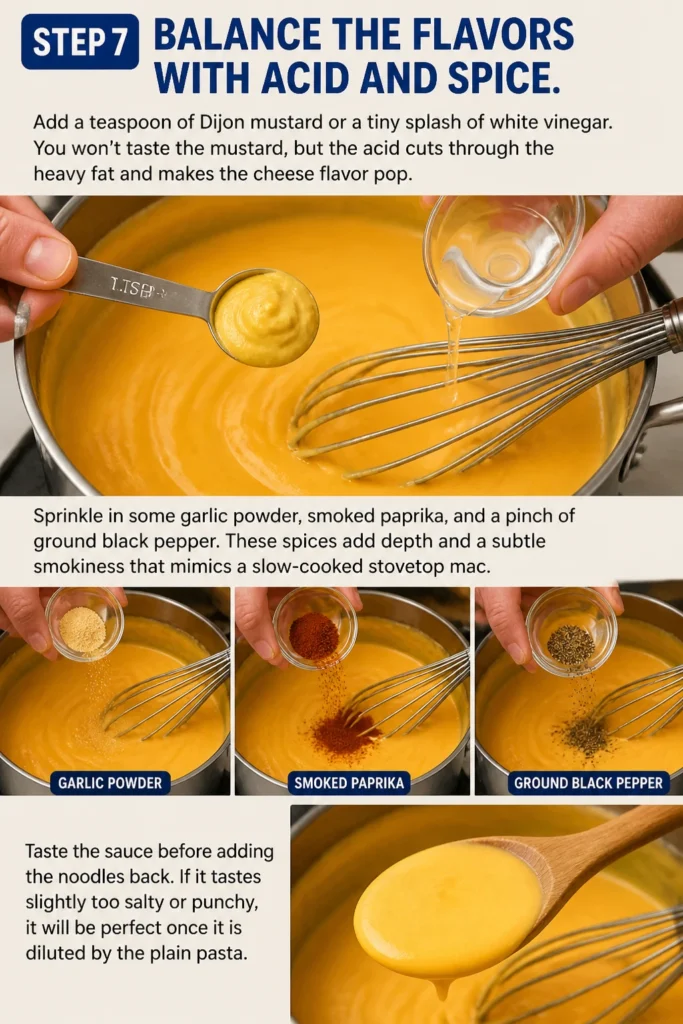
Sprinkle in some garlic powder, smoked paprika, and a pinch of ground black pepper. These spices add depth and a subtle smokiness that mimics a slow-cooked stovetop mac.
Taste the sauce before adding the noodles back. If it tastes slightly too salty or punchy, it will be perfect once it is diluted by the plain pasta.
Step 8: The final fold
Dump the undercooked noodles back into the pot with the finished sauce. Use a rubber spatula to gently fold the noodles until every single one is submerged.
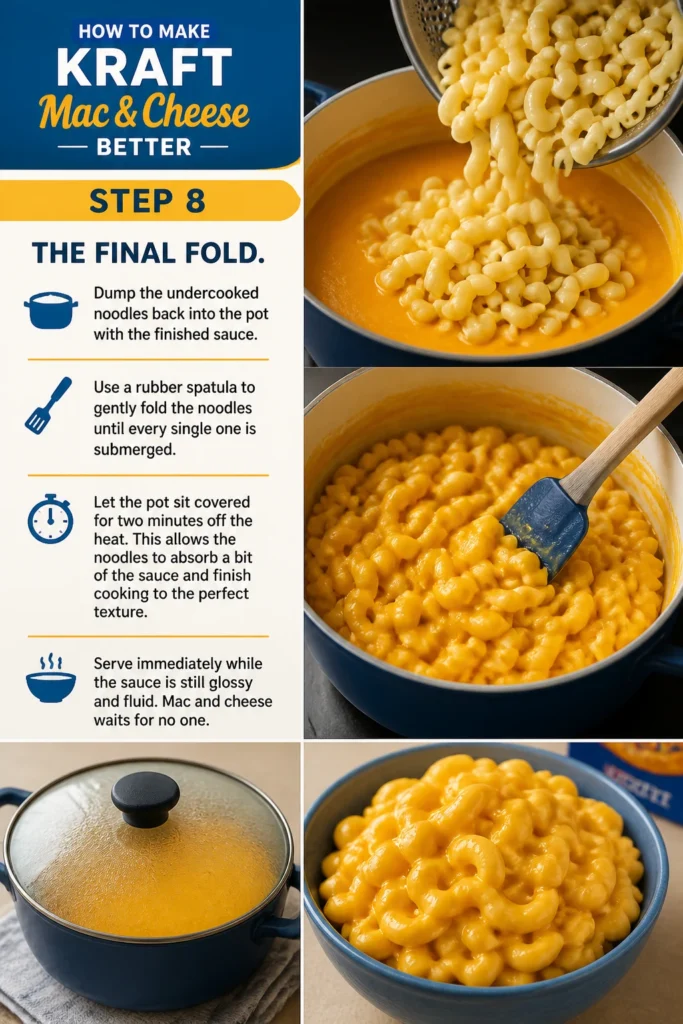
Let the pot sit covered for two minutes off the heat. This allows the noodles to absorb a bit of the sauce and finish cooking to the perfect texture.
Serve immediately while the sauce is still glossy and fluid. Mac and cheese waits for no one.
Common Mistakes to Avoid
Dumping everything in at once
Many people throw the butter, milk, powder, and noodles into the pot simultaneously. This results in a lumpy sauce and unevenly coated noodles. By making the sauce first and then adding the noodles, you ensure a professional finish every time.
Overcooking the pasta
Soft, mushy noodles are the enemy of a good mac and cheese. Since the noodles sit in a hot liquid for a few minutes before serving, they continue to hydrate. Starting with firm noodles is the only way to avoid a texture that resembles baby food.
Using cold milk and butter
If you pour ice-cold milk into a hot pot, it can cause the sauce to break or the cheese to seize. Take your butter and cream out of the fridge when you start boiling the water. Room-temperature ingredients emulsify much better than cold ones.
Troubleshooting
The sauce is too thin and watery
If your sauce looks like soup, do not panic. Turn the heat up to medium-low and stir constantly for two or three minutes. The heat will help the liquids evaporate and the starches thicken. You can also add another handful of real shredded cheese to act as a thickening agent.
The cheese sauce is grainy or gritty
This usually happens if the heat was too high when you added the real cheese. To fix this, add a tiny splash of heavy cream and whisk vigorously. The extra fat can sometimes help smooth out the proteins that have clumped together.
The flavor is flat or boring
If the dish tastes “one-note,” it likely needs more acid or salt. A tiny squeeze of lemon juice or a dash of hot sauce can brighten the entire profile. Often, a lack of flavor is simply a lack of salt, even if you salted the pasta water.
Key Takeaways
- Always undercook the pasta by 2 minutes to maintain a firm texture.
- Whisk the cheese powder into the melted butter before adding liquids to prevent clumps.
- Replace standard milk with heavy cream for a much richer, velvet-like sauce.
- Add a teaspoon of Dijon mustard to enhance the “cheesy” perception of the dish.
- Use freshly grated cheese instead of pre-shredded bags to avoid a grainy texture.
- Reserve pasta water to help emulsify and thin out the sauce if it becomes too thick.
Frequently Asked Questions
Can I make this in the microwave?
While you can, the results will never be as good as the stovetop method. The microwave cooks unevenly and makes it difficult to create a proper emulsion with the butter and cream. If you must use a microwave, still try to follow the “butter first” mixing rule in a separate bowl.
What is the best real cheese to add to Kraft?
Extra sharp cheddar is the classic choice because it complements the flavor of the powder. However, Monterey Jack is excellent for creaminess, and Smoked Gouda adds a sophisticated layer of flavor. Avoid very hard cheeses like Parmesan as they don’t melt as smoothly into this specific sauce base.
How do I reheat leftovers without them getting oily?
Add a tablespoon of milk or cream to the bowl before putting it in the microwave. Heat it in 30-second intervals, stirring in between. This replaces the moisture lost during refrigeration and helps the sauce come back together.
Is it okay to use margarine instead of butter?
Margarine has a very high water content and a distinct chemical aftertaste. It will make your sauce thinner and less flavorful. If you want the best results, stick to real dairy butter, preferably unsalted so you can control the salt level yourself.
Our Top Recommended Finds
- Stainless Steel Balloon Whisk: A sturdy whisk is essential for breaking up the cheese powder and creating a smooth emulsion.
- Microplane Grater: This tool allows you to grate real cheese into fine wisps that melt almost instantly into the sauce.
- Heavy-Bottomed Saucepan: A thick pot distributes heat evenly, preventing the cheese sauce from scorching on the bottom.
Level Up Your Next Bowl
Now that you have the foundation for the ultimate boxed mac and cheese, do not be afraid to experiment further.
Try topping your finished bowl with toasted Panko breadcrumbs or a drizzle of truffle oil for a truly decadent experience.
You can even stir in some rotisserie chicken or steamed broccoli to turn this side dish into a complete, balanced meal.
Go to your pantry, grab that blue box, and put these techniques to the test tonight.