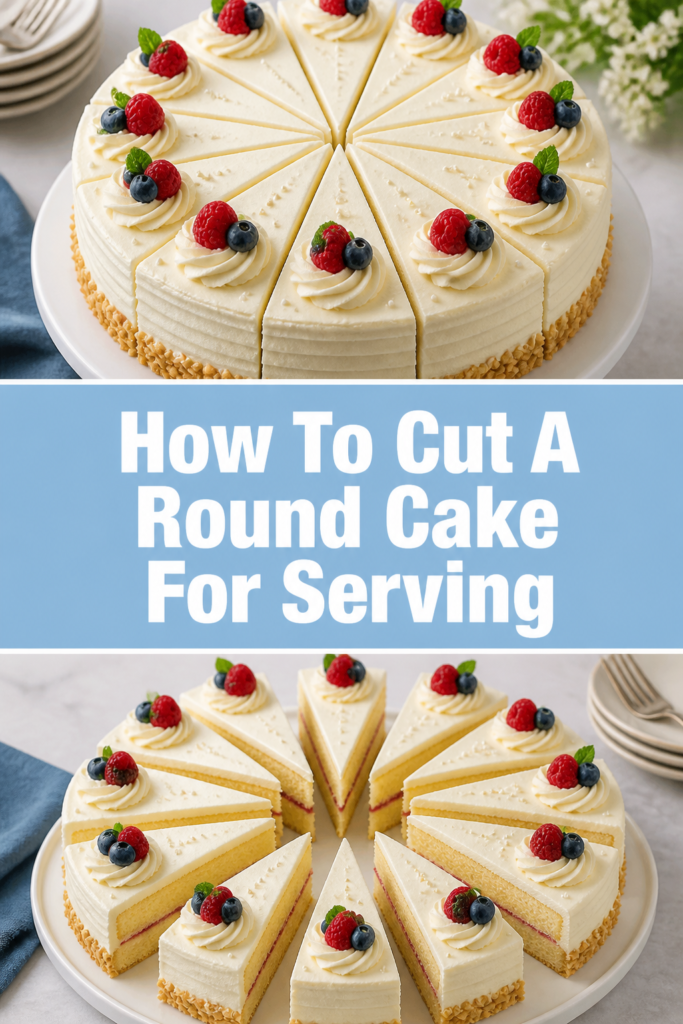
🎂 How To Cut A Round Cake For Serving
I have stood over hundreds of beautiful cakes with a knife in hand, feeling the slight pressure of not wanting to ruin a masterpiece.
Whether it was a multi-tiered wedding cake or a simple birthday sponge, I learned that the secret to a perfect slice is more about physics than luck.
This guide comes from years of trial and error in busy kitchens to ensure your next celebration ends with beautiful, uniform portions for everyone.
Quick Overview
You are about to master the art of the clean slice, ensuring every guest gets a piece that looks as good as it tastes.
- Time needed: 10-15 minutes
- Difficulty: Beginner
- What you’ll need: A long thin knife, a tall container of hot water, a clean kitchen towel, and a cutting board or cake stand.
Step-by-Step Instructions
Step 1: Prepare Your Workspace
Clear a large enough area on your counter or table so you have room to move your arms freely.
Make sure the cake is on a stable surface, ideally a cake board or a flat-bottomed plate that won’t slide around.
Gather all your tools before you make the first incision so you don’t have to step away mid-process.
Pro Tip: If your cake is on a rotating cake stand, use a small piece of damp paper towel under the cake board to keep it from spinning too easily while you cut.
Step 2: Choose the Right Knife
Select a knife with a long, thin blade that can reach across the entire diameter of the cake.
Use a smooth-edged chef’s knife for creamy cakes like cheesecake or mousse to get a silky finish.
Opt for a long serrated bread knife if you are cutting a light, airy sponge or a cake with many layers of fruit and nuts.
The serrated edge allows you to saw gently through the structure without compressing the delicate crumb.
Step 3: Temper the Cake
Bring your cake out of the refrigerator about 15 to 30 minutes before you plan to serve it.
Allow the frosting to soften slightly so it doesn’t crack or shatter when the blade enters.
However, do not let it sit out so long that the buttercream becomes oily or the structure becomes unstable.
A slightly chilled cake is much easier to handle than one that has reached full room temperature in a warm kitchen.
Step 4: Heat the Blade
Fill a tall pitcher or a large glass with very hot tap water.
Dip your knife blade into the hot water and let it sit for about thirty seconds until the metal is warm to the touch.
Wipe the blade completely dry with a clean kitchen towel before it touches the cake.
The heat from the metal will melt the fats in the frosting just enough to glide through like a hot wire through butter.
Pro Tip: Re-dip and wipe your knife after every single cut to maintain the temperature and keep the blade clean.
Step 5: Score the Surface
Before you commit to a deep cut, use the tip of your knife to lightly mark the top of the frosting.
Trace a line across the center to divide the cake in half, then do it again to create quarters.
Divide each quarter into the number of slices you need, ensuring they look even from above.
This visual roadmap prevents the common problem of ending up with one giant slice and one tiny sliver at the end.
Step 6: Execute the Vertical Cut
Position the knife at the center point of the cake and hold it perfectly vertical.
Press the blade down in one smooth, steady motion rather than using a back-and-forth sawing action.
Pull the knife out through the bottom or side of the cake rather than lifting it back up through the top.
Lifting the knife back up often drags crumbs and filling onto the pristine top surface of the cake.
Step 7: Master the Catering Style (The Grid Cut)
If you are serving a large crowd from an 8-inch or 10-inch cake, consider the “caterer’s method” instead of traditional wedges.
Cut a smaller circle inside the cake, about two inches in from the outer edge.
Slice the outer ring into rectangular portions, then cut the remaining center circle into wedges or smaller squares.
This method can nearly double the number of servings you get from a single round cake while keeping portions manageable.
Step 8: Support and Lift
Use a small offset spatula or a dedicated cake server to remove the first piece.
Slide the server all the way under the base of the slice to ensure you pick up the bottom crust.
Apply a tiny bit of pressure against the side of the slice with your knife to keep it from tipping over as you move it to the plate.
The first slice is always the most difficult, so take your time and don’t worry if it isn’t 100% perfect.
Common Mistakes to Avoid
Using a Cold, Dry Knife
Many people try to cut a cake with a room-temperature knife that hasn’t been cleaned between slices.
The frosting from the previous cut sticks to the blade and tears the side of the next slice.
Always use the hot water dip and wipe method to ensure the blade is slick and clean every time it enters the cake.
The Sawing Motion
Aggressively sawing back and forth through a soft cake will destroy its internal structure.
It forces the layers to slide against each other and pushes the filling out the sides.
Aim for a single, confident downward stroke or very long, gentle draws if using a serrated blade.
Cutting a Warm Cake
Attempting to slice a cake that has just come out of the oven or off a warm delivery truck is a recipe for disaster.
The internal crumb has not had time to set, and the heat will turn the knife into a blunt instrument that squashes the layers.
Ensure the cake is completely cool to the touch, or ideally chilled, before you even think about grabbing your knife.
Troubleshooting
The Frosting is Sticking to the Blade
If the frosting is particularly fudgy or contains a lot of caramel, it might stick even to a warm knife.
Try lightly coating the blade with a flavorless vegetable oil spray before dipping it in the hot water.
This creates a non-stick barrier that helps the blade release from the sugar and fat more easily.
The Cake is Crumbling Apart
Very dry sponges or cakes with large chunks of nuts can crumble when hit by a thick blade.
Switch to a thinner blade, like a long utility knife or even a piece of unflavored dental floss for a clean break.
If using floss, hold it taut, press it down through the cake to the base, and pull it out sideways from the bottom.
The Slices Keep Tipping Over
Tall, narrow cakes are notorious for falling over the moment they are separated from the main body.
Use a clean plate or a second spatula to provide “side support” as you lift the slice away.
You can also lay the slice flat on its side on the serving plate to show off the layers and prevent it from falling over later.
Key Takeaways
- Choose a blade that is longer than the cake’s diameter for the most control.
- Clean and heat your knife in hot water after every single slice you make.
- Score the top of the cake first to ensure all guests receive equal-sized portions.
- Pull the knife out through the side or bottom to avoid dragging crumbs upward.
- Use the catering “inner circle” method for cakes larger than 8 inches to maximize servings.
- Ensure the cake is slightly chilled for the cleanest, most professional-looking cuts.
Frequently Asked Questions
How many slices can I get from an 8-inch round cake?
A standard 8-inch cake will yield about 12 to 14 generous wedge-shaped slices.
If you use the catering method with an inner circle, you can often get up to 20 smaller event-style portions.
What is the best knife for a cheesecake?
A long, thin, non-serrated carving knife or chef’s knife is best for cheesecake.
Because cheesecake is so dense, the hot water dip is absolutely essential to prevent the cheese from sticking to the metal.
Should I remove the decorations before cutting?
Large structural decorations like plastic toppers or large whole fruits should be removed first.
Small buttercream flowers or piped borders can stay, as the knife will easily pass through them without ruining the look.
Can I use dental floss to cut a regular cake?
Yes, unflavored dental floss is an excellent tool for soft cakes without hard inclusions like nuts.
It provides a perfectly thin “blade” that doesn’t compress the sponge, though it requires a bit of coordination to keep the lines straight.
Our Top Recommended Finds
- 10-inch Stainless Steel Chef’s Knife: A versatile tool with enough length to handle most standard round cakes in one motion.
- Offset Icing Spatula: Perfect for sliding under the base of a slice and providing the necessary lift without damaging the edges.
- Professional Cake Server: A wide-based server with a serrated edge on one side that helps support the weight of tall, multi-layer slices.
Elevating Your Dessert Presentation
Now that you have the technical skills to produce perfect slices, you can focus on the finishing touches of your service.
Consider chilling your serving plates for a few minutes if you are serving a delicate mousse or ice cream cake.
You might also want to look into how to pair different cake flavors with specific coffees or dessert wines to round out the experience.
Take these techniques to your next party and watch how much more professional your dessert table looks when the first slice is served.