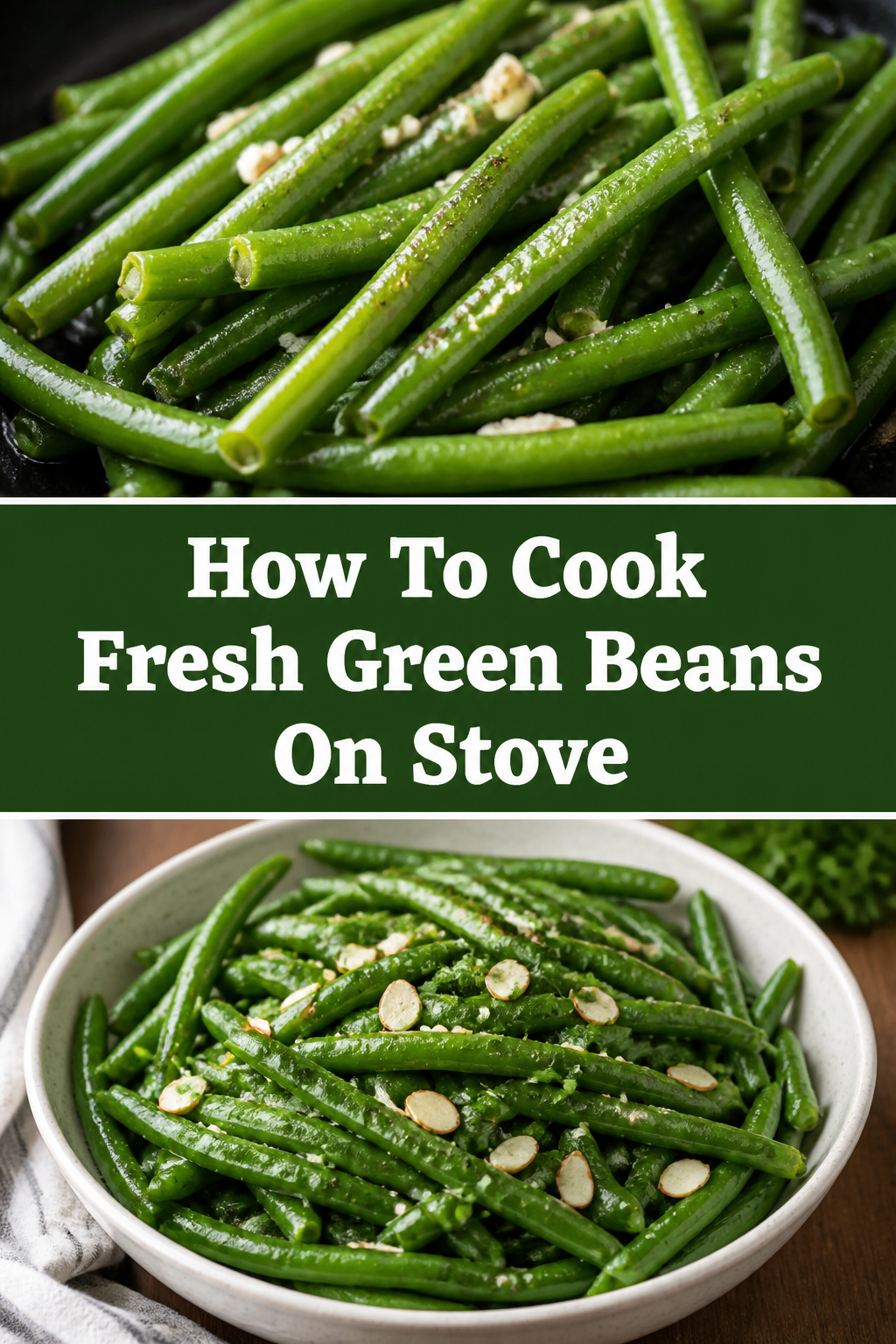
🥦 How To Cook Fresh Green Beans On Stove
There is nothing quite like the snap of a perfectly cooked green bean.
I remember spending summers on my grandmother’s porch, snapping the ends off baskets of beans while the sun set.
After years of professional kitchen work and home cooking, I have found that the stovetop is the absolute best way to achieve that vibrant color and crisp-tender texture.
Quick Overview
This guide will show you how to take raw, garden-fresh beans and turn them into a restaurant-quality side dish in under twenty minutes.
- Time needed: 15 to 20 minutes
- Difficulty: Beginner
- What you’ll need: Fresh green beans, a large skillet or pot, salt, olive oil or butter, and a bowl of ice water.
Step-by-Step Instructions
Step 1: Select and Sort Your Beans
Look for beans that are bright green and feel firm to the touch.
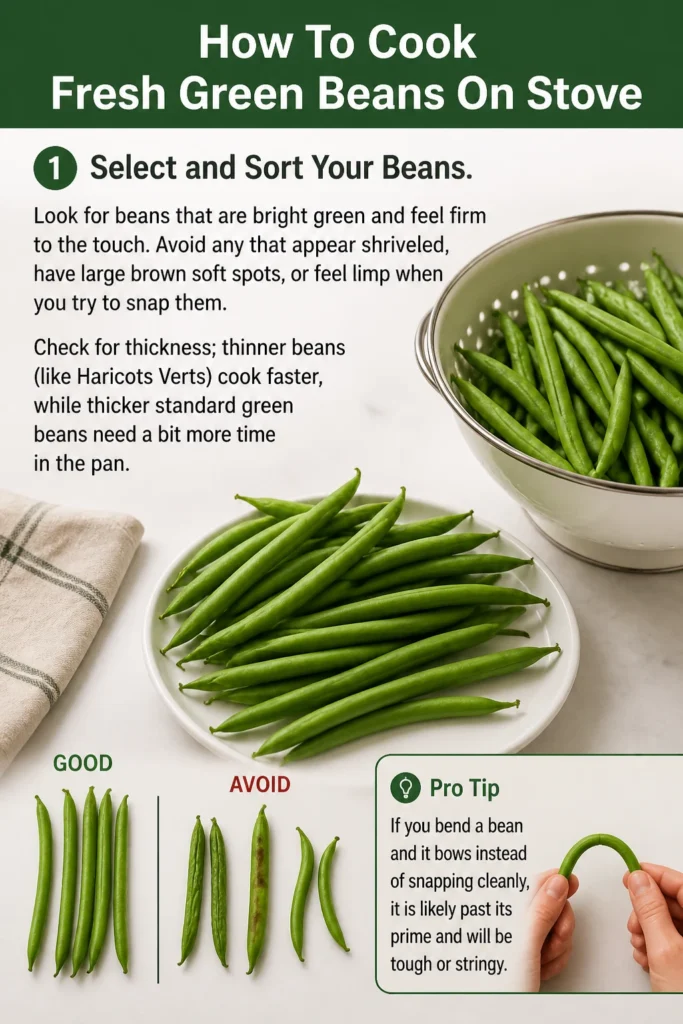
Avoid any that appear shriveled, have large brown soft spots, or feel limp when you try to snap them.
Check for thickness; thinner beans (like Haricots Verts) cook faster, while thicker standard green beans need a bit more time in the pan.
Pro Tip: If you bend a bean and it bows instead of snapping cleanly, it is likely past its prime and will be tough or stringy.
Step 2: Wash and Trim the Ends
Place your beans in a colander and rinse them thoroughly under cold running water to remove any lingering dirt or debris.
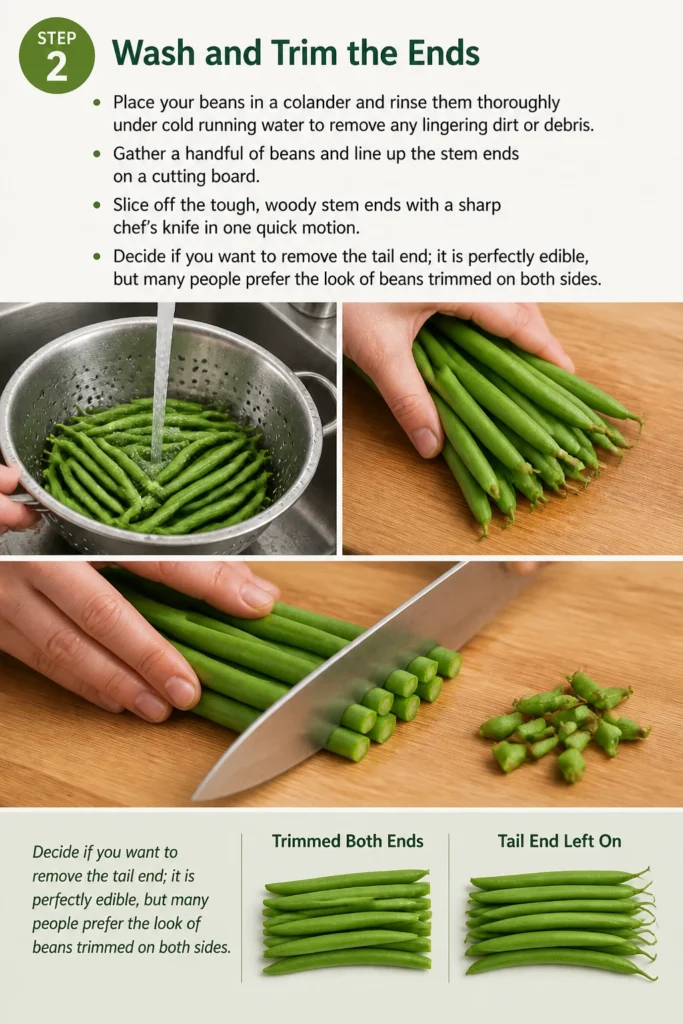
Gather a handful of beans and line up the stem ends on a cutting board.
Slice off the tough, woody stem ends with a sharp chef’s knife in one quick motion.
Decide if you want to remove the “tail” end; it is perfectly edible, but many people prefer the look of beans trimmed on both sides.
Step 3: Prepare a Blanching Pot
Fill a large pot with water and bring it to a rolling boil over high heat.
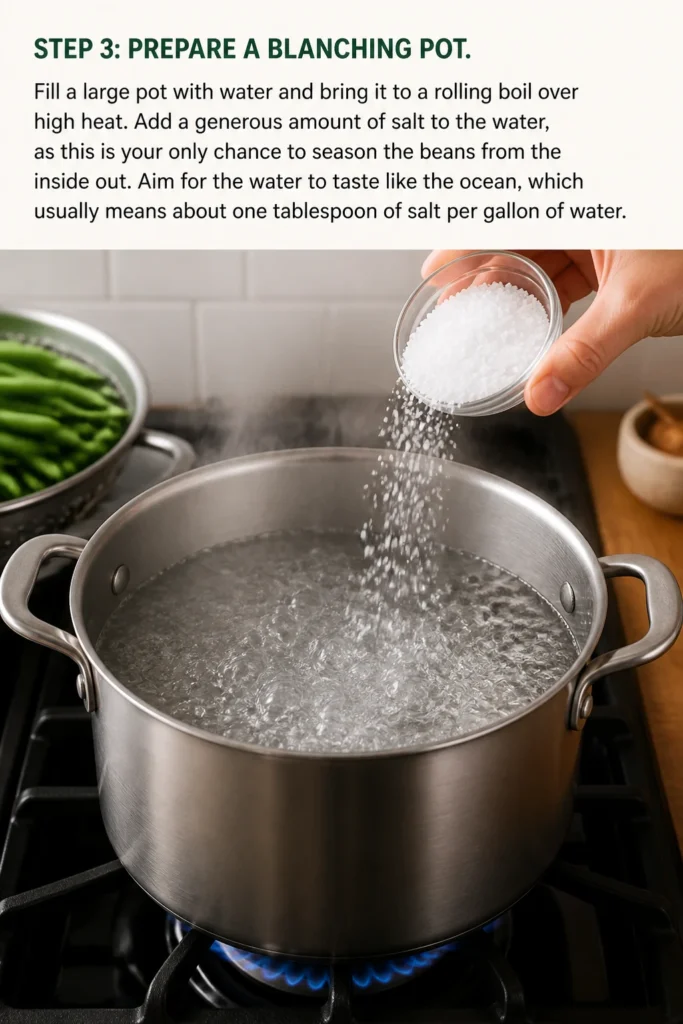
Add a generous amount of salt to the water, as this is your only chance to season the beans from the inside out.
Aim for the water to taste like the ocean, which usually means about one tablespoon of salt per gallon of water.
Step 4: Blanch for Vibrant Color
Drop the trimmed beans into the boiling water and let them cook for just two to three minutes.
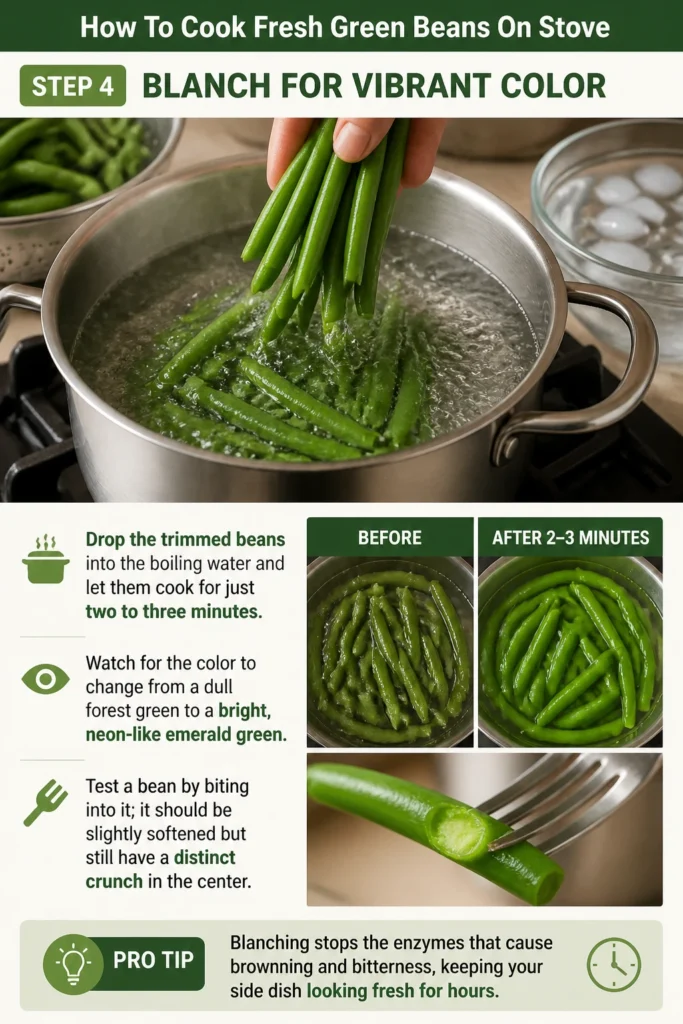
Watch for the color to change from a dull forest green to a bright, neon-like emerald green.
Test a bean by biting into it; it should be slightly softened but still have a distinct “crunch” in the center.
Pro Tip: Blanching stops the enzymes that cause browning and bitterness, keeping your side dish looking fresh for hours.
Step 5: The Ice Bath Shock
Prepare a large bowl filled with cold water and several handfuls of ice cubes while the beans boil.
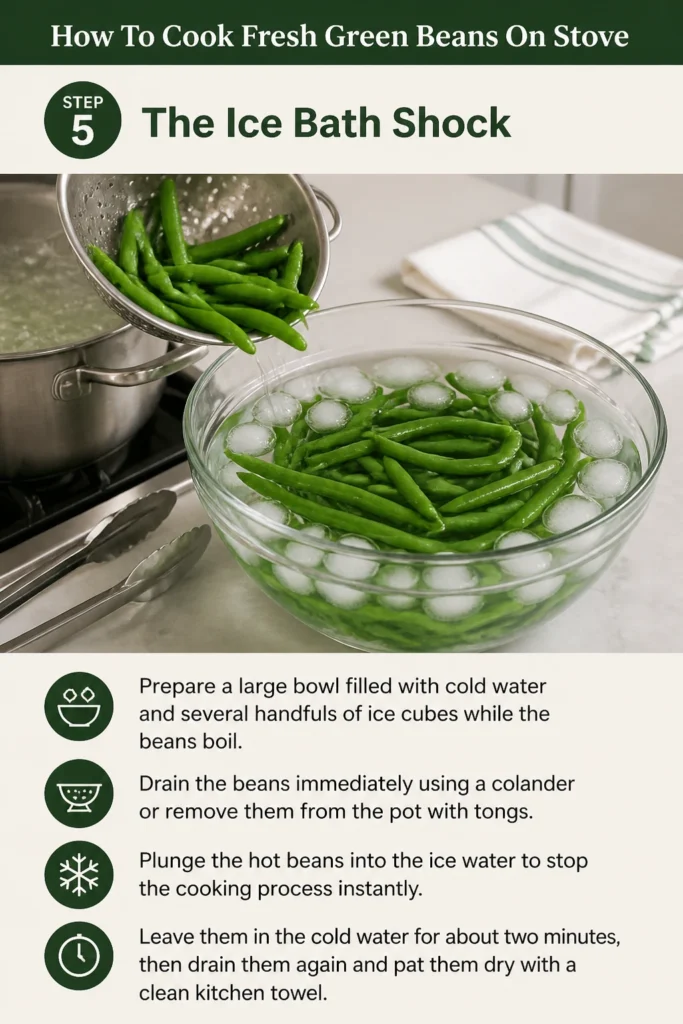
Drain the beans immediately using a colander or remove them from the pot with tongs.
Plunge the hot beans into the ice water to stop the cooking process instantly.
Leave them in the cold water for about two minutes, then drain them again and pat them dry with a clean kitchen towel.
Step 6: Heat the Skillet
Place a wide skillet or frying pan over medium-high heat on your stove.
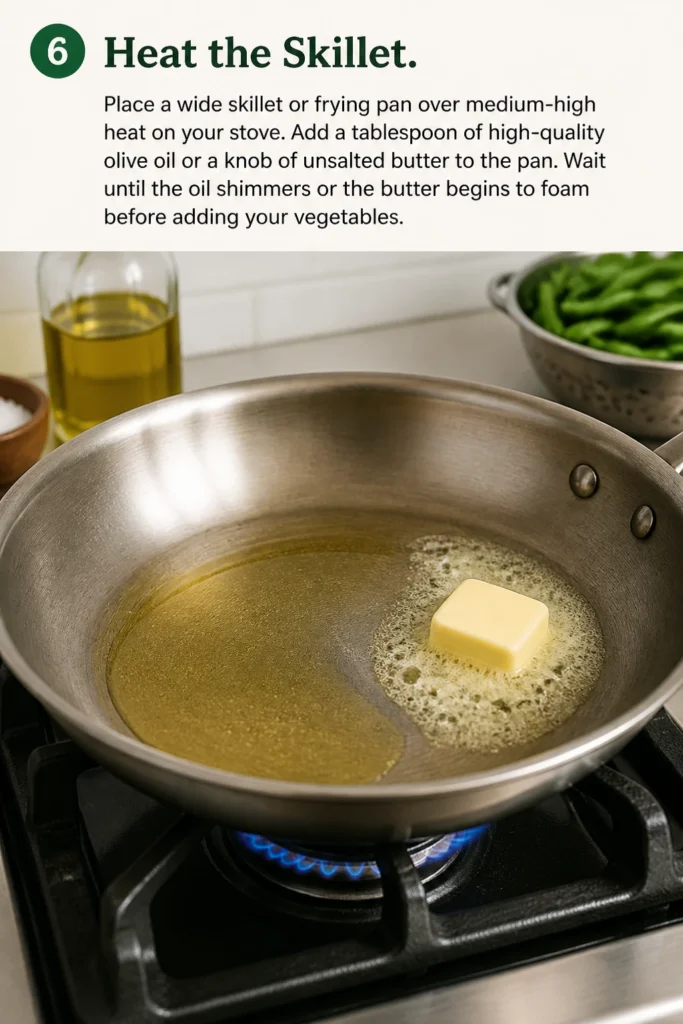
Add a tablespoon of high-quality olive oil or a knob of unsalted butter to the pan.
Wait until the oil shimmers or the butter begins to foam before adding your vegetables.
Step 7: Sauté for Texture
Add the blanched and dried green beans to the hot skillet in a single layer if possible.
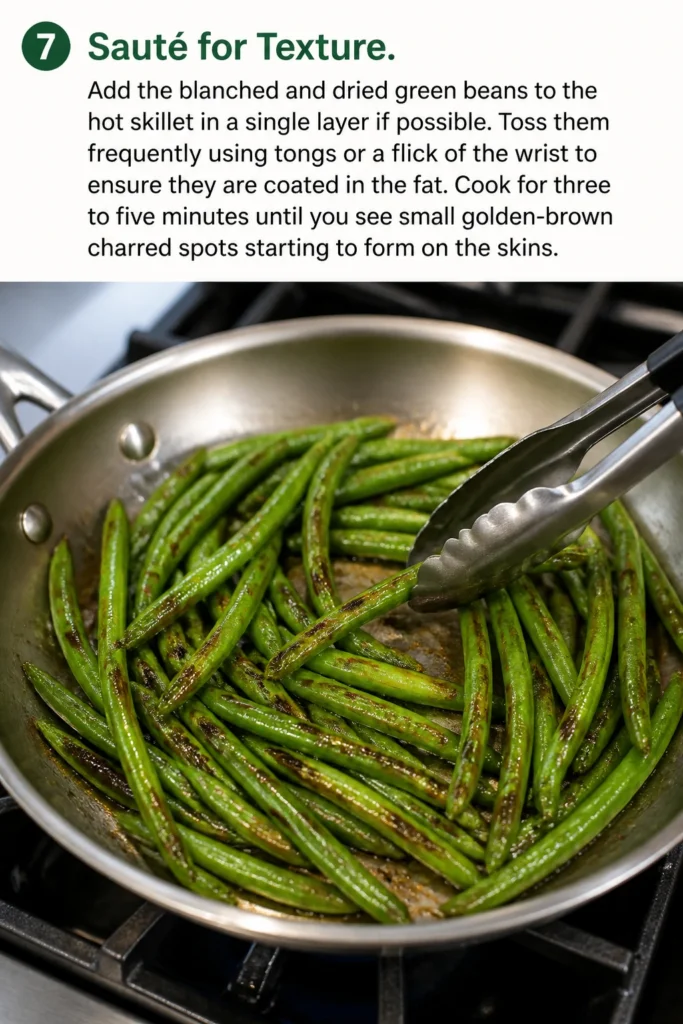
Toss them frequently using tongs or a flick of the wrist to ensure they are coated in the fat.
Cook for three to five minutes until you see small golden-brown charred spots starting to form on the skins.
Step 8: Add Aromatics and Flavor
Lower the heat to medium so you do not burn your delicate seasonings.
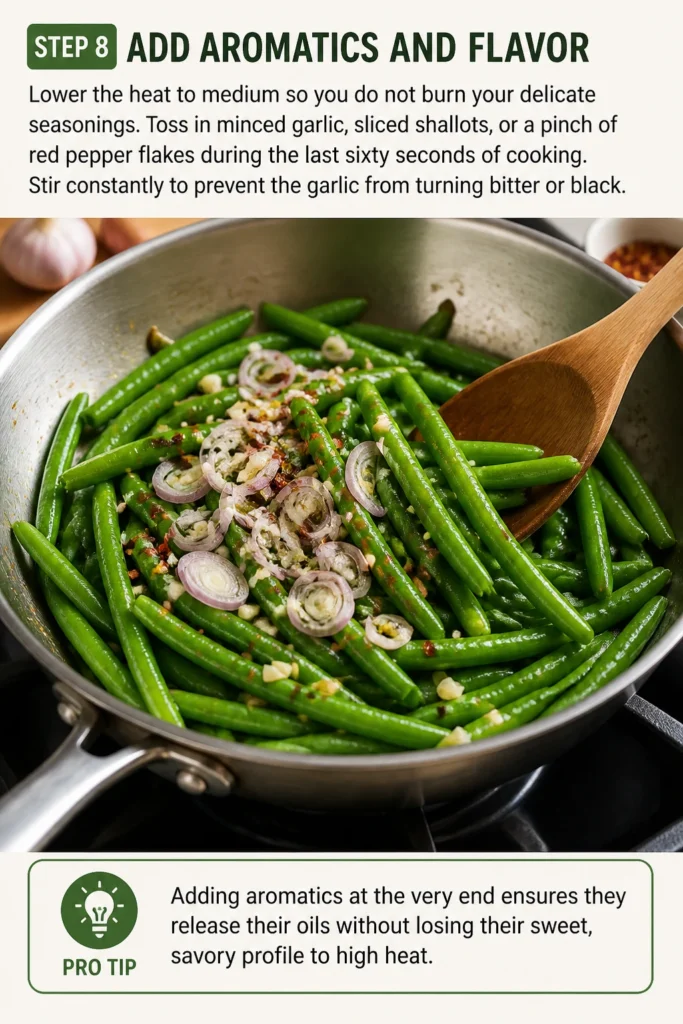
Toss in minced garlic, sliced shallots, or a pinch of red pepper flakes during the last sixty seconds of cooking.
Stir constantly to prevent the garlic from turning bitter or black.
Pro Tip: Adding aromatics at the very end ensures they release their oils without losing their sweet, savory profile to high heat.
Step 9: Final Seasoning and Garnish
Remove the skillet from the heat and sprinkle the beans with a pinch of flaky sea salt and freshly cracked black pepper.
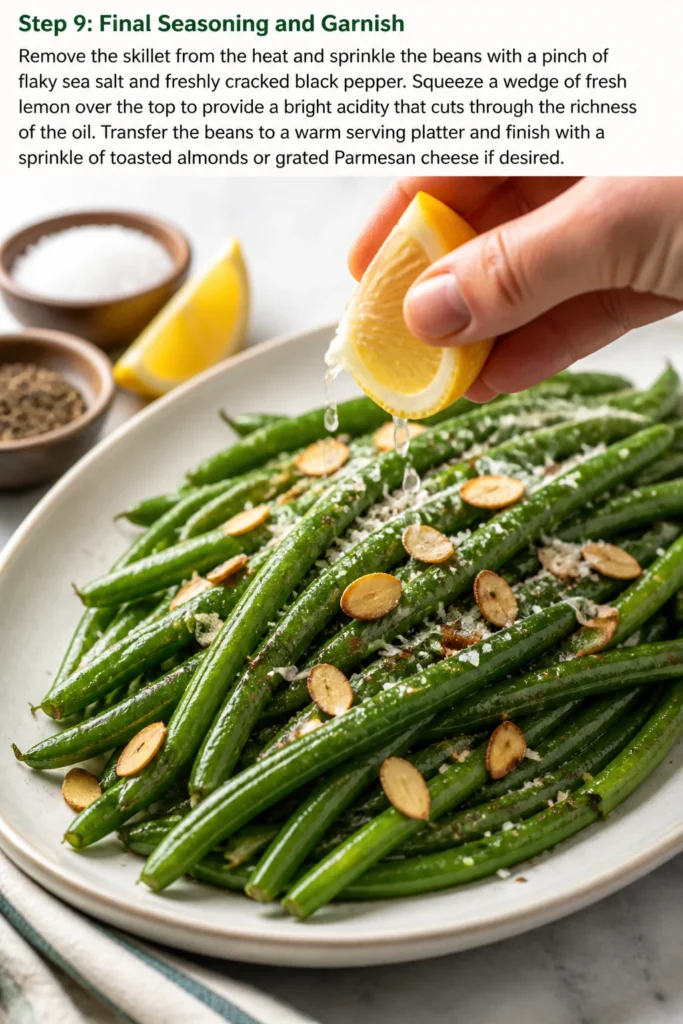
Squeeze a wedge of fresh lemon over the top to provide a bright acidity that cuts through the richness of the oil.
Transfer the beans to a warm serving platter and finish with a sprinkle of toasted almonds or grated Parmesan cheese if desired.
Common Mistakes to Avoid
Skipping the Ice Bath
Many cooks think they can just drain the beans and let them sit on the counter.
Residual heat continues to cook the beans inside, turning them from a beautiful green to a muddy, olive-drab color.
The ice bath is the secret to that “snap” you find in high-end restaurant vegetables.
Crowding the Sauté Pan
If you put too many beans in a small skillet at once, they will steam instead of sear.
Steam creates a soft, limp texture rather than the crispy, blistered skin that makes stovetop beans delicious.
Use the largest pan you have or cook the beans in two separate batches to give them enough space.
Using Wet Beans in Hot Oil
Water and hot oil do not mix well and can cause dangerous splattering.
Damp beans will also prevent the Maillard reaction, which is the browning process that creates deep flavor.
Always take the extra thirty seconds to roll your beans in a dry towel after the ice bath.
Under-salting the Boiling Water
Green beans have a thick skin that is difficult for salt to penetrate once they are finished cooking.
If the water isn’t salty enough, the beans will taste bland even if you cover them in salt at the table.
Think of the boiling stage as your primary seasoning window.
Troubleshooting
The Beans are Too Tough or Squeaky
This usually means the beans were undercooked during the blanching phase.
If you notice this while they are in the skillet, add two tablespoons of water or chicken broth to the pan.
Cover the pan with a lid for sixty seconds to create a quick steam chamber that will soften the fibers.
The Garlic Burned and Smells Bitter
Garlic cooks extremely fast and can go from perfect to ruined in ten seconds.
If your garlic turns dark brown or black, it is best to wipe the pan clean and start the sauté step over.
The bitterness from burnt garlic will permeate the entire batch of beans and cannot be masked.
The Beans Lost Their Bright Green Color
Color loss usually happens because of acid being added too early or overcooking.
Wait until the very last second to add lemon juice or vinegar, as acid reacts with chlorophyll and turns it brown.
Ensure your ice bath is actually icy; lukewarm water won’t stop the cooking process fast enough.
Key Takeaways
- Always trim the stem ends of the beans for a better eating experience.
- Blanch the beans in heavily salted water for exactly two to three minutes.
- Use an ice bath to lock in the vibrant green color and stop the cooking.
- Dry the beans thoroughly before they hit the hot oil in your skillet.
- Add garlic and delicate herbs only at the very end to prevent burning.
- Finish with a touch of acid, like lemon juice, to make the flavors pop.
Frequently Asked Questions
Can I use this method for frozen green beans?
You can, but you should skip the blanching and ice bath steps entirely.
Frozen beans are already blanched before they are packaged, so you can put them directly into a hot skillet from the bag.
Keep in mind that frozen beans will release more water, so you may need to cook them slightly longer to get a sear.
How long do fresh green beans stay good in the fridge?
Fresh beans generally last about five to seven days when stored properly in a breathable bag.
Keep them in the crisper drawer of your refrigerator to maintain their moisture levels.
If they start to feel slimy or show visible mold, they should be discarded immediately.
Do I have to remove the strings from the beans?
Most modern varieties of green beans are “stringless” and do not have the tough fiber running down the side.
If you are using heirloom varieties or older garden beans, you might need to pull the string away after snapping the tip.
For standard grocery store beans, simply trimming the ends is usually sufficient.
Can I cook these ahead of time for a dinner party?
Yes, you can blanch and shock the beans up to twenty-four hours in advance.
Store the cold, dry beans in a sealed container in the refrigerator.
When you are ready to serve, simply perform the sauté step, which will take less than five minutes.
Our Top Recommended Finds
- 12-Inch Cast Iron Skillet: This provides the most even heat distribution and creates the best charred texture on the beans.
- Stainless Steel Mesh Spider: This tool makes it incredibly easy to move beans from boiling water to an ice bath without making a mess.
- High-Quality Sea Salt Flakes: Using a finishing salt adds a delightful crunch and a clean salty flavor that table salt cannot match.
Master The Art Of The Perfect Side Dish
Now that you know the secrets to perfect stovetop green beans, you can experiment with different flavor profiles.
Try adding toasted pine nuts and balsamic glaze for an Italian twist, or ginger and soy sauce for an Asian-inspired flavor.
The beauty of this method lies in its versatility and the way it respects the natural flavor of the vegetable.
Pick up a pound of fresh beans from your local market today and put these steps into practice for your next meal.