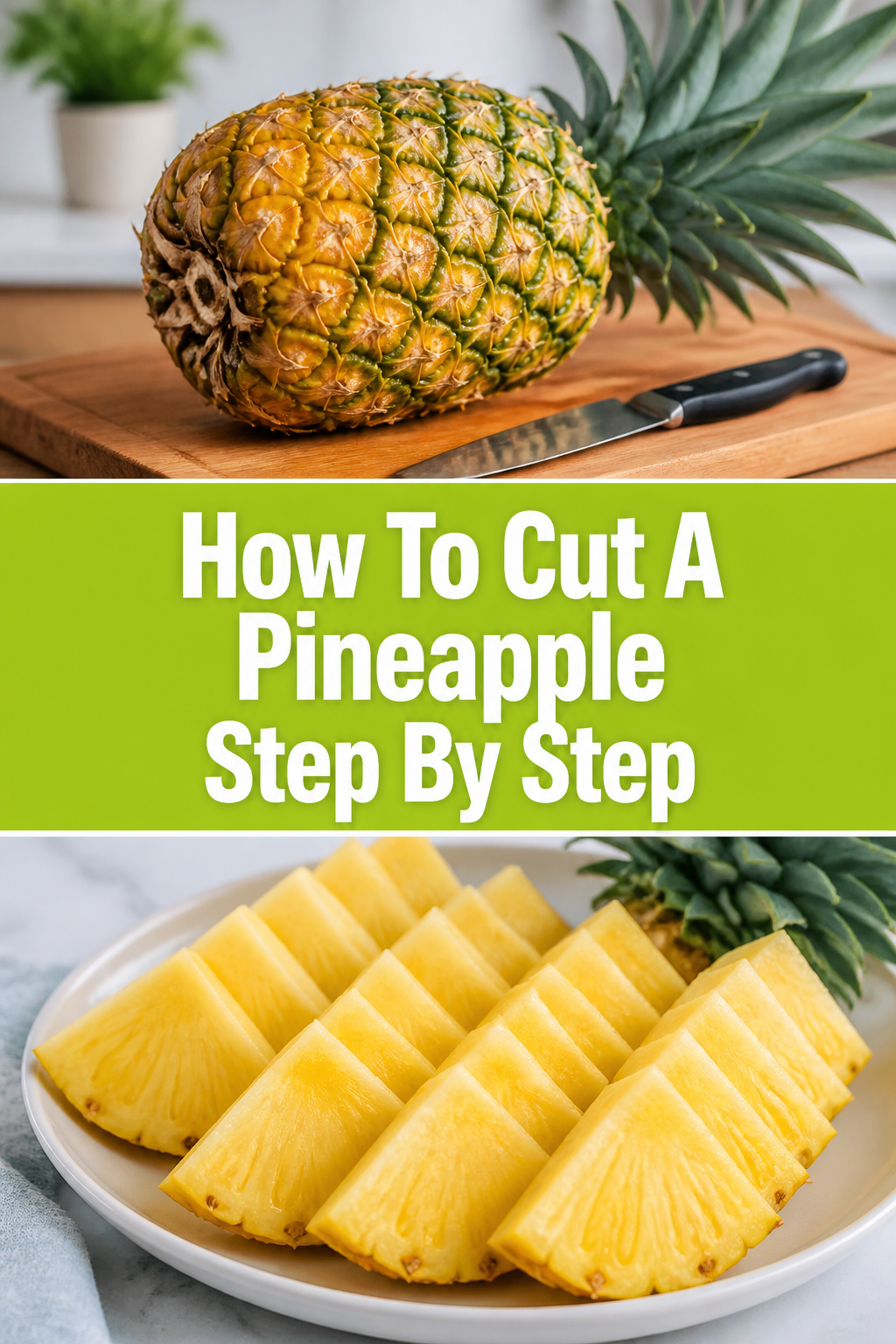
🍍 How To Cut A Pineapple Step By Step
Learning to cut a fresh pineapple might seem daunting at first glance. Its spiky exterior and tough rind often intimidate home cooks.
However, I’ve personally sliced countless pineapples over the years, perfecting a method that’s both efficient and safe. This guide shares my tested approach, ensuring you get perfectly sweet, juicy pieces every time.
Quick Overview
This guide will walk you through transforming a whole pineapple into ready-to-eat pieces. You’ll learn to remove the tough skin, eyes, and core, leaving you with delicious fruit.
- Time needed: 10-15 minutes
- Difficulty: Beginner
- What you’ll need: A sharp chef’s knife, a cutting board, and a whole pineapple.
Step-by-Step Instructions
Step 1: Choose the Right Pineapple
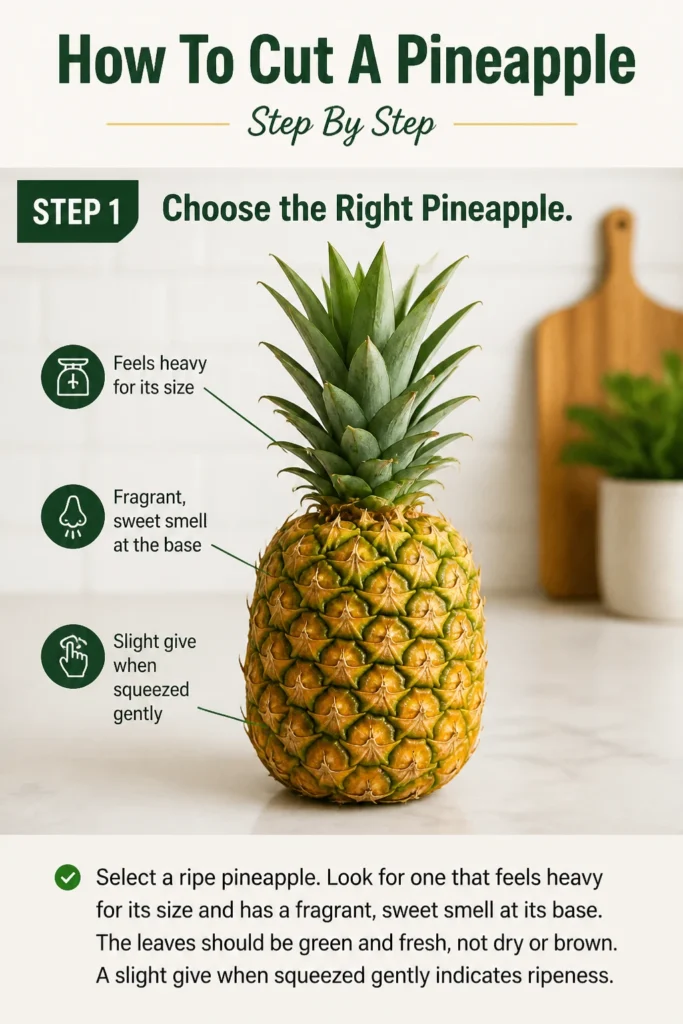
Select a ripe pineapple. Look for one that feels heavy for its size and has a fragrant, sweet smell at its base. The leaves should be green and fresh, not dry or brown. A slight give when squeezed gently indicates ripeness.
Step 2: Prepare Your Workstation
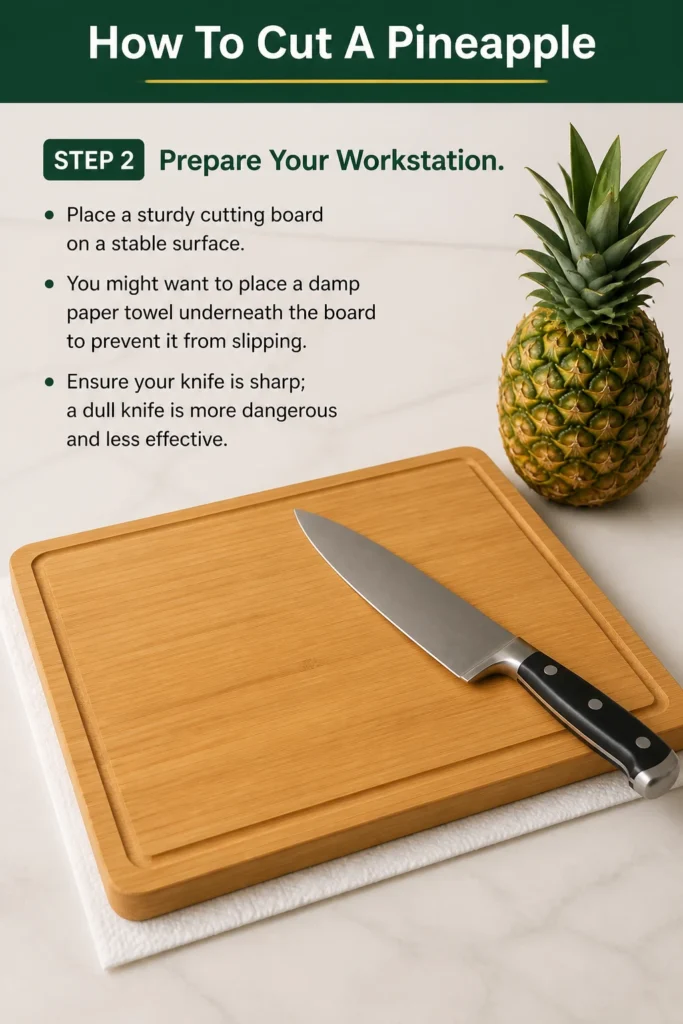
Place a sturdy cutting board on a stable surface. You might want to place a damp paper towel underneath the board to prevent it from slipping. Ensure your knife is sharp; a dull knife is more dangerous and less effective.
Step 3: Remove the Top and Bottom
Lay the pineapple on its side. Using your sharp chef’s knife, carefully slice off the top crown, about half an inch below the green leaves.
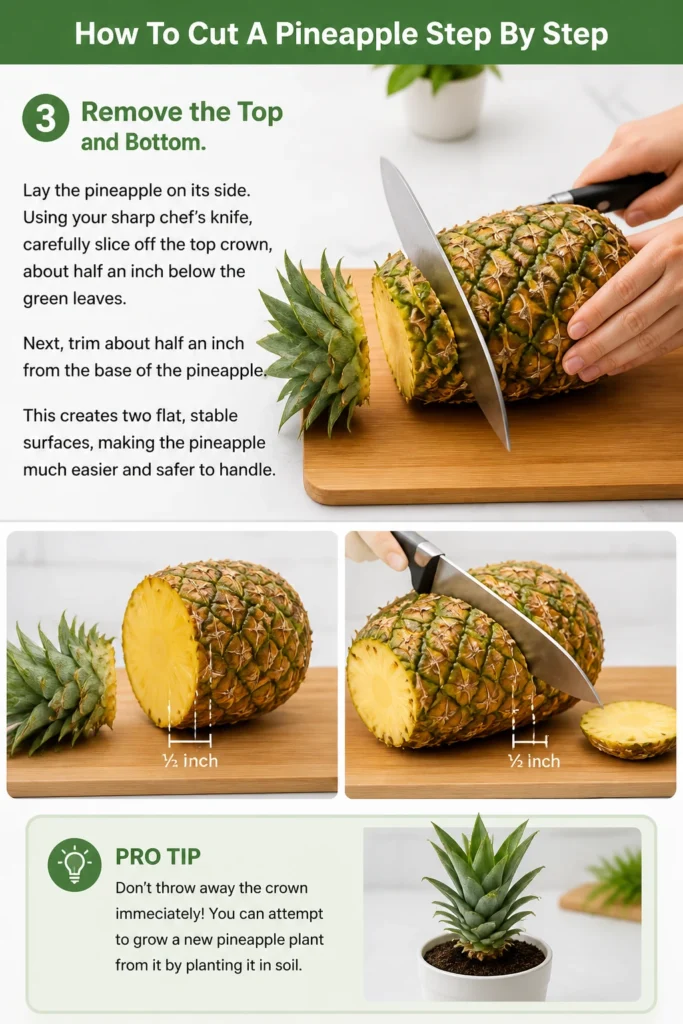
Next, trim about half an inch from the base of the pineapple. This creates two flat, stable surfaces, making the pineapple much easier and safer to handle.
Pro Tip: Don’t throw away the crown immediately! You can attempt to grow a new pineapple plant from it by planting it in soil.
Step 4: Stand and Peel the Rind
Stand the pineapple upright on one of its newly flattened ends. Carefully begin to slice off the thick, spiky rind in strips.
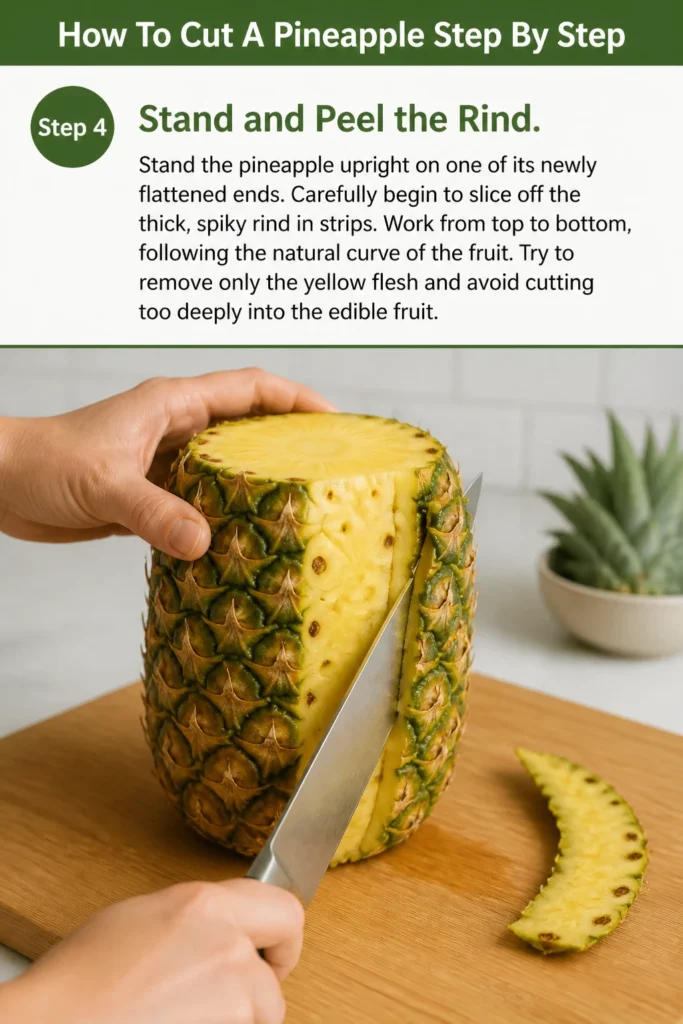
Work from top to bottom, following the natural curve of the fruit. Try to remove only the yellow flesh and avoid cutting too deeply into the edible fruit.
Step 5: Remove the “Eyes”
After peeling, you’ll notice diagonal rows of brownish “eyes” embedded in the flesh. These are fibrous and unpleasant to eat.
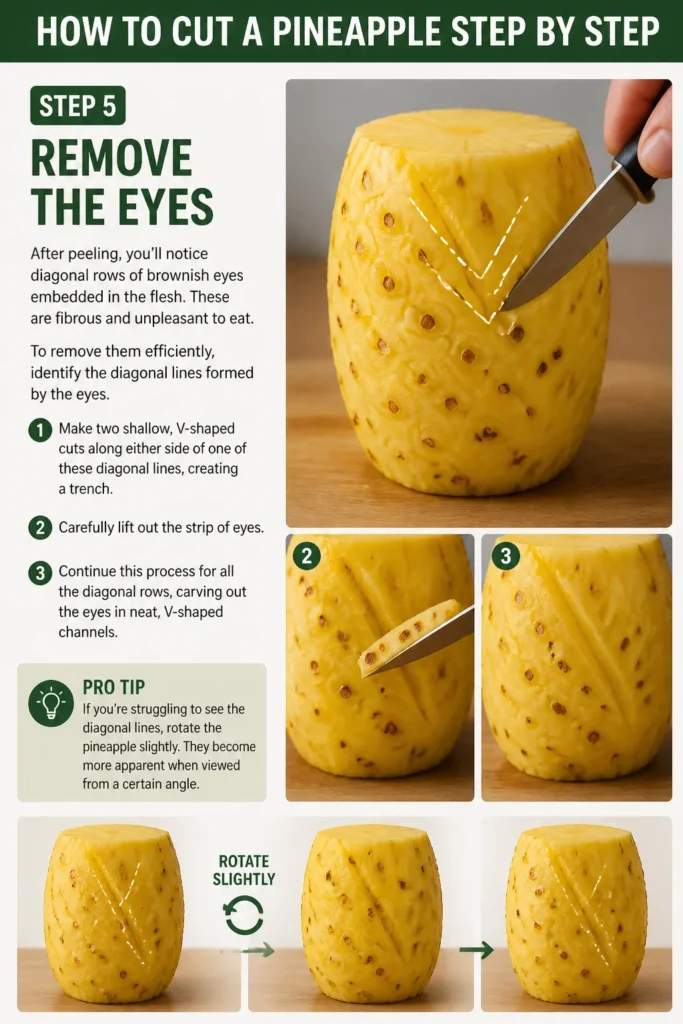
To remove them efficiently, identify the diagonal lines formed by the eyes. Make two shallow, V-shaped cuts along either side of one of these diagonal lines, creating a trench.
Carefully lift out the strip of eyes. Continue this process for all the diagonal rows, carving out the eyes in neat, V-shaped channels. This method minimizes fruit waste compared to peeling deeper.
Pro Tip: If you’re struggling to see the diagonal lines, rotate the pineapple slightly. They become more apparent when viewed from a certain angle.
Step 6: Core the Pineapple
Once the rind and eyes are removed, you’ll be left with a cylinder of golden pineapple flesh. The very center of this cylinder is the fibrous core, which is tough and not enjoyable to eat.
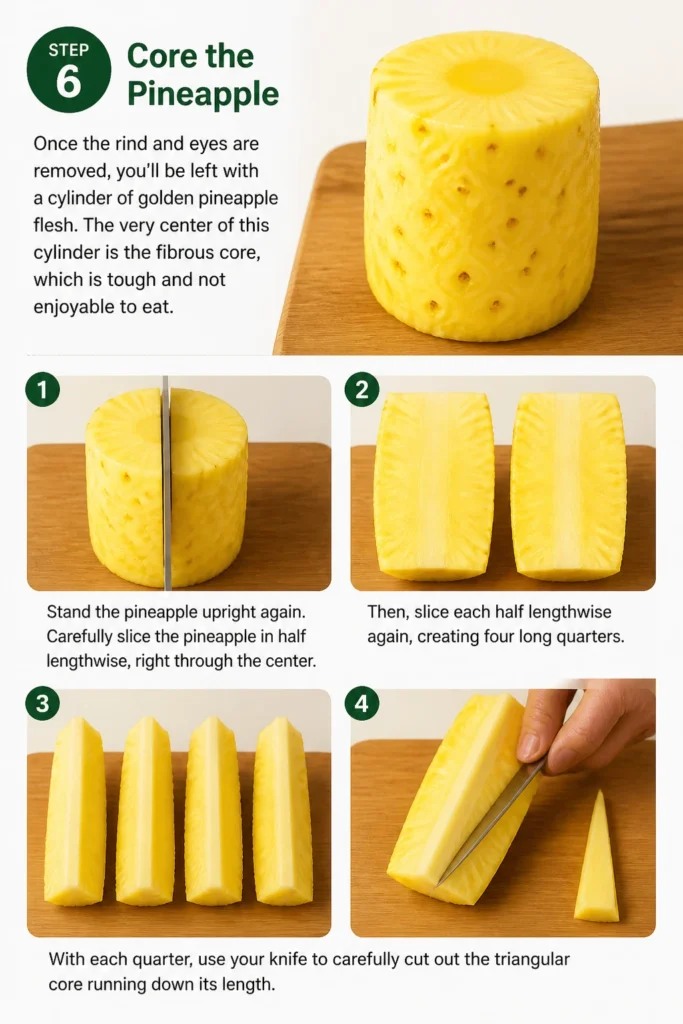
Stand the pineapple upright again. Carefully slice the pineapple in half lengthwise, right through the center.
Then, slice each half lengthwise again, creating four long quarters. With each quarter, use your knife to carefully cut out the triangular core running down its length.
Step 7: Cut into Desired Pieces
Now that the pineapple is peeled and cored, you can cut it into your preferred shape. Lay the cored quarters flat on the cutting board.
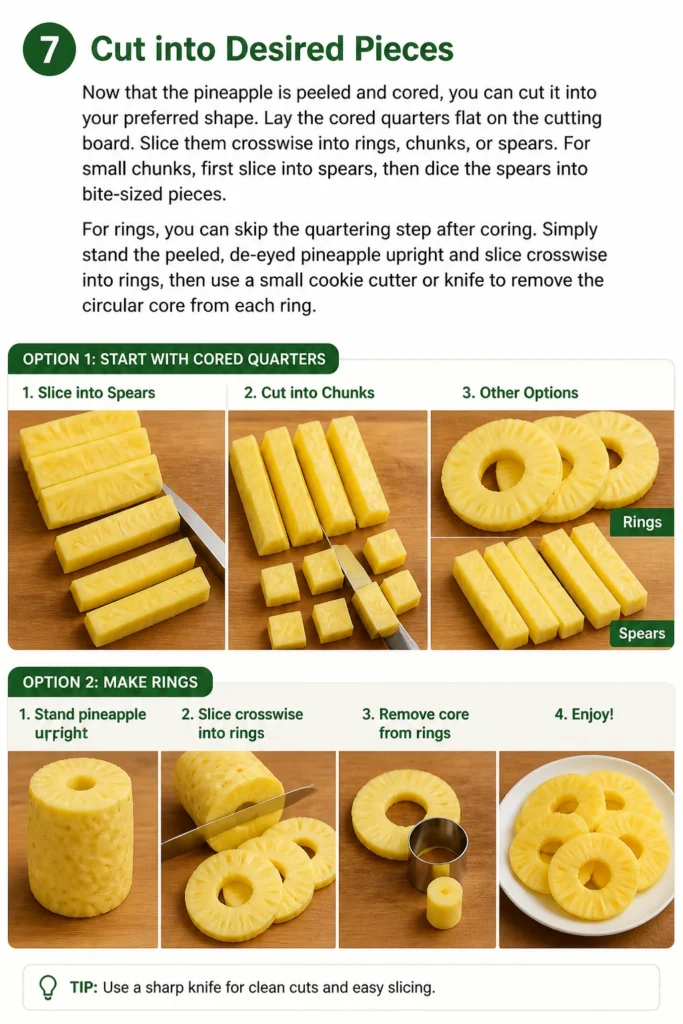
Slice them crosswise into rings, chunks, or spears. For small chunks, first slice into spears, then dice the spears into bite-sized pieces.
For rings, you can skip the quartering step after coring. Simply stand the peeled, de-eyed pineapple upright and slice crosswise into rings, then use a small cookie cutter or knife to remove the circular core from each ring.
Step 8: Store Your Pineapple
If you’re not eating the pineapple immediately, transfer the cut pieces into an airtight container. Store them in the refrigerator.
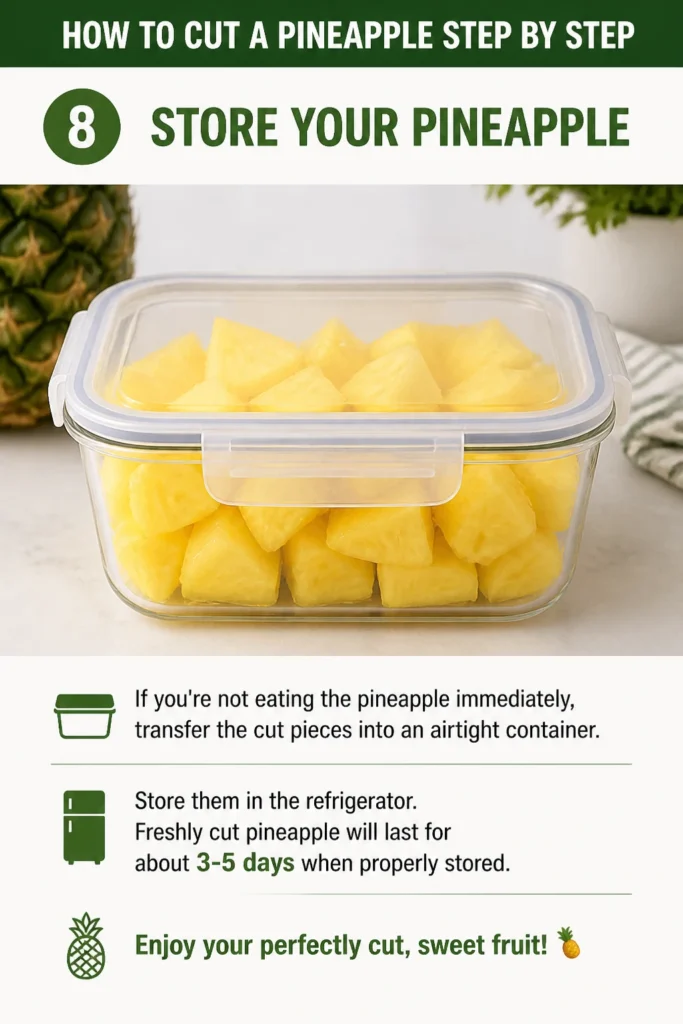
Freshly cut pineapple will last for about 3-5 days when properly stored. Enjoy your perfectly cut, sweet fruit!
Common Mistakes to Avoid
Not Using a Sharp Knife
Many people attempt to cut a pineapple with a dull knife, which can be incredibly dangerous. A dull blade requires more force, increasing the risk of it slipping and causing injury. Always ensure your chef’s knife is sharpened before starting this task.
Cutting Too Much Flesh
When peeling the rind, it’s common to cut too deeply, removing a significant amount of the edible fruit along with the skin. Try to follow the natural curve of the pineapple and take off only the necessary outer layer. The V-cut method for eyes helps minimize waste.
Ignoring the Core
Some might be tempted to leave the core in, especially if cutting into large chunks. The core is very fibrous and not pleasant to chew. While it’s edible, removing it significantly improves the eating experience. Always take the time to properly core the fruit.
Improper Storage
Leaving cut pineapple exposed to air at room temperature will cause it to spoil quickly and lose its freshness. Always store cut pineapple in an airtight container in the refrigerator to maintain its quality and extend its shelf life. This keeps it juicy and prevents bacterial growth.
Troubleshooting
Pineapple Feels Too Hard to Cut
If your pineapple feels unusually hard to slice, your knife might not be sharp enough. Pause and sharpen your knife. Alternatively, the pineapple might be underripe, making the flesh denser and tougher. Let it ripen a few more days on the counter.
Struggling with Slippage on the Cutting Board
A pineapple’s juicy nature can make your cutting board slippery. To prevent this, place a damp paper towel or a non-slip mat underneath your cutting board. This provides friction and keeps the board stable, enhancing safety.
Eyes Are Difficult to Remove Neatly
Sometimes, the eyes are deeply embedded or not perfectly aligned, making the V-cut challenging. Don’t worry about perfect trenches. Focus on removing the fibrous bits. If a few small eyes remain, you can carefully pick them out with the tip of your knife.
Pineapple Tastes Sour or Bland
A sour or bland taste indicates an underripe pineapple. Unfortunately, pineapples do not ripen much after being picked. Ensure you select a ripe pineapple from the start by checking for a sweet aroma and slight give at the base. There’s no way to sweeten it significantly once cut.
Key Takeaways
- Always begin with a ripe pineapple, identified by its sweet smell and slight give.
- Use a very sharp chef’s knife for safety and efficiency during the entire process.
- Create flat top and bottom surfaces for stability before peeling the rind.
- Employ the V-cut method to remove the eyes, minimizing fruit waste.
- Always remove the fibrous core for a better eating experience.
- Store cut pineapple in an airtight container in the refrigerator for optimal freshness.
Frequently Asked Questions
Can I use a pineapple corer instead of a knife?
Yes, a pineapple corer is a very effective tool for quickly removing the core and slicing the fruit into rings. It’s an excellent option if you frequently cut pineapples and prefer uniform rings. However, you’ll still need a knife to remove the top and bottom, and to trim the outer rind.
How can I tell if a pineapple is ripe?
A ripe pineapple will have a strong, sweet aroma at its base, not just the top. It should feel heavy for its size and have a slight give when gently squeezed. The leaves should appear fresh and green. Avoid pineapples with soft spots, mold, or dry, brittle leaves.
Is the pineapple core edible?
While the pineapple core is technically edible, it is very tough, fibrous, and less sweet than the surrounding flesh. Most people prefer to remove it for a more enjoyable eating experience. Some juice enthusiasts might blend the core for its nutritional value, but it’s rarely eaten raw.
How long does fresh-cut pineapple last?
Freshly cut pineapple, when stored properly in an airtight container in the refrigerator, will typically last for 3 to 5 days. After this period, it may start to ferment or develop an off-flavor and texture. For best taste, consume it within a few days of cutting.
Our Top Recommended Finds
- High-Quality Chef’s Knife: A sharp, well-balanced chef’s knife makes all the difference for safe and efficient cutting. It handles everything from the tough rind to precise coring.
- Non-Slip Cutting Board: Essential for preventing accidents, a non-slip board keeps your pineapple stable as you work, especially with juicy fruit.
- Pineapple Corer Tool: For those who frequently enjoy pineapple, a dedicated corer can streamline the process, creating perfect rings with ease.
Embrace the Sweetness Today
Cutting a pineapple doesn’t have to be a chore; it can be a simple, rewarding process. With these steps, you’re now equipped to tackle any pineapple that comes your way, transforming it into a delicious snack or ingredient.
Don’t let the spiky exterior deter you from enjoying this tropical delight. Pick up a pineapple on your next grocery run and put these skills to the test.
Soon, you’ll be effortlessly slicing and dicing, ready to add fresh pineapple to smoothies, salads, or simply enjoy it on its own. Your taste buds will thank you!