🍰 How To Make Boxed Cake Taste Like Bakery
I remember the first time I served a “doctored” box cake at a high-end dinner party.
Nobody believed me when I told them it didn’t come from a boutique pastry shop down the street.
After years of testing professional techniques, I found that small swaps make the biggest difference in your kitchen.

Quick Overview
Transforming a standard box mix is surprisingly simple once you understand the science of baking. You are essentially taking a pre-measured base and adding the fats and proteins that manufacturers leave out to keep the product shelf-stable.
- Time needed: 45 to 60 minutes
- Difficulty: Beginner
- What you’ll need: Boxed cake mix, whole milk, unsalted butter, extra eggs, sour cream, and high-quality extracts.
Step-by-Step Instructions
Step 1: Upgrade the Liquid Base
Replace the water requested on the back of the box with an equal amount of whole milk or buttermilk.
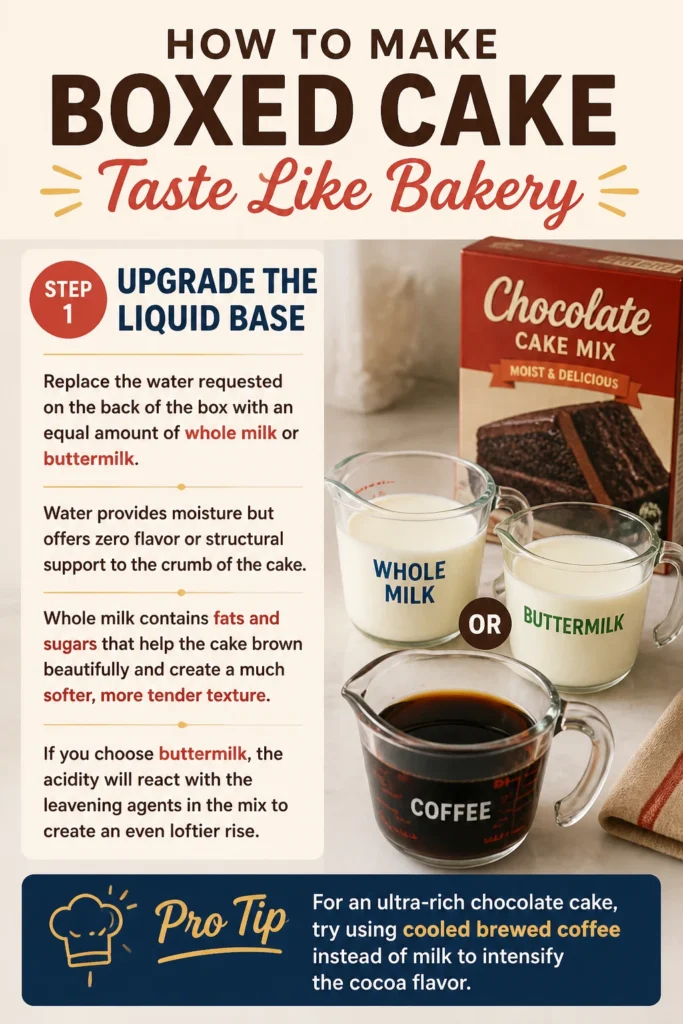
Water provides moisture but offers zero flavor or structural support to the crumb of the cake.
Whole milk contains fats and sugars that help the cake brown beautifully and create a much softer, more tender texture.
If you choose buttermilk, the acidity will react with the leavening agents in the mix to create an even loftier rise.
Pro Tip: For an ultra-rich chocolate cake, try using cooled brewed coffee instead of milk to intensify the cocoa flavor.
Step 2: Swap the Oil for Melted Butter
Substitute the vegetable oil with melted unsalted butter, and then double the amount.
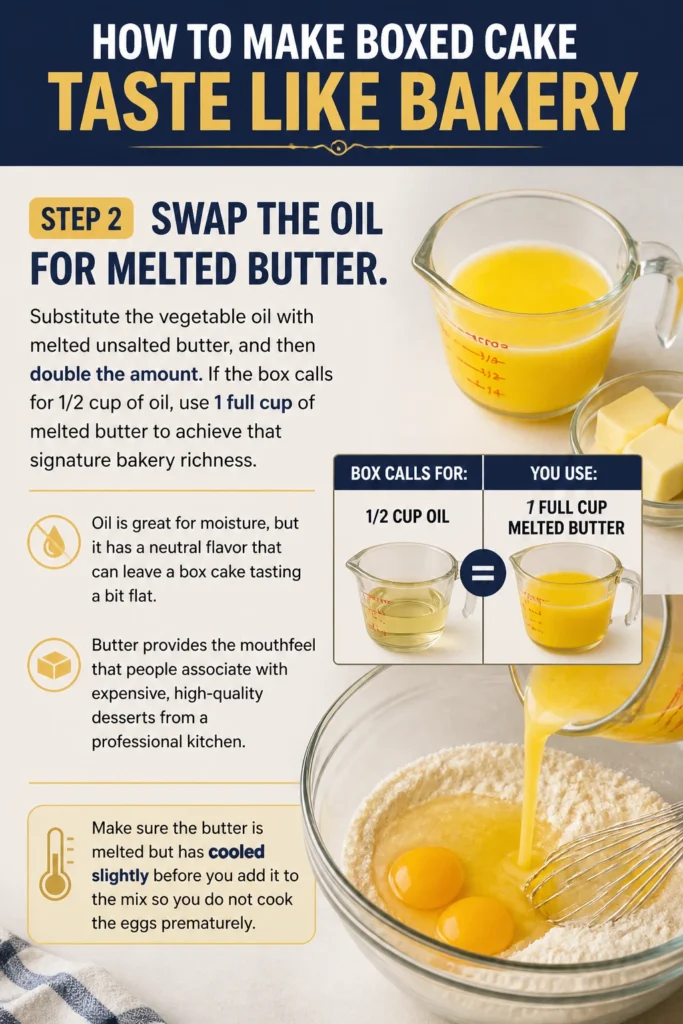
If the box calls for 1/2 cup of oil, use 1 full cup of melted butter to achieve that signature bakery richness.
Oil is great for moisture, but it has a neutral flavor that can leave a box cake tasting a bit flat.
Butter provides the “mouthfeel” that people associate with expensive, high-quality desserts from a professional kitchen.
Make sure the butter is melted but has cooled slightly before you add it to the mix so you do not cook the eggs prematurely.
Step 3: Increase the Egg Count
Add one or two extra eggs than what the instructions specify to improve the cake’s structure.
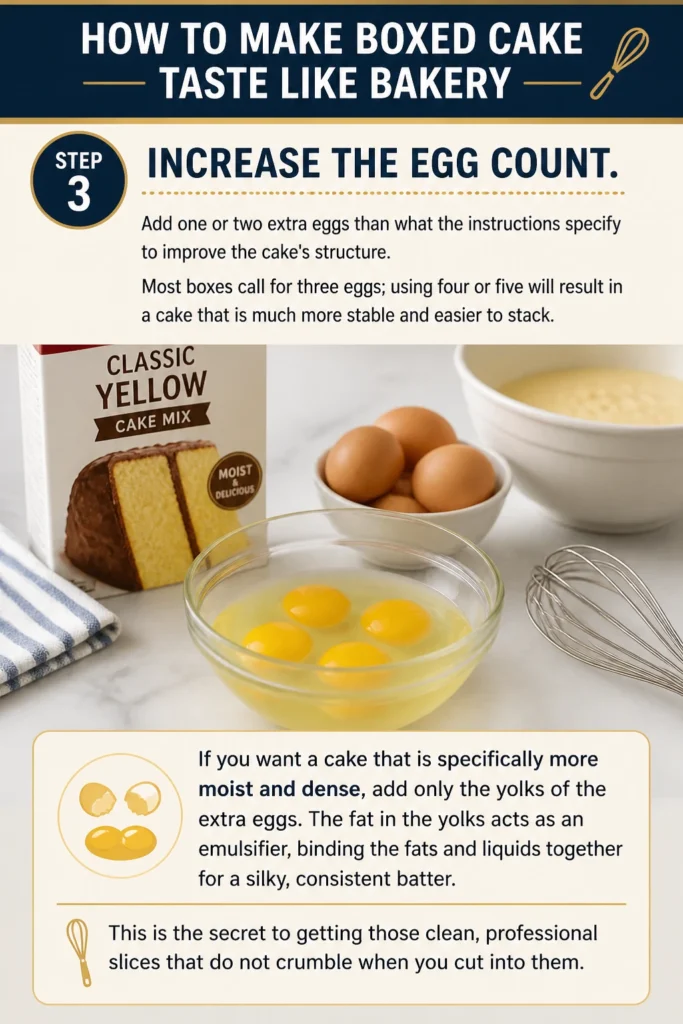
Most boxes call for three eggs; using four or five will result in a cake that is much more stable and easier to stack.
If you want a cake that is specifically more moist and dense, add only the yolks of the extra eggs.
The fat in the yolks acts as an emulsifier, binding the fats and liquids together for a silky, consistent batter.
This is the secret to getting those clean, professional slices that do not crumble when you cut into them.
Step 4: Add a Dollop of Richness
Incorporate a half-cup of sour cream or full-fat Greek yogurt directly into the wet ingredients.
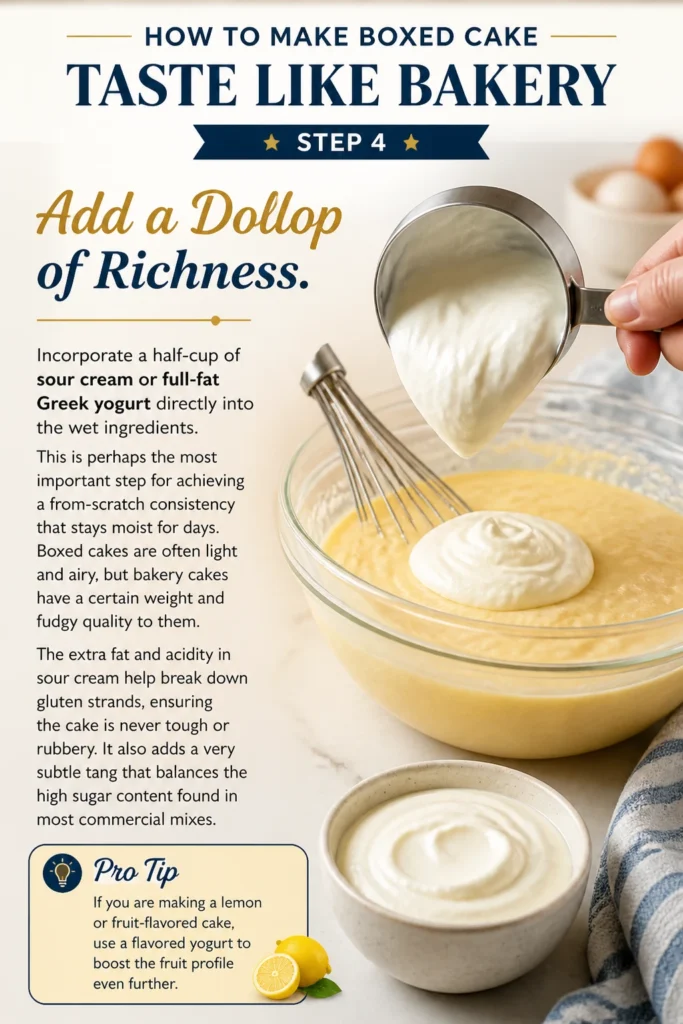
This is perhaps the most important step for achieving a “from-scratch” consistency that stays moist for days.
Boxed cakes are often light and airy, but bakery cakes have a certain weight and “fudgy” quality to them.
The extra fat and acidity in sour cream help break down gluten strands, ensuring the cake is never tough or rubbery.
It also adds a very subtle tang that balances the high sugar content found in most commercial mixes.
Pro Tip: If you are making a lemon or fruit-flavored cake, use a flavored yogurt to boost the fruit profile even further.
Step 5: Amplify the Flavor Profile
Stir in a teaspoon of high-quality vanilla extract or vanilla bean paste, even if the mix is already flavored.
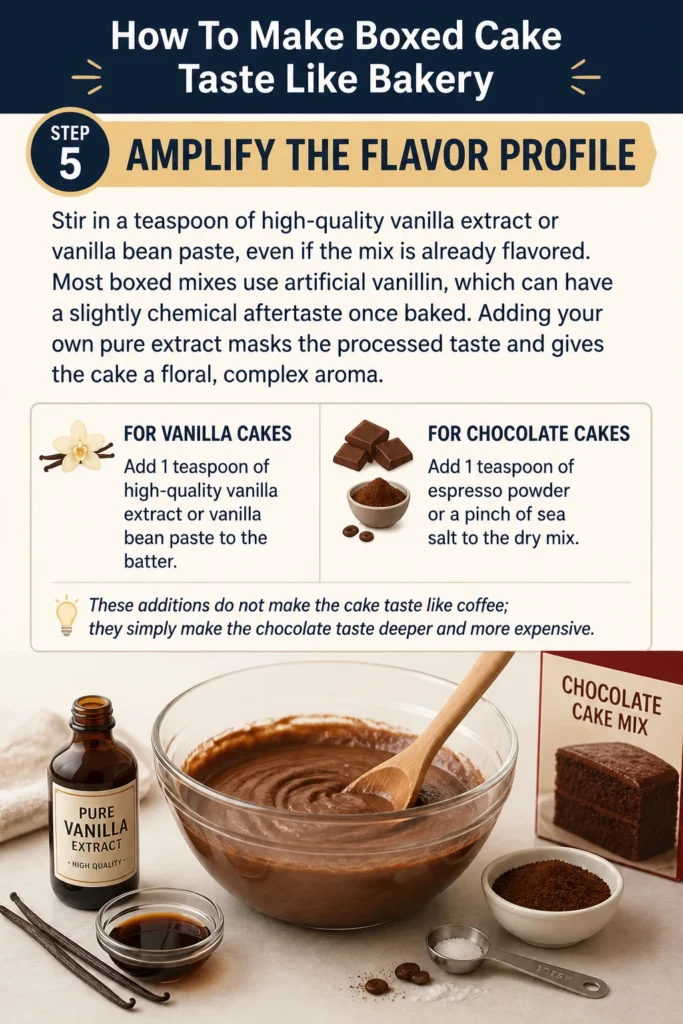
Most boxed mixes use artificial vanillin, which can have a slightly chemical aftertaste once baked.
Adding your own pure extract masks the “processed” taste and gives the cake a floral, complex aroma.
For chocolate cakes, add a teaspoon of espresso powder or a pinch of sea salt to the dry mix.
These additions do not make the cake taste like coffee; they simply make the chocolate taste deeper and more expensive.
Step 6: Sift for Success
Pass the dry cake mix through a fine-mesh sieve before you add any of your wet ingredients.
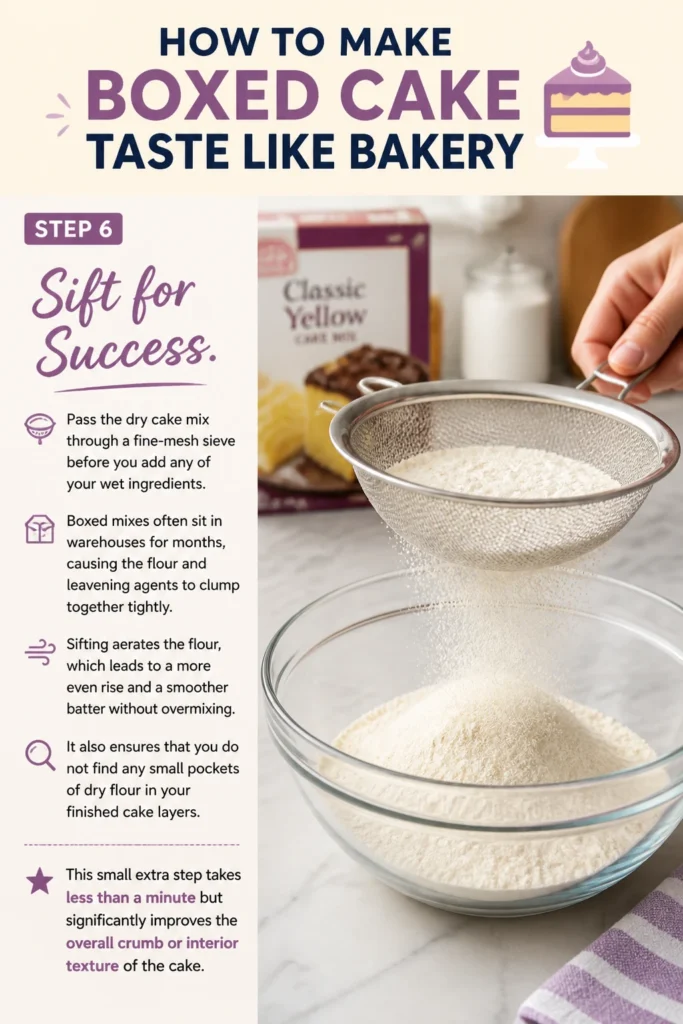
Boxed mixes often sit in warehouses for months, causing the flour and leavening agents to clump together tightly.
Sifting aerates the flour, which leads to a more even rise and a smoother batter without overmixing.
It also ensures that you do not find any small pockets of dry flour in your finished cake layers.
This small extra step takes less than a minute but significantly improves the overall “crumb” or interior texture of the cake.
Step 7: Master the Bake Time
Reduce your oven temperature by 25 degrees Fahrenheit and bake for a slightly longer period.
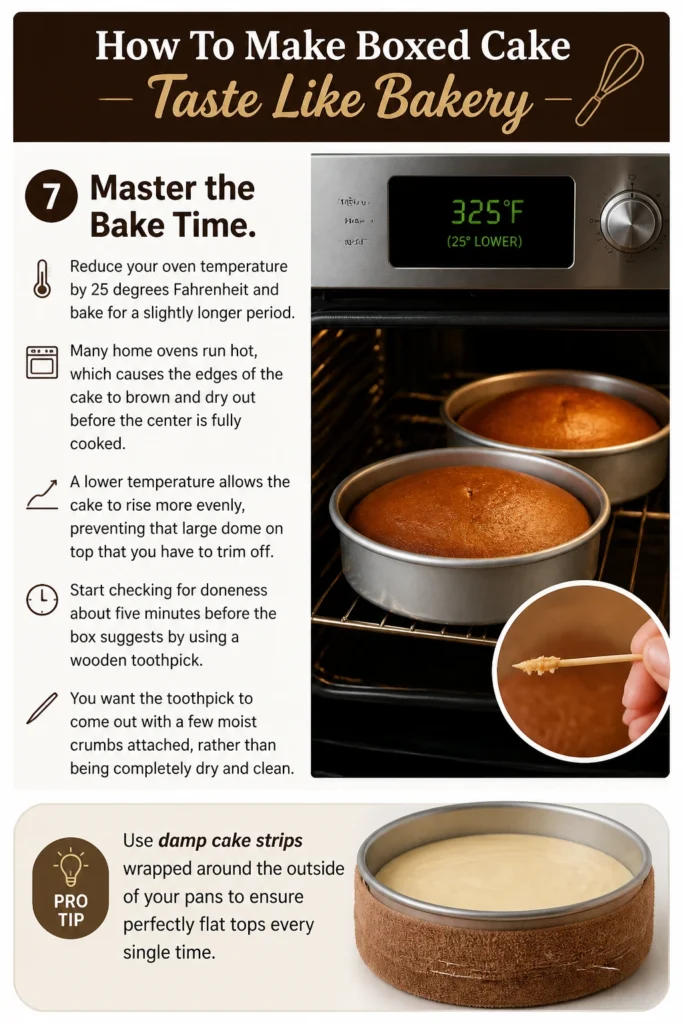
Many home ovens run hot, which causes the edges of the cake to brown and dry out before the center is fully cooked.
A lower temperature allows the cake to rise more evenly, preventing that large “dome” on top that you have to trim off.
Start checking for doneness about five minutes before the box suggests by using a wooden toothpick.
You want the toothpick to come out with a few moist crumbs attached, rather than being completely dry and clean.
Pro Tip: Use damp cake strips wrapped around the outside of your pans to ensure perfectly flat tops every single time.
Step 8: Ditch the Canned Frosting
Create a simple homemade buttercream or cream cheese frosting to finish your masterpiece.
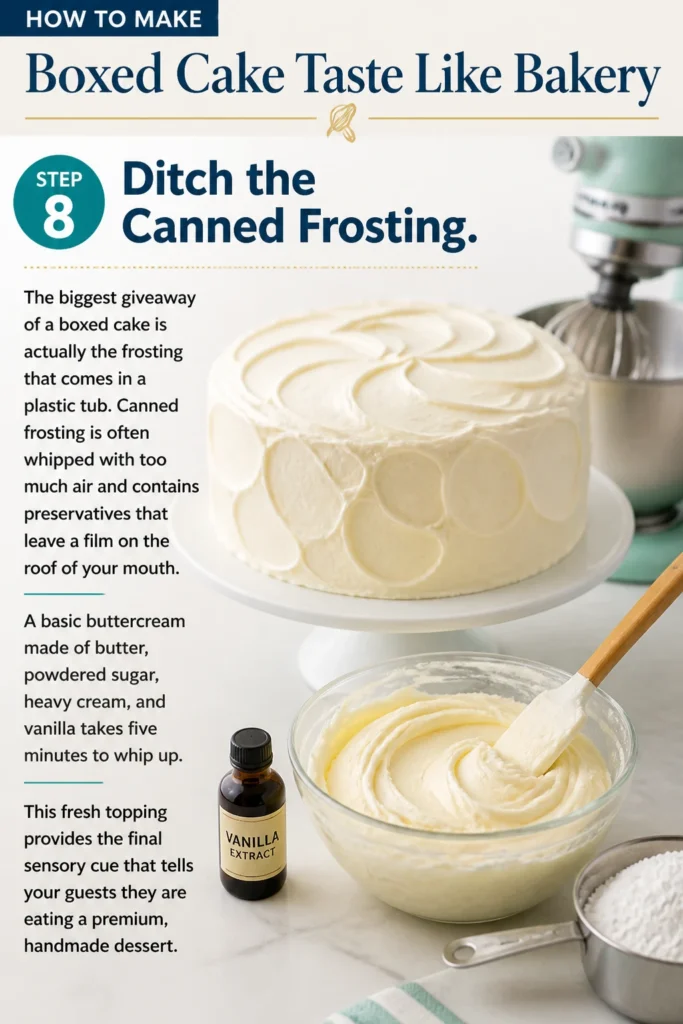
The biggest giveaway of a boxed cake is actually the frosting that comes in a plastic tub.
Canned frosting is often whipped with too much air and contains preservatives that leave a film on the roof of your mouth.
A basic buttercream made of butter, powdered sugar, heavy cream, and vanilla takes five minutes to whip up.
This fresh topping provides the final sensory cue that tells your guests they are eating a premium, handmade dessert.
Common Mistakes to Avoid
Overmixing the Batter
Once you add the wet ingredients to the dry mix, you must stop mixing as soon as the flour streaks disappear. Overworking the batter develops too much gluten, which turns a light cake into something that feels more like bread. Use a rubber spatula to fold the last few bits of flour in by hand rather than relying solely on an electric mixer.
Using Cold Ingredients
Cold milk and eggs do not emulsify well with melted butter or dry flour. This can lead to a lumpy batter or a cake that doesn’t rise properly because the fats have seized up. Take your eggs, milk, and sour cream out of the refrigerator at least thirty minutes before you plan to start baking.
Opening the Oven Door Too Early
It is tempting to peek at your cake while it is rising, but a sudden rush of cool air can cause the delicate structure to collapse. The center of the cake is the last part to set, and it is very sensitive to temperature fluctuations in the first twenty minutes. Only open the door when you are ready to perform the final toothpick test.
Troubleshooting
The Cake is Too Dense
If your cake feels heavy like a brick, you might have added too much liquid or overmixed the batter. Ensure you are measuring your substitutions accurately and sifting the dry mix to keep things light. Next time, try using only the extra egg yolks rather than the whole eggs to keep the moisture high without adding too much structural weight.
The Cake Sank in the Middle
This usually happens if the cake is underbaked or if you used too much leavening (which can happen if you add extra baking soda to a mix that already has it). Make sure your oven is properly calibrated with an external thermometer. If the cake is already out of the oven, you can often hide a sunken center with extra frosting or by filling the hole with fresh fruit and whipped cream.
Key Takeaways
- Swap water for milk to add flavor, sugar, and protein for a better crumb.
- Use melted butter instead of oil and double the amount to achieve a rich, bakery-style mouthfeel.
- Add an extra egg or two to create a sturdier cake that is easy to frost and stack.
- Include sour cream to provide essential moisture and a professional, dense texture.
- Add vanilla extract and a pinch of salt to mask the “boxed” taste and enhance the natural flavors.
- Always make frosting from scratch because it is the most noticeable element of a high-quality cake.
Frequently Asked Questions
Can I use dairy-free alternatives for these swaps?
Yes, you can use oat milk or soy milk instead of dairy milk, as they have a higher protein content than almond milk. For the butter, use a high-quality vegan butter stick rather than a spreadable tub margarine. Coconut cream or dairy-free Greek yogurt also works well as a substitute for sour cream.
Does this work for all flavors of cake mix?
These techniques work for almost any standard mix, including yellow, white, chocolate, and red velvet. However, for white cakes, be aware that adding extra egg yolks or dark vanilla extract will change the color of the batter to a slight off-white. If you need a pure white cake, use extra egg whites and clear vanilla extract instead.
Why is my cake dry even after adding these ingredients?
The most common cause of dryness is overbaking. Even with all the extra fat from the butter and sour cream, leaving a cake in the oven for just three minutes too long can pull out the moisture. Always start checking your cake early and remember that it will continue to cook slightly from residual heat once it is removed from the oven.
Can I add mix-ins like chocolate chips or fruit?
Absolutely, but you should toss them in a tablespoon of the dry cake mix before folding them into the batter. This light coating of flour prevents the heavy ingredients from sinking to the bottom of the pan during the bake. This ensures every bite has an even distribution of chocolate chips, nuts, or berries.
Our Top Recommended Finds
- Professional Grade Cake Pans: Look for heavy-gauge aluminum pans with straight sides to ensure even heat distribution and sharp edges.
- Pure Vanilla Bean Paste: This provides the beautiful little black flecks of vanilla that signal a high-end bakery product.
- Digital Kitchen Scale: While most boxes use volume, weighing your butter and sour cream ensures perfect consistency every time you bake.
Elevate Your Next Celebration
Now that you have the secrets to a perfect bakery-style cake, it is time to put them into practice.
You can apply these same principles to other boxed treats, like brownies or muffin mixes, to see how fats and proteins change the game.
Try experimenting with different extracts like almond or peppermint to create your own signature flavors.
The best part about these hacks is that they save you time without sacrificing the quality your guests expect.
Grab a box of your favorite mix today and start swapping those ingredients for a result that truly tastes like it came from a professional pastry chef.