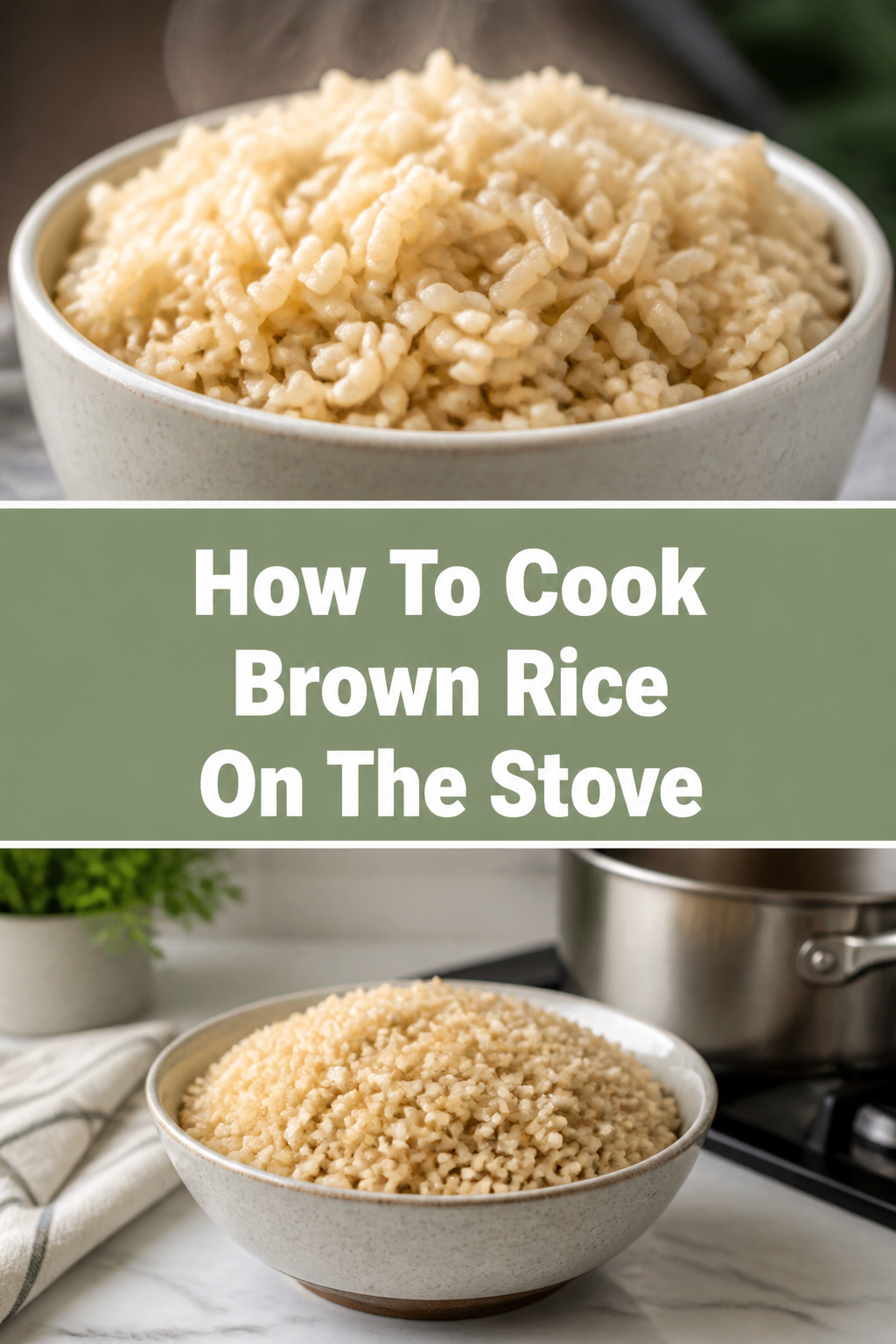
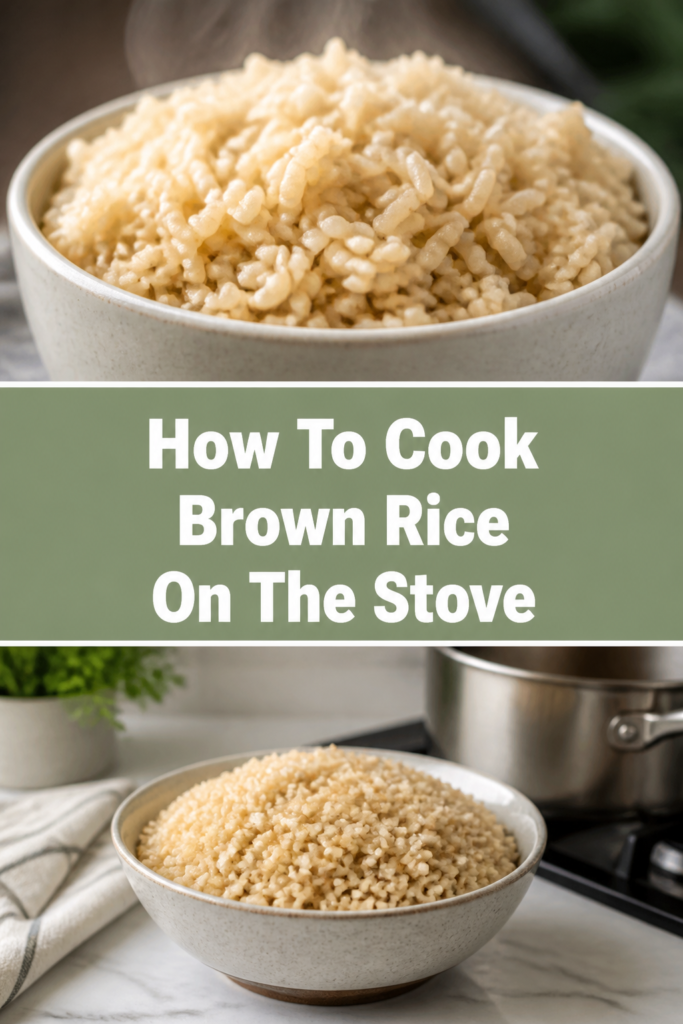
🍚 How To Cook Brown Rice On The Stove
Cooking brown rice perfectly can feel like a culinary mystery.
For years, I struggled with gummy messes or crunchy grains, thinking it was a difficult task.
However, I’ve discovered a straightforward method that consistently yields fluffy, delicious brown rice, and I’m excited to share it with you.
Quick Overview
This guide will walk you through preparing perfect brown rice on your stovetop.
You’ll learn the essential steps to achieve a tender, nutty grain, ideal for any meal.
Say goodbye to undercooked or overcooked rice forever with these simple instructions.
- Time needed: Approximately 45-55 minutes (10 mins prep, 35-45 mins cook time)
- Difficulty: Beginner
- What you’ll need: Brown rice, water, a heavy-bottomed pot with a tight-fitting lid, a fine-mesh sieve, a measuring cup, and a spoon or fork.
Step-by-Step Instructions
Step 1: Choose Your Rice and Measure
Select a good quality long-grain or medium-grain brown rice for best results.
Measure out the desired amount of rice. A general rule is to start with 1 cup of dry brown rice, which yields about 3 cups cooked.
Adjust the quantity based on how many servings you need, remembering that brown rice expands significantly.
Step 2: Rinse the Rice Thoroughly
Place your measured brown rice into a fine-mesh sieve.
Rinse it under cool running water for about 30 seconds to 1 minute.
This step helps remove excess starch and any dust or debris, leading to a cleaner, less sticky final product.
Step 3: Combine Rice and Water in a Pot
Transfer the rinsed brown rice to a heavy-bottomed pot with a tight-fitting lid.
Add water to the pot using a 2:1 ratio of water to rice. For 1 cup of brown rice, use 2 cups of water.
A heavy-bottomed pot ensures even heat distribution, preventing scorching.
Pro Tip: For extra flavor, you can substitute half of the water with vegetable or chicken broth. Add a pinch of salt at this stage to enhance the rice’s natural taste.
Step 4: Bring to a Boil
Place the pot on the stovetop over high heat.
Bring the water to a rolling boil. Keep an eye on it to prevent over-boiling.
This initial high heat phase is crucial for kickstarting the cooking process.
Step 5: Reduce Heat and Simmer
Once the water reaches a vigorous boil, immediately reduce the heat to the lowest setting.
Cover the pot tightly with its lid. A tight seal is essential for trapping steam.
Do not lift the lid during the cooking process; the trapped steam cooks the rice evenly.
Step 6: Cook Undisturbed
Allow the brown rice to simmer gently for 35-45 minutes.
The exact cooking time can vary slightly depending on your stove and the type of brown rice.
Resist the urge to check the rice by lifting the lid, as this releases valuable steam.
Step 7: Rest Off the Heat
After the simmering time is complete, remove the pot from the heat.
Keep the lid on and let the rice rest for another 10 minutes.
This resting period allows the remaining steam to absorb fully, making the rice perfectly fluffy and preventing stickiness.
Pro Tip: Resting is arguably the most overlooked step. It ensures every grain is tender and distinct, not mushy.
Step 8: Fluff and Serve
After the resting period, carefully remove the lid.
Use a fork to gently fluff the brown rice. This separates the grains and releases any remaining steam.
Serve your perfectly cooked brown rice immediately as a side dish or as part of a main course.
Common Mistakes to Avoid
Not Rinsing the Rice
Skipping the rinsing step can lead to gummy or sticky brown rice.
The surface starch on the grains, when cooked, can create a glue-like texture.
A quick rinse helps remove this excess starch, ensuring a fluffier outcome.
Lifting the Lid During Cooking
Opening the lid allows steam to escape, which is vital for cooking brown rice.
Each time you peek, the internal temperature drops, extending the cooking time and potentially leading to unevenly cooked grains.
Trust the process and keep that lid on tightly until the full cooking and resting time is complete.
Using the Wrong Water-to-Rice Ratio
An incorrect ratio of water to rice is a common pitfall.
Too much water results in soggy, mushy rice, while too little leaves it undercooked and crunchy.
Stick to the 2:1 water-to-rice ratio for consistent, excellent results with brown rice.
Not Resting the Rice
Failing to let the rice rest after cooking can make it seem wetter than it is.
The resting period allows the grains to finish absorbing moisture and firm up.
This crucial step transforms good rice into truly great, separate, and tender grains.
Troubleshooting
Rice is Crunchy or Hard
If your brown rice is still hard after the recommended cooking time, it likely needs more moisture or cooking.
Add a tablespoon or two of hot water, cover the pot tightly, and return it to the lowest heat for another 5-10 minutes.
Ensure your lid forms a good seal to trap all the steam inside.
Rice is Mushy or Sticky
Mushy rice usually indicates too much water or overcooking.
Next time, slightly reduce the water by a quarter cup or shorten the cooking time by a few minutes.
Make sure you’re not stirring the rice during cooking, as this can release starch and make it sticky.
Water Doesn’t Fully Absorb
If there’s still water in the pot after cooking, your heat might have been too low, or the lid wasn’t tight enough.
Ensure your lid has a snug fit. You can also carefully drain any excess water before the resting phase.
For future batches, verify your stovetop’s lowest setting is truly low enough for a gentle simmer.
Key Takeaways
- Always rinse brown rice thoroughly to remove excess starch.
- Maintain a precise 2:1 water-to-rice ratio for optimal texture.
- Keep the lid on tight and avoid peeking during the entire cooking process.
- Allow the cooked rice to rest off the heat for 10 minutes to finish absorbing moisture.
- Fluff with a fork before serving to separate the grains and release steam.
- Patience is key; brown rice takes longer than white rice but is worth the wait.
Frequently Asked Questions
Can I cook brown rice in a regular pot?
Yes, you can absolutely cook brown rice in a regular pot.
The most important factor is that the pot has a heavy bottom to distribute heat evenly and a tight-fitting lid to trap steam effectively.
Avoid thin-bottomed pots, as they can cause rice to stick and burn easily.
What is the best way to store leftover brown rice?
Store leftover brown rice in an airtight container in the refrigerator within one hour of cooking.
It can be safely stored for 3-4 days. Reheat it thoroughly before serving.
You can also freeze cooked brown rice for longer storage, up to 1-2 months.
Is it necessary to soak brown rice before cooking?
Soaking brown rice is not strictly necessary for this method, but it can slightly reduce cooking time.
If you choose to soak, do so for 30 minutes to an hour, then drain and reduce the cooking water by about a quarter cup.
For most home cooks, rinsing is sufficient and simpler.
Our Top Recommended Finds
- Heavy-Bottomed Stainless Steel Pot: Essential for even heat distribution and preventing sticking. Look for one with a well-fitting glass lid.
- Fine-Mesh Sieve: Perfect for rinsing rice and other grains efficiently without losing any through the holes.
- Digital Kitchen Scale: While measuring cups work, a scale provides precise measurements for both rice and water, leading to more consistent results.
Embrace Your Inner Rice Master
You now possess the knowledge and steps to conquer brown rice on the stovetop.
No more guesswork or disappointing results; just consistently fluffy, tender grains every single time.
Start practicing this method today and elevate your home-cooked meals with this nutritious staple.
Experiment with different seasonings or broths to make it truly your own.