
How To Cut A Mango With A Pit
Learning to cut a mango can seem like a tricky task, especially with that large, flat pit right in the middle.
But with a few simple techniques, you’ll be slicing and dicing this tropical fruit like a pro in no time.
I’ve spent countless hours in my kitchen perfecting the art of mango preparation, and I’m excited to share my foolproof method with you.

Quick Overview
Cutting a mango effectively allows you to enjoy its sweet, juicy flesh without the hassle. This guide will walk you through preparing your mango, making precise cuts around the pit, and safely cubing the fruit for eating or use in recipes.
- Time needed: 5-10 minutes
- Difficulty: Beginner
- What you’ll need: Ripe mango, sharp chef’s knife or paring knife, cutting board
Step-by-Step Instructions
Step 1: Select Your Perfect Mango
Choose a ripe mango for the best flavor and easiest cutting experience. A ripe mango will usually have a vibrant color, depending on the variety, but color isn’t the only indicator.
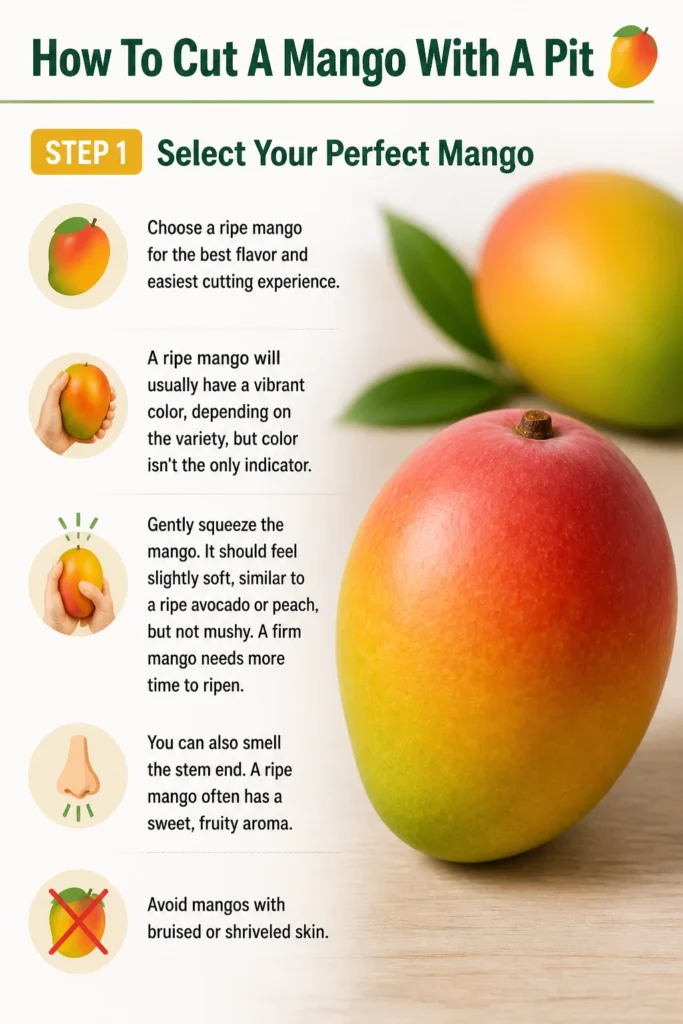
Gently squeeze the mango. It should feel slightly soft, similar to a ripe avocado or peach, but not mushy. A firm mango needs more time to ripen.
You can also smell the stem end. A ripe mango often has a sweet, fruity aroma. Avoid mangos with bruised or shriveled skin.
Step 2: Gather Your Tools and Prepare Your Workspace
Set up a clean, stable cutting board on your counter. Placing a damp paper towel or a non-slip mat underneath the board can prevent it from sliding while you cut.
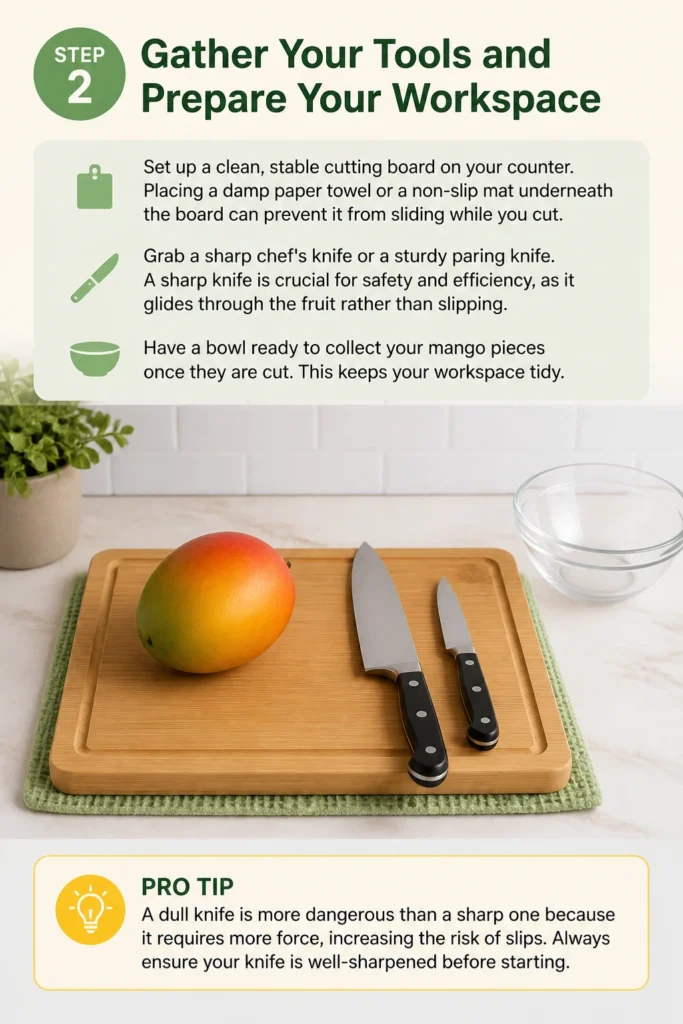
Grab a sharp chef’s knife or a sturdy paring knife. A sharp knife is crucial for safety and efficiency, as it glides through the fruit rather than slipping.
Have a bowl ready to collect your mango pieces once they are cut. This keeps your workspace tidy.
Pro Tip: A dull knife is more dangerous than a sharp one because it requires more force, increasing the risk of slips. Always ensure your knife is well-sharpened before starting.
Step 3: Stabilize the Mango
Wash your mango thoroughly under cool running water. This removes any dirt or residues from its skin.
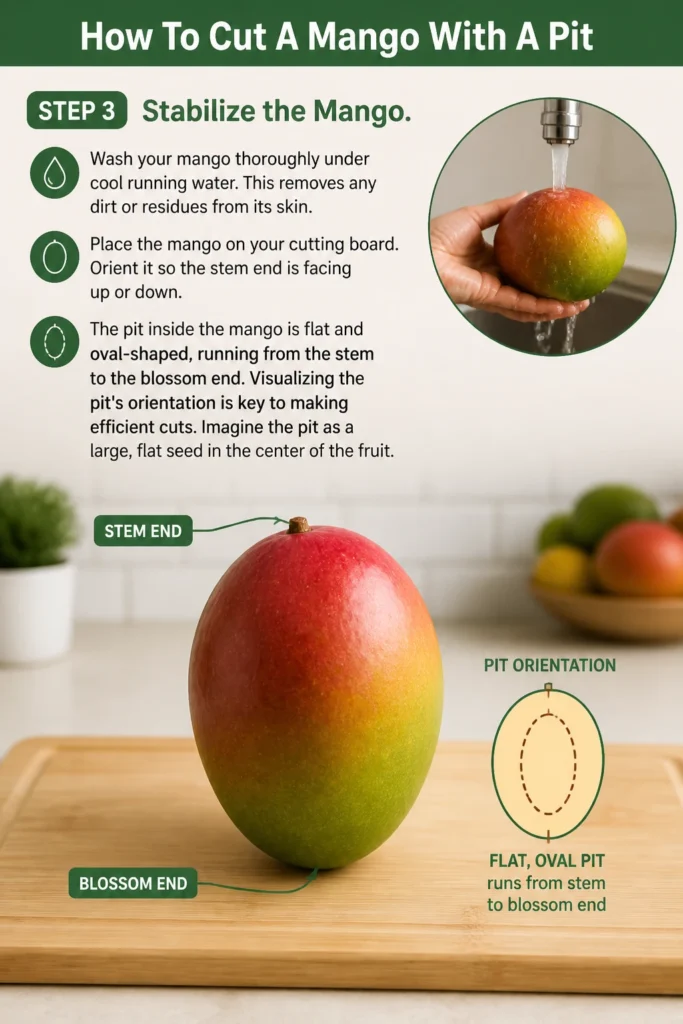
Place the mango on your cutting board. Orient it so the stem end is facing up or down. The pit inside the mango is flat and oval-shaped, running from the stem to the blossom end.
Visualizing the pit’s orientation is key to making efficient cuts. Imagine the pit as a large, flat seed in the center of the fruit.
Step 4: Slice Off the “Cheeks”
Identify the widest part of the mango. The pit runs through this center.
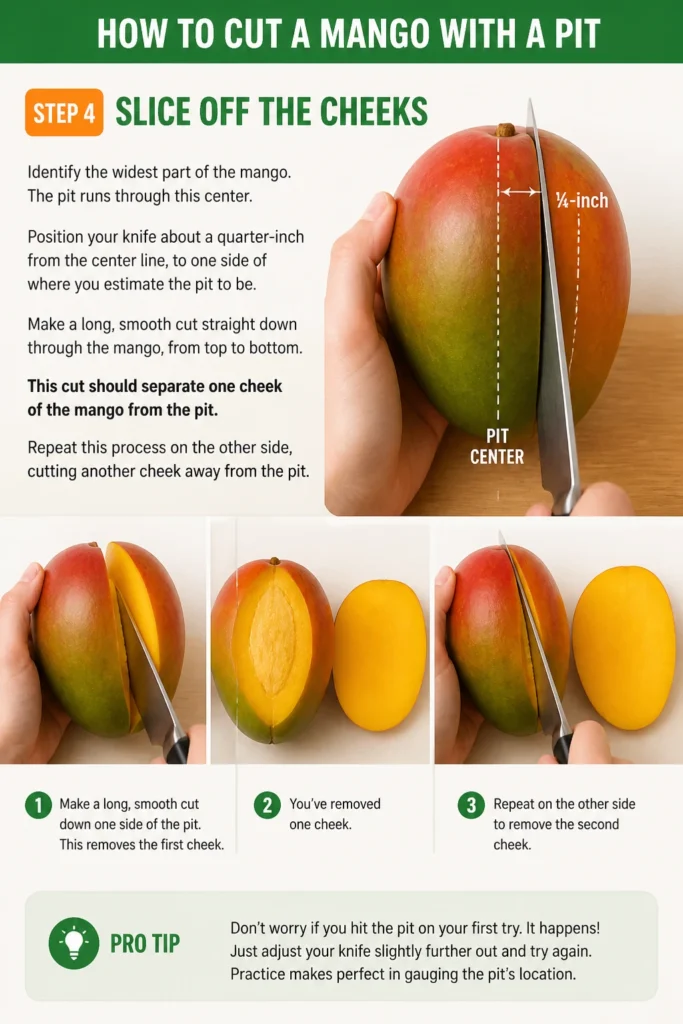
Position your knife about a quarter-inch from the center line, to one side of where you estimate the pit to be. Make a long, smooth cut straight down through the mango, from top to bottom.
This cut should separate one “cheek” of the mango from the pit. Repeat this process on the other side, cutting another cheek away from the pit.
Pro Tip: Don’t worry if you hit the pit on your first try. It happens! Just adjust your knife slightly further out and try again. Practice makes perfect in gauging the pit’s location.
Step 5: Trim the Remaining Sides
Hold the pit upright on your cutting board. It will now have mango flesh remaining on two narrower sides.
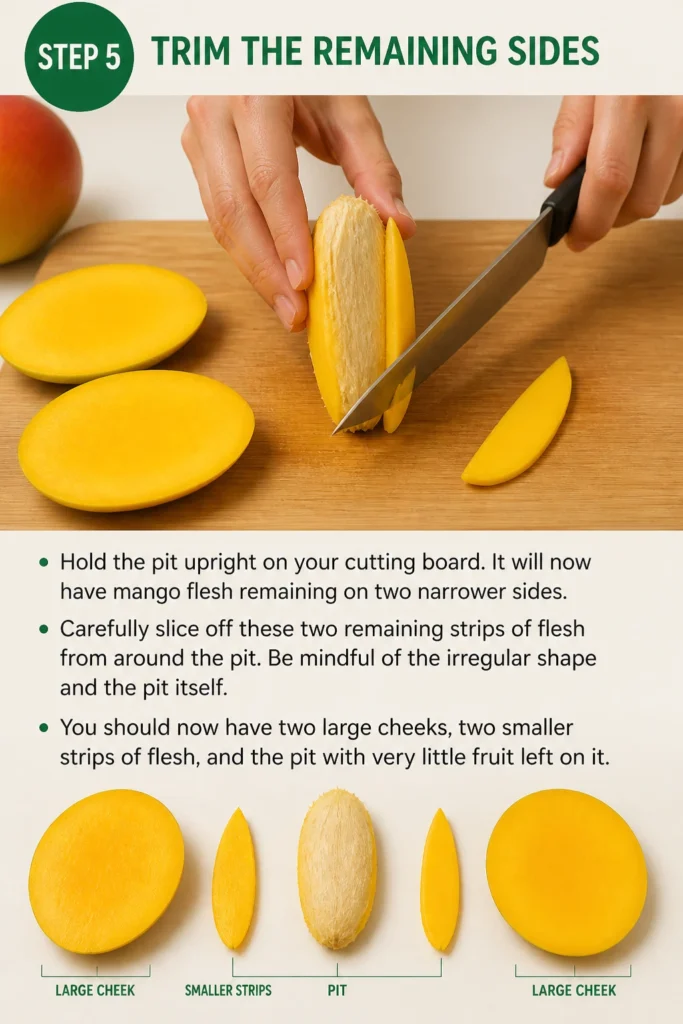
Carefully slice off these two remaining strips of flesh from around the pit. Be mindful of the irregular shape and the pit itself.
You should now have two large cheeks, two smaller strips of flesh, and the pit with very little fruit left on it.
Step 6: Score the Mango Flesh
Take one of the mango cheeks, skin-side down, in your hand or place it flat on the cutting board. Use your knife to score the flesh in a grid pattern.
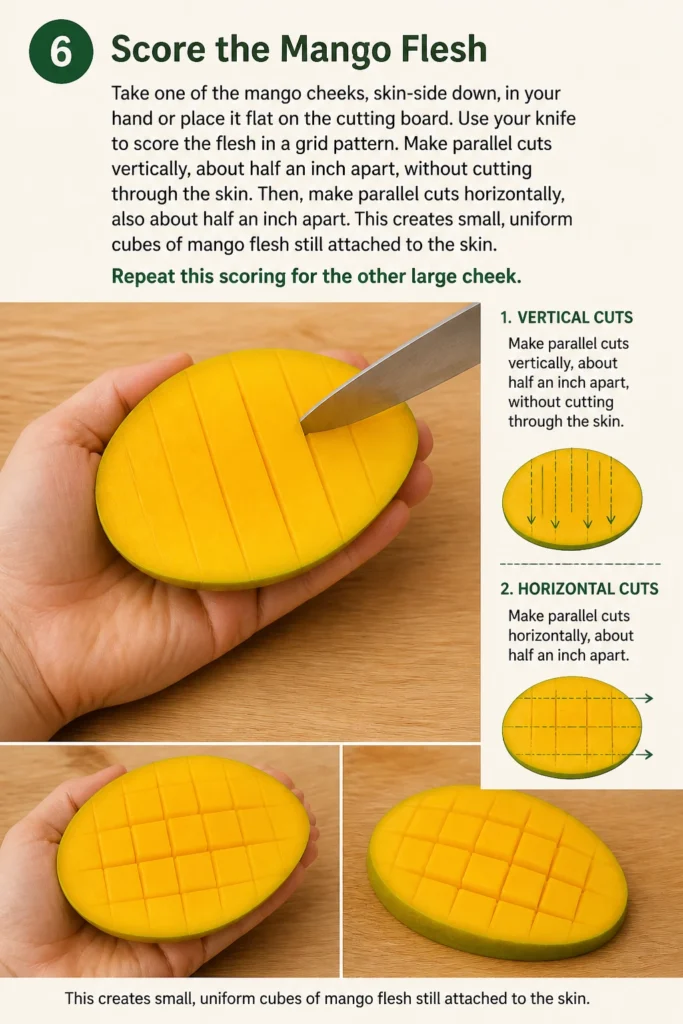
Make parallel cuts vertically, about half an inch apart, without cutting through the skin. Then, make parallel cuts horizontally, also about half an inch apart.
This creates small, uniform cubes of mango flesh still attached to the skin. Repeat this scoring for the other large cheek.
Step 7: “Invert” and Scoop Out the Cubes
Gently push the skin side of the scored mango cheek upwards with your thumbs. The scored flesh will “invert” or pop out, resembling a porcupine’s back.
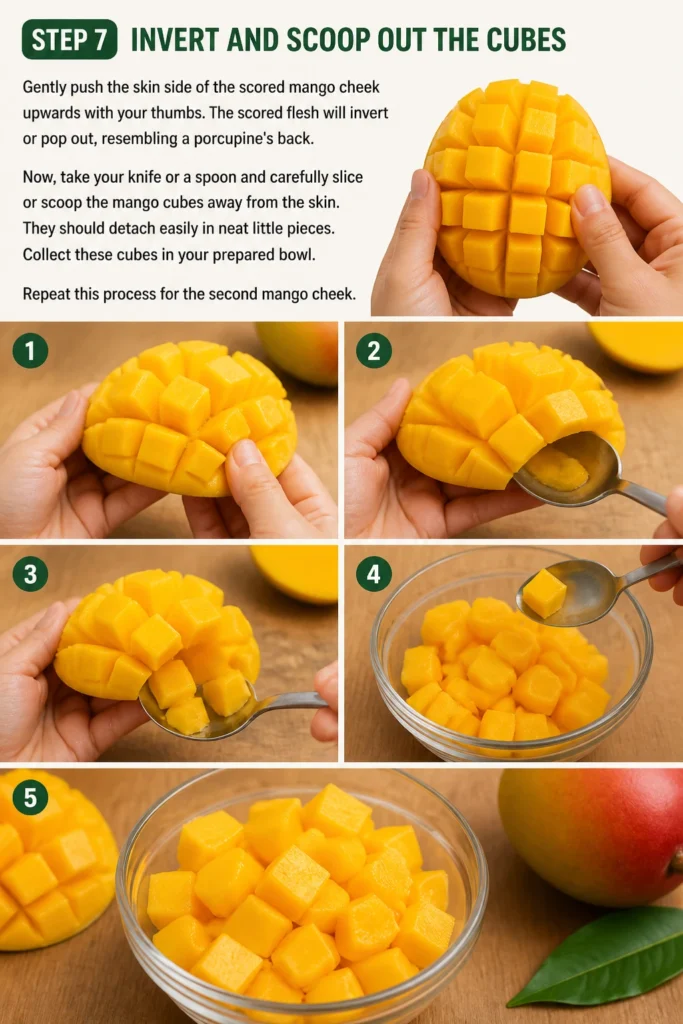
Now, take your knife or a spoon and carefully slice or scoop the mango cubes away from the skin. They should detach easily in neat little pieces.
Collect these cubes in your prepared bowl. Repeat this process for the second mango cheek.
Step 8: Dice the Remaining Strips
Peel the skin off the smaller strips of mango flesh you cut from the sides of the pit. A paring knife can be helpful for this.
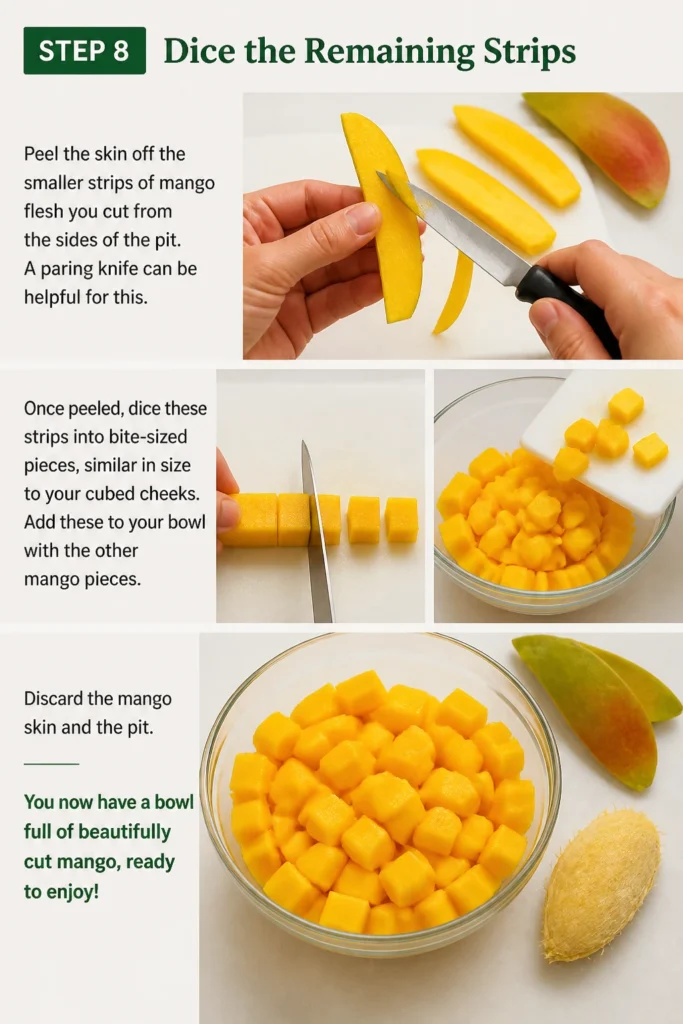
Once peeled, dice these strips into bite-sized pieces, similar in size to your cubed cheeks. Add these to your bowl with the other mango pieces.
Discard the mango skin and the pit. You now have a bowl full of beautifully cut mango, ready to enjoy!
Common Mistakes to Avoid
Using a Dull Knife
A dull knife is a common culprit for messy mango cuts and potential accidents. It requires more force to cut through the fruit, increasing the likelihood of the knife slipping and causing injury. Always ensure your knife is sharp; a sharp blade glides cleanly through the flesh, making the process safer and more efficient.
Cutting Too Close to the Pit
Many people try to cut as close to the pit as possible to maximize fruit yield, but this often leads to hitting the pit and damaging your knife or making an uneven cut. Aim to cut about a quarter-inch away from the estimated center of the pit. You can always trim a little more flesh from the pit later if needed.
Not Stabilizing the Mango
Cutting a round, slippery fruit like a mango on an unstable surface is a recipe for disaster. Always use a cutting board that doesn’t slide, or place a damp paper towel underneath it. Holding the mango firmly with a flat hand (fingers curled back) while making your cuts is also essential for safety.
Forgetting to Score Uniformly
When scoring the mango cheeks, inconsistent cuts can lead to uneven cubes. If your scores are too shallow, the cubes won’t pop out easily. If they’re too deep, you might cut through the skin, making them harder to scoop. Aim for consistent depth and spacing to get those perfect, uniform mango pieces.
Troubleshooting
Mango is Too Slippery to Hold
If your mango feels too slippery, especially after washing, try drying it thoroughly with a paper towel before you begin cutting. You can also place it on a non-slip cutting board and hold it with a clean kitchen towel to give you a better grip. Ensure your hands are dry as well.
Can’t Find the Pit
The mango pit is flat and runs lengthwise through the center of the fruit. If you’re having trouble visualizing it, look for the widest sides of the mango. The pit usually lies along this wider plane. If you hit the pit on your first cut, simply adjust your knife slightly further out from the center and try again.
Cubes Don’t Pop Out Easily
If your scored mango cubes aren’t popping out easily when you invert the cheek, it likely means your initial scores weren’t deep enough. Gently press the skin side more firmly, or carefully use your knife to deepen the existing score lines slightly, being careful not to cut through the skin.
Key Takeaways
- Choose a ripe mango: Soft to the touch and fragrant for the best results.
- Use a sharp knife: Essential for safety and clean, efficient cuts.
- Stabilize your workspace: Prevent slips by using a secure cutting board.
- Cut around the pit: Make two main cuts parallel to the pit to create the cheeks.
- Score and invert: Create a grid pattern on the flesh and push the skin to reveal cubes.
- Don’t waste any flesh: Carefully trim and dice the smaller pieces from the pit’s sides.
Frequently Asked Questions
What’s the best way to ripen a mango quickly?
To ripen a mango faster, place it in a paper bag on your countertop, possibly with a ripe banana or apple. These fruits release ethylene gas, which helps accelerate the ripening process. Check it daily for softness and aroma.
Can I eat the mango skin?
While mango skin is technically edible, it contains compounds that can irritate some people’s mouths and digestive systems, similar to poison ivy. It also has a slightly bitter taste. Most people prefer to peel or cut around the skin for a better eating experience.
How do I store cut mango?
Once cut, mango should be stored in an airtight container in the refrigerator. It will typically stay fresh for 3-5 days. For longer storage, you can freeze mango cubes in a single layer on a baking sheet before transferring them to a freezer bag, where they’ll last for several months.
What can I do with the mango pit?
While most people discard the pit, you can actually try to grow a mango tree from it! Clean the pit thoroughly, remove the outer husk, and then plant the seed in a pot. It’s a fun experiment, though growing fruit-bearing trees from pits can take many years.
Our Top Recommended Finds
- Non-Slip Cutting Board: A sturdy, non-slip board ensures safety and stability while slicing, preventing accidents.
- Sharp Chef’s Knife: A high-quality, well-maintained chef’s knife makes all the difference for smooth, precise cuts through fruit.
- Mango Slicer Tool: For those who cut mangos often, a dedicated mango slicer can quickly remove the pit and slice the cheeks in one swift motion.
Embrace Your Inner Fruit Maestro
You now have all the knowledge and practical steps needed to confidently tackle any mango. No longer will that elusive pit stand between you and enjoying this delicious, vitamin-rich fruit.
Think of all the vibrant salads, refreshing smoothies, and delectable desserts you can create. This skill opens up a world of culinary possibilities, adding a touch of tropical sunshine to your meals.
So, grab a ripe mango from the market today. Put these steps into practice and savor the sweet reward of your efforts. Your taste buds will thank you for mastering this essential kitchen skill!