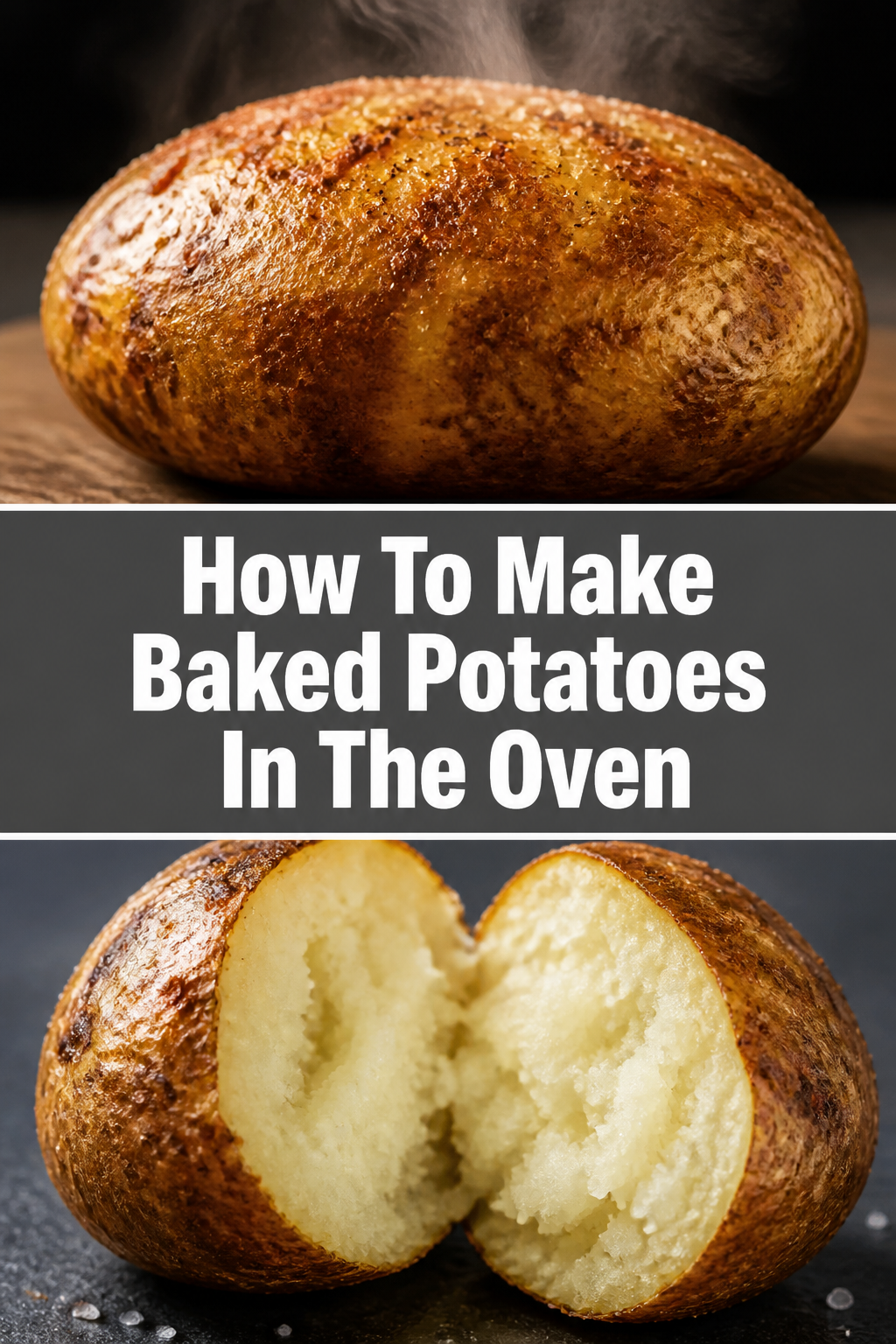
🥔 How To Make Baked Potatoes In The Oven
There’s nothing quite like a perfectly baked potato. Its crispy skin and fluffy, steaming interior offer pure comfort.
For years, I’ve experimented with various methods to achieve that ideal texture and flavor. This guide shares my tried-and-true approach for oven-baked perfection every time.
It’s simpler than you might think to create a side dish or main meal that everyone will adore.
Quick Overview
Get ready to master the art of the perfect baked potato. You’ll learn how to achieve a crispy skin and a wonderfully fluffy center. This guide covers everything from selecting your spuds to serving them hot and delicious.
- Time needed: 60-90 minutes (prep + bake)
- Difficulty: Beginner
- What you’ll need: Potatoes, olive oil, salt, oven, fork or paring knife, baking sheet.
Step-by-Step Instructions
Step 1: Choose Your Spuds Wisely
The foundation of a great baked potato starts with selecting the right variety. Russet potatoes, also known as Idaho potatoes, are the undisputed champions for baking. Their high starch content and thick skin are perfect for achieving that desirable fluffy interior and crispy exterior.
Look for firm, unblemished potatoes of uniform size. This ensures they cook evenly in the oven. Avoid any potatoes with green spots or sprouts, which can indicate poor quality.
Pro Tip: Opt for medium to large potatoes. Smaller ones tend to dry out, while excessively large ones can take a very long time to cook through. Aim for potatoes that are roughly 8-10 ounces each.
Step 2: Clean and Prep for Perfection
Thoroughly wash your potatoes under cold running water. Use a stiff vegetable brush to scrub away any dirt or debris from the skin. This step is crucial, especially if you plan to eat the skin, which we highly recommend for its texture and nutrients.
Once clean, pat each potato completely dry with a paper towel or a clean kitchen cloth. Moisture on the skin will prevent it from getting crispy in the oven. A truly dry surface is key for that satisfying crunch.
Step 3: Aerate for Fluffiness
Before baking, use a fork or a small paring knife to pierce the potato skin several times all over. Make about 6-8 punctures on each potato. This allows steam to escape during baking, preventing the potato from exploding.
More importantly, it helps the inside cook more evenly and results in a lighter, fluffier texture. Without these holes, the steam can get trapped, leading to a denser potato.
Step 4: Oil and Season Generously
Drizzle each potato with a small amount of olive oil or another neutral cooking oil. About a teaspoon per potato is usually sufficient. Use your hands or a pastry brush to rub the oil evenly over the entire surface of the potato skin.
The oil helps to crisp up the skin beautifully and encourages browning. After oiling, sprinkle a generous amount of coarse salt, like kosher salt or sea salt, all over the skin. This not only adds flavor but also helps draw out moisture, contributing to an even crispier skin.
Pro Tip: For an extra layer of flavor, experiment with garlic powder, onion powder, or a pinch of paprika mixed with the salt. This can elevate your baked potato experience.
Step 5: Preheat and Position
Preheat your oven to a hot temperature, ideally 400°F (200°C). A high heat is essential for achieving that sought-after crispy skin and tender interior. Place your prepared potatoes directly on the oven rack.
Placing them directly on the rack allows for maximum air circulation around the potatoes. This promotes even cooking and ensures the skin gets crispy on all sides. If you’re concerned about drips, you can place a baking sheet on a lower rack to catch any oil.
Step 6: Bake to Golden Perfection
Bake the potatoes for 60 to 90 minutes, depending on their size. Smaller potatoes might be ready closer to 60 minutes, while larger ones could take up to 90 minutes or even slightly longer. Do not open the oven frequently, as this causes temperature fluctuations.
Resist the urge to wrap them in foil during baking. Foil traps moisture, which leads to a steamed, soft skin rather than a crispy one. The direct heat of the oven is what creates the perfect texture.
Step 7: Check for Doneness
The best way to tell if a baked potato is done is to gently squeeze it. A perfectly cooked potato will yield easily to pressure, feeling soft all the way through. You can also insert a fork or a thin skewer into the center.
It should slide in with very little resistance. Another indicator is an internal temperature of 205-212°F (96-100°C) if you use a meat thermometer. The skin will also look deeply browned and crisp.
Step 8: Fluff and Serve Immediately
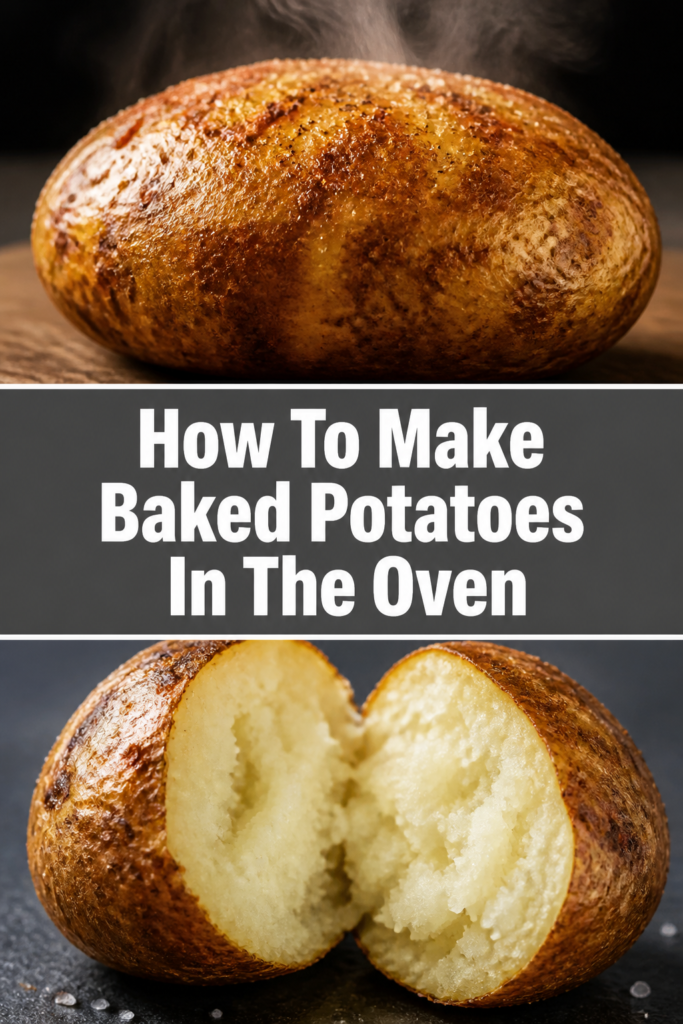
Once cooked, carefully remove the potatoes from the oven. Using a knife, slice each potato lengthwise down the middle, but don’t cut all the way through. Hold the ends and gently push them towards each other to open the potato.
This action helps to release the steam and fluffs up the interior. Immediately add a pat of butter, a dollop of sour cream, or your favorite toppings. Serve them piping hot for the best flavor and texture.
Common Mistakes to Avoid
Not Piercing the Skin
Forgetting to pierce the potato skin is a common error. Without these small holes, steam builds up inside the potato during baking. This can cause the potato to burst open in your oven, creating a messy situation. More importantly, it prevents the interior from becoming light and fluffy, often resulting in a denser texture. Always make sure to pierce your potatoes multiple times before they go into the oven.
Wrapping in Foil
Many people mistakenly wrap their potatoes in aluminum foil before baking. While this might seem like a way to keep them moist, it actually traps moisture around the skin. The result is a steamed potato with a soft, soggy skin instead of the desired crispy exterior. For truly crispy skin, always bake your potatoes directly on the oven rack, unwrapped.
Under-seasoning
A bland baked potato is a missed opportunity. Some bakers only season the inside of the potato after it’s cooked. However, salting the skin generously with coarse salt before baking is crucial. This not only adds flavor to the exterior but also helps to draw out moisture, contributing to a wonderfully crisp crust. Don’t be shy with the salt!
Baking at Too Low a Temperature
Baking potatoes at too low a temperature is another common mistake. A low oven temperature prolongs the cooking time significantly and often results in a dried-out interior and a less-than-crispy skin. For optimal results, a hot oven, typically 400°F (200°C), is essential. This high heat quickly cooks the interior while crisping the exterior efficiently.
Troubleshooting
Soggy Skin
If your baked potato skin turns out soggy instead of crispy, moisture is likely the culprit. This usually happens if the potato wasn’t completely dry before oiling and salting, or if it was wrapped in foil during baking. Ensure potatoes are thoroughly patted dry and always bake them directly on the oven rack, unwrapped. Baking at a slightly higher temperature or for a bit longer might also help.
Dry Interior
A dry, mealy baked potato interior can be disappointing. This often occurs if the potato is overcooked, baked at too low a temperature for too long, or if it’s a smaller variety that dries out quickly. To prevent this, choose larger, starchy potatoes like Russets. Bake until just tender, checking for doneness with a fork rather than relying solely on time. A higher baking temperature can also help cook the interior faster without drying it out excessively.
Undercooked Center
An undercooked center means the potato hasn’t spent enough time in the oven or the oven temperature wasn’t consistent. This can also happen with very large potatoes that require more baking time. To fix this, return the potato to the oven for an additional 10-15 minutes, or until a fork slides easily into the center. Ensure your oven is properly preheated and consider using an oven thermometer to verify its accuracy.
Key Takeaways
- Always choose starchy potatoes like Russets for the best texture.
- Thoroughly wash and dry your potatoes before baking to encourage crispy skin.
- Pierce the potatoes multiple times with a fork to allow steam to escape and ensure a fluffy interior.
- Oil and generously salt the potato skin for flavor and crispness.
- Bake potatoes unwrapped, directly on the oven rack, at a high temperature (around 400°F / 200°C).
- Check for doneness by gently squeezing or inserting a fork; it should yield easily.
- Fluff the interior immediately after baking and serve hot with your favorite toppings.
Frequently Asked Questions
What’s the best potato type for baking?
Russet potatoes, also known as Idaho potatoes, are universally considered the best for baking. Their high starch content and thick skin create a wonderfully fluffy interior and a crispy exterior. Other starchy varieties can work, but Russets are ideal.
Can I microwave them first to speed up the process?
While you can microwave potatoes for a few minutes to jumpstart the cooking process, it often compromises the crispy skin. Microwaving pre-cooks the interior but adds moisture to the skin. If you’re short on time, you might microwave for 5-7 minutes, then finish in a hot oven for 30-40 minutes to crisp the skin.
How do I store leftover baked potatoes?
To store leftover baked potatoes, allow them to cool completely. Then, place them in an airtight container or wrap them tightly in plastic wrap. Refrigerate within two hours of baking. They will keep in the refrigerator for up to 3-4 days. Reheat in the oven or air fryer for best results.
Why did my potato skin not get crispy?
Soggy skin is usually due to moisture. Ensure your potatoes are completely dry before oiling and salting. Never wrap them in foil during baking, as this traps steam. Also, ensure your oven is hot enough and that the potatoes are baked directly on the oven rack for maximum air circulation.
Our Top Recommended Finds
- Stiff Bristle Vegetable Brush: Essential for thoroughly cleaning potato skins without damaging them.
- Baking Sheet with Rack: While we recommend direct oven rack baking, a sturdy baking sheet with a wire rack can catch drips and is versatile for other kitchen tasks.
- Large-Grain Kosher or Sea Salt: Perfect for seasoning the potato skin, giving it flavor and helping with crispness.
Embrace the Baked Potato Perfection
You now have all the knowledge and steps to create truly exceptional baked potatoes in your own kitchen. This simple dish, when done right, is incredibly satisfying and versatile. It can be a hearty side or a delicious meal on its own.
Don’t hesitate to experiment with different toppings once you’ve mastered the basic bake. From classic butter and sour cream to chili, cheese, or even leftover pulled pork, the possibilities are endless. Go ahead, gather your ingredients, and bake up some comfort today!