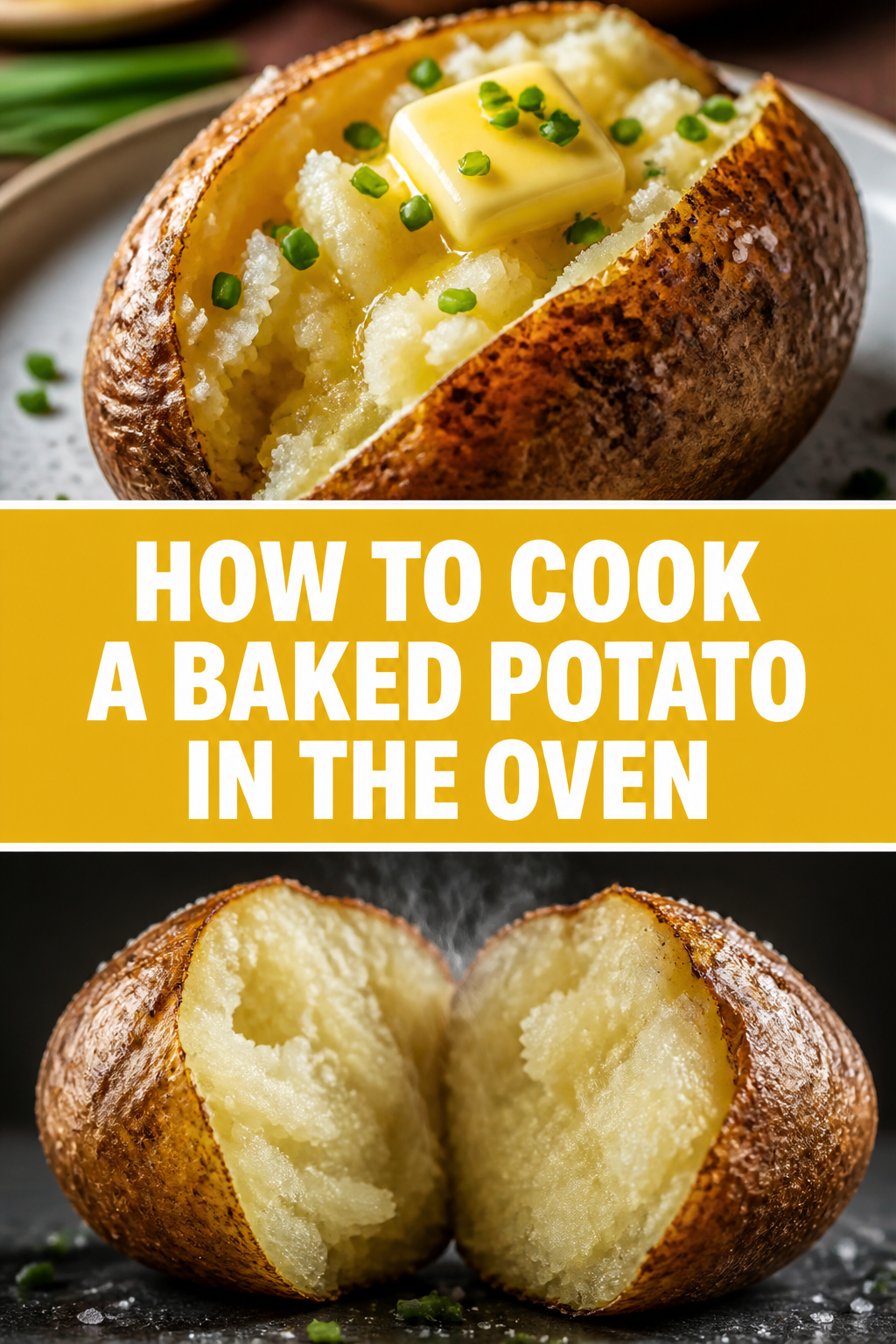
🥔 How To Cook A Baked Potato In The Oven
There’s nothing quite like a perfectly baked potato.
Crispy skin, fluffy interior, and ready to hold all your favorite toppings.
I’ve spent countless evenings perfecting this simple classic, and I’m excited to share the foolproof method that brings smiles to my dinner table every time.
Quick Overview
This guide will walk you through creating a classic, perfectly baked potato in your oven, ready for any meal or topping.
- Time needed: 60-90 minutes (prep: 5-10 mins, cook: 50-80 mins)
- Difficulty: Beginner
- What you’ll need: Potatoes, olive oil (or other fat), salt, fork, baking sheet, oven mitts
Step-by-Step Instructions
Step 1: Choose Your Potatoes Wisely
Select the right type of potato for baking. Russet potatoes, also known as Idaho potatoes, are your best bet.
Their high starch content and thick skin are ideal for achieving that fluffy interior and crispy exterior.
Look for potatoes that are firm, free from sprouts, green spots, or soft areas.
Aim for similarly sized potatoes if you’re cooking more than one, ensuring even baking.
Step 2: Preheat Your Oven
Set your oven to the optimal temperature. A consistent heat is key for a truly great baked potato.
Preheat your oven to 400°F (200°C).
This temperature allows the potato to cook thoroughly without drying out too quickly, promoting that desired fluffy texture inside.
Pro Tip: Always allow your oven at least 15-20 minutes to fully preheat after it signals it’s ready. Ovens often reach the set temperature faster than the internal elements and walls do, which can lead to uneven cooking.
Step 3: Wash and Scrub
Rinse your potatoes thoroughly under cool running water. Use a vegetable brush to gently scrub away any dirt or debris from the skin.
Even if you plan to discard the skin, this step is important for hygiene and flavor.
Pat the potatoes completely dry with a clean kitchen towel or paper towels.
Excess moisture can steam the potato rather than crisping the skin, so ensure they are very dry.
Step 4: Pierce for Perfection
Pierce each potato multiple times with a fork or a sharp knife.
Make about 6-8 small holes all around the potato.
This crucial step allows steam to escape during baking, preventing the potato from exploding in your oven.
It also helps the interior become wonderfully fluffy instead of dense or watery.
Step 5: Oil and Salt the Skin
Drizzle a small amount of olive oil (or avocado oil, grapeseed oil, or melted butter) over each potato.
Use your hands to rub the oil evenly all over the potato skin.
This creates a barrier that helps the skin crisp up beautifully and adds flavor.
Sprinkle a generous amount of coarse salt, such as kosher salt or sea salt, over the oiled potatoes.
The salt draws out moisture from the skin, enhancing its crispness and seasoning it right from the start.
Pro Tip: For extra flavor and a more savory crust, mix a pinch of garlic powder or paprika with your salt before sprinkling.
Step 6: Bake Until Tender
Place the prepared potatoes directly on the oven rack.
Avoid using aluminum foil, as it steams the potato, preventing the skin from getting crispy.
A baking sheet can be placed on a lower rack to catch any oil drips, making cleanup easier.
Bake for 50 to 80 minutes, depending on the size of your potatoes.
Smaller potatoes might be ready in 50 minutes, while larger ones could take up to 80 minutes or even longer.
Test for doneness by gently squeezing the potato with an oven-mitted hand.
It should feel soft and yield easily to pressure.
Alternatively, insert a fork or skewer into the center; it should slide in with little resistance.
Pro Tip: For the absolute best results, use an instant-read thermometer. A perfectly baked potato will reach an internal temperature of 205-212°F (96-100°C).
Step 7: Prepare for Serving
Remove the baked potatoes from the oven using oven mitts.
Immediately place them on a cutting board.
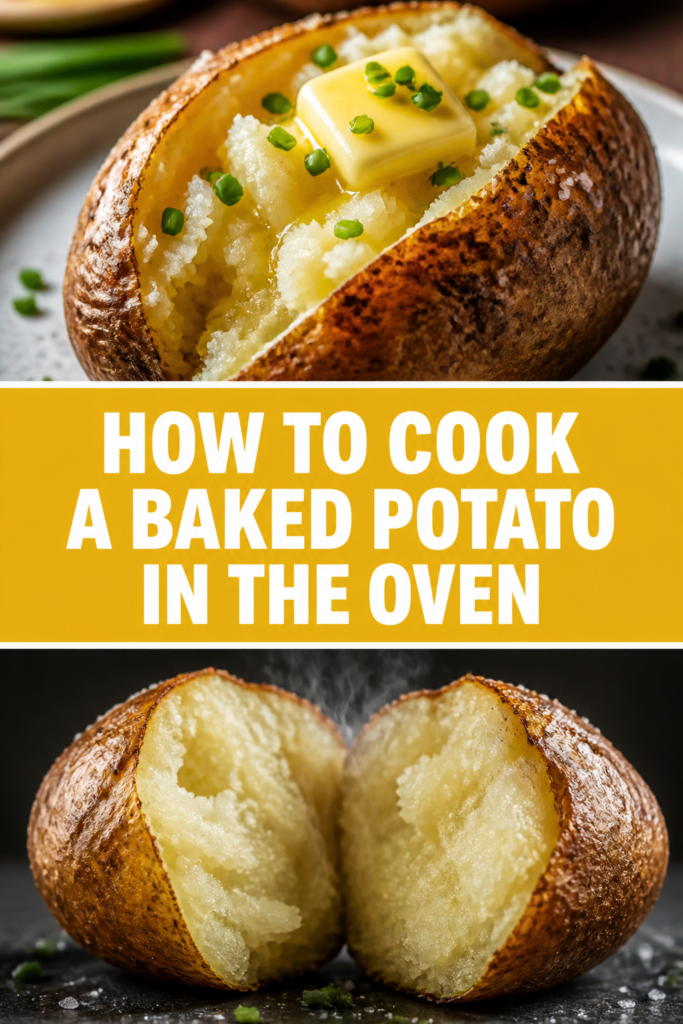
Slice each potato lengthwise down the middle, but don’t cut all the way through.
Gently push the ends inward to fluff up the interior, creating a perfect pocket for toppings.
Serve immediately with your favorite additions like butter, sour cream, chives, cheese, or chili.
Common Mistakes to Avoid
Wrapping in Aluminum Foil
Many people wrap their potatoes in foil before baking, believing it helps them cook faster or stay moist. However, foil traps steam around the potato.
This steaming action prevents the skin from becoming crispy and can lead to a soggy, rather than fluffy, interior.
For best results, always bake potatoes directly on the oven rack.
Not Piercing the Skin
Forgetting to pierce the potato skin is a common oversight. Without small holes for steam to escape, pressure builds up inside the potato as it heats.
This can cause the potato to burst open in your oven, creating a messy situation and an unevenly cooked potato.
Always make sure to poke several holes with a fork before baking.
Under-Salting the Skin
The skin of a baked potato is a delicious part of the experience, especially when it’s crispy and well-seasoned. Under-salting or not salting at all leaves the skin bland.
A generous coating of coarse salt not only adds flavor but also helps draw out moisture, contributing to a wonderfully crisp texture.
Don’t be shy with the salt on the exterior.
Baking at Too Low a Temperature
Baking potatoes at too low a temperature for an extended period can lead to a dry, dense, or unevenly cooked potato. The goal is to cook the potato through while achieving a fluffy interior and crisp skin.
A consistent high heat, around 400°F (200°C), ensures the potato cooks efficiently and develops the desired textures.
Avoid temperatures below 375°F (190°C) for optimal baking.
Troubleshooting
Potato Skin Isn’t Crispy
If your potato skin turned out soft or chewy instead of crisp, it’s likely due to excess moisture or baking conditions.
Ensure you thoroughly dry the potatoes after washing and before oiling.
Avoid wrapping them in foil, as this traps steam. Also, ensure your oven is fully preheated to 400°F (200°C) and bake the potatoes directly on the rack.
Potato Interior Is Dense or Watery
A dense or watery interior often points to steam being trapped inside the potato, or the wrong cooking temperature.
Always pierce the potato generously with a fork to allow steam to escape during baking.
Baking at too low a temperature can also contribute to this issue; stick to 400°F (200°C) for the best results.
Potatoes Took Too Long to Cook
If your potatoes are taking longer than expected, several factors could be at play. The most common reasons are an inaccurate oven temperature or very large potatoes.
Use an oven thermometer to verify your oven’s actual temperature.
Larger potatoes naturally require more baking time; consider cutting extremely large ones in half or cooking them separately.
Key Takeaways
- Always choose high-starch Russet potatoes for the best texture.
- Preheat your oven fully to 400°F (200°C) for even cooking.
- Wash, dry, and pierce your potatoes thoroughly to prevent explosions and ensure fluffiness.
- Oil and generously salt the skin for crispness and flavor.
- Bake directly on the oven rack; avoid aluminum foil.
- Confirm doneness by squeezing gently or using an instant-read thermometer (205-212°F).
Frequently Asked Questions
Can I bake potatoes ahead of time?
While freshly baked potatoes are best, you can bake them slightly ahead. For optimal results, bake them until just tender, then allow them to cool completely. Reheat in a 350°F (175°C) oven for 15-20 minutes, or until warmed through, to regain some crispness.
What’s the best way to store leftover baked potatoes?
Store leftover baked potatoes in an airtight container in the refrigerator for up to 3-4 days. Allow them to cool completely before storing to prevent condensation, which can make them soggy. Do not leave them at room temperature for extended periods.
Can I microwave a baked potato?
You can start a potato in the microwave to speed up cooking, but it won’t achieve the same crispy skin and fluffy texture as oven baking alone. For a quick start, microwave pierced potatoes for 5-10 minutes, then transfer to a 400°F (200°C) oven for 20-30 minutes to finish and crisp the skin.
Why do some people rub butter on their potatoes instead of oil?
Rubbing butter on potatoes adds a rich, dairy flavor to the skin that oil doesn’t provide. While oil is excellent for crisping, butter offers a distinct taste. You can use either, or even a combination, depending on your preferred flavor profile for the skin.
Our Top Recommended Finds
- Vegetable Brush: A good sturdy brush makes scrubbing dirt off potatoes quick and easy, ensuring a clean surface for baking.
- Instant-Read Thermometer: The most reliable way to check for perfect doneness inside your potato, taking the guesswork out of baking.
- Coarse Sea Salt: Essential for that wonderfully crispy and flavorful skin, a good quality coarse salt makes a noticeable difference.
Mastering Your Next Meal
You now have all the knowledge to create a truly exceptional baked potato.
This simple side dish can elevate any meal, from a casual weeknight dinner to a festive gathering.
Don’t just read about it; grab some Russets and preheat your oven today.
Experiment with different toppings and make this versatile classic your own.