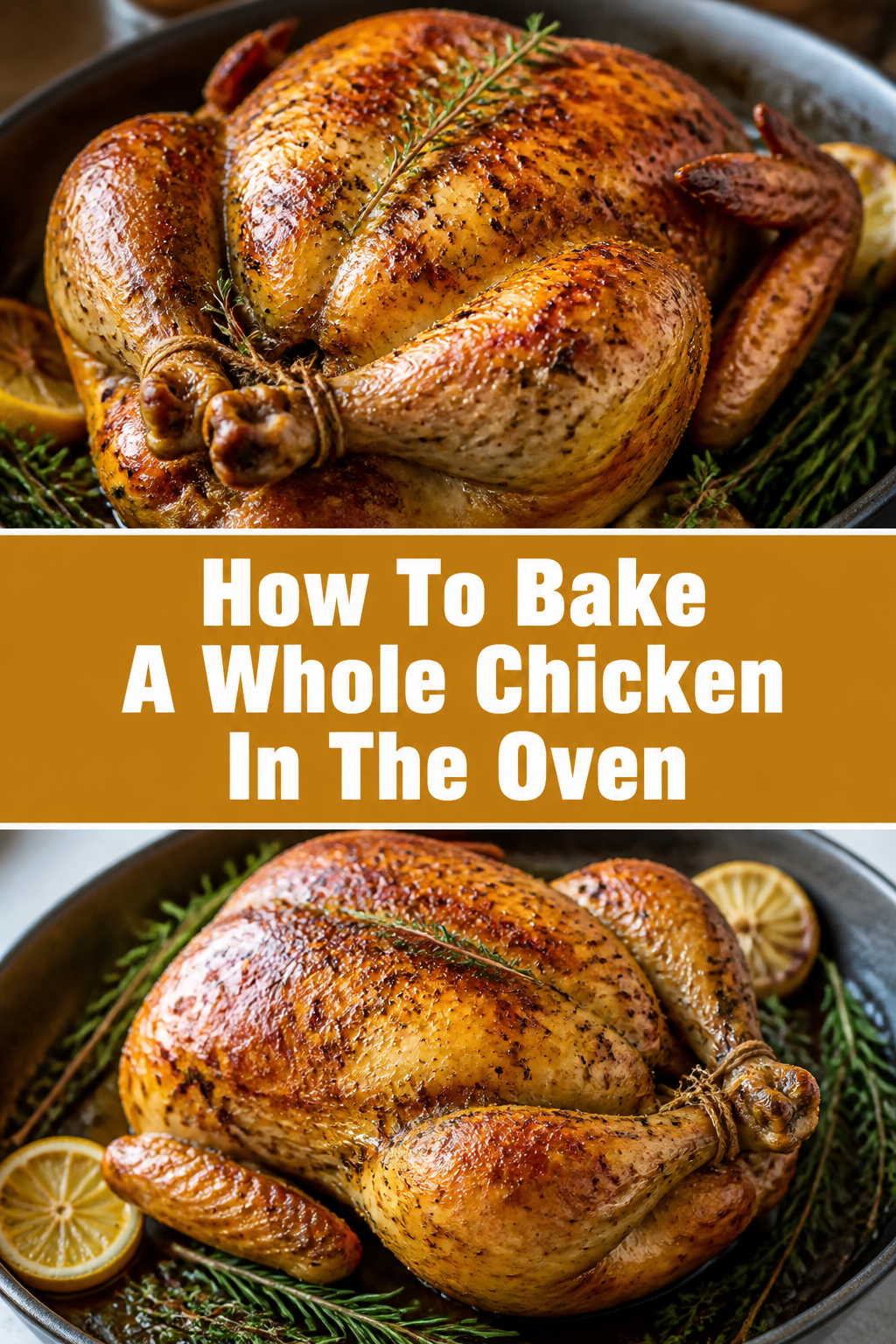
🍗 How To Bake A Whole Chicken In The Oven
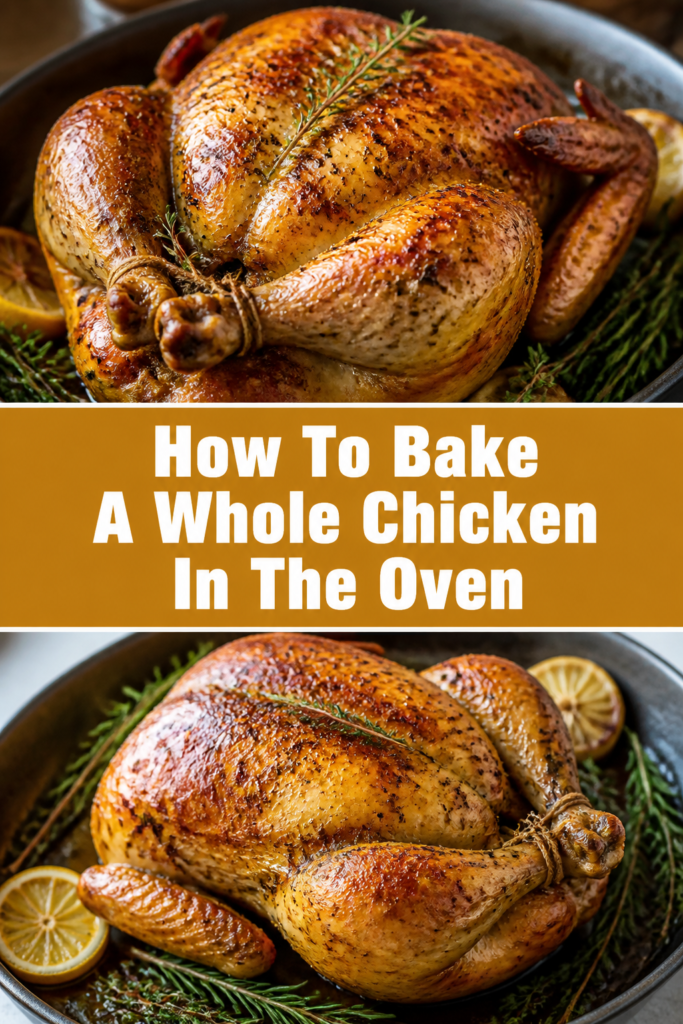
Imagine a centerpiece for your dinner table: a perfectly golden-brown chicken, glistening with savory juices, its skin crisp and inviting.
This isn’t just a dream; it’s an achievable reality, and this guide will show you exactly how to get there.
Having roasted countless chickens over the years, I’ve refined the process to be straightforward and consistently delicious, ensuring your first (or hundredth) roast is a triumph.
Quick Overview
Baking a whole chicken in the oven transforms a simple bird into a succulent, flavorful meal. You’ll master the art of achieving crispy skin and tender, juicy meat every time, making it a staple in your cooking repertoire.
- Time needed: Approximately 1 hour 45 minutes to 2 hours 30 minutes (including prep and resting)
- Difficulty: Beginner
- What you’ll need: A whole chicken, basic seasonings, a roasting pan, and a reliable meat thermometer
Step-by-Step Instructions
Step 1: Prepare Your Workspace and Chicken
Begin by ensuring your kitchen counter is clean and ready. Roasting a chicken can be a bit messy, so clear some space.
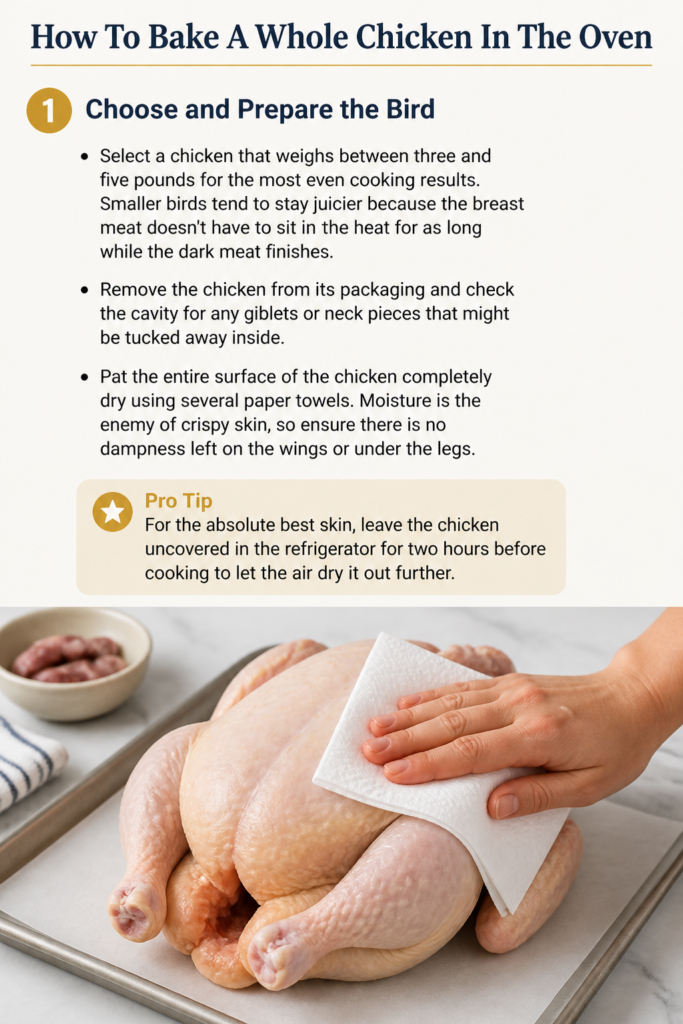
First, remove the chicken from its packaging. Reach inside the cavity and pull out the giblets and neck, which are usually in a small bag. You can discard these or save them for stock.
Rinse the chicken thoroughly under cold running water, both inside and out. This helps remove any loose bits.
Pat the chicken completely dry with paper towels. Achieving crispy skin depends heavily on a dry surface, so don’t skip this critical step.
Step 2: Create Your Flavor Profile
Now it’s time to infuse your chicken with delicious flavor. Start by generously seasoning the inside cavity of the chicken with salt and freshly ground black pepper.
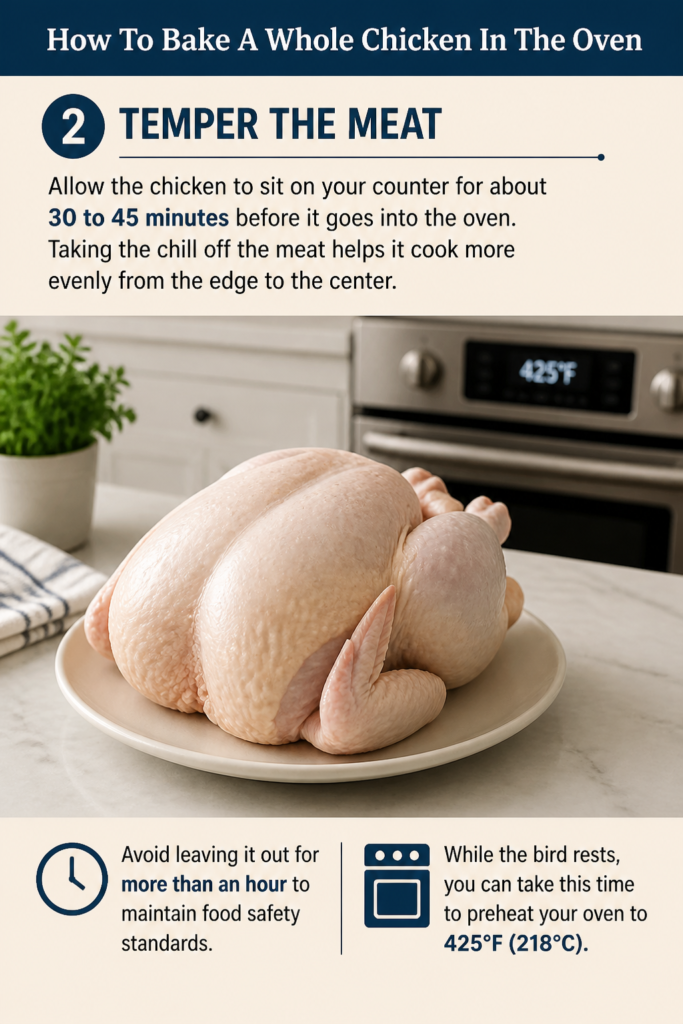
Next, prepare your external seasoning. You can use a simple mix of salt, pepper, garlic powder, and paprika, or get creative with fresh herbs like rosemary and thyme.
Rub the entire exterior of the chicken with a tablespoon or two of olive oil or melted butter. This helps the seasonings adhere and promotes browning.
Sprinkle your chosen seasonings all over the chicken, making sure to cover every surface, including under the wings and legs. Don’t be shy with the seasoning; a whole chicken can handle a good amount.
Pro Tip: For an extra layer of flavor and moisture, gently lift the skin over the breast and slide a few pats of butter or sprigs of fresh herbs directly underneath before seasoning the skin.
Step 3: Truss the Chicken (Optional but Recommended)
Trussing means tying the chicken’s legs and wings with kitchen twine. This isn’t just for presentation; it helps the chicken cook more evenly.
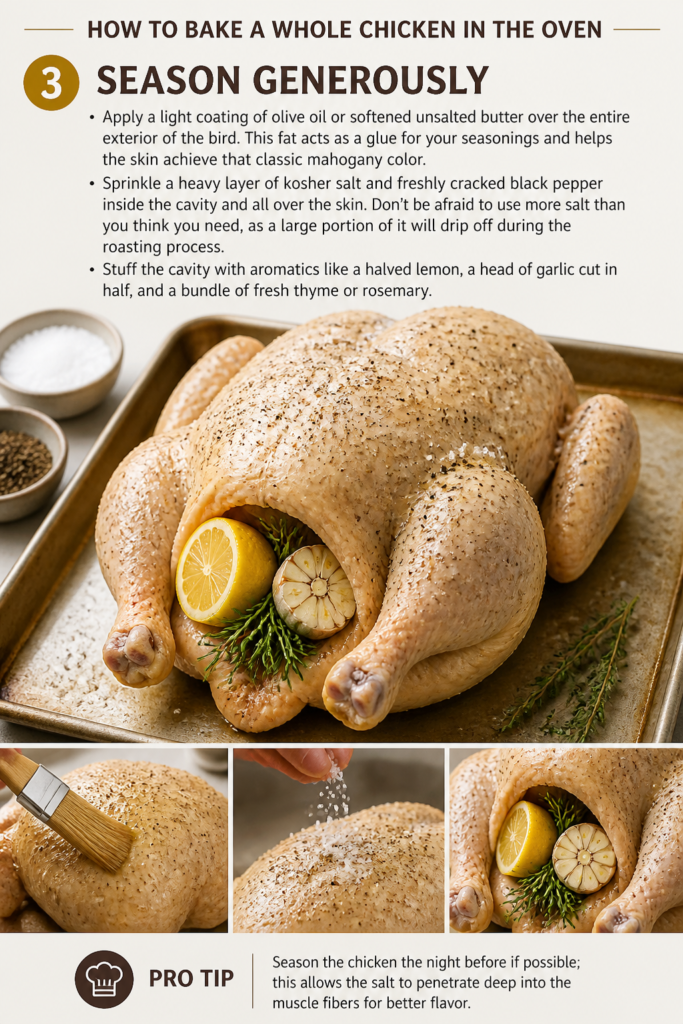
By tucking the wings close to the body and tying the legs together, you create a more compact shape. This prevents the wing tips and leg ends from overcooking and drying out before the breast is done.
To truss, simply take a long piece of kitchen twine. Center it under the chicken’s back, bring it up around the wings, cross it over the breast, then loop it around the ends of the drumsticks and tie them together securely.
If trussing feels too complex, don’t worry. You can still achieve a great roast without it, just be mindful of potential uneven cooking.
Step 4: Preheat the Oven and Prepare the Pan
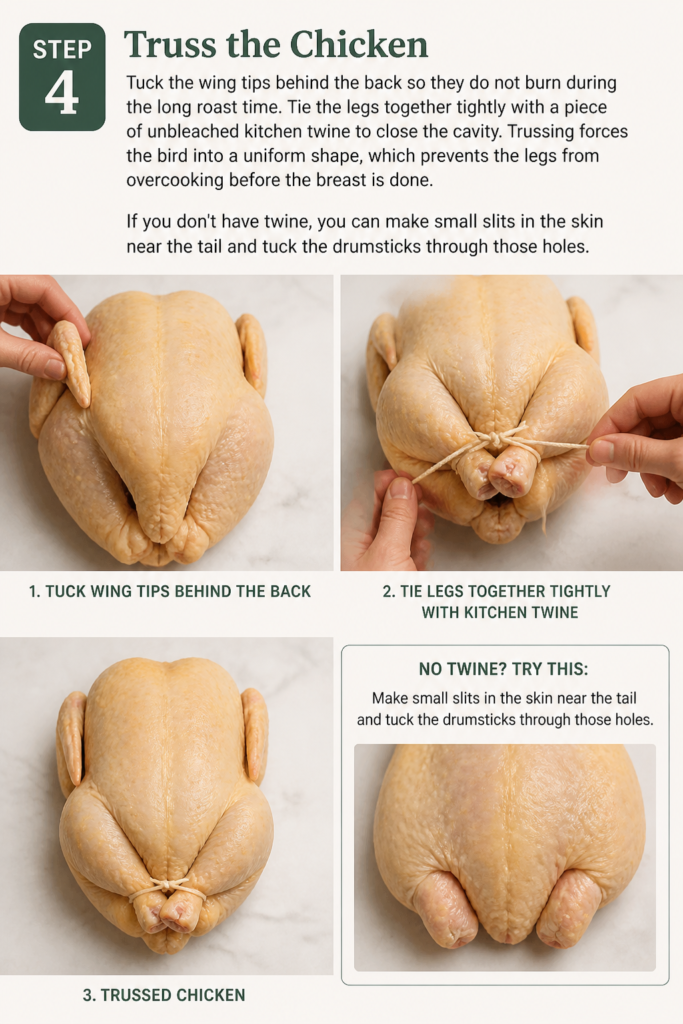
Preheat your oven to 425°F (220°C) with an oven rack positioned in the middle. A high initial temperature helps achieve that desirable crispy skin.
Choose a sturdy roasting pan that is large enough to comfortably hold the chicken without overcrowding it. A pan with a rack is ideal, as it lifts the chicken out of its drippings, allowing air to circulate and promoting even browning on all sides.
If you don’t have a rack, you can create a makeshift one by placing chopped root vegetables like carrots, celery, and onions on the bottom of the pan. These also add flavor to any pan drippings for gravy later.
Place the seasoned and trussed chicken breast-side up on the roasting rack or bed of vegetables in the pan.
Step 5: Roast the Chicken
Once the oven is preheated, carefully place the roasting pan with the chicken into the hot oven. Start with the higher temperature.
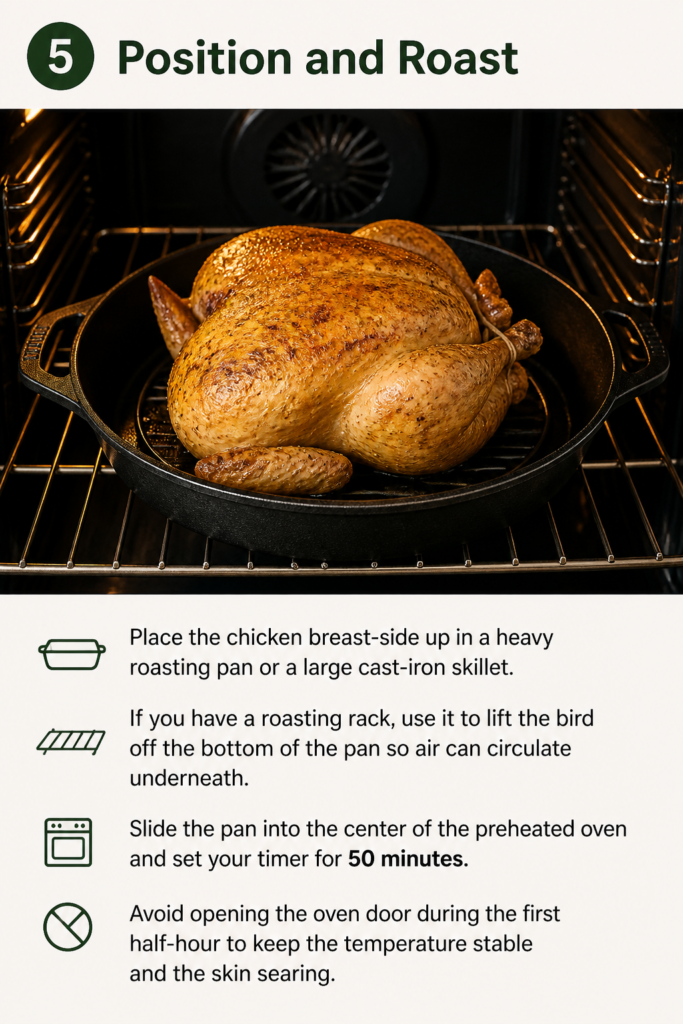
Roast the chicken at 425°F (220°C) for 15-20 minutes. This initial blast of high heat helps to crisp the skin and develop a beautiful golden color.
After the initial high-heat roasting, reduce the oven temperature to 375°F (190°C). Continue roasting until the chicken is cooked through.
The total cooking time will vary depending on the size of your chicken. A general rule of thumb is about 20 minutes per pound, plus an extra 15 minutes.
Step 6: Monitor and Baste (If Desired)
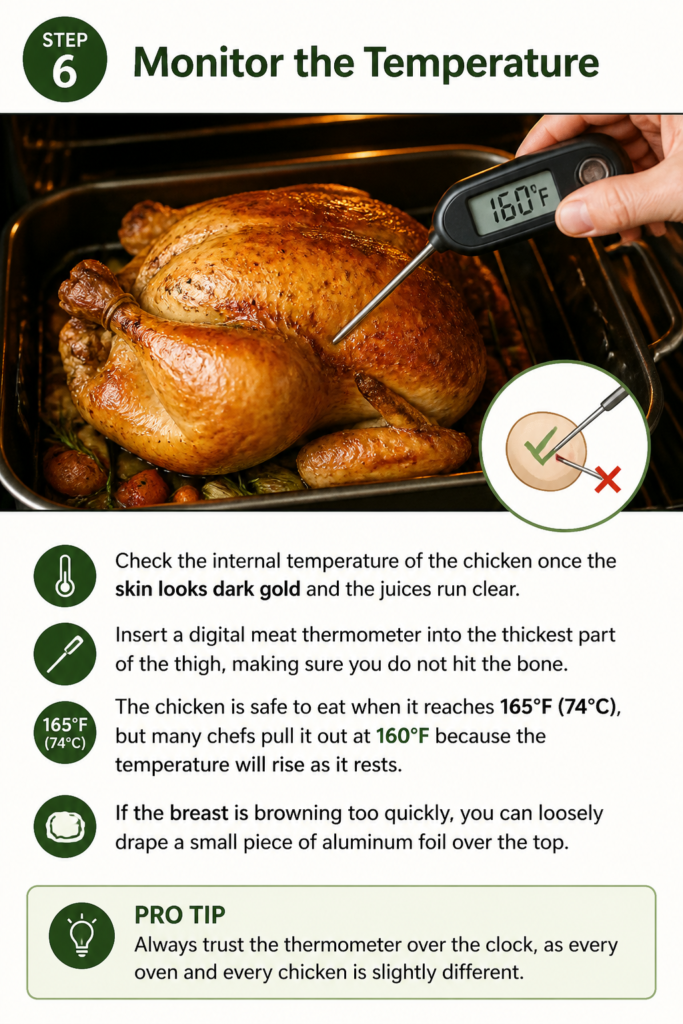
While the chicken roasts, it’s good practice to keep an eye on it. If the skin starts to brown too quickly, you can loosely tent it with aluminum foil.
Basting involves spooning the pan drippings over the chicken during cooking. While some cooks swear by it for moisture, a well-seasoned and properly cooked chicken often doesn’t strictly require basting.
If you choose to baste, do so every 20-30 minutes. Be quick when opening the oven door to avoid significant heat loss.
The most important part of monitoring is checking the internal temperature. This is the only reliable way to ensure the chicken is safely cooked.
Pro Tip: Invest in a good quality instant-read meat thermometer. It’s the single most important tool for perfectly cooked poultry, preventing both undercooked dangers and overcooked dryness.
Step 7: Check for Doneness and Rest the Chicken
The chicken is fully cooked when an instant-read thermometer inserted into the thickest part of the thigh, without touching the bone, registers 165°F (74°C). Check multiple spots to be sure.
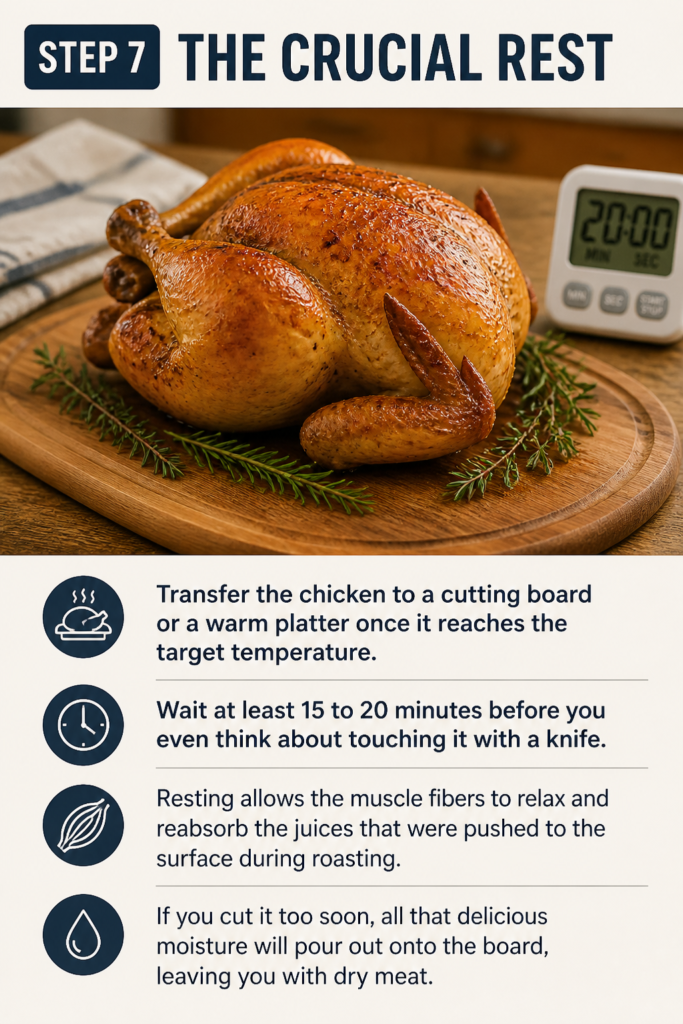
Once the chicken reaches the target temperature, carefully remove the roasting pan from the oven. Transfer the chicken to a clean cutting board or serving platter.
This next step is crucial: allow the chicken to rest for at least 15-20 minutes before carving. Resting lets the juices redistribute throughout the meat.
If you cut into the chicken too soon, all those delicious juices will run out, leaving you with dry meat. Tent the chicken loosely with foil during its rest to keep it warm.
Step 8: Carve and Serve
After resting, the chicken is ready to be carved. Remove any twine if you trussed it.
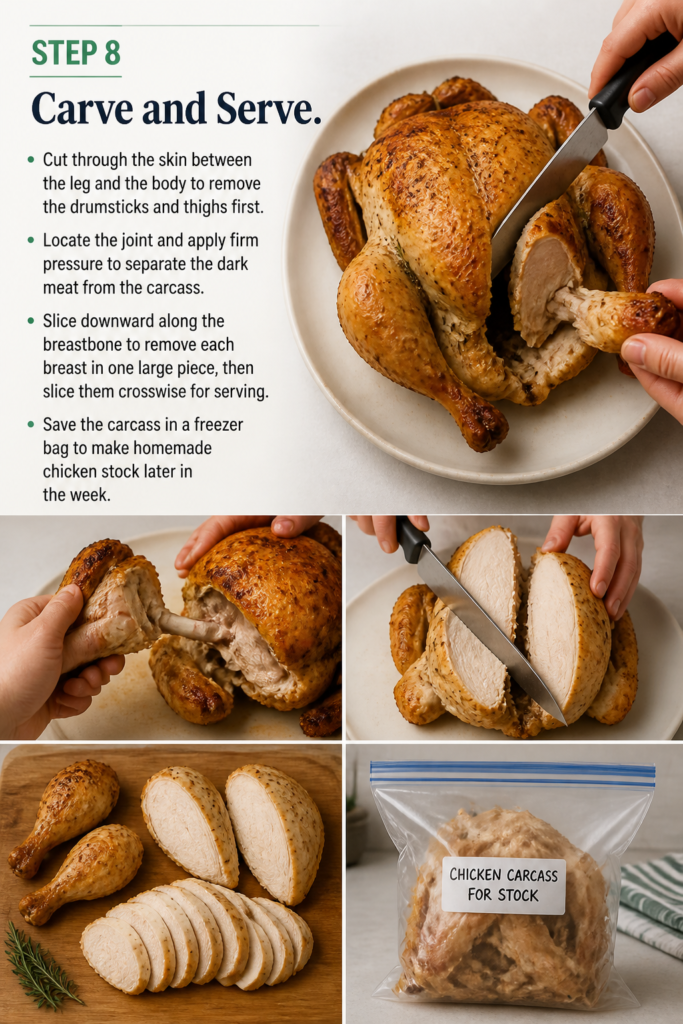
Start by separating the leg and thigh quarters from the breast. Then, separate the drumstick from the thigh.
Next, slice the breast meat from the bone. You can carve it into individual slices or larger pieces depending on preference.
Arrange the carved chicken on a platter and serve immediately. Enjoy your perfectly baked whole chicken!
Common Mistakes to Avoid
Not Patting the Chicken Dry
Many home cooks skip the crucial step of thoroughly patting the chicken dry with paper towels. A moist surface prevents the skin from crisping up, leading to a rubbery texture instead of a golden crunch. Always ensure the chicken is as dry as possible before applying oil and seasoning.
Overcrowding the Roasting Pan
Trying to fit too many vegetables or a chicken that is too large for the pan can hinder proper roasting. When the pan is overcrowded, moisture cannot evaporate effectively, and the chicken essentially steams rather than roasts. Use a pan that allows ample space around the chicken for air circulation, or cook vegetables separately.
Skipping the Resting Period
It’s tempting to carve a hot, fragrant chicken right out of the oven, but doing so is a major mistake. Cutting into the chicken immediately allows all the precious juices to escape, leaving the meat dry and less flavorful. Always allow the chicken to rest for 15-20 minutes, loosely tented with foil, to let the juices redistribute for maximum tenderness and moisture.
Eyeballing Doneness Instead of Using a Thermometer
Guessing if your chicken is cooked by checking the color of the juices or poking it can lead to either undercooked poultry (a health risk) or overcooked, dry meat. An instant-read meat thermometer is an indispensable tool. Always check the internal temperature in the thickest part of the thigh, away from the bone, to ensure it reaches a safe and juicy 165°F (74°C).
Troubleshooting
Chicken Skin Isn’t Crispy
If your chicken skin isn’t reaching that perfect crispiness, there are a few things to check. Ensure you thoroughly patted the chicken dry before seasoning, as moisture is the enemy of crisp skin. Also, make sure your initial oven temperature was high enough (425°F) to kickstart the browning process. For extra crispiness, try rubbing a bit of baking powder (about 1/2 teaspoon per chicken) into your seasoning mix; it helps draw out moisture.
Chicken is Dry and Tough
Dry chicken is usually a sign of overcooking. The most effective way to prevent this is by using a reliable meat thermometer and removing the chicken from the oven as soon as it hits 165°F (74°C) in the thickest part of the thigh. Skipping the resting period can also make chicken seem dry, as the juices haven’t had time to redistribute. For future attempts, consider brining your chicken beforehand to add extra moisture.
Uneven Cooking (e.g., breasts dry, thighs undercooked)
Uneven cooking often happens when the chicken isn’t trussed, or when the oven has hot spots. Trussing helps create a more uniform shape, allowing all parts to cook at a similar rate. If your oven has hot spots, rotate the roasting pan halfway through the cooking time. You can also try starting the chicken breast-side down for the first 30 minutes, then flipping it, which helps the dark meat cook more while protecting the breast from drying out.
Key Takeaways
- Thoroughly patting your chicken dry is the secret to achieving wonderfully crispy skin.
- Generously season both the inside and outside of the chicken to build deep flavor.
- Trussing the chicken, while optional, promotes more even cooking and a better presentation.
- Always start with a high oven temperature (425°F) for initial browning, then reduce it to 375°F for thorough cooking.
- An instant-read meat thermometer is essential for ensuring the chicken is perfectly cooked to 165°F (74°C) without overcooking.
- Resting the chicken for 15-20 minutes after baking is non-negotiable for juicy, tender results.
Frequently Asked Questions
How long does it take to bake a whole chicken per pound?
Generally, you should plan for about 20 minutes of cooking time per pound of chicken when baking at 375°F (190°C), plus an additional 15 minutes. For example, a 4-pound chicken would take approximately 1 hour 35 minutes. Always rely on an internal temperature of 165°F (74°C) rather than just time.
Should I cover the chicken with foil while baking?
You typically don’t need to cover the chicken for most of the baking process, especially if you want crispy skin. However, if the skin starts browning too quickly before the chicken is fully cooked, you can loosely tent it with aluminum foil for the remainder of the cooking time to prevent it from burning.
What temperature should a whole chicken be when it’s done?
A whole chicken is safely cooked when an instant-read meat thermometer inserted into the thickest part of the thigh, without touching the bone, reads 165°F (74°C). It’s a good idea to check in a couple of different spots to ensure even cooking.
Can I stuff the cavity of the chicken?
While you can stuff the cavity with aromatics like lemon halves, onion wedges, garlic cloves, or fresh herbs to add flavor, it’s generally not recommended to stuff it with traditional bread-based stuffing. Stuffed chickens take longer to cook, and the stuffing itself needs to reach a safe temperature (165°F) to be safe, which can lead to overcooked chicken meat.
Our Top Recommended Finds
- Digital Instant-Read Meat Thermometer: Absolutely vital for ensuring perfectly cooked, juicy chicken every time, preventing both undercooked risks and overcooked dryness.
- Heavy-Duty Roasting Pan with Rack: A good quality roasting pan with a V-rack lifts the chicken out of its drippings, allowing for excellent air circulation and crispy skin all around.
- Kitchen Twine (Butcher’s Twine): Essential for trussing your chicken, which helps it cook more evenly and results in a more attractive presentation.
Your Next Delicious Meal Awaits
You now have all the knowledge and practical steps to bake a whole chicken in your oven that will impress everyone at your table. This isn’t just about following a recipe; it’s about understanding the nuances that transform a simple bird into a culinary masterpiece.
Why wait for a special occasion? Embrace the joy of home cooking today. Gather your ingredients, preheat that oven, and get ready to enjoy the incredible aroma and taste of your very own perfectly roasted chicken. Experiment with different herbs and spices, pair it with your favorite roasted vegetables, or use the leftovers for amazing sandwiches and salads. The possibilities are endless, and the delicious journey starts now!