🥩 How To Cook Filet Mignon On The Stove
I have spent over a decade in professional kitchens where the stovetop sear was a daily ritual.
There is a specific, tactile satisfaction in watching a cold piece of beef transform into a butter-tender masterpiece using nothing but a heavy pan and a flame.
This guide will teach you the exact techniques chefs use to achieve that iconic crust and edge-to-edge pink interior without ever turning on your oven.

Quick Overview
Cooking a filet mignon on the stove is about controlling heat and timing to respect the leanest cut of the cow.
- Time needed: 25-30 minutes (including resting time)
- Difficulty: Intermediate
- What you’ll need: Cast iron skillet, high-smoke point oil, unsalted butter, fresh aromatics, and a reliable meat thermometer.
Step-by-Step Instructions
Step 1: Select the Right Cut
Look for steaks that are at least 1.5 to 2 inches thick to ensure you don’t overcook the center before the crust forms.
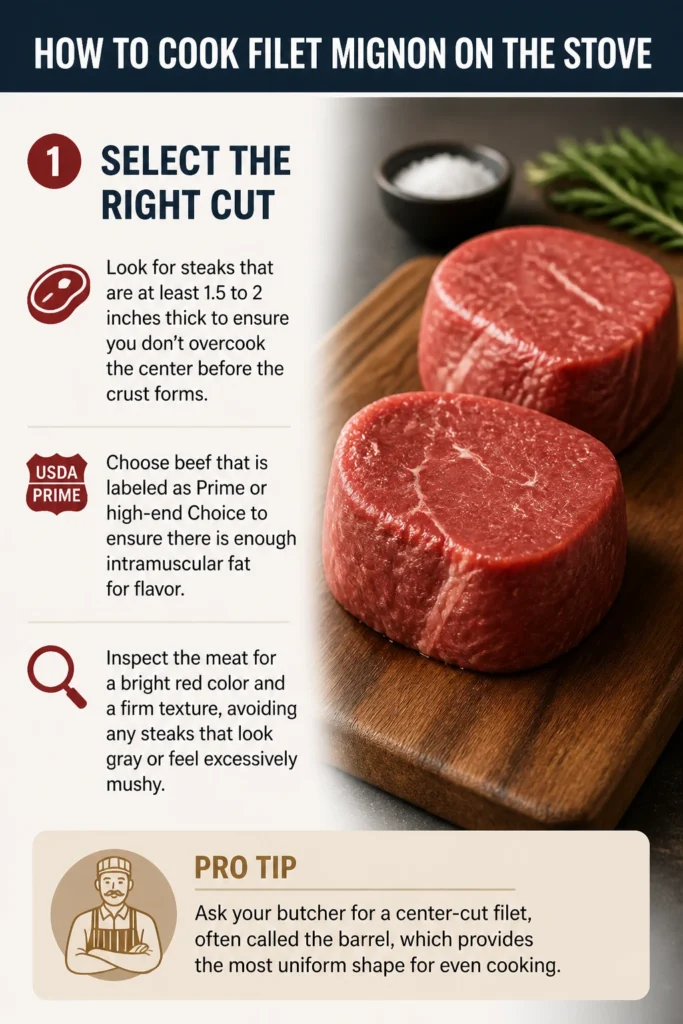
Choose beef that is labeled as “Prime” or high-end “Choice” to ensure there is enough intramuscular fat for flavor.
Inspect the meat for a bright red color and a firm texture, avoiding any steaks that look gray or feel excessively mushy.
Pro Tip: Ask your butcher for a center-cut filet, often called the “barrel,” which provides the most uniform shape for even cooking.
Step 2: Temper the Meat
Remove the steaks from the refrigerator at least 30 to 45 minutes before you plan to start cooking.
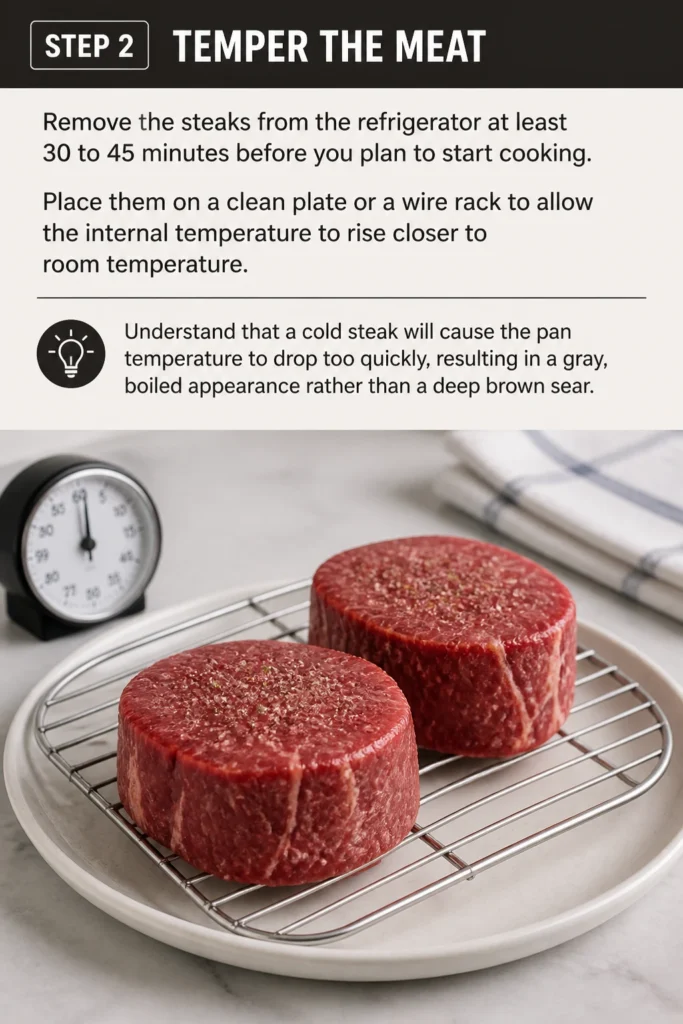
Place them on a clean plate or a wire rack to allow the internal temperature to rise closer to room temperature.
Understand that a cold steak will cause the pan temperature to drop too quickly, resulting in a gray, boiled appearance rather than a deep brown sear.
Step 3: Dry and Season Aggressively
Pat every surface of the meat completely dry using paper towels to remove all surface moisture.
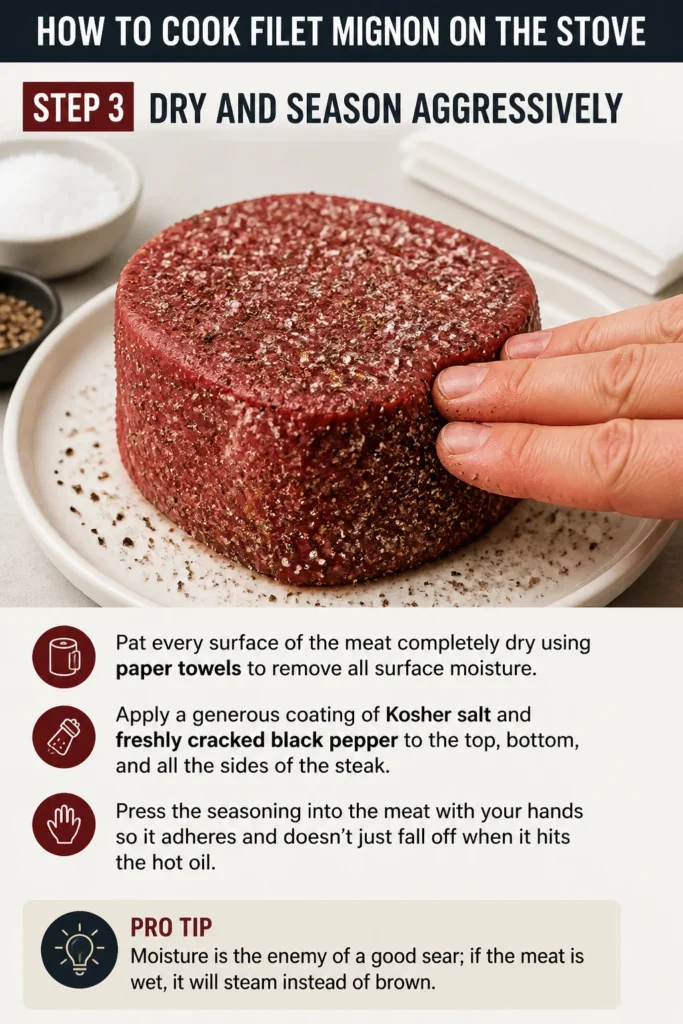
Apply a generous coating of Kosher salt and freshly cracked black pepper to the top, bottom, and all the sides of the steak.
Press the seasoning into the meat with your hands so it adheres and doesn’t just fall off when it hits the hot oil.
Pro Tip: Moisture is the enemy of a good sear; if the meat is wet, it will steam instead of brown.
Step 4: Preheat the Skillet
Set a heavy-bottomed skillet, preferably cast iron, over medium-high heat for at least five minutes.
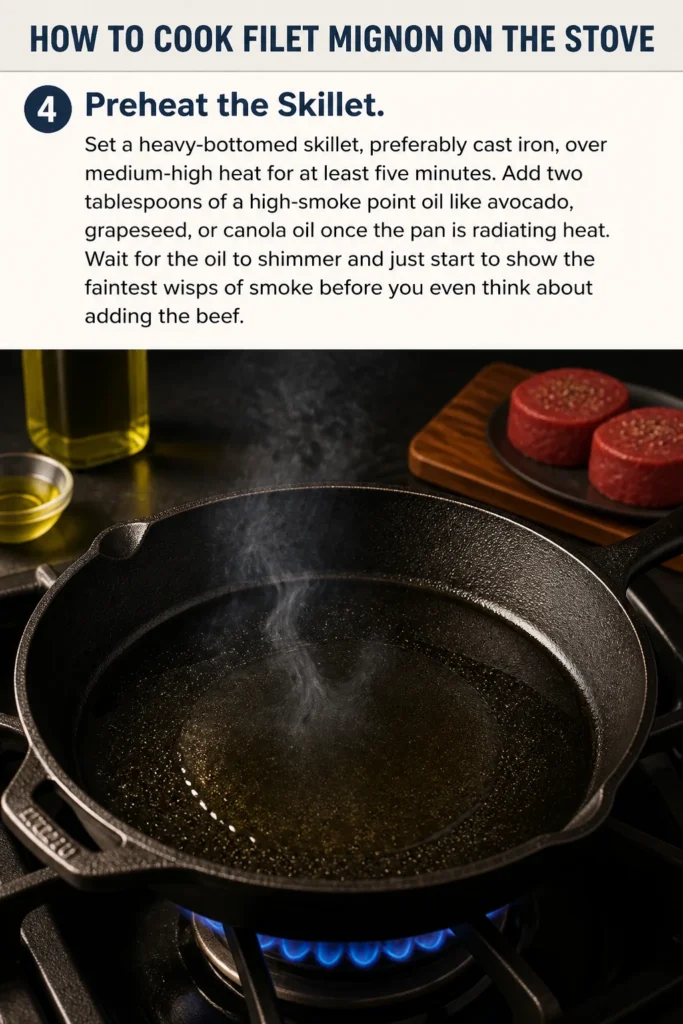
Add two tablespoons of a high-smoke point oil like avocado, grapeseed, or canola oil once the pan is radiating heat.
Wait for the oil to shimmer and just start to show the faintest wisps of smoke before you even think about adding the beef.
Step 5: Execute the Initial Sear
Lay the steaks into the pan carefully, laying them away from your body to avoid any hot oil splashes.
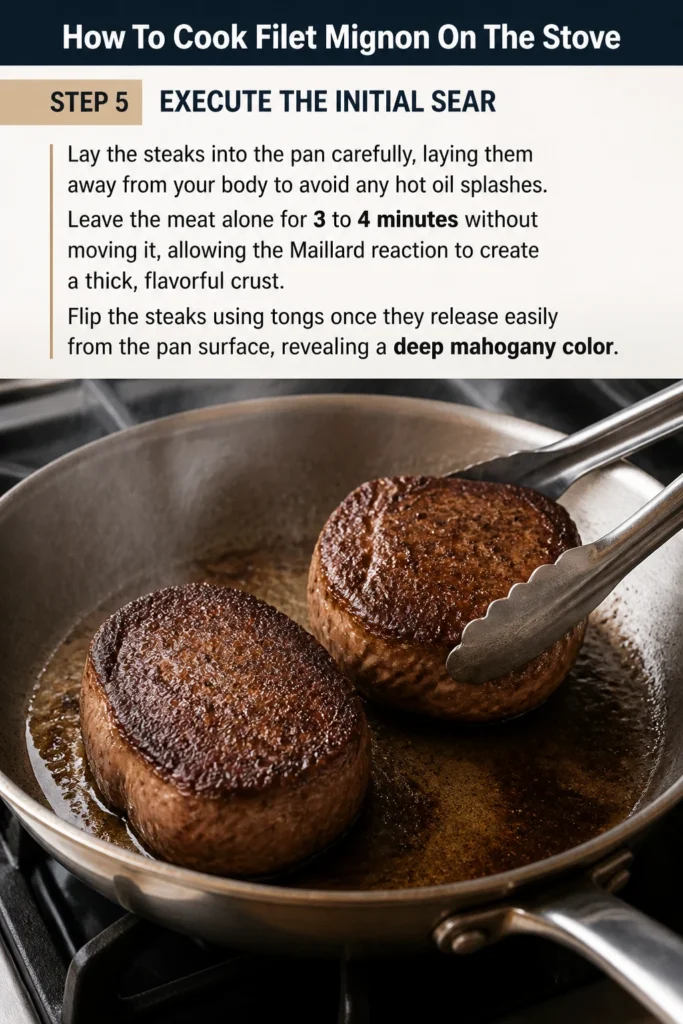
Leave the meat alone for 3 to 4 minutes without moving it, allowing the Maillard reaction to create a thick, flavorful crust.
Flip the steaks using tongs once they release easily from the pan surface, revealing a deep mahogany color.
Step 6: Sear the Sides
Turn the steaks onto their sides once both the top and bottom have developed a beautiful crust.
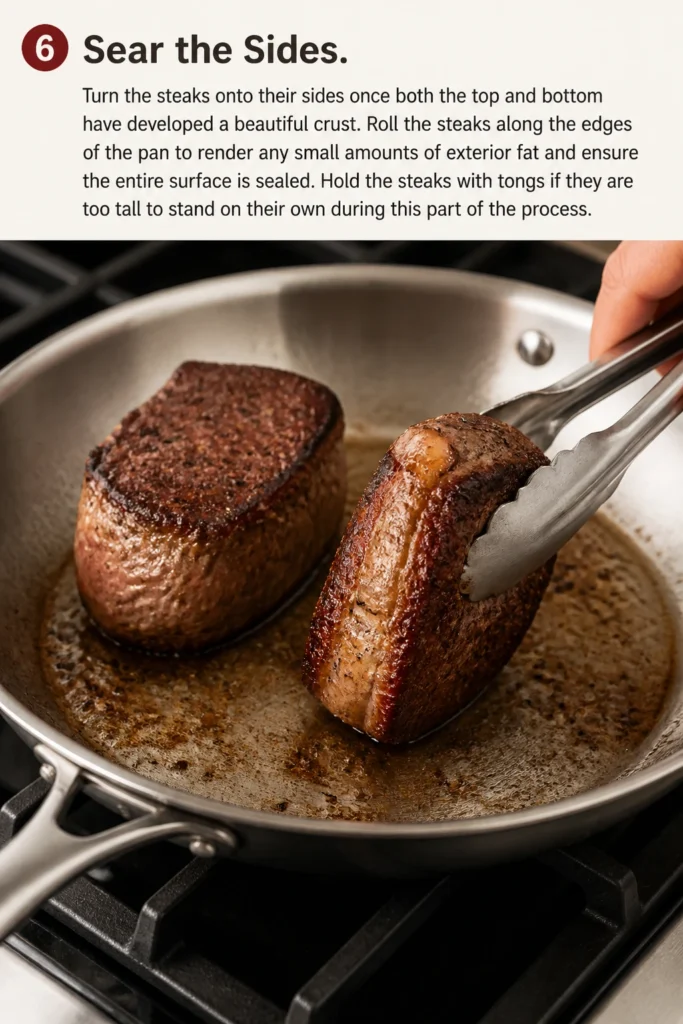
Roll the steaks along the edges of the pan to render any small amounts of exterior fat and ensure the entire surface is sealed.
Hold the steaks with tongs if they are too tall to stand on their own during this part of the process.
Step 7: The Butter Baste (Arrosé)
Reduce the heat to medium and add three tablespoons of unsalted butter to the pan along with smashed garlic cloves and fresh thyme.
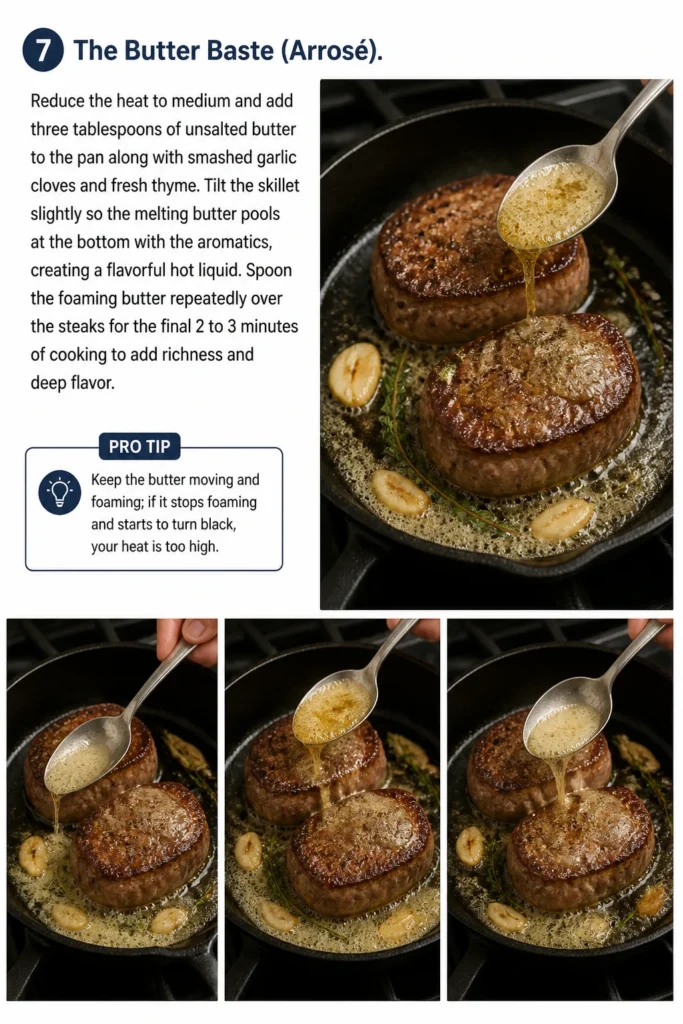
Tilt the skillet slightly so the melting butter pools at the bottom with the aromatics, creating a flavorful hot liquid.
Spoon the foaming butter repeatedly over the steaks for the final 2 to 3 minutes of cooking to add richness and deep flavor.
Pro Tip: Keep the butter moving and foaming; if it stops foaming and starts to turn black, your heat is too high.
Step 8: Check for Doneness
Insert an instant-read meat thermometer into the thickest part of the filet to check the internal temperature.
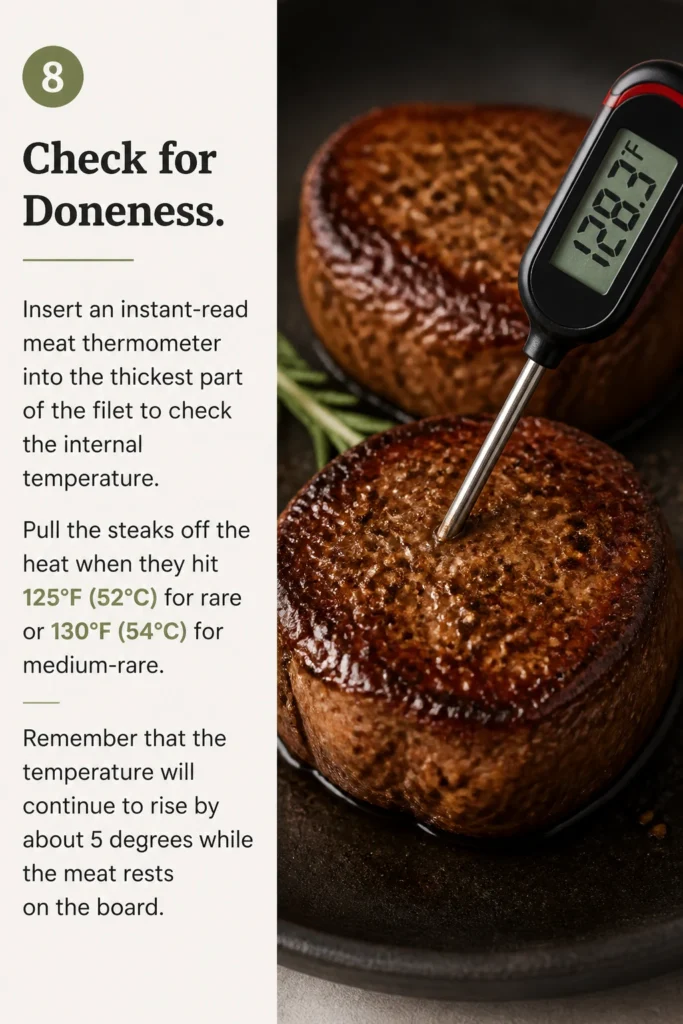
Pull the steaks off the heat when they hit 125°F (52°C) for rare or 130°F (54°C) for medium-rare.
Remember that the temperature will continue to rise by about 5 degrees while the meat rests on the board.
Step 9: Rest the Meat
Transfer the cooked filets to a warm plate or a wooden cutting board to rest for at least 8 to 10 minutes.
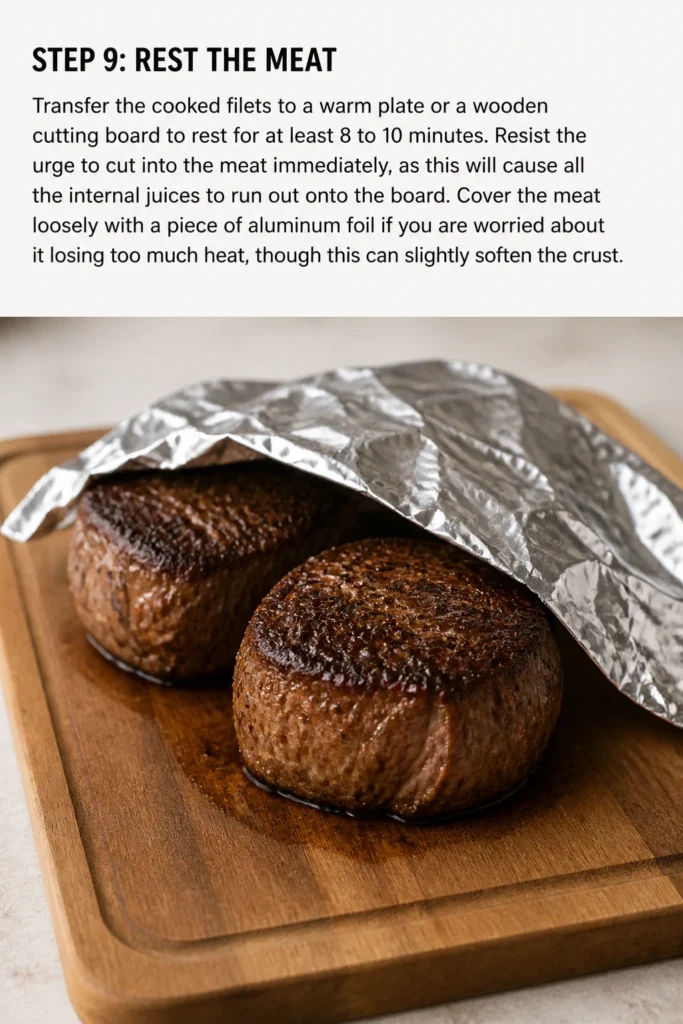
Resist the urge to cut into the meat immediately, as this will cause all the internal juices to run out onto the board.
Cover the meat loosely with a piece of aluminum foil if you are worried about it losing too much heat, though this can slightly soften the crust.
Common Mistakes to Avoid
Using Extra Virgin Olive Oil
Extra virgin olive oil has a very low smoke point and will burn long before the pan is hot enough to sear a steak.
This creates a bitter, acrid flavor that ruins the delicate taste of the filet mignon.
Stick to oils that can handle temperatures above 400 degrees Fahrenheit for the best results.
Flipping the Meat Too Early
Many home cooks get nervous and start moving the steak around the pan before the crust has had time to form.
If the meat sticks to the pan when you try to lift it, it is not ready to be turned yet.
Patience is required to allow the proteins to bond and create that crunchy exterior texture.
Crowding the Pan
Putting too many steaks in a single skillet at once will cause the temperature of the metal to plummet.
This leads to the meat releasing its juices into the pan, which then boil the steak rather than searing it.
Cook in batches or use two separate pans if you are feeding a large group of people.
Troubleshooting
The Pan is Smoking Excessively
If your kitchen is filling with thick smoke, your heat is likely too high or your oil has broken down.
Lower the heat slightly and ensure you are using an oil with a high smoke point like avocado oil.
You can also briefly lift the pan off the burner to allow the temperature to stabilize before continuing.
The Outside is Charred but the Inside is Raw
This usually happens when the steak was too cold when it hit the pan or the heat was set to “high” rather than “medium-high.”
To fix this, lower the heat significantly and continue to butter baste the steak until the internal temperature reaches your target.
In the future, make sure the steak sits at room temperature for at least 45 minutes before cooking.
The Butter is Burning
If the butter turns dark black and smells like smoke, it has reached its limit and will taste bitter.
Carefully wipe the pan out with a thick wad of paper towels held by tongs and start the basting process with fresh butter.
Always wait until the very end of the cooking process to add butter, as it cannot withstand the high heat of the initial sear.
Key Takeaways
- Always pat the steak dry with paper towels to ensure a high-quality crust.
- Use a cast iron skillet for its superior heat retention and distribution.
- Season the meat generously with Kosher salt right before it hits the pan.
- Butter basting with aromatics adds a professional steakhouse finish.
- Never skip the resting period, as it allows the muscle fibers to relax and retain moisture.
- Pull the meat 5 degrees before your target temperature to account for carry-over cooking.
Frequently Asked Questions
Can I cook filet mignon in a non-stick pan?
It is possible, but it is not recommended because non-stick coatings are not designed for the high heat required for a proper sear.
You will struggle to get a dark, crusty exterior, and the high heat can actually damage the non-stick surface of your cookware.
Stainless steel or cast iron are much better choices for this specific culinary task.
How do I know when the steak is medium-rare without a thermometer?
You can use the “finger test” by pressing the fleshy part of your palm under your thumb while touching your middle finger to your thumb.
The steak should have the same springy resistance as that part of your hand when it reaches medium-rare.
However, using a digital thermometer is the only way to guarantee 100% accuracy every time.
Should I use salted or unsalted butter for basting?
Unsalted butter is the standard choice because it allows you to control the seasoning level of the final dish.
Salted butter can sometimes become too concentrated as the water evaporates in the hot pan, making the steak overly salty.
If you only have salted butter, reduce the amount of salt you use during the initial seasoning phase.
Is it okay to flip the steak more than once?
Yes, modern culinary science suggests that flipping the steak every minute can actually lead to more even internal cooking.
While the traditional “one flip” rule is popular, multiple flips can prevent a thick gray band from forming under the crust.
Choose the method that you feel most comfortable with, as both can yield excellent results.
Our Top Recommended Finds
- 12-Inch Cast Iron Skillet: This is the essential tool for heat retention and achieving a restaurant-quality sear.
- Digital Instant-Read Thermometer: This removes all the guesswork and ensures you never overcook an expensive cut of meat.
- Long-Handled Stainless Steel Tongs: These provide the grip and distance needed to flip steaks safely in a hot, splattering pan.
Mastering the Art of the Skillet Sear
Cooking the perfect filet mignon is a skill that improves every time you step into the kitchen and listen to the sizzle of the pan.
Once you have mastered the basic stovetop sear, you can begin experimenting with different compound butters or pan sauces made from the brown bits left in the skillet.
Try making a simple red wine reduction or a creamy peppercorn sauce to elevate your next dinner to a true gourmet experience.
The best way to learn is to start today, so pick up a high-quality cut of beef and put these techniques to the test tonight.