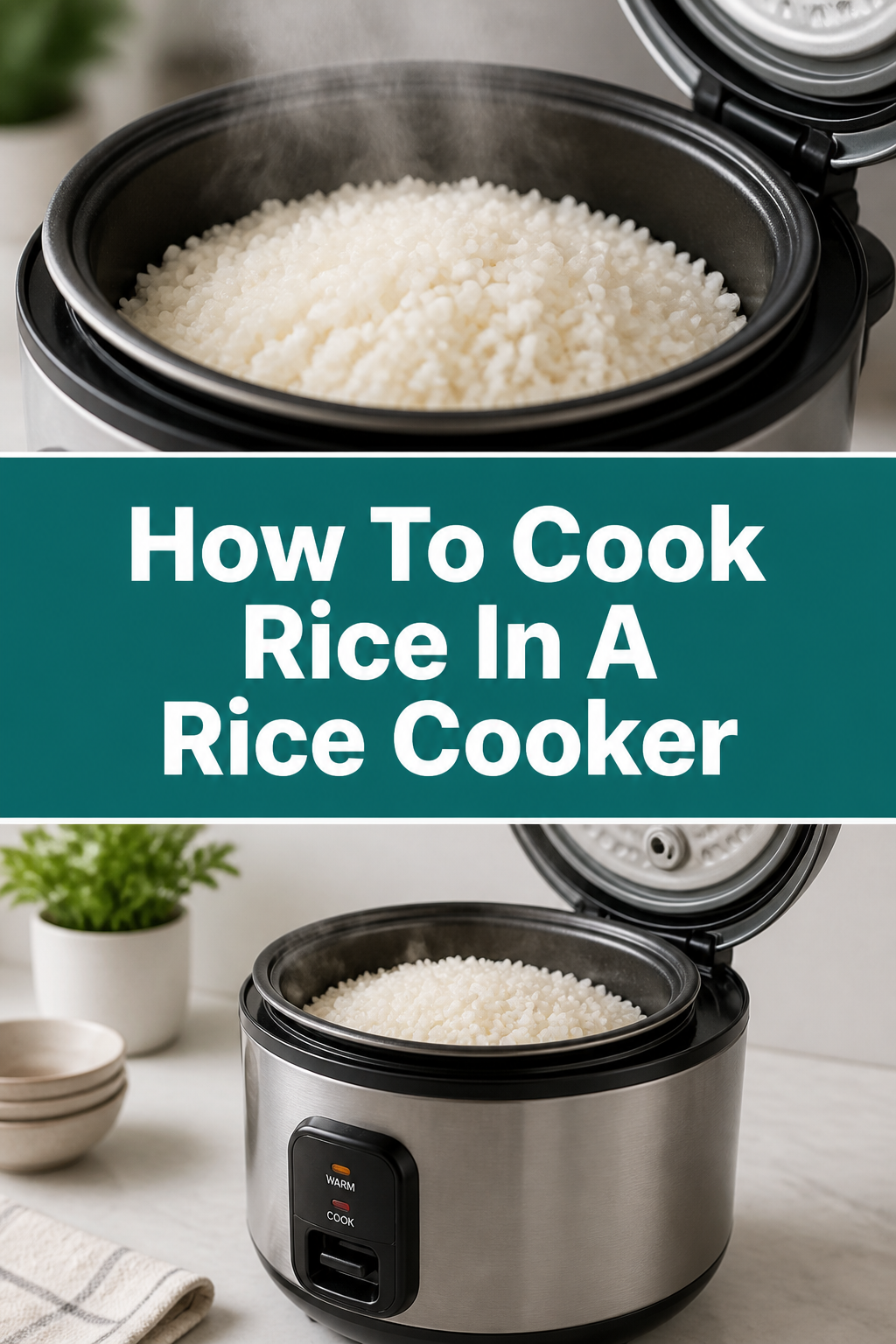
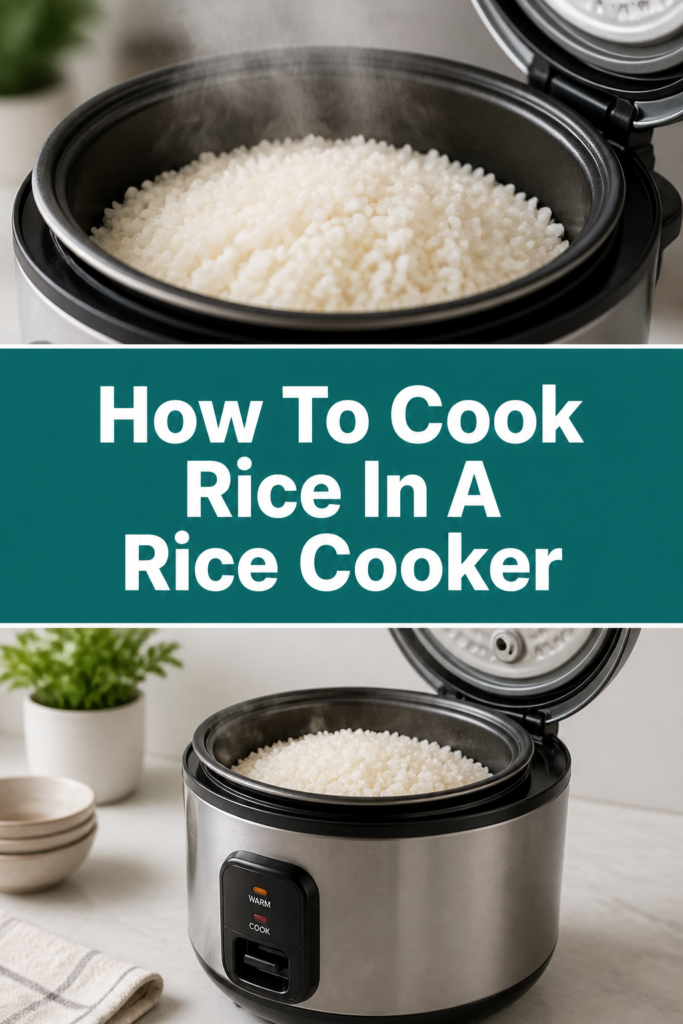
🍚 How To Cook Rice In A Rice Cooker
Cooking rice perfectly can seem daunting at first. It’s a staple in kitchens worldwide, yet many struggle to achieve that ideal fluffy texture.
I’ve personally cooked countless batches of rice, from sticky short-grain to separate basmati, all thanks to the humble rice cooker. This guide distills years of experience into simple, actionable steps. You’ll soon be making flawless rice every time.
Quick Overview
This guide will walk you through preparing delicious, perfectly cooked rice using a rice cooker. You’ll learn the essential steps, common pitfalls to avoid, and how to troubleshoot any issues.
- Time needed: 30-45 minutes (depending on rice type and cooker)
- Difficulty: Beginner
- What you’ll need: Rice cooker, rice, water, measuring cup (often included with cooker), fine-mesh sieve (optional)
Step-by-Step Instructions
Step 1: Choose Your Rice
The journey to perfect rice begins with selecting the right type. Different rice varieties require slightly different care.
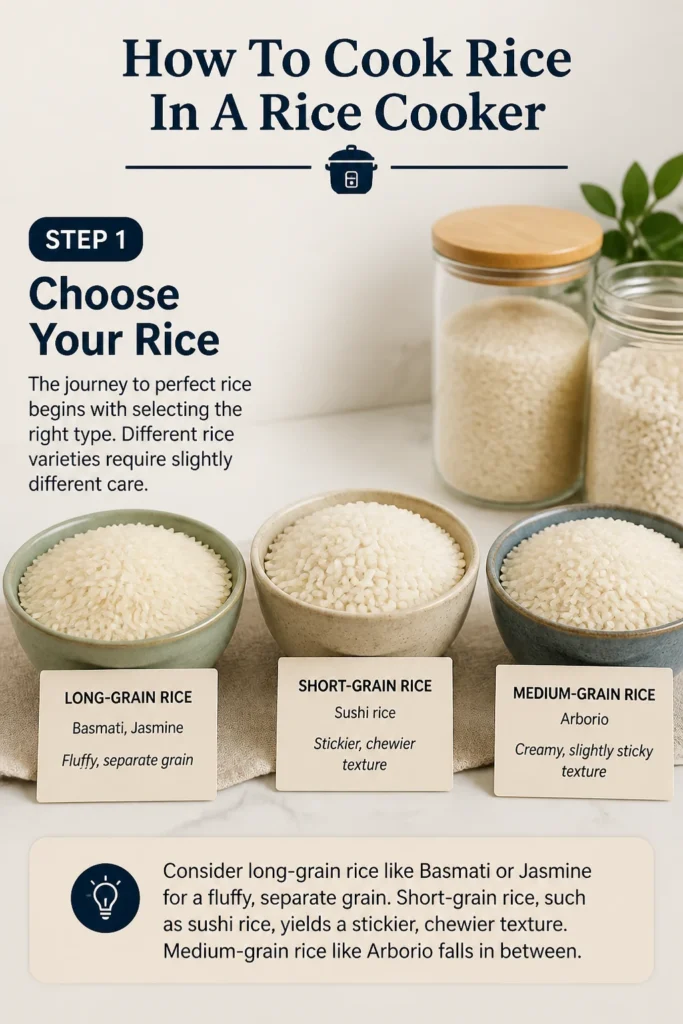
Consider long-grain rice like Basmati or Jasmine for a fluffy, separate grain. Short-grain rice, such as sushi rice, yields a stickier, chewier texture. Medium-grain rice like Arborio falls in between.
Step 2: Measure Your Rice
Accuracy is key when measuring rice. Always use the measuring cup that came with your rice cooker, if available. These cups are often slightly smaller than standard US measuring cups (usually 180ml).
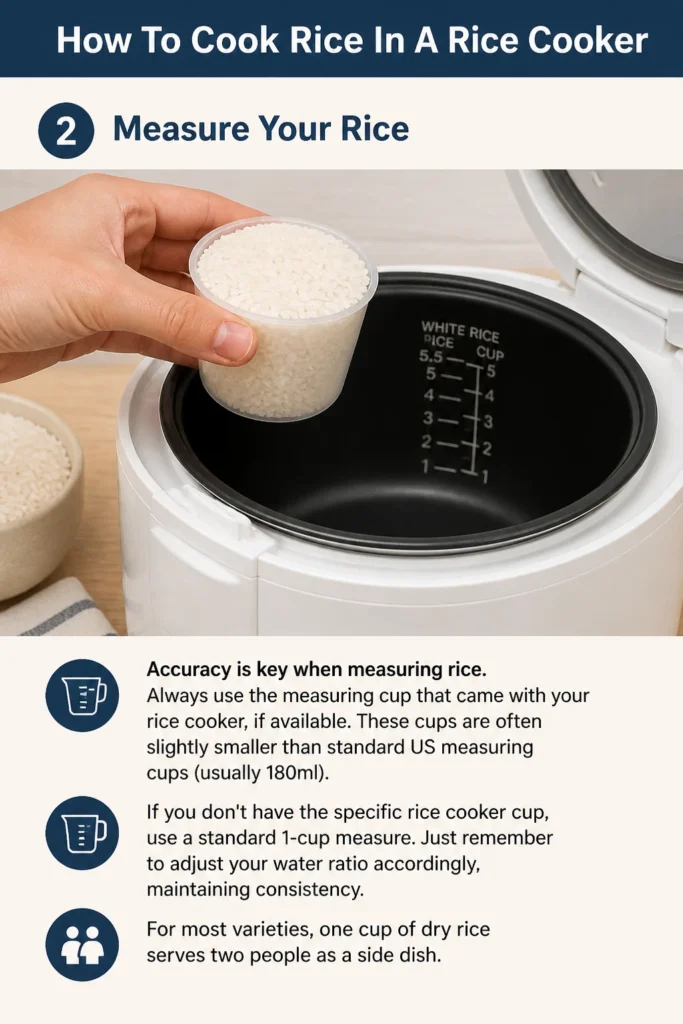
If you don’t have the specific rice cooker cup, use a standard 1-cup measure. Just remember to adjust your water ratio accordingly, maintaining consistency. For most varieties, one cup of dry rice serves two people as a side dish.
Step 3: Rinse Your Rice (Crucial for Best Results)
Rinsing rice removes excess starch from the grains. This prevents the rice from becoming overly gummy or sticky during cooking. It also helps achieve that desirable fluffy texture.
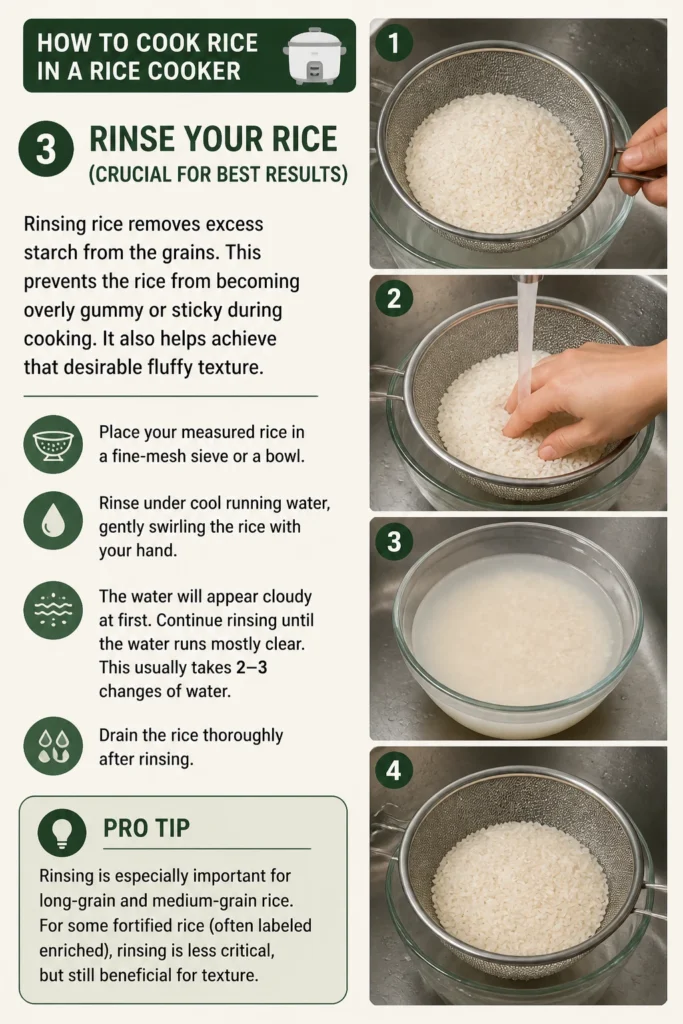
Place your measured rice in a fine-mesh sieve or a bowl. Rinse under cool running water, gently swirling the rice with your hand. The water will appear cloudy at first.
Continue rinsing until the water runs mostly clear. This usually takes 2-3 changes of water. Drain the rice thoroughly after rinsing.
Pro Tip: Rinsing is especially important for long-grain and medium-grain rice. For some fortified rice (often labeled “enriched”), rinsing is less critical, but still beneficial for texture.
Step 4: Add Rice and Water to the Cooker
Carefully transfer the rinsed rice into the inner pot of your rice cooker. Now, it’s time to add the correct amount of water.
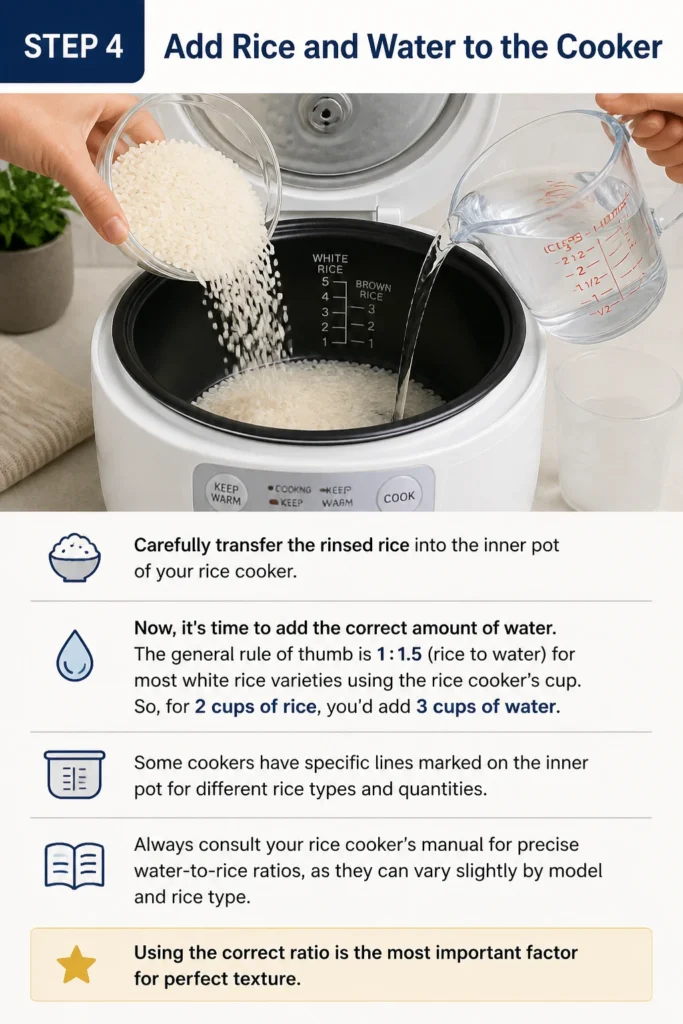
The general rule of thumb is 1:1.5 (rice to water) for most white rice varieties using the rice cooker’s cup. So, for 2 cups of rice, you’d add 3 cups of water. Some cookers have specific lines marked on the inner pot for different rice types and quantities.
Always consult your rice cooker’s manual for precise water-to-rice ratios, as they can vary slightly by model and rice type. Using the correct ratio is the most important factor for perfect texture.
Step 5: Close the Lid and Start Cooking
Ensure the inner pot is properly seated in the rice cooker. Securely close the lid.
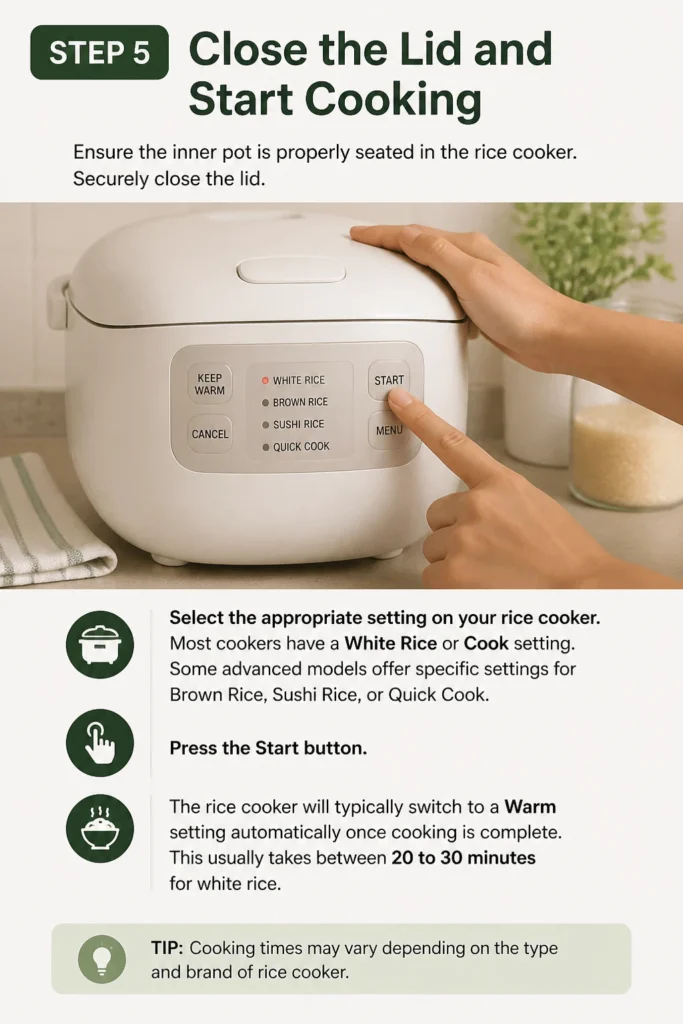
Select the appropriate setting on your rice cooker. Most cookers have a “White Rice” or “Cook” setting. Some advanced models offer specific settings for “Brown Rice,” “Sushi Rice,” or “Quick Cook.”
Press the “Start” button. The rice cooker will typically switch to a “Warm” setting automatically once cooking is complete. This usually takes between 20 to 30 minutes for white rice.
Step 6: Let It Rest
Once the rice cooker switches to “Warm,” resist the urge to open the lid immediately. This resting period is crucial for the rice to finish steaming evenly.
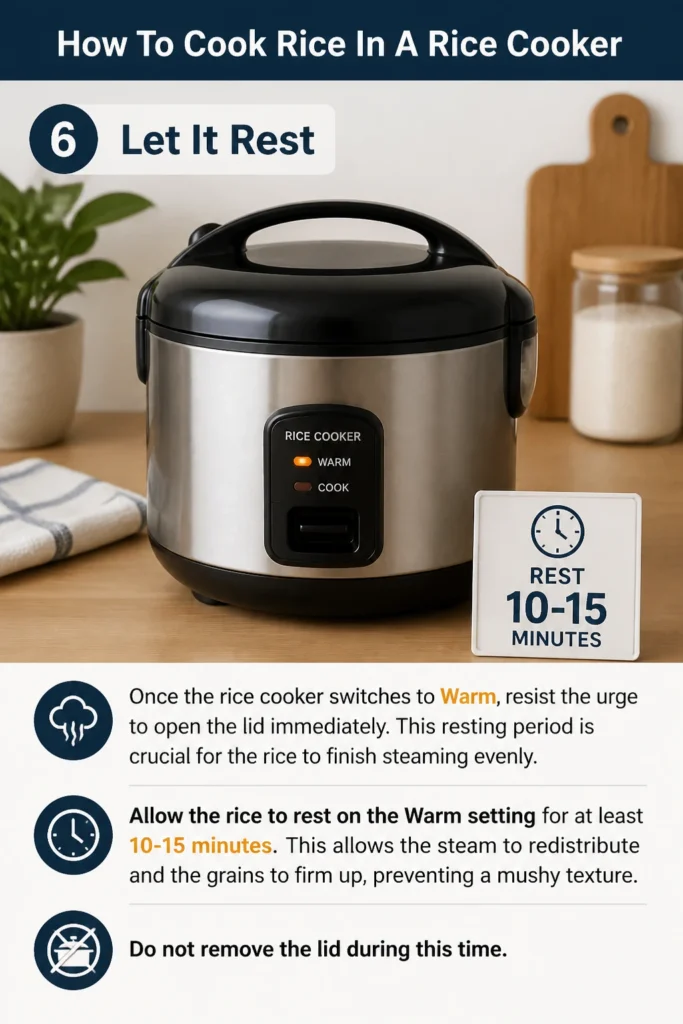
Allow the rice to rest on the “Warm” setting for at least 10-15 minutes. This allows the steam to redistribute and the grains to firm up, preventing a mushy texture. Do not remove the lid during this time.
Step 7: Fluff and Serve
After the resting period, carefully open the lid. Be mindful of the escaping steam.
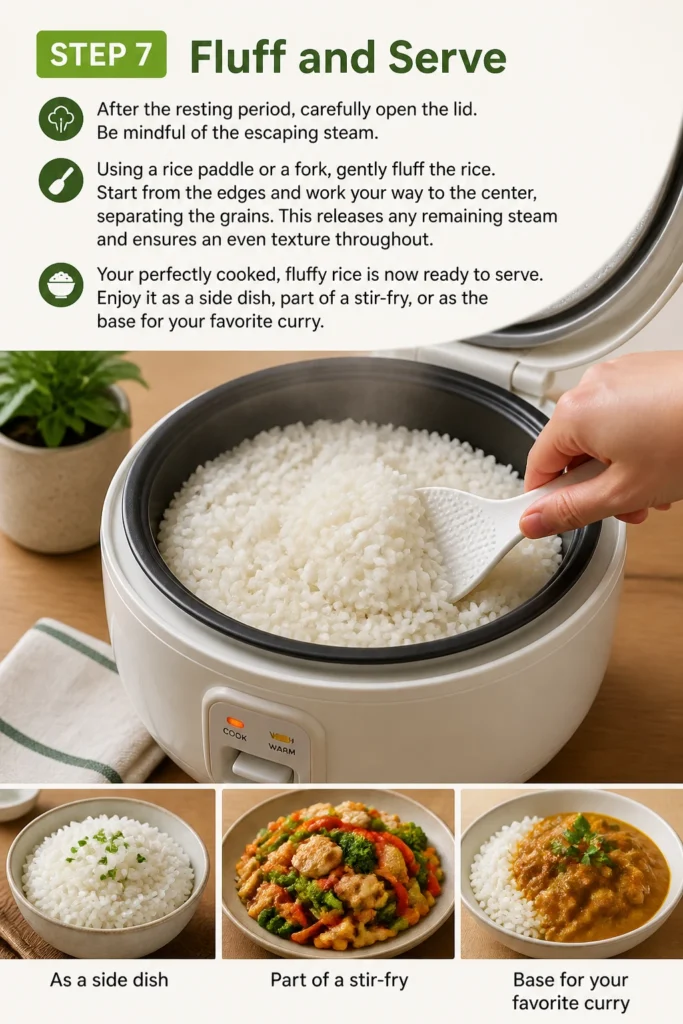
Using a rice paddle or a fork, gently fluff the rice. Start from the edges and work your way to the center, separating the grains. This releases any remaining steam and ensures an even texture throughout.
Your perfectly cooked, fluffy rice is now ready to serve. Enjoy it as a side dish, part of a stir-fry, or as the base for your favorite curry.
Common Mistakes to Avoid
Not Rinsing the Rice
Skipping the rinsing step is a common error that leads to gummy or overly sticky rice. The excess starch on unrinsed grains creates a gluey texture. Always take the time to rinse your rice thoroughly until the water runs clear.
Incorrect Water-to-Rice Ratio
Using too much or too little water is the most frequent cause of imperfect rice. Too much water results in mushy, waterlogged rice. Too little water leaves the rice hard, dry, or undercooked. Always refer to your rice cooker’s manual or use the recommended 1:1.5 ratio for white rice with the cooker’s specific cup.
Opening the Lid During Cooking or Resting
Patience is a virtue when cooking rice. Opening the lid, especially during the cooking cycle, releases steam and heat. This disrupts the cooking process and can lead to unevenly cooked or undercooked rice. Similarly, opening the lid during the resting phase prevents proper steam redistribution.
Not Letting the Rice Rest
Failing to let the rice rest after cooking is a mistake that often results in slightly wet or overly soft grains. The resting period allows the grains to absorb any remaining moisture and firm up. This step is essential for achieving that desirable fluffy texture.
Troubleshooting
Rice is Mushy or Too Wet
This issue almost always points to too much water. You might have used an incorrect water-to-rice ratio, or your rice cooker’s cup differs from your standard measuring cup.
For future batches, reduce the amount of water slightly, perhaps by a quarter cup. Ensure you’re using the correct measuring cup consistently. Rinsing thoroughly can also help prevent excessive stickiness.
Rice is Hard, Dry, or Under-cooked
If your rice is still hard or crunchy, it likely didn’t receive enough water or didn’t cook long enough. This can happen if the water evaporates too quickly.
For your next batch, increase the water slightly, by about a quarter cup. Also, ensure your rice cooker’s lid is sealing properly, preventing steam from escaping prematurely. Make sure you select the correct cooking setting.
Rice Sticks to the Bottom of the Pot
Sticky rice at the bottom can be frustrating. This often occurs if there’s not enough water, or if the rice cooker has a non-stick coating that is worn out.
Ensure you’re using the correct water ratio. If the problem persists, try adding a tiny amount of cooking oil or butter to the rice and water before starting the cooker. Some older rice cookers naturally have more sticking issues.
Key Takeaways
- Always rinse your rice thoroughly to remove excess starch and achieve a fluffy texture.
- Use the correct water-to-rice ratio, preferably following your rice cooker’s manual.
- Never open the lid during the cooking cycle to maintain consistent heat and steam.
- Allow the rice to rest for 10-15 minutes on the “Warm” setting after cooking.
- Gently fluff the rice with a paddle or fork before serving to separate the grains.
- Practice and consistency are key to mastering your rice cooker.
Frequently Asked Questions
Can I cook brown rice in a rice cooker?
Absolutely, most modern rice cookers have a specific “Brown Rice” setting. Brown rice requires more water and a longer cooking time than white rice due to its bran layer. Always check your cooker’s manual for the precise water-to-rice ratio and cooking instructions for brown rice.
How do I clean my rice cooker?
After each use, unplug the cooker and allow it to cool completely. Remove the inner pot and wash it with warm, soapy water using a soft sponge. Wipe down the exterior of the cooker with a damp cloth. Never immerse the main unit in water.
Can I add seasonings to the rice before cooking?
Yes, you can definitely add seasonings! A pinch of salt is commonly added to the water. You can also experiment with a pat of butter, a few drops of sesame oil, or herbs like bay leaves for extra flavor. Add them directly to the inner pot with the rice and water before starting.
How long does cooked rice last in the fridge?
Cooked rice should be cooled quickly and stored in an airtight container in the refrigerator. It is generally safe to consume within 3-4 days. Always reheat rice thoroughly to a steaming hot temperature to ensure food safety.
Our Top Recommended Finds
- Zojirushi Neuro Fuzzy Rice Cooker: Known for its advanced technology and consistent, perfect results every time.
- Instant Pot (Multi-Cooker): A versatile appliance that also excels at cooking rice, offering various settings for different grains.
- OXO Good Grips Rice & Grain Washing Colander: A sturdy, fine-mesh colander specifically designed for efficiently rinsing rice.
Your Journey to Perfect Rice Begins Now
You now possess the knowledge and practical steps to consistently cook perfect rice. No more guessing, no more soggy or crunchy grains.
Embrace the simplicity and reliability of your rice cooker. This foundational skill will elevate countless meals. Go ahead, choose your favorite rice, and get cooking!