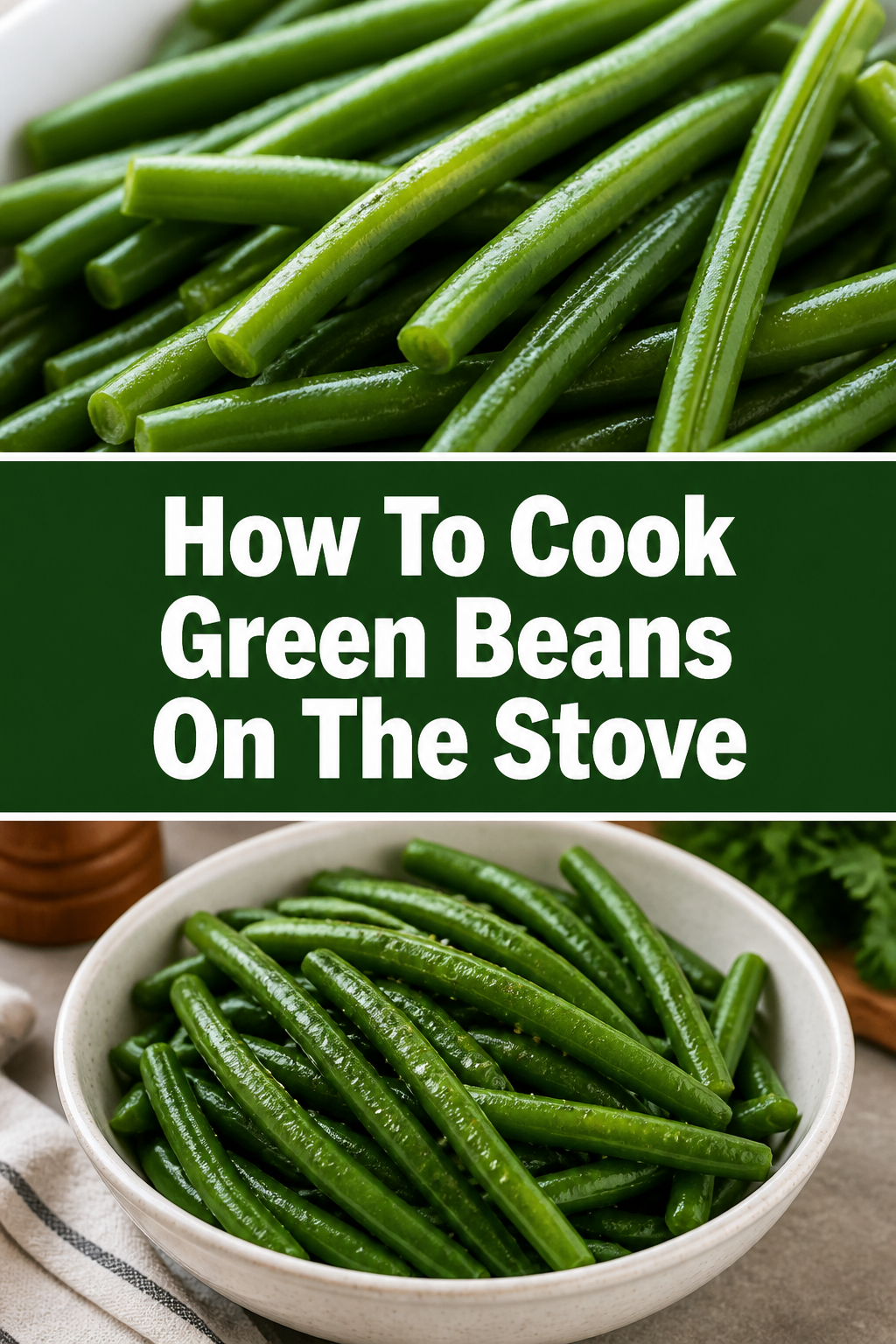
How To Cook Green Beans On The Stove
Cooking green beans on the stove is a simple pleasure, transforming humble pods into a delightful side dish.
I’ve prepared countless batches of these vibrant vegetables, perfecting the technique for tender-crisp results every time.
This guide shares my tried-and-true method, ensuring your green beans are always a highlight at the table.
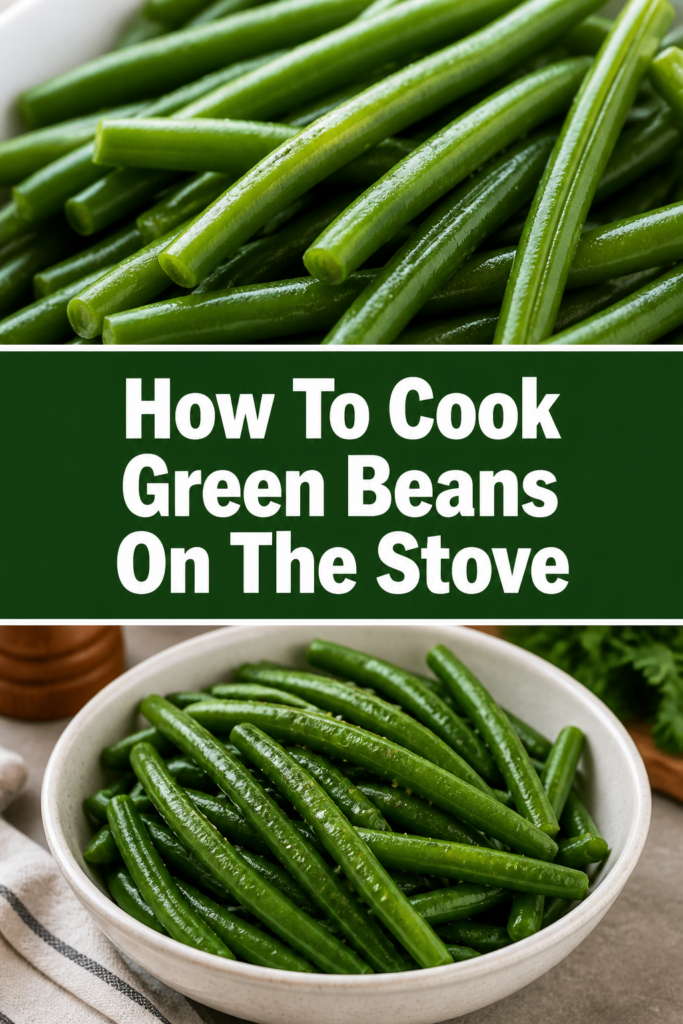
Quick Overview
This guide will walk you through preparing perfectly cooked green beans, from selecting the freshest pods to serving them beautifully.
You’ll achieve a tender-crisp texture and vibrant color that complements any meal.
- Time needed: 15-20 minutes (5 min prep, 10-15 min cook)
- Difficulty: Beginner
- What you’ll need: Fresh green beans, a large pot, water, salt, butter or olive oil.
Step-by-Step Instructions
Step 1: Choose and Prepare Your Green Beans
Start by selecting the freshest green beans available. Look for pods that are firm, bright green, and snap easily when bent.
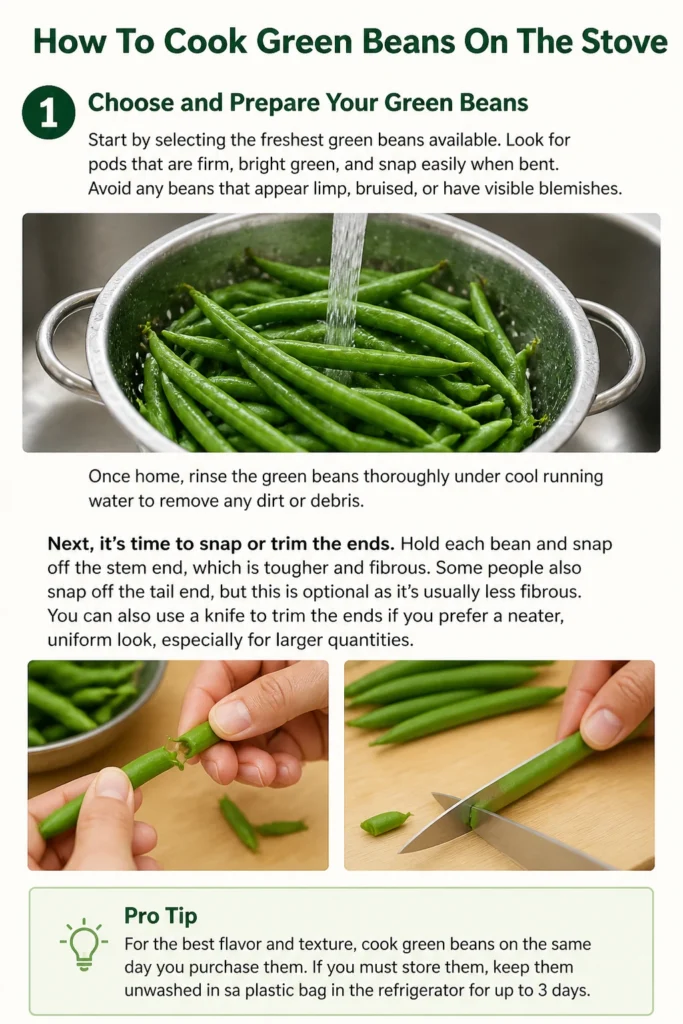
Avoid any beans that appear limp, bruised, or have visible blemishes.
Once home, rinse the green beans thoroughly under cool running water to remove any dirt or debris.
Next, it’s time to “snap” or trim the ends. Hold each bean and snap off the stem end, which is tougher and fibrous.
Some people also snap off the tail end, but this is optional as it’s usually less fibrous.
You can also use a knife to trim the ends if you prefer a neater, uniform look, especially for larger quantities.
Pro Tip: For the best flavor and texture, cook green beans on the same day you purchase them. If you must store them, keep them unwashed in a plastic bag in the refrigerator for up to 3-4 days.
Step 2: Prepare Your Cooking Water
Find a large pot, preferably one with a lid. A pot that can comfortably hold all your green beans with plenty of room is ideal.
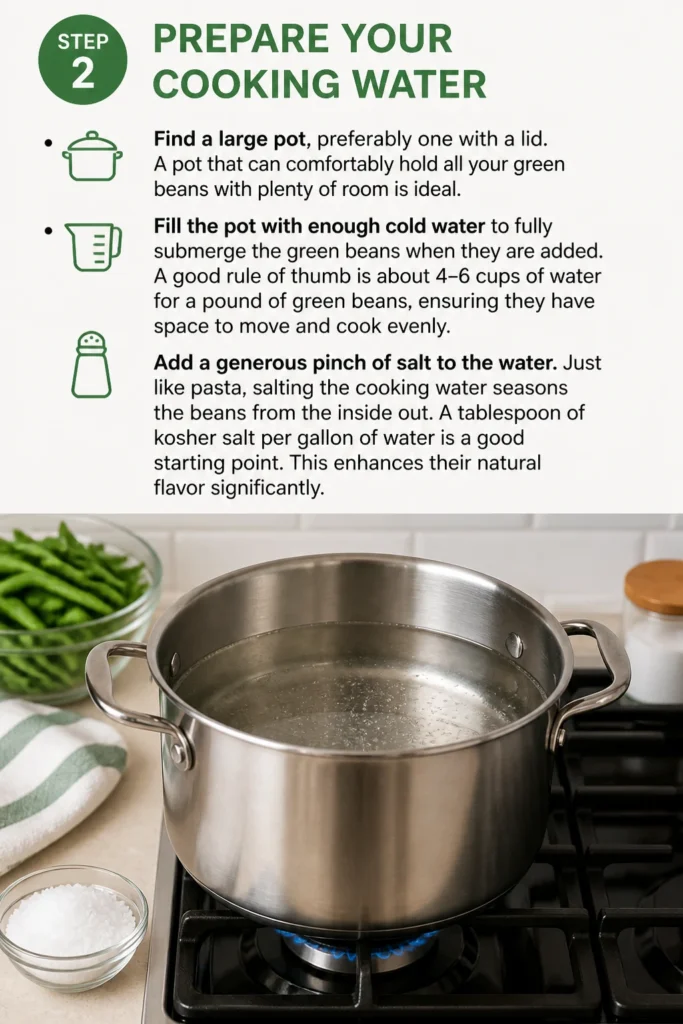
Fill the pot with enough cold water to fully submerge the green beans when they are added.
A good rule of thumb is about 4-6 cups of water for a pound of green beans, ensuring they have space to move and cook evenly.
Add a generous pinch of salt to the water. Just like pasta, salting the cooking water seasons the beans from the inside out.
A tablespoon of kosher salt per gallon of water is a good starting point. This enhances their natural flavor significantly.
Step 3: Bring Water to a Rolling Boil
Place the pot of salted water on your stove over high heat.
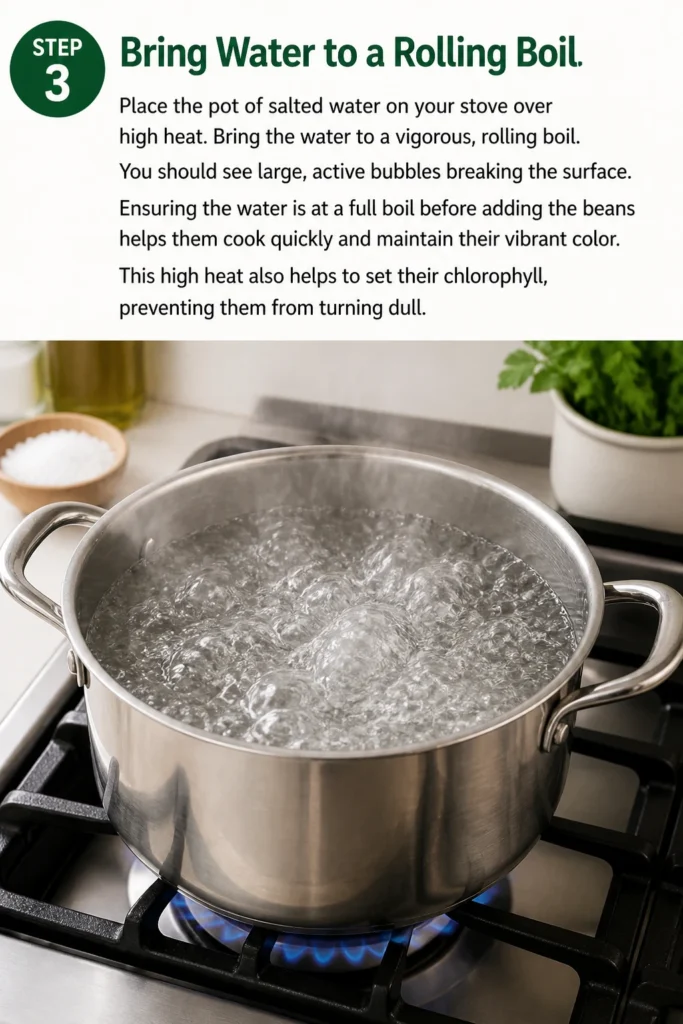
Bring the water to a vigorous, rolling boil. You should see large, active bubbles breaking the surface.
Ensuring the water is at a full boil before adding the beans helps them cook quickly and maintain their vibrant color.
This high heat also helps to set their chlorophyll, preventing them from turning dull.
Step 4: Add Green Beans and Cook
Carefully add the trimmed green beans to the boiling water. Be mindful of potential splashes from the hot water.
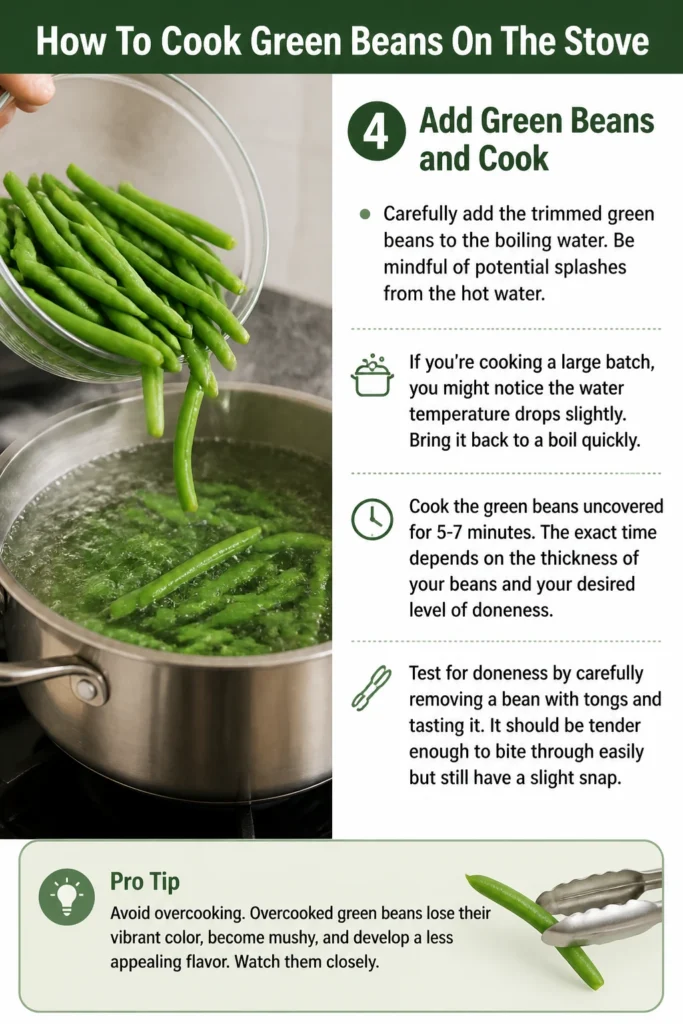
If you’re cooking a large batch, you might notice the water temperature drops slightly. Bring it back to a boil quickly.
Cook the green beans uncovered for 5-7 minutes. The exact time depends on the thickness of your beans and your desired level of doneness.
For tender-crisp beans, 5 minutes is often perfect. For a softer texture, extend the cooking time by a minute or two.
Test for doneness by carefully removing a bean with tongs and tasting it. It should be tender enough to bite through easily but still have a slight snap.
Pro Tip: Avoid overcooking. Overcooked green beans lose their vibrant color, become mushy, and develop a less appealing flavor. Watch them closely.
Step 5: Drain the Green Beans
Once the green beans have reached your desired tenderness, immediately remove the pot from the heat.
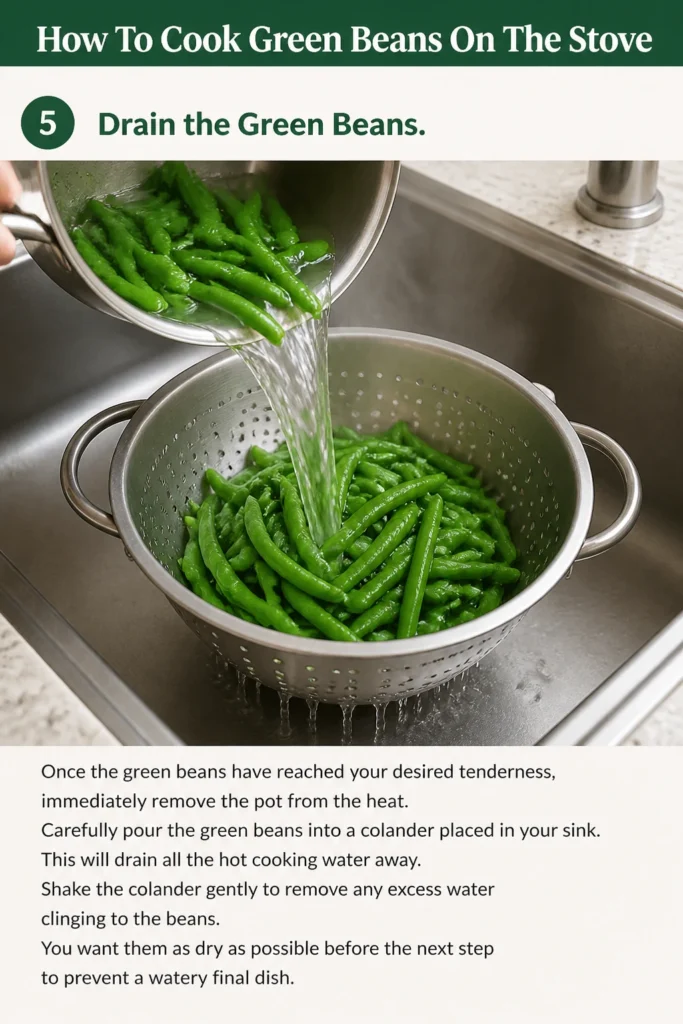
Carefully pour the green beans into a colander placed in your sink. This will drain all the hot cooking water away.
Shake the colander gently to remove any excess water clinging to the beans.
You want them as dry as possible before the next step to prevent a watery final dish.
Step 6: Optional: Shock in Ice Water Bath (Blanching)
If you want to stop the cooking process immediately and preserve the brightest green color, prepare an ice water bath.
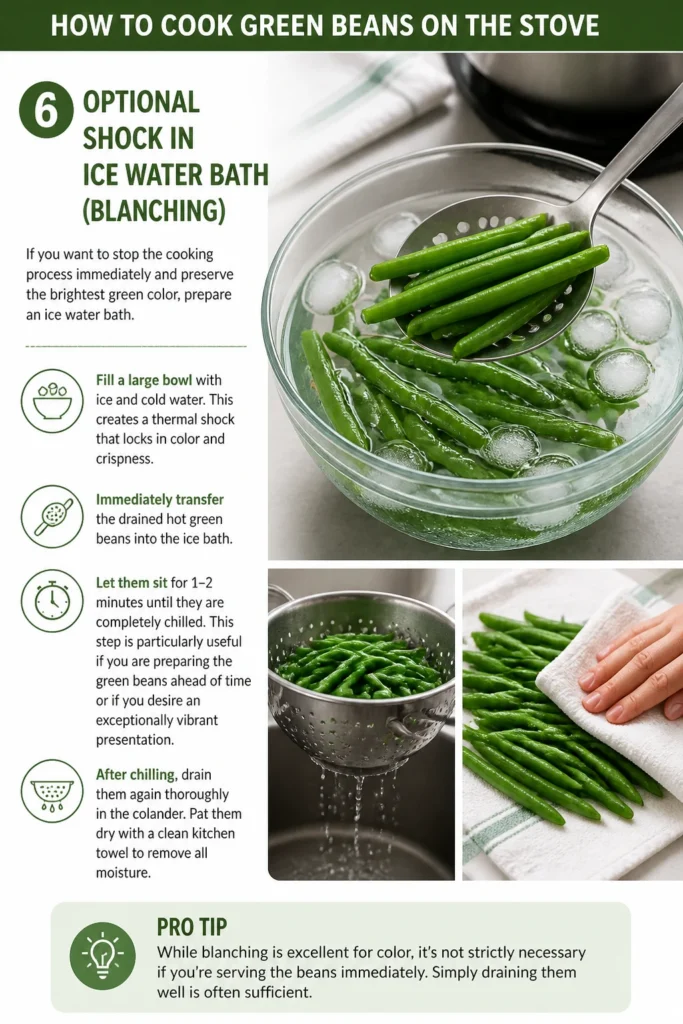
Fill a large bowl with ice and cold water. This creates a thermal shock that locks in color and crispness.
Immediately transfer the drained hot green beans into the ice bath. Let them sit for 1-2 minutes until they are completely chilled.
This step is particularly useful if you are preparing the green beans ahead of time or if you desire an exceptionally vibrant presentation.
After chilling, drain them again thoroughly in the colander. Pat them dry with a clean kitchen towel to remove all moisture.
Pro Tip: While blanching is excellent for color, it’s not strictly necessary if you’re serving the beans immediately. Simply draining them well is often sufficient.
Step 7: Season and Finish
Transfer the drained (and optionally shocked) green beans back into the empty hot pot or a serving bowl.
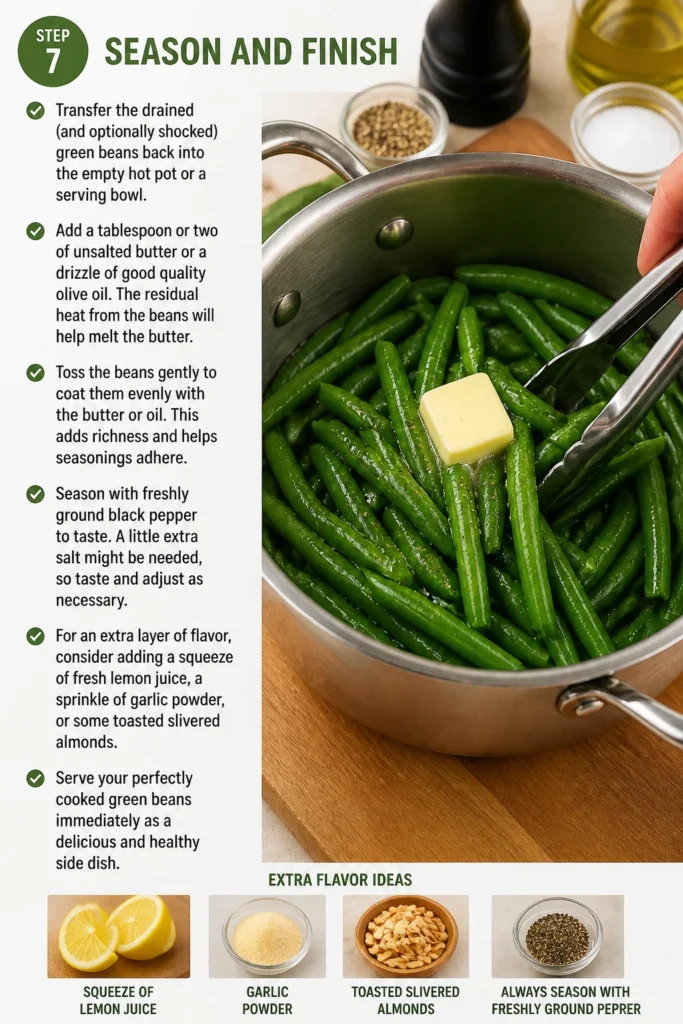
Add a tablespoon or two of unsalted butter or a drizzle of good quality olive oil. The residual heat from the beans will help melt the butter.
Toss the beans gently to coat them evenly with the butter or oil. This adds richness and helps seasonings adhere.
Season with freshly ground black pepper to taste. A little extra salt might be needed, so taste and adjust as necessary.
For an extra layer of flavor, consider adding a squeeze of fresh lemon juice, a sprinkle of garlic powder, or some toasted slivered almonds.
Serve your perfectly cooked green beans immediately as a delicious and healthy side dish.
Common Mistakes to Avoid
Overcrowding the Pot
Adding too many green beans to a small pot of water is a common error. This significantly lowers the water temperature.
When the temperature drops, the beans take longer to return to a boil, resulting in uneven cooking.
It can also lead to steamed, rather than boiled, beans, which affects their texture and color.
Always use a pot large enough so the green beans have ample space to move freely and the water maintains a rolling boil.
Under-Seasoning the Water
Many home cooks forget to salt their cooking water generously. This means the beans themselves lack internal seasoning.
Adding salt only at the end results in a coating of salt, rather than seasoning integrated throughout the vegetable.
Treat green beans like pasta; the cooking water should taste noticeably salty. This is crucial for flavor development.
Overcooking the Beans
Leaving green beans in boiling water for too long is perhaps the most frequent mistake. They quickly lose their crispness and vibrant color.
Mushy, dull green beans are a tell-tale sign of overcooking, and their natural sweetness can turn bitter.
Start checking for doneness around the 5-minute mark. You want them tender-crisp, not limp.
Not Draining Thoroughly
After cooking, if you don’t drain the beans properly, residual water can dilute your seasonings.
This leads to a watery and less flavorful dish, especially if you’re adding butter or oil.
Shake the colander well or even pat the beans dry with a towel, particularly if you plan to sauté them further.
Troubleshooting
Green Beans Are Too Mushy
If your green beans turned out soft and lacking their characteristic snap, they were likely overcooked.
This often happens when the cooking time is too long, or the water isn’t boiling vigorously enough for quick cooking.
Next time, start checking for doneness earlier, around 4-5 minutes, and remove them as soon as they reach your desired tender-crisp stage.
Green Beans Lost Their Bright Color
Dull, olive-green beans indicate they were cooked too long or not cooked in sufficiently salted boiling water.
The chlorophyll, which gives them their vibrant hue, degrades with prolonged heat.
Ensure your water is at a rolling boil and well-salted. If serving later, an ice bath after cooking will help lock in that bright green.
Green Beans Taste Bland
If your beans lack flavor, the most common culprit is insufficient seasoning, particularly salt, in the cooking water.
The water should be salty enough to season the beans from within as they cook.
Also, don’t forget to finish them with butter, oil, and a final sprinkle of salt and pepper to enhance their natural taste.
Key Takeaways
- Always choose firm, bright green beans for the best results.
- Trim the stem ends of the beans before cooking.
- Generously salt the cooking water to season the beans from the inside.
- Cook green beans in a large pot of vigorously boiling water to ensure even cooking and vibrant color.
- Aim for a tender-crisp texture by cooking for 5-7 minutes, testing for doneness frequently.
- Drain green beans thoroughly and finish with butter or olive oil, salt, and pepper for optimal flavor.
Frequently Asked Questions
Can I use frozen green beans for this method?
Yes, you can absolutely use frozen green beans. You don’t need to thaw them first.
Simply add them directly to the boiling salted water. They may cook a bit faster than fresh beans, so start checking for doneness after 3-4 minutes.
How can I make my green beans more flavorful?
Beyond salt and pepper, there are many ways to boost flavor. Try adding a minced garlic clove to the melted butter at the end.
A splash of lemon juice, a dash of red pepper flakes, or a sprinkle of toasted nuts like almonds or pecans can also add fantastic dimensions.
What’s the best way to store cooked green beans?
Allow cooked green beans to cool completely before storing them. Place them in an airtight container in the refrigerator.
They will keep well for 3-4 days. Reheat gently in a pan with a little butter or in the microwave.
Do I need to snap off both ends of the green beans?
It’s most important to snap or trim off the stem end, as this part is fibrous and tough.
The tail end is typically softer and can be left on if you prefer, or trimmed for a neater presentation.
Our Top Recommended Finds
- Large Stainless Steel Pot: Essential for boiling vegetables evenly without overcrowding. Look for one with a heavy bottom for consistent heat.
- Sturdy Colander: A well-made colander is crucial for quick and efficient draining of hot beans. Stainless steel is durable and easy to clean.
- Kitchen Tongs: Perfect for safely transferring hot beans, testing for doneness, and tossing with seasonings.
Embrace the Green: Your Next Culinary Adventure
You now possess the knowledge and confidence to transform simple green beans into a standout dish.
This foundational technique opens the door to countless variations, from simple buttered beans to gourmet creations.
Don’t wait to put these steps into practice. Gather your ingredients and create a delicious, vibrant side dish tonight.
Experiment with different seasonings and enjoy the fresh, satisfying taste of perfectly cooked green beans.