🥘 How To Cook Pinto Beans On The Stove
There is a quiet, rhythmic comfort in the sound of a pot of beans bubbling on the back of the stove.
I learned to cook these beans by watching my grandmother, who could tell if they were done just by the way the steam smelled in the kitchen.
This guide comes from decades of trial, error, and thousands of bowls of perfectly creamy pinto beans served with hot cornbread.

Quick Overview
Cooking pinto beans on the stove is a slow-burn process that rewards patience with incredible flavor and texture.
- Time needed: 2 to 4 hours (plus soaking time)
- Difficulty: Beginner
- What you’ll need: Dry pinto beans, a heavy-bottomed pot, water, aromatics, and salt.
Step-by-Step Instructions
Step 1: Sort and Inspect Your Beans
Spread your dry pinto beans out on a flat, light-colored surface like a baking sheet or a clean countertop.
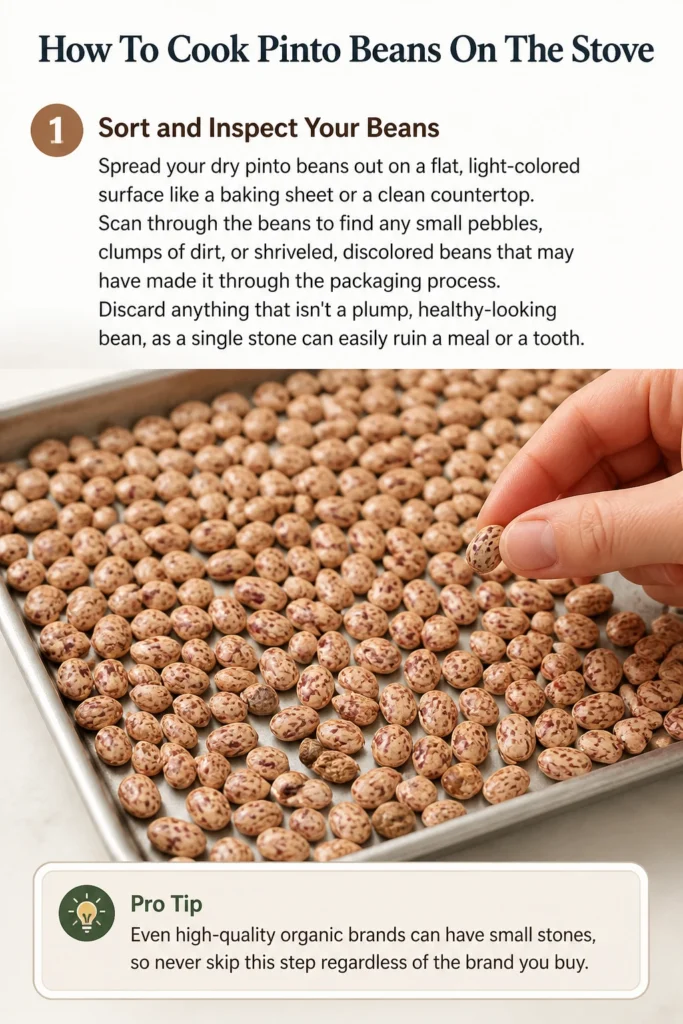
Scan through the beans to find any small pebbles, clumps of dirt, or shriveled, discolored beans that may have made it through the packaging process.
Discard anything that isn’t a plump, healthy-looking bean, as a single stone can easily ruin a meal or a tooth.
Pro Tip: Even high-quality organic brands can have small stones, so never skip this step regardless of the brand you buy.
Step 2: Rinse Thoroughly
Place the sorted beans into a large colander or fine-mesh strainer.
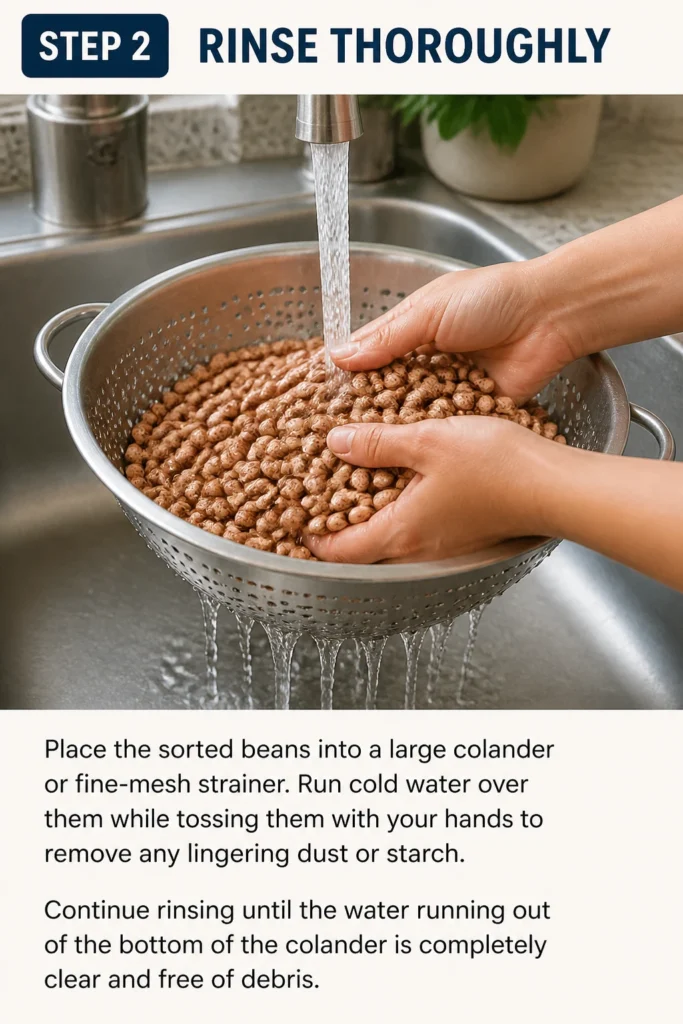
Run cold water over them while tossing them with your hands to remove any lingering dust or starch.
Continue rinsing until the water running out of the bottom of the colander is completely clear and free of debris.
Step 3: Choose Your Soaking Method
Decide between the traditional overnight soak or the quick-soak method based on your schedule.
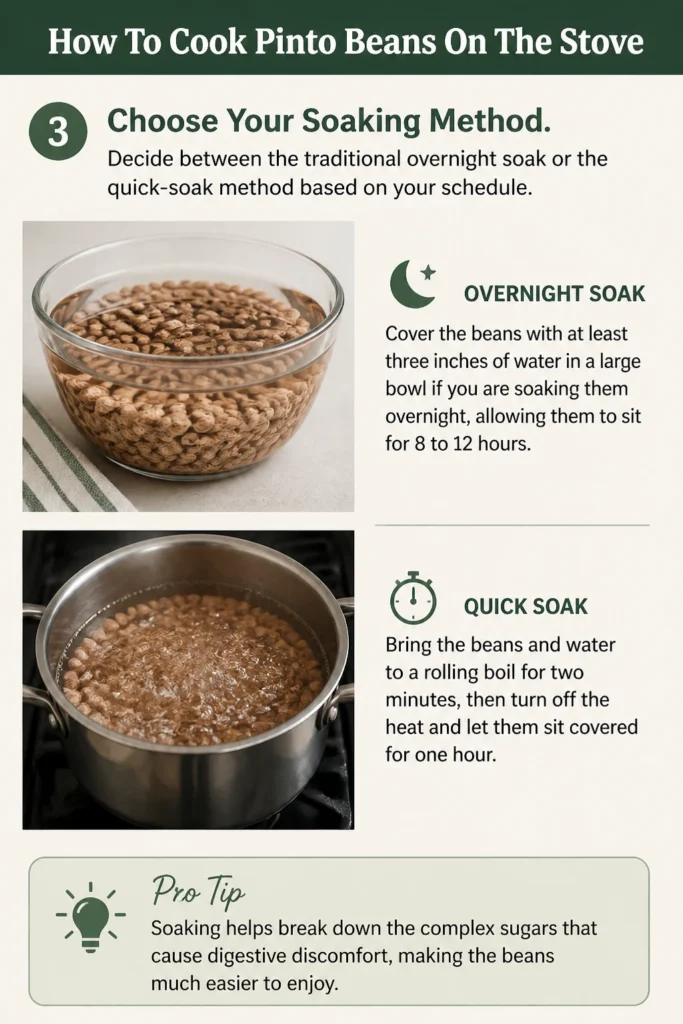
Cover the beans with at least three inches of water in a large bowl if you are soaking them overnight, allowing them to sit for 8 to 12 hours.
Perform a quick soak by bringing the beans and water to a rolling boil for two minutes, then turning off the heat and letting them sit covered for one hour.
Pro Tip: Soaking helps break down the complex sugars that cause digestive discomfort, making the beans much easier to enjoy.
Step 4: Prepare the Cooking Pot
Drain the soaking water and give the beans one final rinse to remove the released sugars.
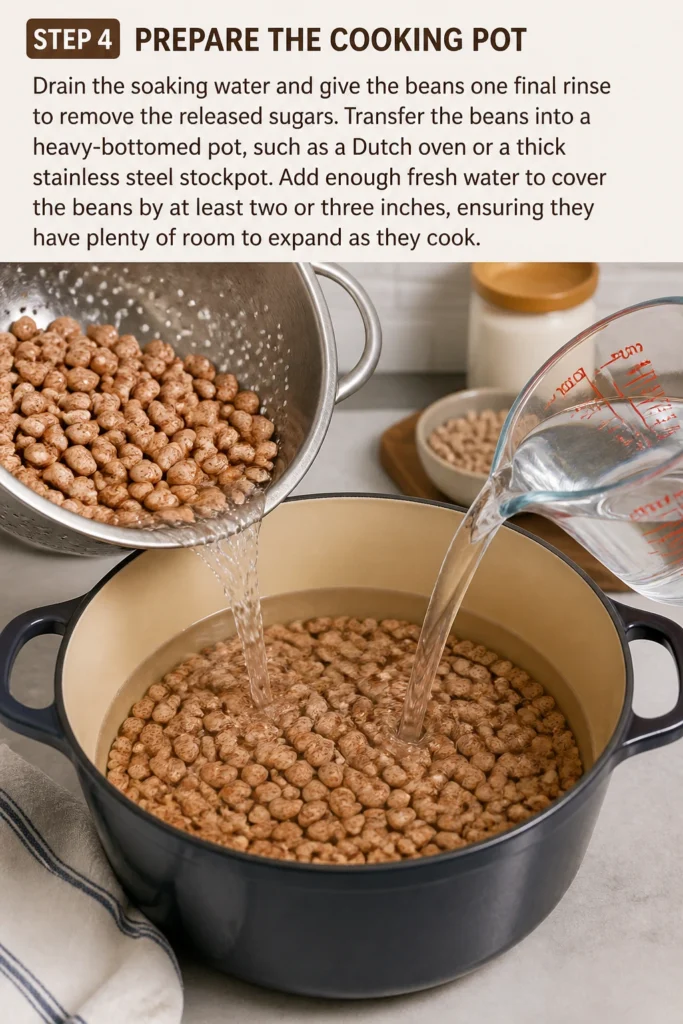
Transfer the beans into a heavy-bottomed pot, such as a Dutch oven or a thick stainless steel stockpot.
Add enough fresh water to cover the beans by at least two or three inches, ensuring they have plenty of room to expand as they cook.
Step 5: Add Your Aromatics
Introduce flavor early by adding a halved onion, several smashed garlic cloves, and a couple of bay leaves to the water.
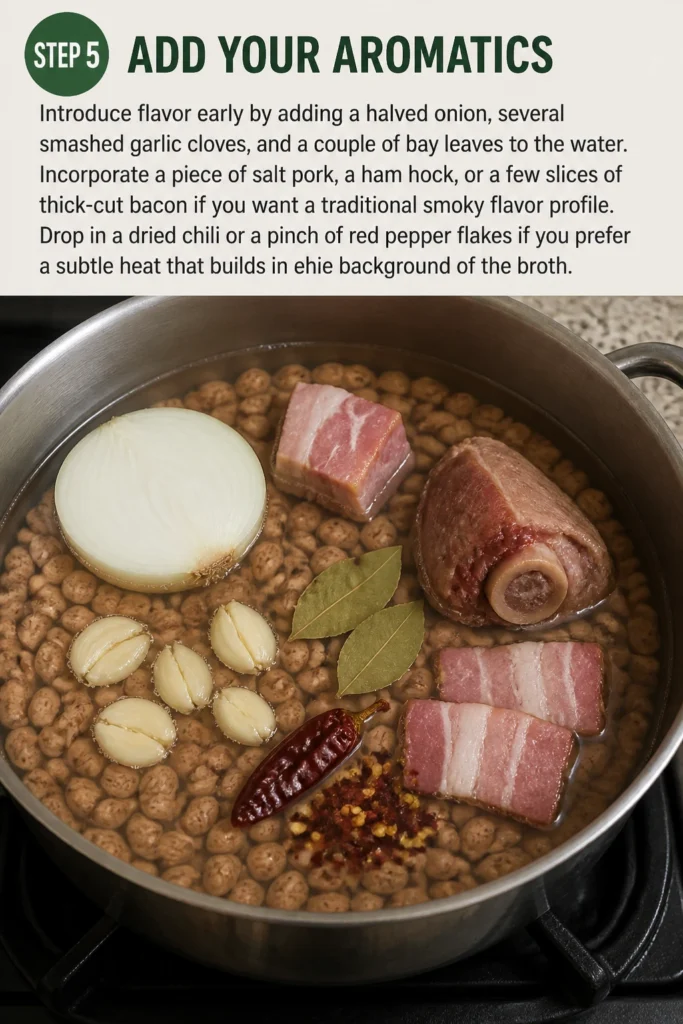
Incorporate a piece of salt pork, a ham hock, or a few slices of thick-cut bacon if you want a traditional smoky flavor profile.
Drop in a dried chili or a pinch of red pepper flakes if you prefer a subtle heat that builds in the background of the broth.
Step 6: Bring to a Gentle Simmer
Turn the heat to medium-high and bring the pot to a boil, but watch it closely so it doesn’t boil over.
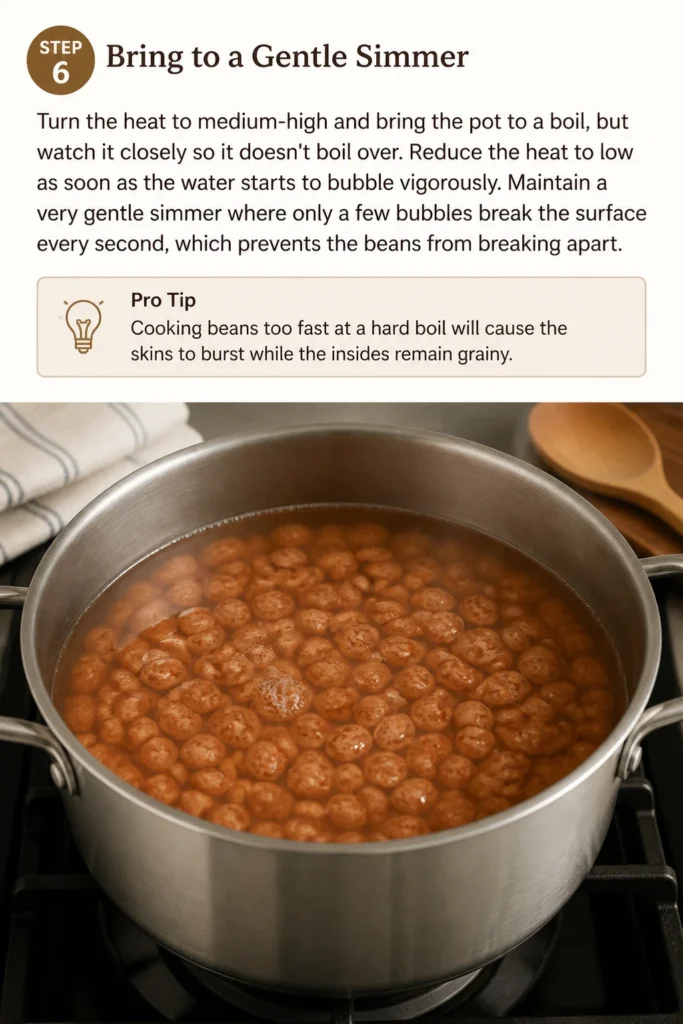
Reduce the heat to low as soon as the water starts to bubble vigorously.
Maintain a very gentle simmer where only a few bubbles break the surface every second, which prevents the beans from breaking apart.
Pro Tip: Cooking beans too fast at a hard boil will cause the skins to burst while the insides remain grainy.
Step 7: Skim the Surface
Observe the gray or white foam that often rises to the top of the pot during the first 30 minutes of cooking.
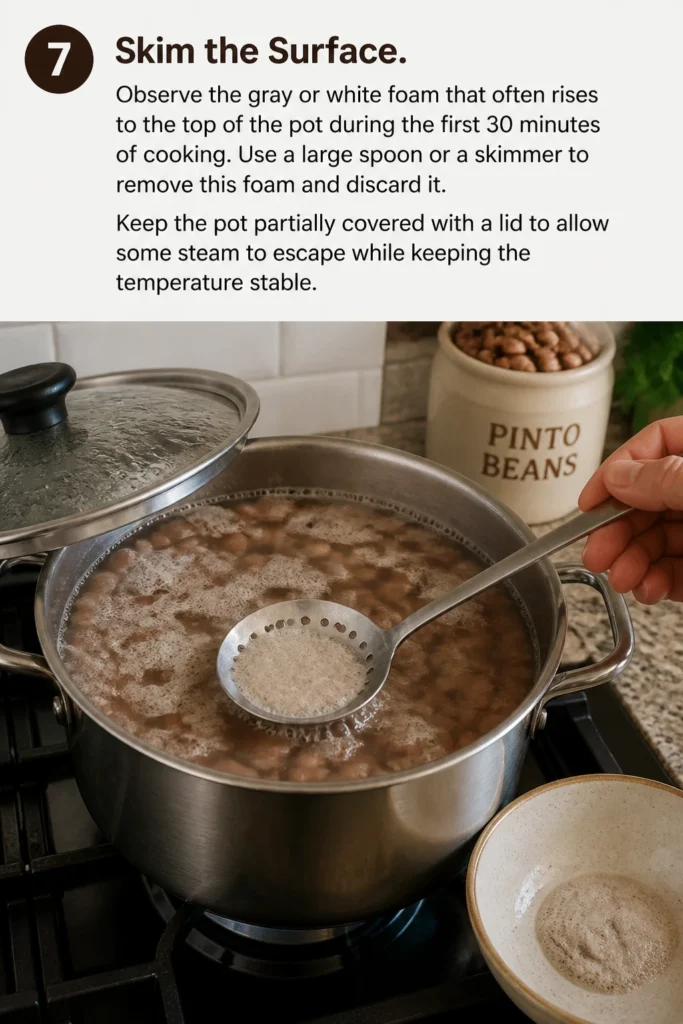
Use a large spoon or a skimmer to remove this foam and discard it.
Keep the pot partially covered with a lid to allow some steam to escape while keeping the temperature stable.
Step 8: Check the Water Level
Monitor the pot every 30 minutes to make sure the beans stay submerged under the liquid.
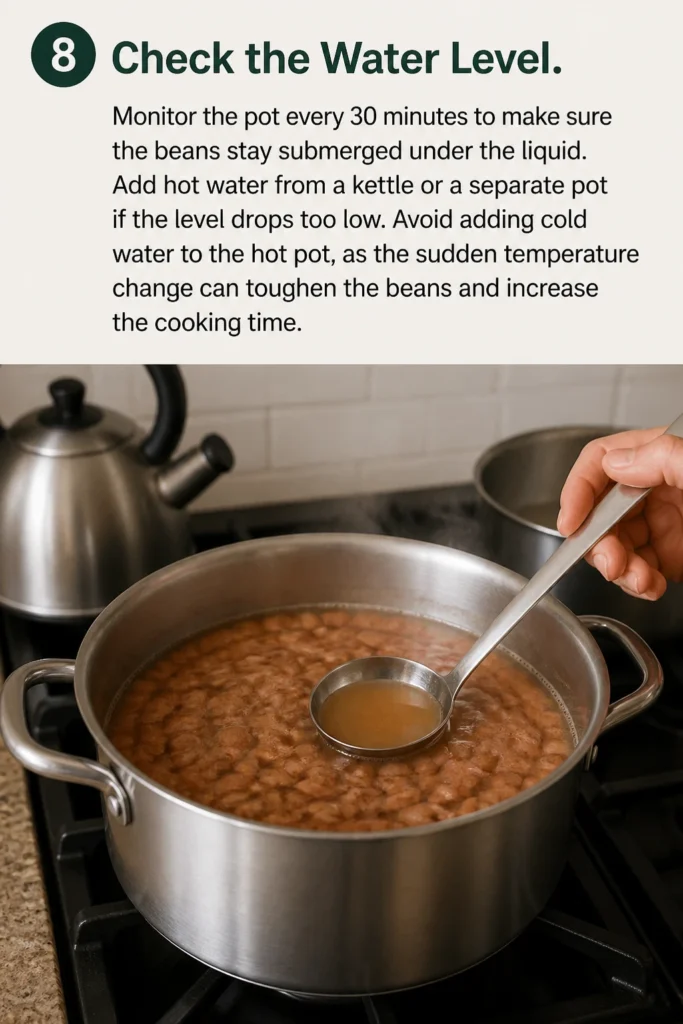
Add hot water from a kettle or a separate pot if the level drops too low.
Avoid adding cold water to the hot pot, as the sudden temperature change can toughen the beans and increase the cooking time.
Step 9: Season with Salt
Wait until the beans are nearly tender before adding your salt.
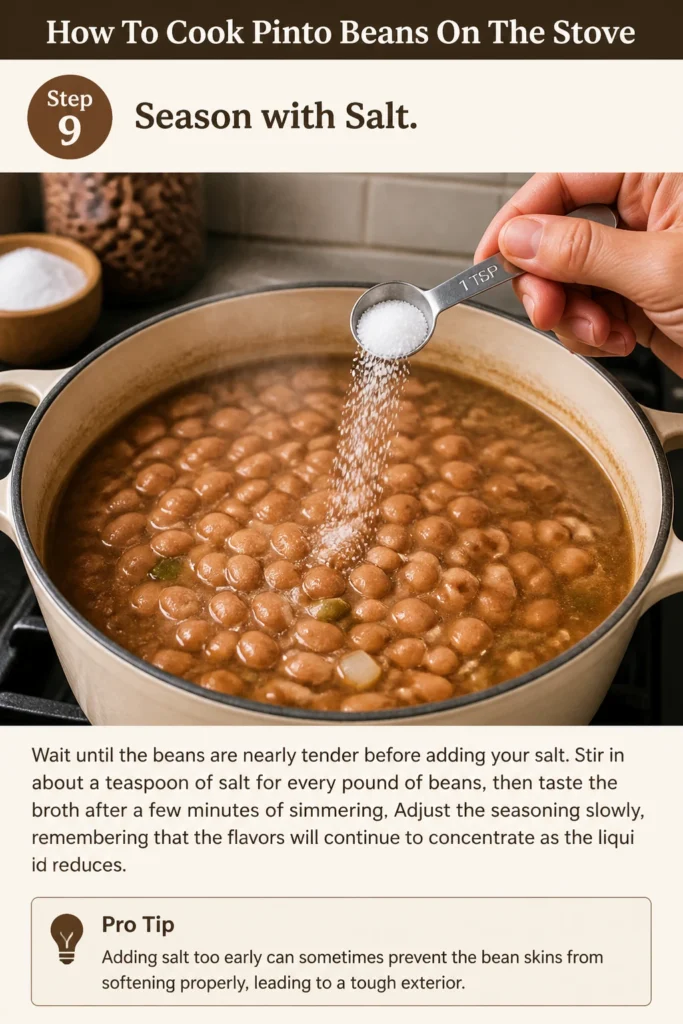
Stir in about a teaspoon of salt for every pound of beans, then taste the broth after a few minutes of simmering.
Adjust the seasoning slowly, remembering that the flavors will continue to concentrate as the liquid reduces.
Pro Tip: Adding salt too early can sometimes prevent the bean skins from softening properly, leading to a tough exterior.
Step 10: Test for Doneness
Retrieve a single bean from the pot with a spoon and let it cool for a second.

Press the bean against the roof of your mouth with your tongue; it should be buttery and creamy with no resistance.
Blow on a spoonful of beans; if the skins peel back and curl, it is a classic sign that they are perfectly cooked.
Common Mistakes to Avoid
Using Old Beans
Many people struggle with beans that stay hard no matter how long they cook them. This is often because the beans have been sitting on a grocery store shelf for years.
Old beans lose their internal moisture and the cell walls become so tough that water cannot penetrate them. Always try to buy beans from a store with high turnover to ensure you are getting a relatively fresh harvest.
Cooking at Too High a Temperature
It is tempting to crank up the heat to finish the beans faster, but this is a mistake. High heat creates a violent environment in the pot that knocks the beans against each other.
This physical agitation destroys the delicate skins and turns your pot of beans into a mushy soup. A slow, gentle simmer is the only way to achieve that sought-after “pot liquor” and intact beans.
Adding Acid Too Early
Ingredients like tomatoes, vinegar, or lime juice add great brightness to beans, but they can be problematic if added at the start. Acid reacts with the starch in the beans and can keep them from ever softening.
Save your acidic ingredients for the very end of the cooking process. Once the beans are fully tender, you can safely add your hot sauce or tomato products without ruining the texture.
Troubleshooting
The Beans Are Still Hard After Three Hours
If your beans refuse to soften, you might be dealing with hard water. The minerals in hard water can bind to the bean skins and prevent hydration.
To fix this, you can add a tiny pinch (about 1/8 teaspoon) of baking soda to the pot. This changes the pH of the water and helps break down the pectin in the bean skins.
The Broth Is Too Thin and Watery
Sometimes the beans are cooked, but the liquid looks more like tea than a rich gravy. You can easily fix this by mashing a half-cup of the cooked beans against the side of the pot.
Stir those mashed beans back into the broth and let it simmer uncovered for another ten minutes. The starch from the mashed beans will naturally thicken the liquid into a silky sauce.
The Beans Are Bland and Flavorless
If your beans taste flat, they likely need more salt or a hit of acidity. Try adding a teaspoon of apple cider vinegar or a squeeze of fresh lime juice.
The acid acts as a flavor highlighter, making the earthy taste of the pinto bean and the saltiness of the pork stand out more clearly. Also, don’t be afraid to add a bit more salt than you think you need, as beans are naturally very bland.
Key Takeaways
- Always sort and rinse: This prevents unwanted debris and dust from entering your meal.
- Soak for success: Whether you use the overnight or quick-soak method, soaking improves texture and digestibility.
- Simmer, don’t boil: Low and slow heat is the secret to creamy, intact beans.
- Salt late: Wait until the beans are tender before adding salt to ensure the skins soften correctly.
- Check water levels: Keep the beans submerged with hot water to maintain a consistent cooking temperature.
- Thicken the broth: Mash a few beans at the end to create a rich, flavorful pot liquor.
Frequently Asked Questions
Do I really have to soak pinto beans?
While you can cook beans without soaking, it will take significantly longer and the beans may cook unevenly. Soaking ensures that the water reaches the center of the bean more efficiently during the simmering process. It also helps remove some of the gas-producing sugars, making the final dish more comfortable to eat.
How long do cooked pinto beans last in the fridge?
Cooked pinto beans will stay fresh in an airtight container for about four to five days. In fact, many people believe they taste even better on the second day after the flavors have had time to meld. If you can’t finish them within that window, they freeze beautifully for up to six months.
Can I use a slow cooker instead of the stove?
Yes, you can use a slow cooker, but the stove gives you much more control over the reduction of the liquid. On the stove, you can easily adjust the heat and monitor the thickness of the broth. If you use a slow cooker, you may find the broth stays quite thin because there is very little evaporation.
Why did my beans turn out dark brown?
Pinto beans naturally release a dark pigment as they cook, which creates a rich, brown broth. If they are exceptionally dark, it might be due to the aromatics you used, such as smoked ham hocks or a large amount of chili powder. This color is usually a sign of a very flavorful, well-developed pot of beans.
Our Top Recommended Finds
- Enameled Cast Iron Dutch Oven: This provides the most consistent heat distribution for long, slow simmers.
- Fine Mesh Stainless Steel Strainer: Perfect for sorting and rinsing beans without losing any through the holes.
- Wooden Stirring Spoon: A thick wooden spoon is gentle on the beans and won’t scrape the bottom of your expensive pots.
Mastering Your Kitchen Craft
Now that you have mastered the art of the pinto bean, you have a versatile foundation for dozens of other meals.
You can turn these beans into refried beans for tacos, add them to a hearty vegetable chili, or simply enjoy them in a bowl with a slice of onion.
The next time you are at the store, grab a bag of dry beans and put these steps into practice to see just how much better home-cooked beans can be.