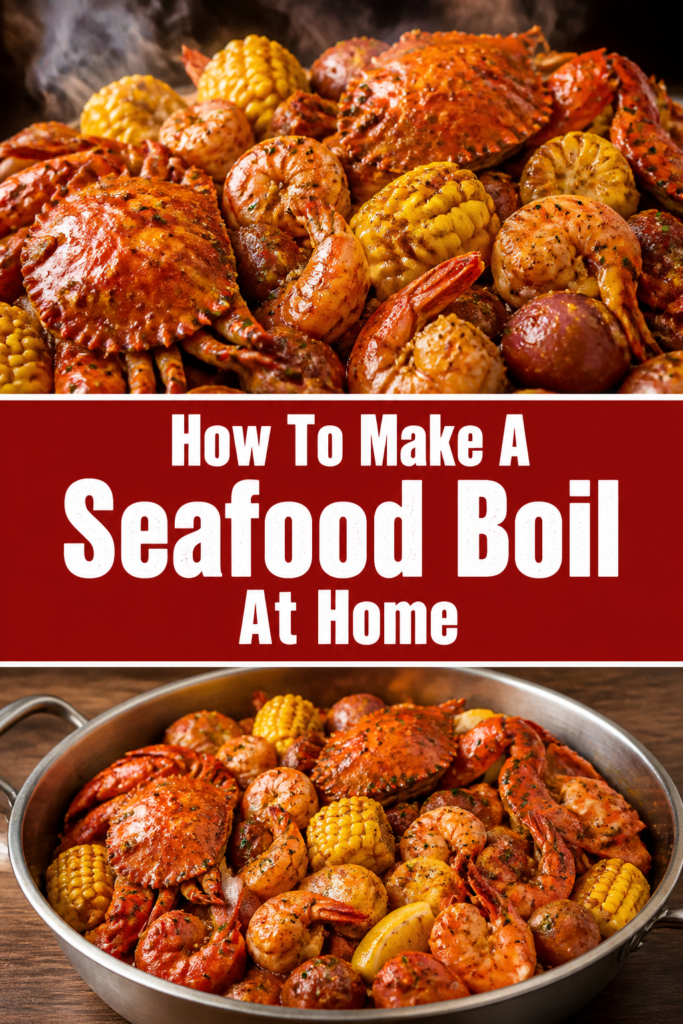
🦀 How To Make A Seafood Boil At Home
There is something primal and joyous about dumping a massive pot of steaming seafood directly onto a newspaper-covered table.
I have spent years perfecting this recipe in backyard gatherings across the coast, learning that the secret isn’t just the heat, but the soak.
This guide will teach you how to master the timing and flavor profiles required to host a professional-grade seafood boil in your own kitchen or yard.
Quick Overview
Before you start scrubbing your potatoes and thawing your shrimp, here is a snapshot of what to expect from this process.
- Time needed: 1.5 to 2 hours (including prep and soaking)
- Difficulty: Intermediate
- What you’ll need: A very large stockpot (30-60 quarts), a high-quality seafood seasoning blend, fresh seafood, and a sturdy outdoor burner or a powerful indoor stove.
Step-by-Step Instructions
Step 1: Prepare Your Equipment and Space
Clear a large workspace and ensure your pot is clean and ready for a high-volume boil.
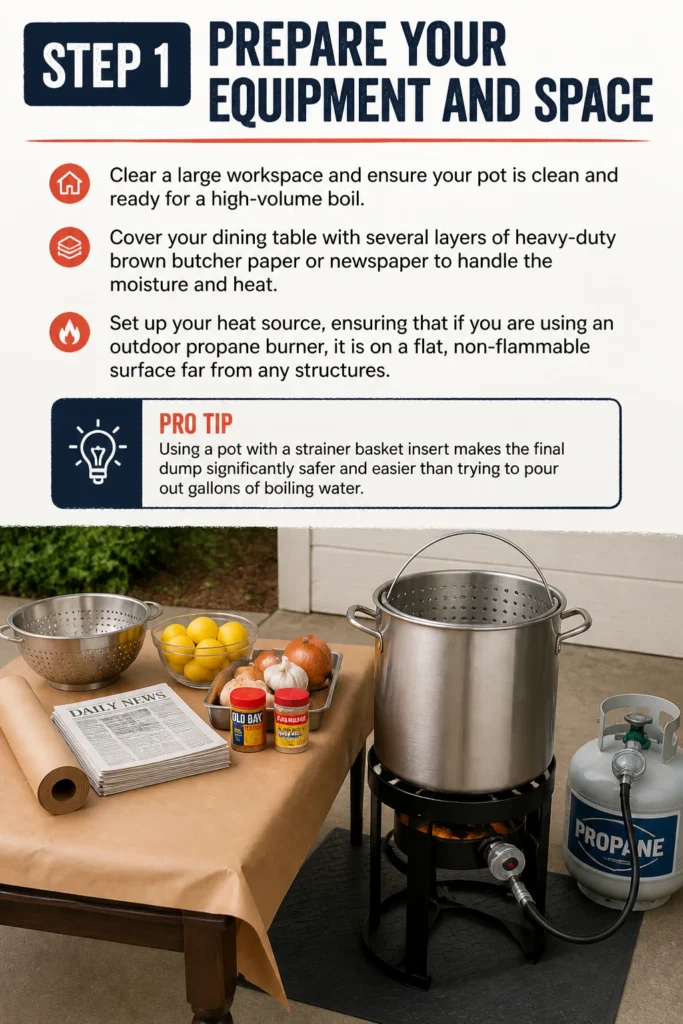
Cover your dining table with several layers of heavy-duty brown butcher paper or newspaper to handle the moisture and heat.
Set up your heat source, ensuring that if you are using an outdoor propane burner, it is on a flat, non-flammable surface far from any structures.
Pro Tip: Using a pot with a strainer basket insert makes the final “dump” significantly safer and easier than trying to pour out gallons of boiling water.
Step 2: Source High-Quality Ingredients
Select a variety of seafood that can withstand boiling, such as jumbo shrimp (shell-on), snow crab legs, or crawfish.
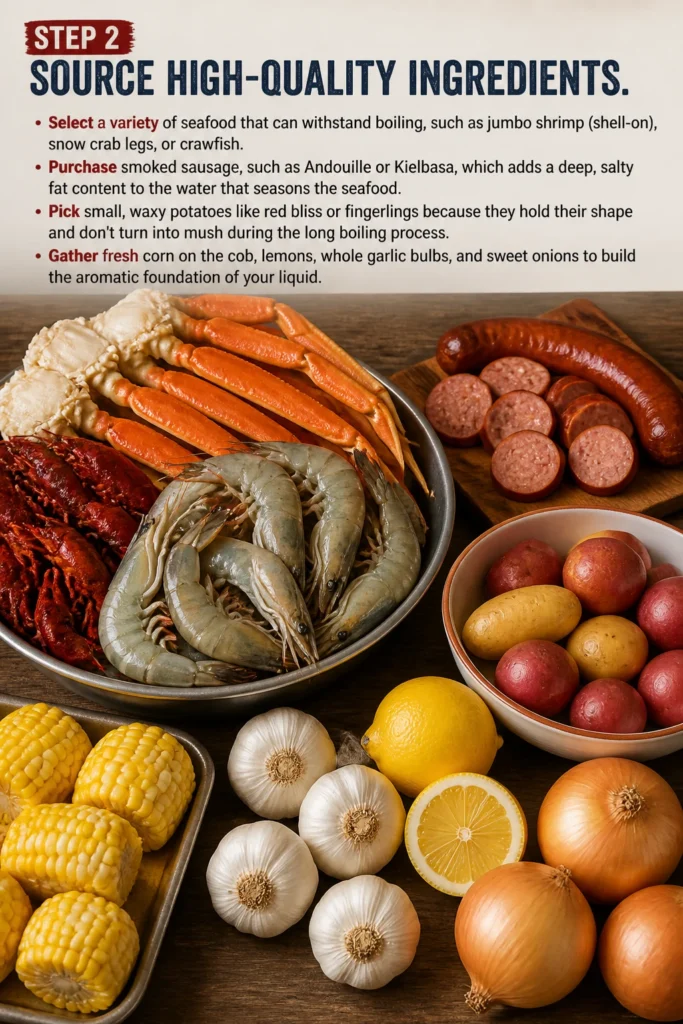
Purchase smoked sausage, such as Andouille or Kielbasa, which adds a deep, salty fat content to the water that seasons the seafood.
Pick small, waxy potatoes like red bliss or fingerlings because they hold their shape and don’t turn into mush during the long boiling process.
Gather fresh corn on the cob, lemons, whole garlic bulbs, and sweet onions to build the aromatic foundation of your liquid.
Step 3: Build the Flavor Base
Fill your pot halfway with water and bring it to a rolling boil over high heat.
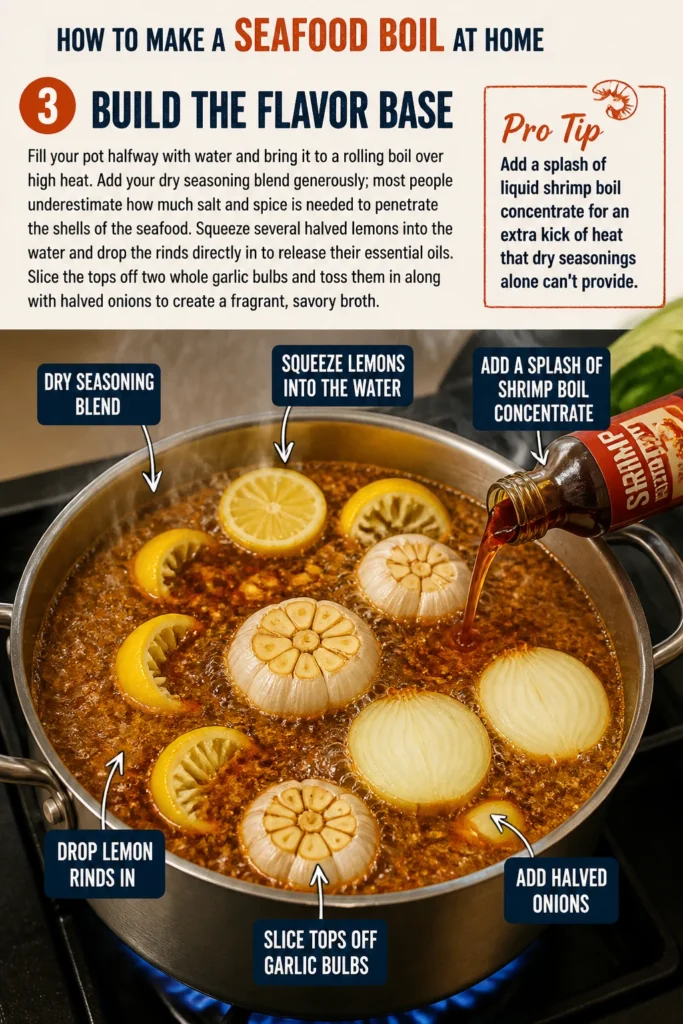
Add your dry seasoning blend generously; most people underestimate how much salt and spice is needed to penetrate the shells of the seafood.
Squeeze several halved lemons into the water and drop the rinds directly in to release their essential oils.
Slice the tops off two whole garlic bulbs and toss them in along with halved onions to create a fragrant, savory broth.
Pro Tip: Add a splash of liquid shrimp boil concentrate for an extra kick of heat that dry seasonings alone can’t provide.
Step 4: Cook the Hardy Vegetables First
Drop the potatoes into the seasoned water first, as they require the longest cooking time to become tender.
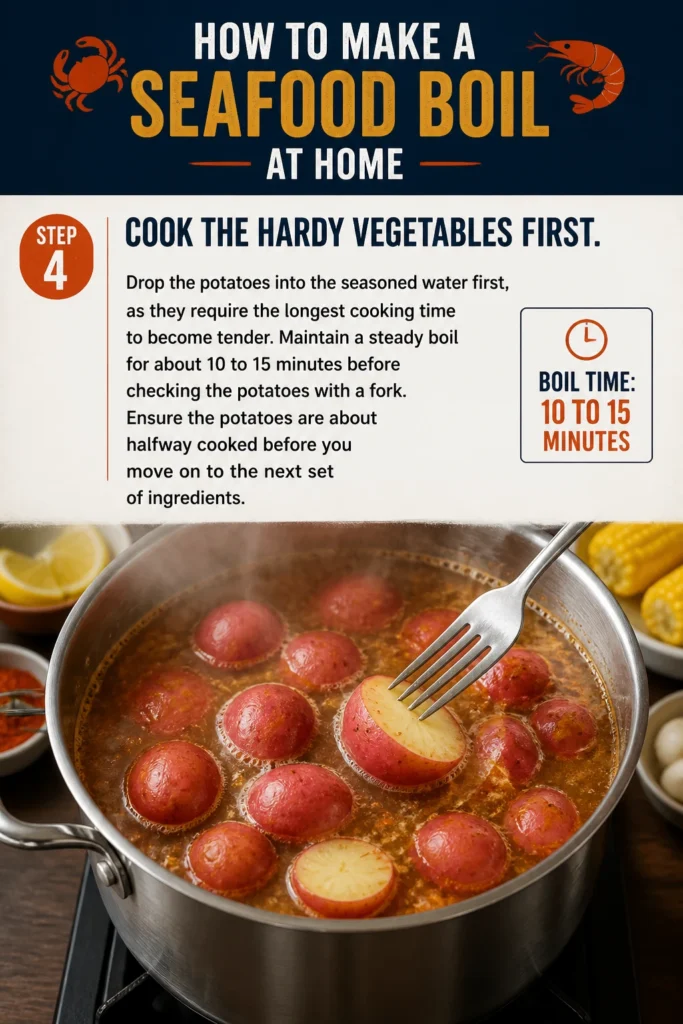
Maintain a steady boil for about 10 to 15 minutes before checking the potatoes with a fork.
Ensure the potatoes are about halfway cooked before you move on to the next set of ingredients.
Step 5: Add the Sausage and Corn
Cut your smoked sausage into two-inch chunks and add them to the pot to begin rendering their fat into the broth.
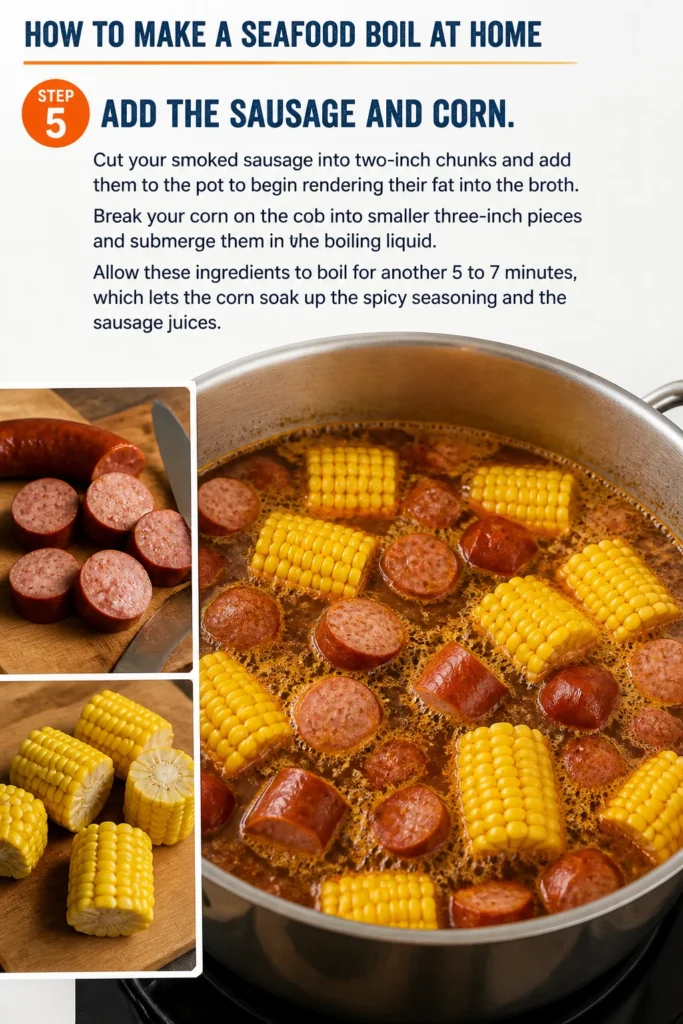
Break your corn on the cob into smaller three-inch pieces and submerge them in the boiling liquid.
Allow these ingredients to boil for another 5 to 7 minutes, which lets the corn soak up the spicy seasoning and the sausage juices.
Step 6: Time the Seafood Layers
Add the crab legs or lobster tails first, as these take slightly longer than shrimp to heat through and absorb flavor.
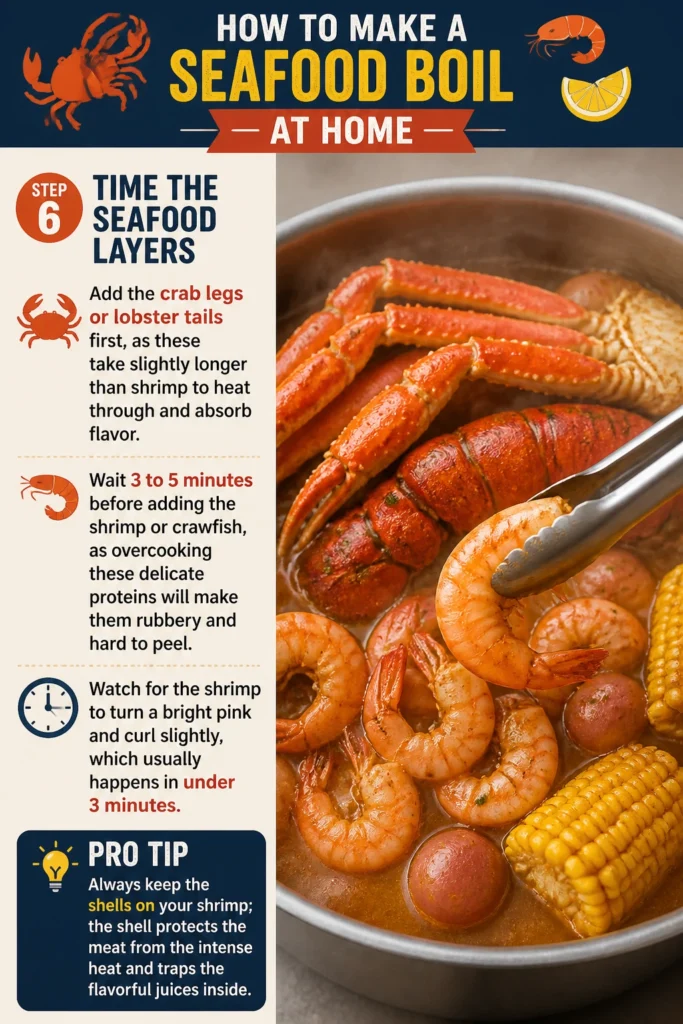
Wait 3 to 5 minutes before adding the shrimp or crawfish, as overcooking these delicate proteins will make them rubbery and hard to peel.
Watch for the shrimp to turn a bright pink and curl slightly, which usually happens in under 3 minutes.
Pro Tip: Always keep the shells on your shrimp; the shell protects the meat from the intense heat and traps the flavorful juices inside.
Step 7: The Critical Flavor Soak
Turn off the heat completely once the seafood is just barely cooked through.
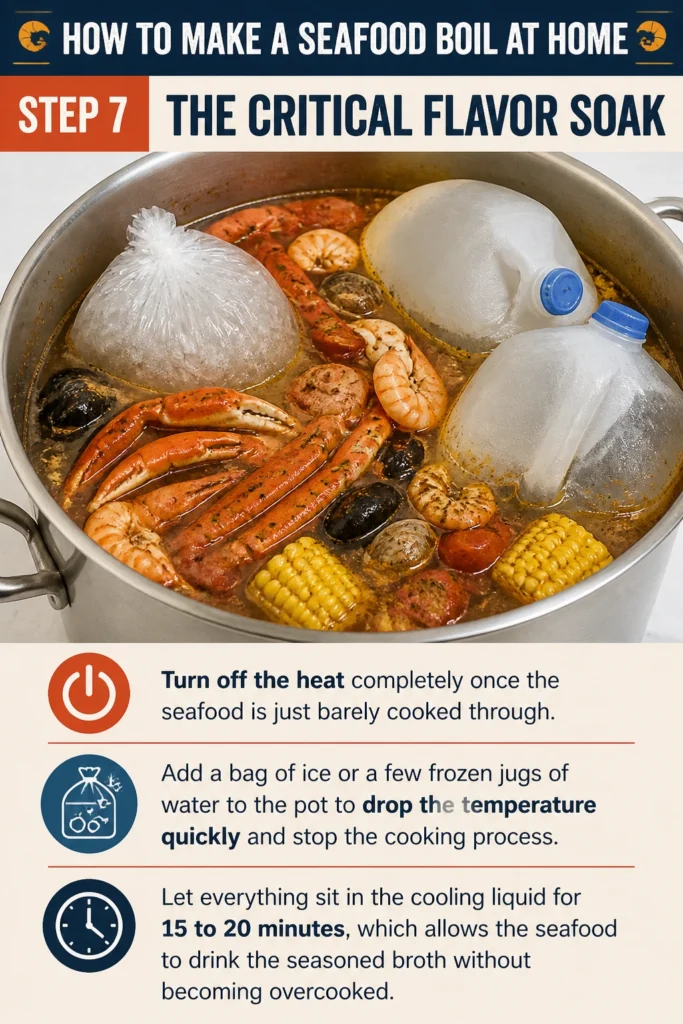
Add a bag of ice or a few frozen jugs of water to the pot to drop the temperature quickly and stop the cooking process.
Let everything sit in the cooling liquid for 15 to 20 minutes, which allows the seafood to “drink” the seasoned broth without becoming overcooked.
Step 8: Create the Garlic Butter Finishing Sauce
Melt several sticks of unsalted butter in a separate saucepan while the seafood is soaking.
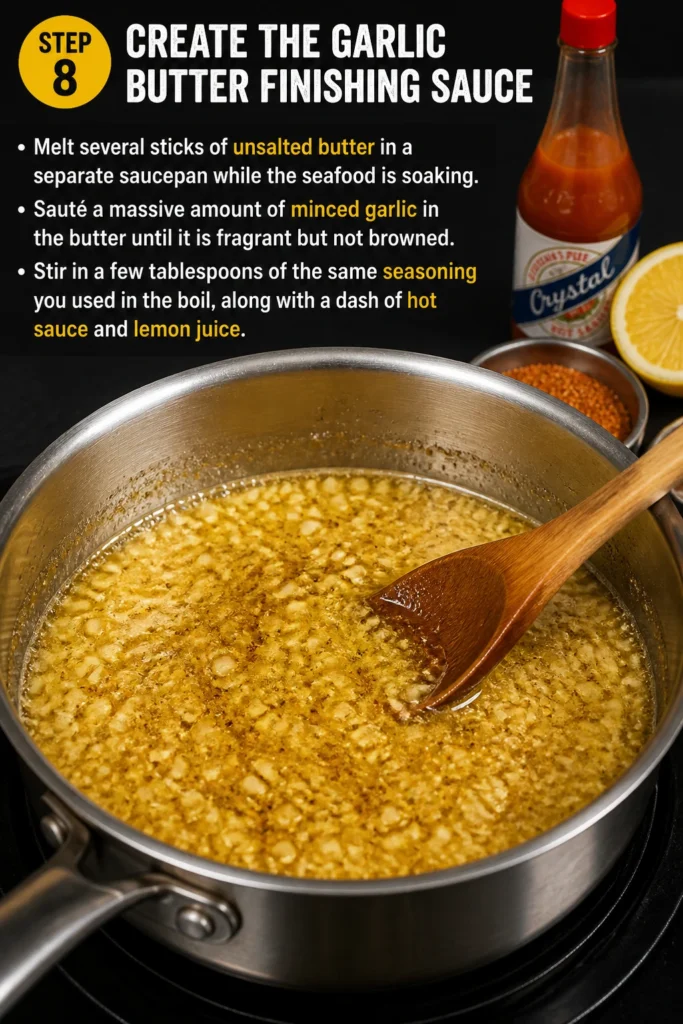
Sauté a massive amount of minced garlic in the butter until it is fragrant but not browned.
Stir in a few tablespoons of the same seasoning you used in the boil, along with a dash of hot sauce and lemon juice.
Step 9: The Table Dump and Serving
Lift the strainer basket out of the pot and let the excess water drain for a few seconds.
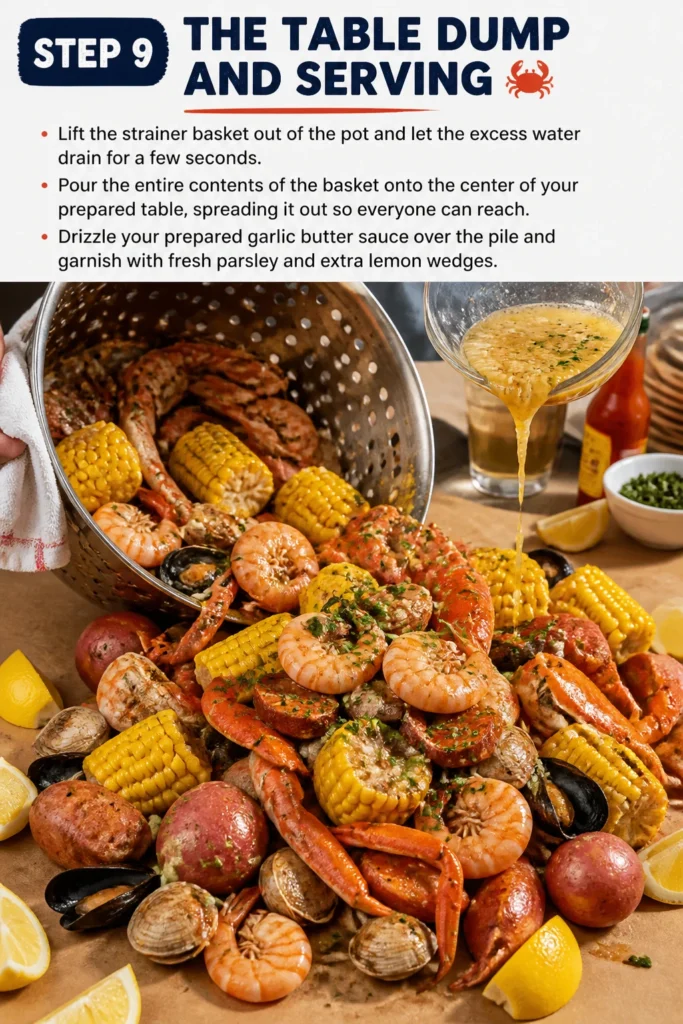
Pour the entire contents of the basket onto the center of your prepared table, spreading it out so everyone can reach.
Drizzle your prepared garlic butter sauce over the pile and garnish with fresh parsley and extra lemon wedges.
Common Mistakes to Avoid
Under-seasoning the Water
Many beginners treat the boil water like a standard soup base, but it needs to be much more concentrated. Remember that the seasoning has to penetrate thick crab shells and potato skins in a very short amount of time. If your water doesn’t look dark and smell incredibly spicy, your food will likely taste bland once it is peeled.
Overcooking the Shrimp
Shrimp are the most delicate part of the boil and are often ruined by staying in the boiling water too long. They only need a few minutes of active boiling before the heat is turned off for the soak. If they are tightly curled into a “C” shape or look shrunken, they have been overcooked and will be difficult to peel.
Skipping the Cooling Soak
The soak is where the magic happens, yet many people skip it to eat sooner. When you drop the temperature of the water with ice, the seafood stops cooking and begins to absorb the seasoned liquid through osmosis. Skipping this step results in seafood that is hot on the outside but lacks deep flavor on the inside.
Using Starchy Potatoes
Using Russet or baking potatoes is a recipe for disaster in a seafood boil. These potatoes break down in boiling water and create a cloudy, starchy mess that coats the seafood. Stick to waxy varieties like Red Bliss or Yukon Gold that maintain their structural integrity even after 20 minutes in the pot.
Troubleshooting
The Seafood is Too Spicy to Eat
If you find that the heat level is overwhelming, do not panic. You can mitigate the spice by serving the boil with plenty of extra plain melted butter and fresh lemon juice. The fat in the butter helps neutralize the capsaicin on your palate, while the acid in the lemon cuts through the intensity of the peppers.
The Potatoes are Still Hard
This usually happens if the potatoes were too large or weren’t given enough of a head start. If you have already added the seafood, you cannot keep boiling the pot without ruining the shrimp. The best fix is to remove the potatoes, place them in a microwave-safe bowl with a little boil liquid, and finish them in the microwave for 3-5 minutes before tossing them back in.
The Crab Meat is Sticking to the Shell
This is a common sign that the crab was either overcooked or was frozen and thawed improperly. To fix this for the next batch, ensure you are using the “ice trick” to stop the cooking immediately. For the current batch, use a pair of kitchen shears to cut the shells open cleanly rather than trying to snap them by hand.
Key Takeaways
- Timing is everything: Stagger your ingredients based on their density, starting with potatoes and ending with shrimp.
- Season aggressively: Use more dry seasoning than you think is necessary, as much of it stays in the water.
- The soak is mandatory: Cooling the water and letting the seafood sit for 20 minutes is the only way to get deep flavor.
- Use waxy potatoes: Red potatoes are the industry standard for a reason; they won’t fall apart.
- Keep the shells on: Shells are essential for flavor protection and provide the classic “peel and eat” experience.
- Finish with butter: A separate garlic butter sauce takes the meal from a simple boil to a gourmet feast.
Frequently Asked Questions
Can I use frozen seafood for a boil?
Yes, frozen seafood is perfectly fine and often fresher than “fresh” seafood that has been sitting in a display case. Just make sure to thaw your crab legs and shrimp completely before adding them to the pot so they cook evenly. If you add them frozen, they will drop the water temperature too much and throw off your timing.
What is the best seasoning to use?
Old Bay is the classic choice for a Mid-Atlantic style boil, while Zatarain’s or Slap Ya Mama are preferred for Cajun-style boils. Many enthusiasts prefer to mix their own using paprika, cayenne, garlic powder, onion powder, and plenty of salt. Regardless of the brand, ensure it contains a good balance of salt and heat.
How much seafood should I buy per person?
A good rule of thumb is about one pound of seafood per person, plus a half-pound of sides like sausage, corn, and potatoes. If your guests are heavy eaters, you may want to increase the crab leg count, as they have a lower meat-to-shell ratio. It is always better to have leftovers than to run out of the main attraction.
How do I clean up after a seafood boil?
The beauty of the newspaper-covered table is that cleanup is incredibly fast. Once everyone is finished, simply roll up the newspaper with all the shells and scraps inside and toss the entire bundle into a heavy-duty trash bag. Immediately take the trash outside to an outdoor bin to prevent your house from smelling like old seafood the next day.
Our Top Recommended Finds
- Outdoor Propane Burner: A high-BTU burner allows you to bring massive amounts of water to a boil much faster than a standard kitchen stove.
- 60-Quart Aluminum Stockpot: This size is ideal for feeding a crowd and usually comes with the necessary strainer basket.
- Stainless Steel Kitchen Shears: These are essential for guests to easily cut through tough king crab or snow crab shells without making a mess.
Master The Art Of The Backyard Feast
Now that you have the blueprint for a perfect seafood boil, it is time to gather your friends and fire up the burner.
You might consider experimenting with different proteins like mussels or clams to add more variety to your next pot.
If you enjoyed this guide, look into regional variations like the South Carolina Low Country Boil or the spicy Vietnamese-Cajun style boils found in Houston.
The most important thing is to keep the drinks cold, the butter warm, and the company lively.