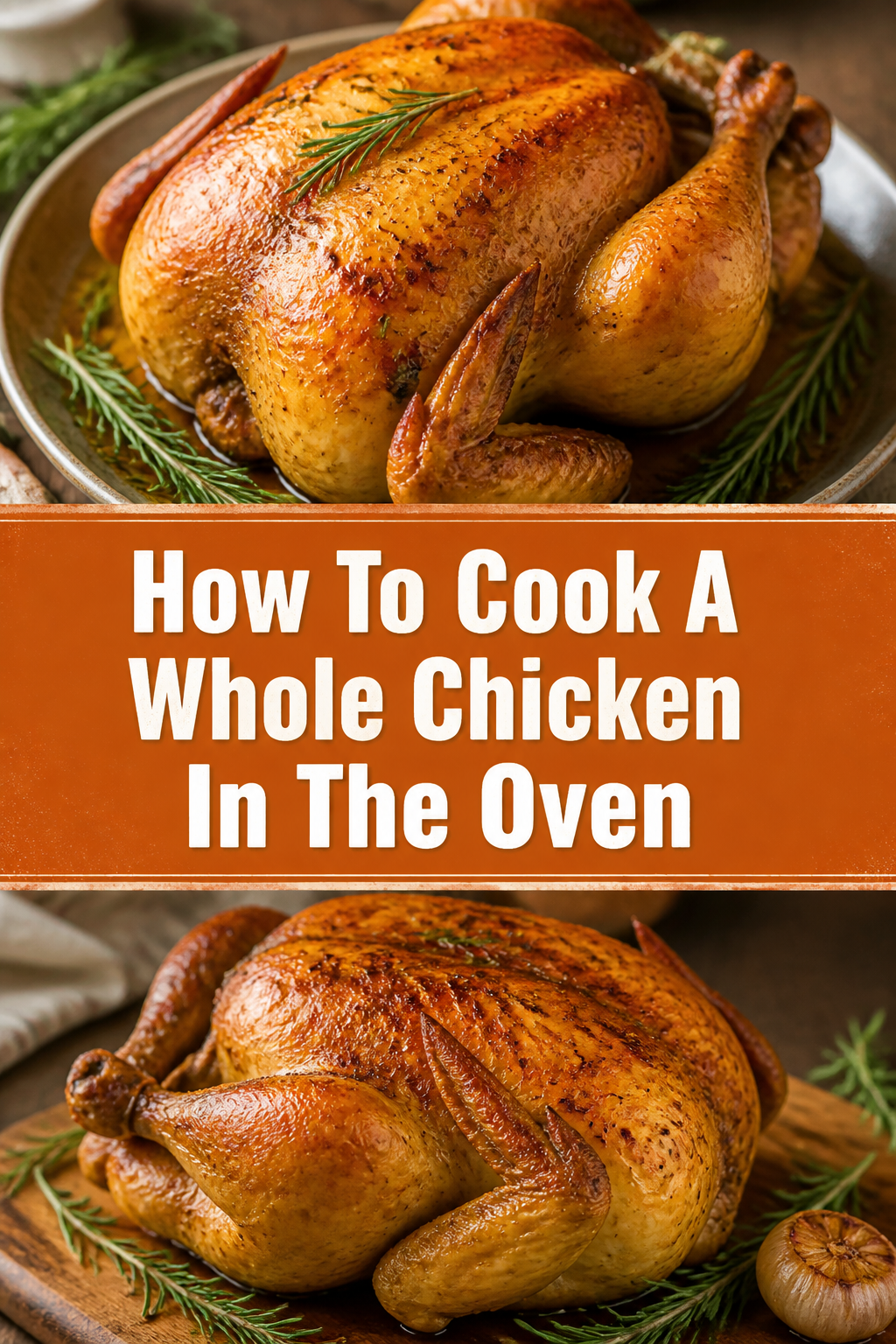
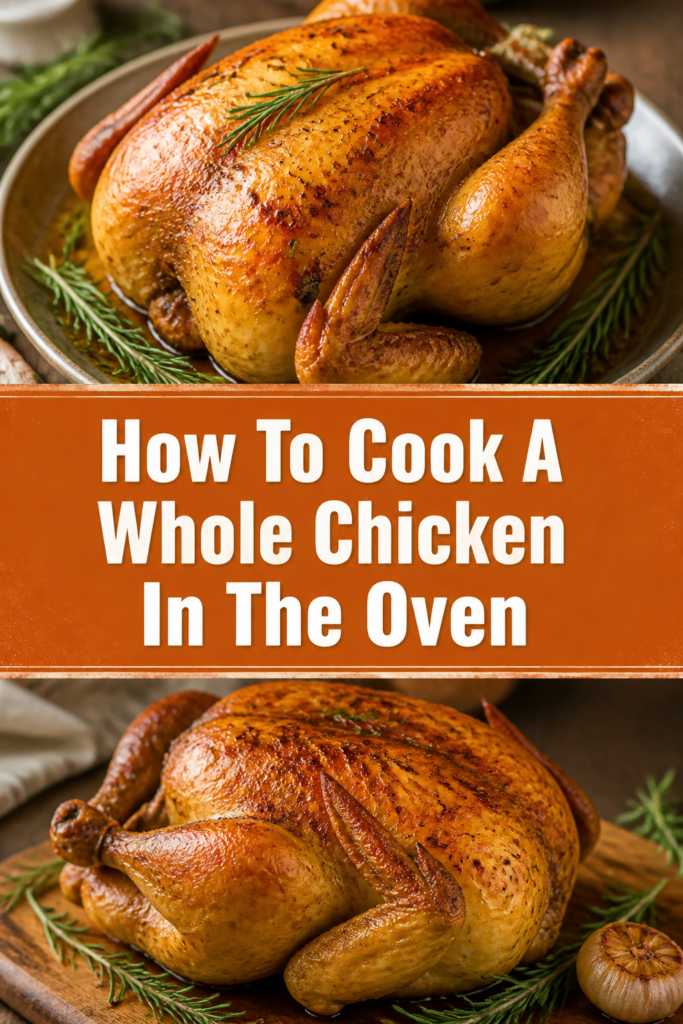
🍗 How To Cook A Whole Chicken In The Oven
There is something deeply comforting about the smell of a roasting chicken filling the house on a Sunday afternoon.
I have spent years perfecting this technique in my own kitchen, moving from soggy skin and dry meat to a consistently golden, juicy bird.
This guide is built on those dozens of trials to ensure you get a restaurant-quality result on your very first try.
Quick Overview
Roasting a whole chicken is a foundational skill that every home cook should master because it is both economical and impressive.
You will learn how to prepare the bird, season it for maximum flavor, and time the cook perfectly for a moist finish.
- Time needed: 1 hour 30 minutes to 2 hours (including prep and resting)
- Difficulty: Beginner
- What you’ll need: A 4-5 pound whole chicken, kosher salt, black pepper, olive oil or butter, a roasting pan or cast-iron skillet, and a reliable meat thermometer.
Step-by-Step Instructions
Step 1: Temper the Chicken
Remove the chicken from the refrigerator about 30 to 45 minutes before you plan to put it in the oven.
Cooking a bird that is ice-cold in the center often leads to uneven results where the outside overcooks before the inside is safe to eat.
Check the cavity of the chicken for any giblets or neck pieces that might be tucked inside a plastic bag.
You can save these pieces for making a rich gravy or stock later, or discard them if you prefer.
Pro Tip: Setting the chicken on the counter allows the muscle fibers to relax, which results in a much more tender bite after roasting.
Step 2: Achieve Maximum Dryness
Pat the entire surface of the chicken with paper towels until it is completely bone-dry.
Moisture is the enemy of crispy skin because any water left on the surface will create steam in the oven.
Ensure you get into the nooks and crannies under the wings and around the legs for the best results.
If you have extra time, you can leave the chicken uncovered in the fridge for a few hours to air-dry the skin even further.
Step 3: Season Generously
Drizzle the bird with olive oil or rub it with softened unsalted butter to help the seasonings stick and aid in browning.
Sprinkle a heavy layer of kosher salt and cracked black pepper over every inch of the skin.
Do not forget to season the inside of the cavity, as this helps flavor the meat from the inside out.
Apply any additional herbs like dried thyme, rosemary, or garlic powder at this stage if you want a specific flavor profile.
Pro Tip: Use more salt than you think you need. A large portion of it will drip off with the fat, and chicken requires aggressive seasoning to taste its best.
Step 4: Add Aromatics
Stuff the cavity with half a lemon, a small onion cut into wedges, and a few smashed cloves of garlic.
These ingredients release moisture and fragrance during the roasting process, keeping the breast meat succulent.
Insert a few sprigs of fresh herbs like sage or parsley if you have them on hand for an extra layer of complexity.
Avoid overstuffing the cavity, as you want some hot air to be able to circulate inside for food safety and even cooking.
Step 5: Truss the Bird
Tie the legs together tightly using a piece of kitchen twine to close the cavity and create a compact shape.
Tuck the wing tips behind the back of the chicken so they do not burn during the long cooking time.
Trussing ensures that the chicken cooks evenly by preventing the thin extremities from drying out before the thickest parts are done.
If you do not have twine, you can make small slits in the skin near the tail and tuck the drumsticks through them.
Step 6: Set the Oven Temperature
Preheat your oven to 425°F (218°C) to ensure a high-heat environment that renders the fat quickly.
High heat is the secret to that classic “crackling” skin that everyone fights over at the dinner table.
Position your oven rack in the middle or lower-third of the oven so the top of the chicken isn’t too close to the heating element.
Using a roasting rack inside your pan is helpful because it allows heat to circulate under the bird, preventing a soggy bottom.
Step 7: The Roasting Process
Place the chicken in the oven with the breast side facing up.
Roast the chicken for approximately 15 minutes per pound, though total time will vary based on your specific oven.
Avoid opening the oven door frequently, as this causes the temperature to drop and slows down the rendering of the skin fat.
Rotate the pan halfway through the cooking time if your oven has hot spots to ensure one side doesn’t brown faster than the other.
Pro Tip: If the breast skin is getting too dark before the legs are done, loosely tent a piece of aluminum foil over the top to protect it.
Step 8: Check the Internal Temperature
Insert an instant-read thermometer into the thickest part of the thigh, making sure not to hit the bone.
The chicken is safe and ready to pull when the thermometer reads 160°F (71°C).
The temperature will continue to rise to the target 165°F (74°C) while the bird rests on the counter.
Check the juices as well; they should run clear, not pink, when the thigh is pierced with a knife.
Step 9: The Crucial Rest
Transfer the chicken to a cutting board or a warm platter once it comes out of the oven.
Wait at least 15 to 20 minutes before you even think about carving into it.
This time allows the juices to redistribute through the meat fibers rather than spilling out onto the board.
Cutting too early results in dry meat, regardless of how perfectly you cooked it.
Common Mistakes to Avoid
Washing the Chicken
Many people grew up being told to rinse poultry in the sink, but this is a major safety hazard. Rinsing splashes bacteria like Salmonella all over your countertops, faucets, and nearby dishes.
The high heat of the oven is more than enough to kill any bacteria on the bird. Focus on drying the skin with paper towels instead of using water.
Using a Shallow Sheet Pan
A whole chicken releases a surprising amount of fat and juices during the roasting process. If you use a flat cookie sheet, you risk a grease fire or a massive mess in your oven as the liquid overflows.
Always use a roasting pan with at least two-inch sides or a heavy cast-iron skillet to contain the drippings. These drippings are liquid gold and can be used to roast potatoes or make gravy.
Overcrowding the Pan
If you decide to roast vegetables alongside your chicken, do not pack them in too tightly around the bird. When vegetables are crowded, they release steam, which will turn your crispy chicken skin soft and rubbery.
Give the chicken plenty of “breathing room” so the dry air can circulate. If you have a lot of vegetables, it is better to roast them on a separate tray.
Troubleshooting
The Skin is Pale and Flabby
This usually happens if the oven temperature was too low or if the skin was still damp when it went into the oven. You can try to fix this by turning on the broiler for the last 2-3 minutes of cooking.
Watch it very closely during this time, as the broiler can turn golden skin into burnt skin in a matter of seconds. In the future, ensure the bird is patted dry and the oven is fully preheated.
The Breast Meat is Dry but Legs are Done
Breast meat cooks faster than dark meat because it has less fat and connective tissue. To prevent this, you can try roasting the chicken breast-side down for the first 20 minutes, then flipping it over to finish.
Another option is to rub a generous amount of butter under the skin of the breast before roasting. This provides a buffer of fat that keeps the white meat moist while the legs catch up.
The Joints are Still Bloody
If the thermometer says the chicken is done but the leg joints look pink or bloody, the bird likely needs a few more minutes. This often happens if the chicken was still too cold when it started cooking.
Cover the breast with foil to prevent overcooking and return the bird to the oven for another 10 minutes. Always rely on the thermometer reading in the thickest part of the thigh as your primary guide.
Key Takeaways
- Dryness is essential: Use paper towels to remove every bit of moisture from the skin for the best crunch.
- Heat matters: A high starting temperature of 425°F helps render fat and creates a golden-brown exterior.
- Aromatics add depth: Lemon, onion, and garlic inside the cavity provide moisture and flavor from within.
- Trust the thermometer: Pull the bird at 160°F and let carry-over cooking bring it to the safe 165°F mark.
- Resting is mandatory: Never skip the 20-minute rest period if you want juicy, tender meat.
Frequently Asked Questions
Can I cook a chicken from frozen in the oven?
It is possible, but it is not recommended for the best flavor and texture. Cooking from frozen takes about 50% longer and often results in the outside becoming tough before the inside is safely thawed and cooked. It is always better to thaw the chicken completely in the refrigerator for 24 hours before roasting.
Should I cover the chicken with foil while it roasts?
Generally, you should leave the chicken uncovered to allow the skin to crisp up. You should only use foil as a “shield” if you notice certain parts, like the wing tips or the top of the breast, are browning too quickly. A fully covered chicken will steam rather than roast, resulting in a different texture entirely.
What should I do with the pan drippings?
The liquid left in the pan is a mixture of rendered chicken fat (schmaltz) and concentrated juices. You can whisk in a little flour and chicken stock to create a delicious homemade gravy. Alternatively, you can toss chopped potatoes in the drippings before roasting them for incredible flavor.
How do I know if my thermometer is accurate?
You can test your thermometer by placing it in a glass of crushed ice and water. It should read exactly 32°F (0°C). If it is off by more than a couple of degrees, you should recalibrate it or replace it, as an inaccurate thermometer is the leading cause of overcooked chicken.
Our Top Recommended Finds
- Digital Instant-Read Thermometer: This tool removes all the guesswork and ensures you never serve undercooked or dry chicken again.
- Heavy-Duty Cast Iron Skillet: A 12-inch skillet is the perfect vessel for roasting a chicken because it holds heat beautifully and develops a great sear on the bottom.
- Cotton Kitchen Twine: Having a roll of food-safe twine in your drawer makes trussing simple and helps your roasts look professional.
Ready To Master The Perfect Roast?
Now that you have the steps and the science behind a perfect roast chicken, it is time to head to the kitchen.
Once you master this basic recipe, you can start experimenting with different herb rubs, compound butters, or even “spatchcocking” the bird for faster cooking.
Pick up a fresh chicken today and put these techniques to the test for your next family dinner.