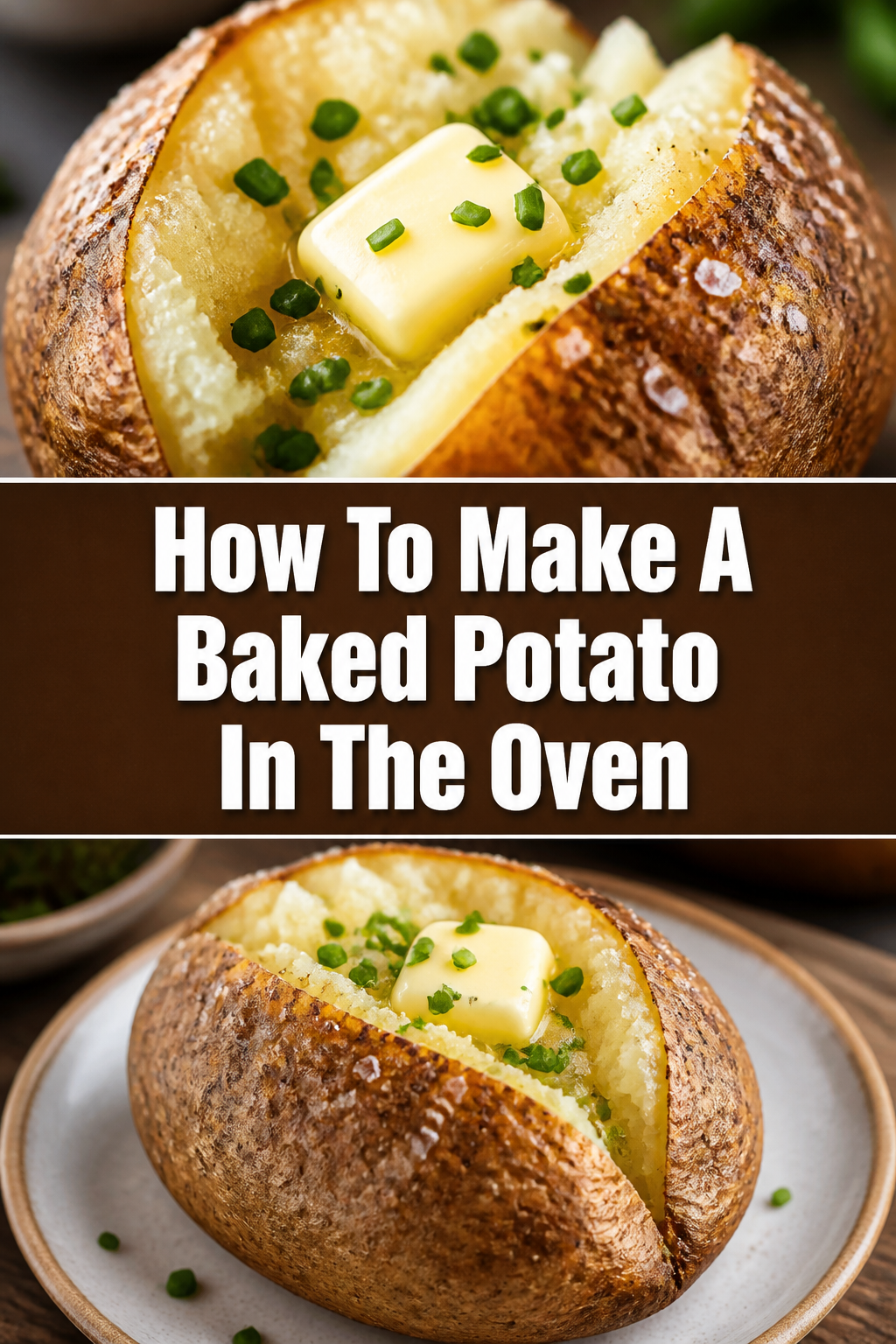
🥔 How To Make A Baked Potato In The Oven
There’s nothing quite like a perfectly baked potato.
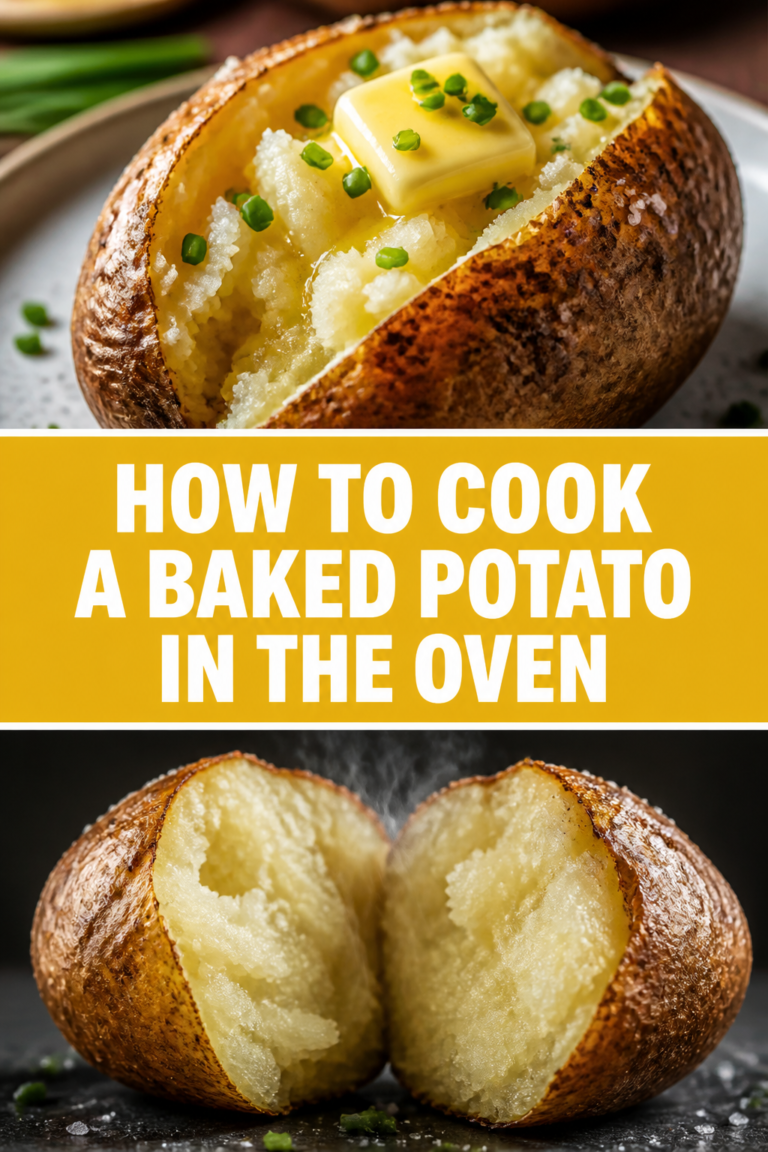
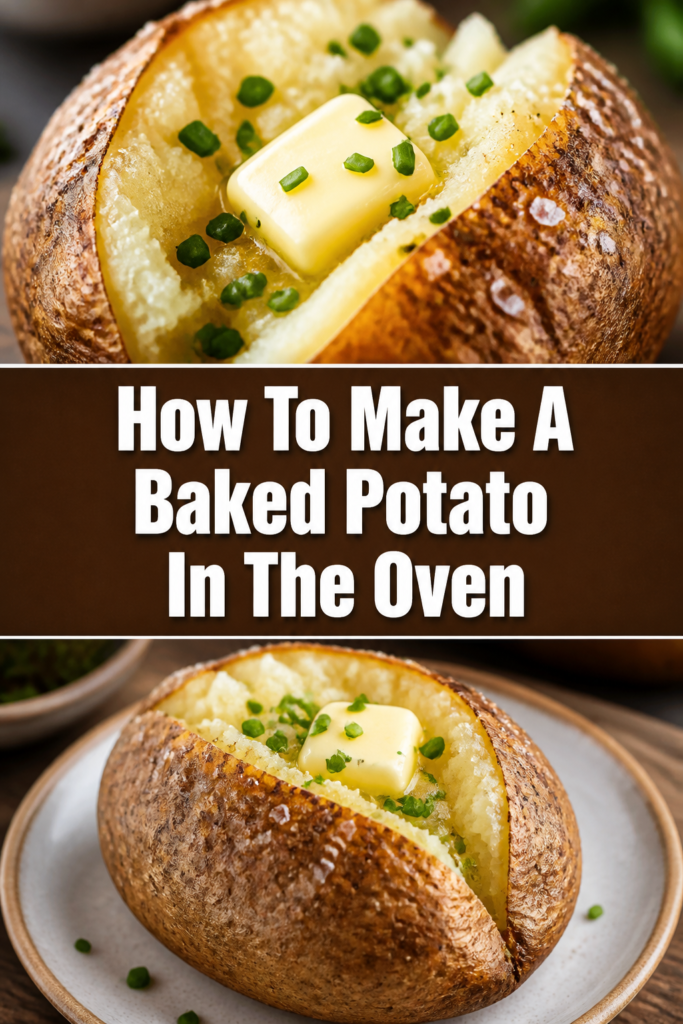
It offers a crispy, salty skin giving way to a wonderfully fluffy, steaming interior, ready to embrace your favorite toppings.
After years of perfecting countless potatoes in my own kitchen, I’m excited to share the simple, reliable method that consistently delivers this ultimate comfort food.
Quick Overview
You’re about to master the art of creating a baked potato with an irresistible crispy skin and a light, airy inside. This guide ensures your spud transforms into a delicious, satisfying meal or side dish.
- Time needed: 60-90 minutes (10 minutes prep, 50-80 minutes bake)
- Difficulty: Beginner
- What you’ll need: Potatoes, olive oil, salt, fork, baking sheet (optional), oven
Step-by-Step Instructions
Step 1: Choose Your Potatoes Wisely
The foundation of a great baked potato starts with the right spud. For the classic fluffy interior and crispy skin, Russet Burbank potatoes are your best bet. Their high starch content and thick skin are ideal for baking.
Look for firm, blemish-free potatoes of a similar size. This ensures they cook evenly and are ready around the same time. Avoid any potatoes with green spots or sprouts, as these indicate they are past their prime.
Pro Tip: Aim for medium to large Russets, roughly 8-12 ounces each. Smaller potatoes may dry out, while excessively large ones can take much longer to cook through.
Step 2: Prepare Your Oven and Tools
Preheat your oven to a consistent 400°F (200°C). This temperature allows the potato to cook thoroughly while also promoting a wonderfully crispy skin. A consistent heat is key for even baking.
Gather your other essentials: a sturdy fork, a small bowl of olive oil, and some coarse salt like kosher or sea salt. You might also want a baking sheet, although placing potatoes directly on the oven rack is often preferred for maximum crispness.
Step 3: Wash and Scrub Thoroughly
Potatoes grow in the ground, so a good cleaning is essential. Hold each potato under cool running water and use a clean vegetable brush or your hands to scrub away any dirt or debris. Be diligent, as you’ll be eating that delicious skin.
Once clean, pat each potato completely dry with a paper towel or a clean kitchen towel. Excess moisture on the skin can prevent it from getting crispy in the oven. A dry surface is crucial for achieving that desired crunch.
Step 4: Prick for Pressure Release
Using your fork, carefully pierce each potato several times all over its surface. Make sure to go deep enough to penetrate the skin and a little into the flesh. Around 6-8 punctures per potato is usually sufficient.
This crucial step allows steam to escape from inside the potato as it bakes. Without these vents, steam can build up, potentially causing the potato to burst open in the oven. It also helps the potato cook more evenly.
Step 5: Oil and Season Generously
Lightly coat each potato with olive oil. You can pour a small amount onto your hands and rub it over the potato, or place the oil in a bowl and roll the potato in it. Ensure the entire surface is covered in a thin, even layer.
Next, sprinkle a generous amount of coarse salt all over the oiled potato skin. The oil helps the salt adhere, and together they work wonders to create a flavorful, incredibly crispy crust. Don’t be shy with the salt; it truly makes a difference.
Pro Tip: For an extra layer of flavor, consider adding a sprinkle of black pepper, garlic powder, or even a pinch of paprika along with the salt. This enhances the skin’s taste even further.
Step 6: Bake Until Tender
Place the prepared potatoes directly on the middle rack of your preheated oven. If you’re concerned about drips, you can place a baking sheet on the rack below, but direct contact with the hot air promotes crispier skin. Give each potato some space for air circulation.
Bake for 50 to 80 minutes, depending on the size of your potatoes. To check for doneness, carefully squeeze the potato; it should yield easily to pressure. Another reliable test is to insert a fork or small knife into the center; it should slide in with very little resistance. The internal temperature should reach 205-212°F (96-100°C).
Step 7: Finish with Flair
Once perfectly baked, carefully remove the potatoes from the oven. Resist the urge to wrap them in foil, which would trap steam and soften the skin. Place them on a cooling rack for a few minutes to allow any residual moisture to escape.
To serve, make a deep cut lengthwise down the center of each potato, but don’t cut all the way through. Hold the potato at each end and gently push towards the center, forcing the fluffy interior to burst open. Use a fork to fluff up the flesh inside, creating more surface area for your toppings.
Common Mistakes to Avoid
Not Pricking the Potato
Forgetting to prick your potatoes before baking is a common oversight with potentially explosive results. As a potato heats up in the oven, water inside turns to steam, creating pressure. Without small holes to release this steam, the pressure can build to a point where the potato literally bursts open, making a mess in your oven.
Always take a few seconds to pierce the potato skin several times with a fork. This simple action allows the steam to escape gradually, ensuring a safe and even cooking process. It’s a small step that prevents a big headache.
Wrapping in Foil Too Soon or Too Long
Many people instinctively wrap their potatoes in aluminum foil, thinking it helps them cook. While foil can keep potatoes warm after baking, wrapping them during the baking process is a mistake if you want crispy skin. Foil traps moisture around the potato, essentially steaming it.
This results in a soft, often soggy skin, rather than the desirable crispy texture. For the best baked potato experience, bake your potatoes unwrapped and directly on the oven rack. Only use foil if you explicitly desire a steamed potato or need to keep it warm after it’s fully cooked.
Overcrowding the Oven
When baking multiple potatoes, it can be tempting to cram them all onto one small rack or baking sheet. However, overcrowding your oven significantly hinders proper air circulation. Hot air needs to flow freely around each potato to ensure even cooking and crispy skin.
If potatoes are touching or too close together, they will steam each other instead of baking. Always ensure there’s ample space between each potato. If necessary, use two oven racks or bake in batches to achieve optimal results.
Underseasoning the Skin
A common mistake is treating the potato skin as merely a protective layer, rather than an integral part of the flavor. Many people lightly oil their potatoes but then neglect to season the skin generously with salt. This leads to a bland, uninteresting skin, even if the inside is perfect.
The oil helps the salt adhere and promotes crispness, while the salt provides essential flavor and draws out moisture. Don’t be afraid to use a good amount of coarse salt on the skin; it transforms it into a delicious, edible component of the baked potato.
Troubleshooting
Potato is Hard Inside
If you cut into your baked potato and find the center is still firm or hard, it means it’s undercooked. This is a common issue, especially with larger potatoes or if your oven temperature wasn’t consistent. An undercooked potato simply hasn’t had enough time in the heat to break down its starches.
The solution is to return the potato to the oven. Continue baking it at the same temperature, checking every 10-15 minutes until it feels tender when squeezed and a fork slides in easily. Next time, consider using slightly smaller potatoes or adding an extra 10-15 minutes to your initial baking time estimate.
Skin is Not Crispy
A soggy or soft potato skin is often due to excess moisture or improper baking technique. This can happen if the potato wasn’t thoroughly dried before baking, if it was wrapped in foil, or if the oven was overcrowded, leading to steaming. Not enough oil or salt can also contribute to a lack of crispness.
To fix this, ensure your potato is completely dry before oiling and salting it generously. Always bake potatoes directly on the oven rack without foil, allowing air to circulate freely. If the skin is still soft towards the end of baking, you can increase the oven temperature to 425°F (220°C) for the last 10-15 minutes to help it crisp up.
Potato Tastes Bland
If your baked potato lacks flavor, even with toppings, the problem likely stems from insufficient seasoning of the potato itself. This is particularly true for the skin and the initial fluffing of the interior. A plain baked potato, without added salt and oil, can taste quite neutral.
Ensure you generously oil and salt the exterior of the potato before baking. Once removed from the oven and cut open, fluff the interior with a fork and immediately add a pinch of salt and a pat of butter (if desired) directly into the hot flesh. This initial seasoning makes a significant difference before any other toppings are added.
Key Takeaways
- Choose high-starch Russet potatoes for the best baked results.
- Always wash, thoroughly dry, and prick your potatoes before baking.
- Generously coat with olive oil and coarse salt for a crispy, flavorful skin.
- Bake unwrapped, directly on the oven rack, allowing for good air circulation.
- Ensure potatoes are fully tender, squeezing easily or reaching 205-212°F internally.
- Fluff the interior immediately after baking to create an airy texture.
Frequently Asked Questions
Can I bake other types of potatoes in the oven?
Yes, you certainly can bake other potato varieties, but the results will differ. Waxy potatoes like Yukon Golds or red potatoes have less starch and thinner skins. They will yield a creamier, denser interior and a less crispy skin compared to a Russet.
While still delicious, they won’t provide that classic fluffy baked potato experience. For a truly traditional baked potato, Russets remain the top recommendation due to their ideal starch content and thick skin.
Should I wrap my potato in foil?
Generally, no, you should not wrap your potato in foil if you desire a crispy skin. Wrapping a potato in foil traps steam around it, which essentially steams the potato rather than baking it. This process results in a soft, moist skin, not the crunchy exterior most people seek in a baked potato.
Only use foil if your goal is a softer, steamed potato texture or if you need to keep a fully cooked potato warm for an extended period after baking. For maximum crispness, bake them unwrapped.
How do I know when it’s done?
The best way to tell if a baked potato is done is by testing its tenderness. Gently squeeze the potato; it should yield easily to pressure and feel soft all the way through. Another reliable method is to insert a fork or a small knife into the center of the potato.
It should slide in with very little resistance, feeling completely tender. For ultimate precision, an instant-read thermometer inserted into the thickest part should register between 205-212°F (96-100°C).
Can I microwave a potato before baking?
You can certainly microwave a potato before baking to significantly cut down on the overall cooking time. Microwaving partially cooks the potato from the inside out, softening the flesh. This can reduce your oven baking time by 20-30 minutes, sometimes more.
However, be aware that microwaving first can sometimes slightly affect the final texture, making it a little less fluffy than a potato baked entirely in the oven. If time is a major constraint, it’s a perfectly acceptable shortcut.
Our Top Recommended Finds
- Vegetable Scrub Brush: Essential for thoroughly cleaning potatoes without damaging the skin. A good brush makes prep quick and easy.
- Instant-Read Thermometer: Takes the guesswork out of determining doneness, ensuring your potatoes are perfectly cooked every time. Look for one that’s fast and accurate.
- Perforated Baking Pan or Rack: While not strictly necessary, a perforated pan or a simple wire rack placed on a baking sheet allows for even better air circulation around the potato, maximizing skin crispness.
Your Perfect Potato Awaits
You now possess all the knowledge needed to create a truly exceptional baked potato. Forget dry interiors and soggy skins; your oven-baked spuds are destined for greatness. This simple yet effective method ensures a delightful contrast between the crispy, salty exterior and the soft, fluffy inside.
Don’t hesitate to experiment with different toppings once you’ve mastered the basic bake. From classic butter and sour cream to chili, cheese, or even leftover pulled pork, the baked potato is a versatile canvas. Go ahead, gather your ingredients, and enjoy the satisfaction of making your very own perfect baked potato today!