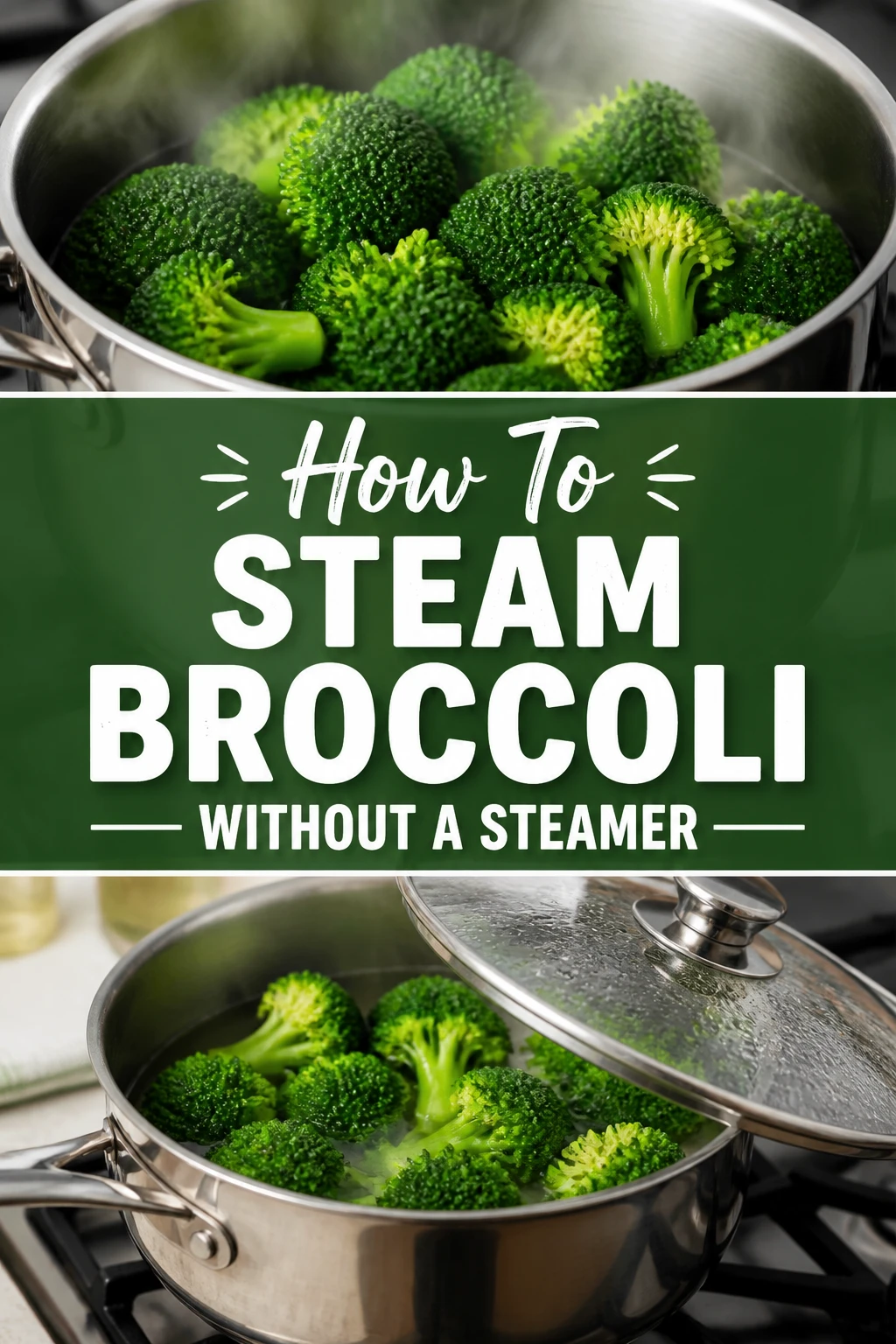
🥦 How To Steam Broccoli Without A Steamer
Steaming broccoli perfectly without a dedicated steamer might sound challenging, but it is incredibly simple. You probably already have all the necessary tools in your kitchen. I’ve been using these methods for years, consistently achieving tender-crisp results every time.
This guide shares my go-to techniques, ensuring your broccoli retains its vibrant color and essential nutrients. You’ll learn how to transform raw florets into a delicious, healthy side dish with minimal effort.
Quick Overview
Transforming tough broccoli into tender, bright green florets is straightforward, even without specialized equipment. You’ll master a few common kitchen methods to achieve perfectly steamed vegetables.
- Time needed: 10-15 minutes (prep and cook time)
- Difficulty: Beginner
- What you’ll need: Broccoli, large pot with lid, colander or small heat-safe bowl, water, salt, olive oil (optional)
Step-by-Step Instructions
Step 1: Choose and Prepare Your Broccoli
Select fresh, firm broccoli heads with tight, dark green florets. Avoid any with yellowing or soft spots, as these indicate older produce. Freshness is key for the best flavor and texture.
Rinse the broccoli thoroughly under cool running water. This removes any dirt or lingering pesticides from the surface of the vegetable. Shake off excess water gently.
Trim the woody end of the stalk, then separate the head into bite-sized florets. You can also peel and slice the tender part of the stalk for steaming, as it’s quite nutritious. Aim for uniform pieces to ensure even cooking.
Pro Tip: Cut florets roughly the same size to guarantee they cook at the same rate. Smaller pieces will cook faster than larger ones.
Step 2: Choose Your Steaming Method
There are a few effective ways to steam broccoli without a traditional steamer basket. The most common involves using a pot with a lid and either a colander or a small, heat-safe bowl. Another simple approach uses just a lidded skillet.
Consider the amount of broccoli you are steaming when selecting your equipment. A larger batch will require a wider pot or skillet. The goal is to create a sealed environment where steam can circulate.
Step 3: Set Up Your Steaming Apparatus (Pot & Colander Method)
Place about one inch of water into a large pot. Ensure the water level is below where your colander or bowl will sit. You want steam, not boiling water, to cook the broccoli.
Bring the water to a gentle boil over medium-high heat. Once the water is simmering, reduce the heat to medium-low to maintain a steady steam. Too vigorous a boil can cause the water to evaporate too quickly.
Nestle a metal colander or a heat-safe glass bowl into the pot, making sure it sits above the water line. The base of your chosen insert should not touch the simmering water. This setup creates a makeshift steamer basket.
Step 4: Add Broccoli and Cover
Carefully place your prepared broccoli florets into the colander or heat-safe bowl. Arrange them in a single layer if possible to promote even cooking. Overcrowding can lead to unevenly cooked broccoli.
Cover the pot tightly with a lid. A snug fit is crucial for trapping the steam inside. This trapped steam is what cooks the broccoli gently and efficiently.
Reduce the heat to medium-low. Maintain a steady simmer beneath the colander, allowing the steam to build up. This consistent steam will cook the broccoli evenly without direct contact with the water.
Step 5: Steam Until Tender-Crisp
Steam the broccoli for 3-5 minutes, or until it reaches your desired tenderness. The exact timing depends on the size of your florets and your personal preference. Smaller florets will cook faster.
Check for doneness by piercing a floret with a fork. It should be tender but still have a slight bite, indicating it’s “al dente” or tender-crisp. The color should also be a vibrant, bright green.
Avoid overcooking, as this can result in mushy, dull-colored broccoli. Overcooked broccoli loses its appealing texture and some nutritional value. Keep a close eye on it during the final minutes.
Pro Tip: For slightly faster cooking, you can add a pinch of salt to the steaming water. This slightly raises the boiling point and infuses a subtle flavor into the steam.
Step 6: Finish and Serve
Carefully remove the lid, being mindful of the hot steam escaping. Use oven mitts to lift the colander or bowl out of the pot. Be cautious as the steam can cause burns.
Transfer the steamed broccoli to a serving dish. You can serve it plain for a healthy option, or enhance its flavor with simple seasonings. A little extra touch can make a big difference.
Toss with a drizzle of olive oil, a squeeze of lemon juice, a sprinkle of sea salt, and freshly ground black pepper. Garlic powder or red pepper flakes also make excellent additions. Enjoy your perfectly steamed broccoli immediately.
Common Mistakes to Avoid
Overcrowding the Pot
Placing too many broccoli florets into your steaming setup at once prevents proper steam circulation. This leads to uneven cooking, with some florets remaining raw while others might overcook. Always give your broccoli enough space.
For best results, steam broccoli in batches if you have a large quantity. This ensures every piece gets consistent exposure to the steam, cooking perfectly. Patience here yields superior texture and color.
Using Too Much Water
Adding excessive water to the pot can cause the broccoli to boil instead of steam. If the water level is too high, it will directly contact the florets, making them soggy and waterlogged. This strips away nutrients and flavor.
Ensure the water level remains below your colander or bowl. You only need about an inch of water to generate sufficient steam. The goal is indirect heat, not submersion.
Overcooking the Broccoli
Leaving broccoli in the steamer for too long results in a mushy, dull-colored, and unappealing vegetable. Overcooked broccoli loses its firm texture and vibrant green hue. It also diminishes its nutritional benefits.
Start checking for doneness around the 3-minute mark. Aim for tender-crisp, where a fork can easily pierce it but it still offers some resistance. Remove it from the heat as soon as it reaches this stage.
Troubleshooting
Broccoli is Soggy and Waterlogged
This usually happens when the broccoli has been in direct contact with the boiling water or has been overcooked. The florets absorb too much moisture, becoming limp and losing their appealing texture.
Ensure your colander or bowl sits well above the water line. Always maintain a low, gentle simmer, not a vigorous boil, to prevent water from splashing onto the broccoli. Reduce cooking time in the future.
Broccoli is Still Hard and Crunchy
If your broccoli remains firm after the recommended steaming time, it likely hasn’t had enough heat exposure. This could be due to insufficient steam, a loose lid, or too large florets. Undercooked broccoli isn’t pleasant to eat.
Check that your pot lid forms a tight seal to trap all the steam effectively. If florets are large, consider cutting them into smaller, more uniform pieces. Increase steaming time by 1-2 minutes, checking frequently.
Broccoli Lost Its Vibrant Green Color
A dull or olive-green color indicates that the broccoli has been overcooked. The chlorophyll responsible for the bright green color breaks down with prolonged heat exposure. It’s a clear sign of mushy broccoli.
To maintain that beautiful, vibrant green, steam the broccoli just until tender-crisp. Remove it from the heat immediately when it reaches this point. A quick plunge into ice water (shocking) can also halt cooking and preserve color, though it’s not strictly necessary for simple steaming.
Key Takeaways
- Always start with fresh, firm broccoli for the best results.
- Cut florets into uniform, bite-sized pieces for even cooking.
- Use about one inch of water in the pot, ensuring it doesn’t touch the broccoli.
- Keep the pot tightly covered to trap steam and cook efficiently.
- Steam for 3-5 minutes, checking frequently for tender-crisp doneness.
- Avoid overcooking to preserve texture, color, and nutrients.
Frequently Asked Questions
Can I steam frozen broccoli using these methods?
Yes, you can absolutely steam frozen broccoli with these techniques. You might need to adjust the cooking time slightly. Frozen broccoli often requires 1-2 minutes longer to reach the desired tenderness.
There’s no need to thaw frozen broccoli before steaming. Place it directly into your makeshift steamer. Keep an eye on it, as it can go from perfectly cooked to mushy quite quickly.
What if I don’t have a lid that fits my pot?
A tight-fitting lid is crucial for effective steaming. If your pot doesn’t have a matching lid, you can improvise. Try using a baking sheet or a large dinner plate that completely covers the pot opening.
You want to create a seal that traps the steam inside. If there are small gaps, you might need to increase the cooking time slightly. Ensure your improvised lid is heat-safe and stable.
Can I add flavorings to the steaming water?
Adding flavorings to the steaming water is a great way to infuse your broccoli with extra taste. You can add a squeeze of lemon, a few garlic cloves, or even some fresh herbs like thyme or rosemary. These aromatics will subtly flavor the steam.
This technique imparts a gentle essence without directly coating the broccoli. Experiment with different combinations to discover your favorite flavor profiles. A bay leaf also works wonderfully.
Our Top Recommended Finds
- Large Stainless Steel Pot with Lid: A versatile kitchen workhorse, essential for many cooking tasks beyond steaming. Its sturdy construction ensures even heat distribution and durability.
- Metal Colander: Perfect for rinsing vegetables and doubles as an excellent makeshift steamer basket. Look for one with a stable base and fine mesh.
- Silicone Oven Mitts: Protect your hands from hot steam and handles when handling pots and lids. They offer superior grip and heat resistance compared to fabric mitts.
Discover the Simple Joy of Perfectly Steamed Broccoli
Mastering how to steam broccoli without a dedicated steamer is a valuable kitchen skill. It opens up a world of quick, healthy, and delicious meal possibilities. You now have all the knowledge to achieve perfectly tender-crisp florets every time.
Don’t let the lack of specialized equipment deter you from enjoying this nutritious vegetable. Embrace these simple methods and make steamed broccoli a regular, effortless addition to your plate. Start experimenting with different seasonings and enjoy your culinary success tonight!