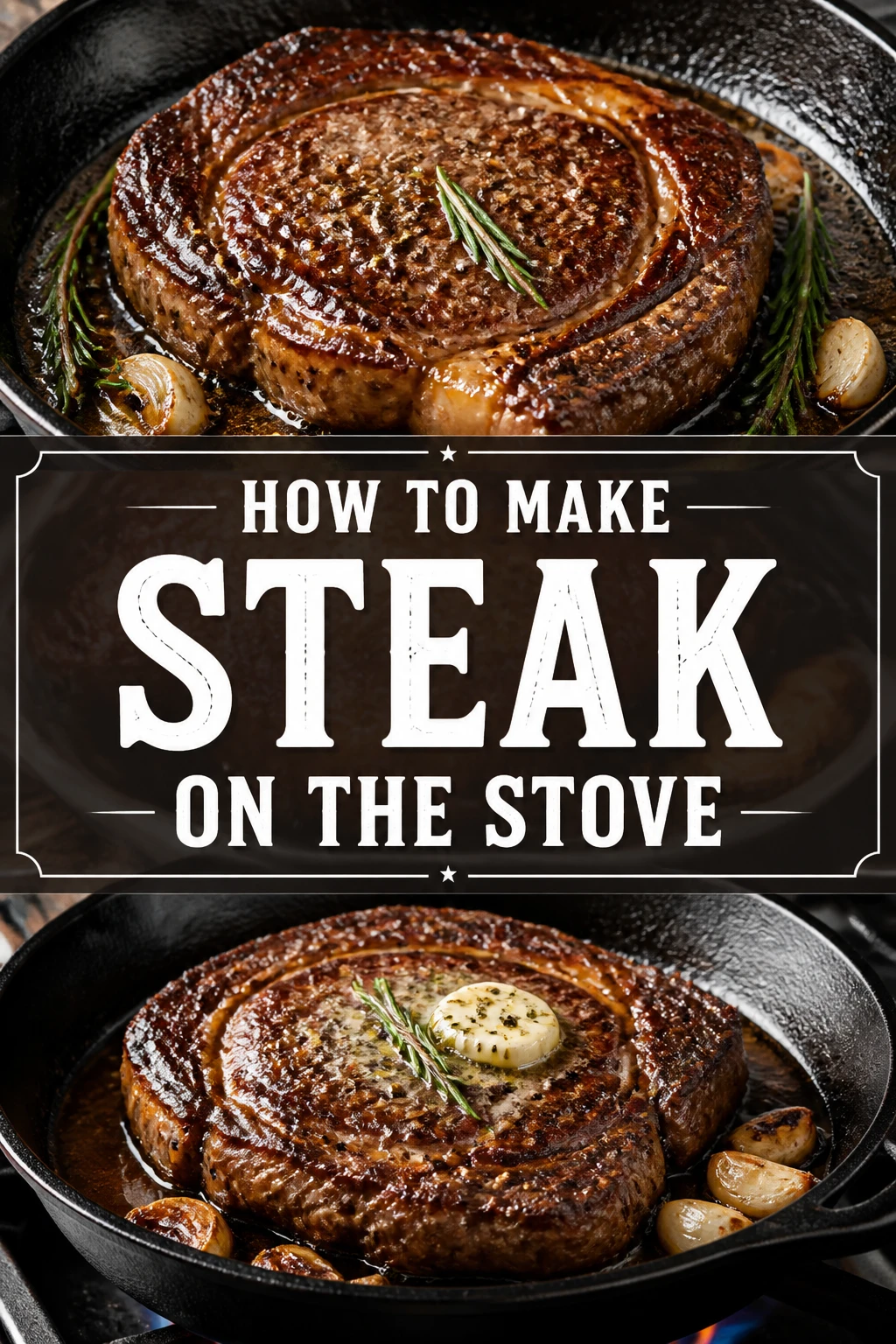
🥩 How To Make Steak On The Stove
I remember standing in my kitchen years ago, staring at a beautiful ribeye that I had just turned into a gray, rubbery disappointment.
That failure drove me to obsess over the science of heat, fat, and protein until I could replicate a high-end steakhouse crust every single time.
This guide is the result of those trials, designed to give you the confidence to cook a world-class steak without ever turning on your grill.
Quick Overview
Cooking a steak on the stove is about managing high heat and timing to create a contrast between a crunchy exterior and a tender interior.
- Time needed: 30–45 minutes (including prep and resting)
- Difficulty: Intermediate
- What you’ll need: Cast iron skillet, high-smoke point oil, kosher salt, unsalted butter, and a digital meat thermometer.
Step-by-Step Instructions
Step 1: Select the Proper Cut of Meat
Choose a steak that is at least 1.5 inches thick to ensure you can get a deep sear without overcooking the center.
Look for heavy marbling, which refers to the white flecks of intramuscular fat that melt during the cooking process to provide flavor.
Opt for a Ribeye if you prefer a rich, fatty flavor, or a New York Strip if you want a balance of tenderness and chew.
Pro Tip: Avoid thin supermarket steaks labeled as “breakfast steaks,” as they will turn into leather before you can develop a proper crust.
Step 2: Temper the Steak to Room Temperature
Remove your steak from the refrigerator at least 30 to 45 minutes before you plan to start cooking.
Allow the internal temperature of the meat to rise, which ensures the heat from the pan doesn’t have to work through a literal ice block in the center.
Observe how the muscle fibers relax as they warm up, which leads to a more even cook across the entire cross-section of the meat.
Step 3: Remove All Surface Moisture
Pat the steak extremely dry on all sides using paper towels until no dampness remains on the surface.
Understand that moisture is the enemy of the Maillard reaction, which is the chemical process that creates the brown, savory crust.
Realize that any water left on the meat will turn into steam, effectively boiling the outside of your steak rather than searing it.
Step 4: Season Aggressively and Early
Apply a generous coating of kosher salt to every surface of the meat, including the thick fat cap on the sides.
Season from a height of about 12 inches to ensure an even distribution of salt crystals across the entire surface area.
Wait at least 15 minutes after salting; the salt will initially pull moisture out, but then it will dissolve into a brine and be reabsorbed into the meat.
Pro Tip: Save the black pepper for the very end of the process, as the high heat of the sear can cause the pepper to burn and become bitter.
Step 5: Prepare Your Skillet and Oil
Place a heavy cast iron or stainless steel skillet over high heat until it is wisps of smoke begin to rise from the surface.
Add two tablespoons of an oil with a high smoke point, such as avocado oil, grapeseed oil, or beef tallow.
Swirl the oil to coat the bottom of the pan, ensuring there is a shimmering layer ready to conduct heat into the meat.
Step 6: Execute the Initial Sear
Lay the steak into the pan carefully, laying it away from your body to prevent hot oil from splashing toward you.
Press down lightly on the top of the steak with a spatula or tongs to ensure every millimeter of the meat makes contact with the hot metal.
Sear the meat for about two minutes without moving it, allowing that deep mahogany crust to form undisturbed.
Step 7: Flip and Baste with Aromatics
Flip the steak over using tongs and immediately reduce the heat to medium-high to prevent the exterior from burning.
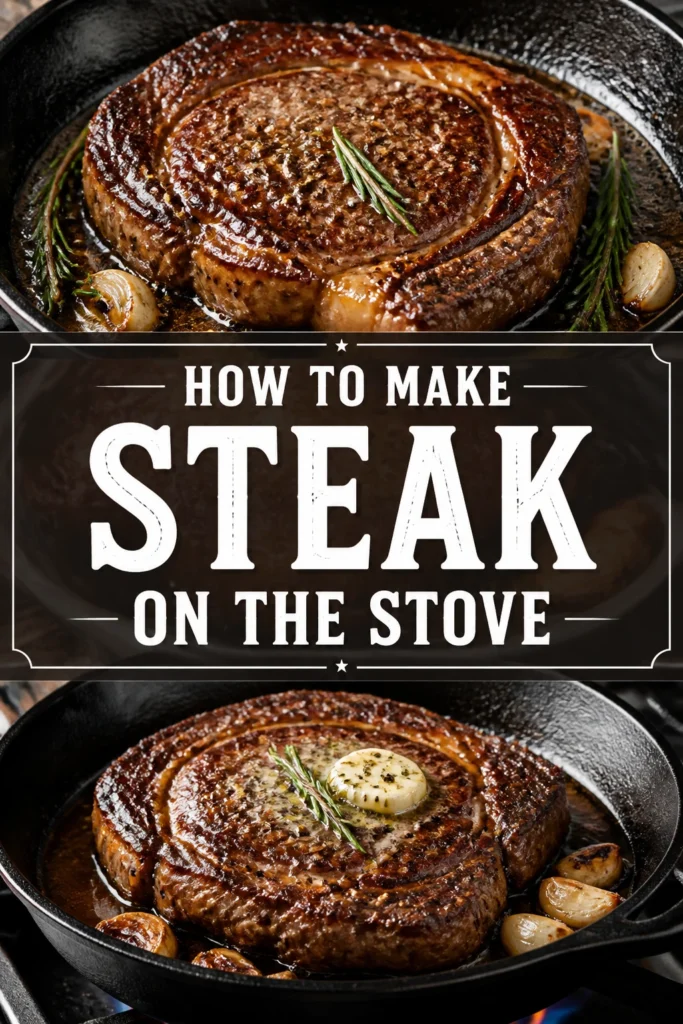
Drop three tablespoons of unsalted butter, three crushed cloves of garlic, and a few sprigs of fresh rosemary or thyme into the pan.
Tilt the pan slightly so the melting butter pools at the bottom with the herbs and garlic, then use a large spoon to pour that flavored fat over the steak repeatedly.
Pro Tip: This technique, called “arrosé,” adds layers of nutty, herbal flavor while finishing the cooking process gently.
Step 8: Monitor the Internal Temperature
Insert a digital instant-read thermometer into the thickest part of the steak, being careful not to hit any bone or pockets of pure fat.
Aim for 125°F (52°C) for a perfect medium-rare, or 135°F (57°C) for a medium finish.
Pull the steak off the heat when it is about 5 degrees below your target temperature, as the internal heat will continue to rise during the rest.
Step 9: The Mandatory Rest
Transfer the steak to a warm plate or a wooden cutting board and let it sit undisturbed for at least 8 to 10 minutes.
Resist the urge to cut into the meat immediately, as the high heat has tightened the muscle fibers and pushed the juices toward the center.
Allow the fibers to relax and reabsorb those juices, ensuring that the flavor stays inside the meat rather than spilling out onto the board.
Common Mistakes to Avoid
Using the Wrong Pan
Non-stick pans are designed for eggs and delicate foods, not the intense heat required for a steak. They cannot hold enough thermal mass to sear the meat, and the coating can release toxic fumes at the temperatures needed for a good crust.
Crowding the Cooking Surface
If you try to cook three large steaks in a small pan, the temperature of the metal will drop instantly. This causes the meat to release its juices and simmer in its own liquid, resulting in a gray, unappealing exterior.
Flipping Only Once
While the old rule was to only flip a steak once, modern testing shows that flipping every 30 to 60 seconds helps the meat cook more evenly. This “flip-often” method prevents a thick gray band of overcooked meat from forming just under the crust.
Using Low-Smoke Point Fats
Starting your sear with butter or extra virgin olive oil is a recipe for a kitchen full of acrid smoke. These fats burn at relatively low temperatures, creating a scorched flavor that ruins the natural taste of the beef.
Troubleshooting
The Steak is Smoking Excessively
If your kitchen is filling with thick white smoke, your pan is likely too hot or you are using an oil with a low smoke point. Turn the heat down slightly and ensure your stove’s ventilation is on high, or use a damp paper towel to carefully wipe out the burnt oil and replace it with fresh avocado oil.
The Crust is Uneven or Patchy
This usually happens because the steak isn’t perfectly flat or wasn’t dried properly. Next time, use a steak weight or a heavy press to keep the meat in contact with the pan, and double-check that the surface is bone-dry before it hits the oil.
The Interior is Cold but the Exterior is Dark
This is a sign that the steak was too cold when it started or the heat was too high. To fix this, you can finish the steak in a 300°F oven for a few minutes until the internal temperature reaches your desired level.
Key Takeaways
- Always use a thick-cut steak (1.5 inches or more) to achieve the best ratio of crust to tender interior.
- Surface moisture is the enemy; pat the meat dry with paper towels multiple times before seasoning.
- Use a cast iron skillet for its superior heat retention and ability to create an even sear.
- Butter basting with garlic and herbs in the final minutes adds professional-level flavor and moisture.
- A digital thermometer is the only way to guarantee perfectly cooked meat every single time.
- Resting the meat for 10 minutes is just as important as the cooking process itself.
Frequently Asked Questions
Can I cook a frozen steak on the stove?
It is possible, but not recommended for this specific high-heat method. Cooking from frozen often results in a burnt exterior and a raw interior; it is much better to thaw the meat slowly in the refrigerator over 24 hours.
What is the best oil for searing steak?
Avocado oil is the gold standard because it has a smoke point of about 520°F. Grapeseed oil and refined light olive oil are also excellent choices, as they can withstand the high heat without breaking down or smoking.
Should I cut the fat cap off before cooking?
No, you should leave the fat cap on as it provides flavor and moisture during the cook. You can use your tongs to hold the steak upright and sear the fat cap directly against the pan for a minute to render it down and make it crispy.
Why is my steak tough even though I cooked it to medium-rare?
This usually comes down to the quality of the meat or the way it was sliced. Always slice your steak against the grain (the direction the muscle fibers run) to shorten the fibers, making each bite much easier to chew.
Our Top Recommended Finds
- 12-Inch Cast Iron Skillet: This tool is a lifetime investment that provides the heat retention necessary for a steakhouse-quality sear.
- Instant-Read Digital Thermometer: This removes all the guesswork and prevents you from cutting into the meat to check for doneness.
- Stainless Steel Basting Spoon: A large, deep spoon makes it easy to scoop up hot butter and pour it over the meat during the final stages of cooking.
Mastering Your Kitchen Skills
Now that you have the foundation for a perfect stovetop steak, you can experiment with different compound butters or pan sauces.
Try deglazing your skillet with a splash of red wine or beef stock after removing the steak to create a rich reduction.
The more you practice these temperature control techniques, the more intuitive your cooking will become.
Pick up a high-quality cut of beef today and put these steps into action for your next dinner.