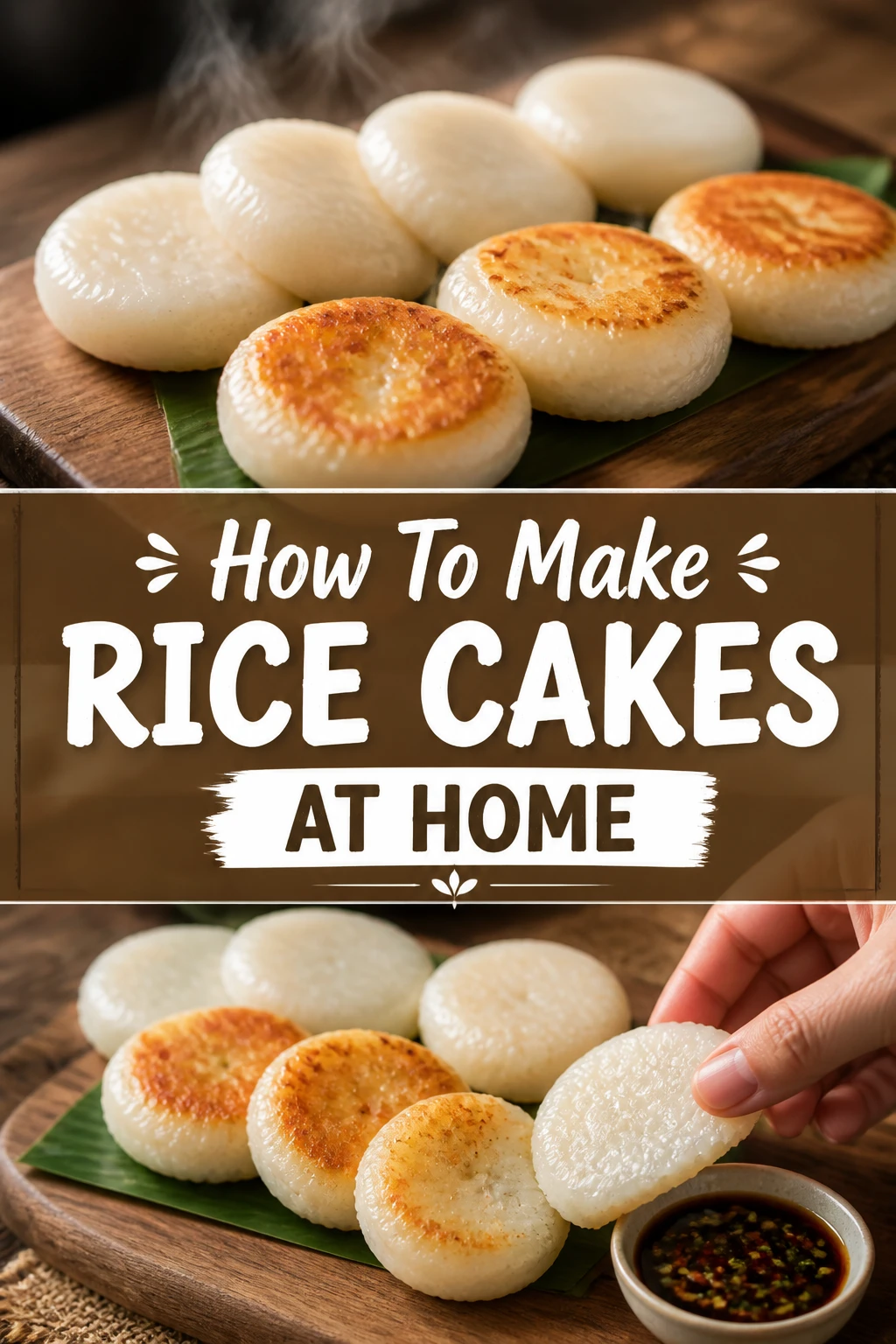
🍚 How To Make Rice Cakes At Home
There’s a unique satisfaction that comes from creating something delicious with your own hands, especially a beloved staple like rice cakes.
I remember my first attempt, a slightly sticky but ultimately rewarding mess that taught me the nuances of glutinous rice flour.
This guide distills years of kitchen experiments into a straightforward process, ensuring your homemade rice cakes are perfectly chewy every time.
Quick Overview
You’re about to embark on a culinary journey to craft authentic, delightfully chewy rice cakes right in your kitchen.
This process transforms simple ingredients into a versatile base for sweet or savory dishes.
- Time needed: 2.5 – 3 hours (including soaking and resting)
- Difficulty: Intermediate
- What you’ll need: Glutinous rice flour, water, salt, a large mixing bowl, a steamer, parchment paper, a rolling pin, and a sharp knife.
Step-by-Step Instructions
Step 1: Gather Your Ingredients and Tools
Before you begin, ensure you have all necessary items laid out and ready.
This prevents interruptions and keeps your workflow smooth.
You will need glutinous rice flour (also known as sweet rice flour), water, and a pinch of salt.
Essential tools include a large mixing bowl, a steamer setup, parchment paper, a rolling pin, and a sharp knife or dough cutter.
Pro Tip: Using a kitchen scale to measure your flour and water by weight offers far greater accuracy than volume measurements, leading to more consistent results.
Step 2: Prepare the Dough
In your large mixing bowl, combine 2 cups (about 250g) of glutinous rice flour with a quarter teaspoon of salt.
Gradually add about 1 cup (240ml) of hot water, mixing with a spatula or chopsticks as you pour.
The water should be hot, but not boiling, as it helps activate the starch in the flour.
Once the mixture is cool enough to touch, begin to knead the dough by hand.
Knead for about 5-7 minutes until the dough becomes smooth, elastic, and no longer sticky.
It should feel like soft playdough.
Step 3: Shape and Rest the Dough
Divide the kneaded dough into two or three equal portions.
Roll each portion into a thick log, roughly 1 to 1.5 inches in diameter.
Cover these logs with a damp cloth or plastic wrap to prevent them from drying out.
Let the dough logs rest at room temperature for about 15-20 minutes.
This resting period allows the gluten to relax, making the dough easier to work with later.
Step 4: Prepare for Steaming
Line your steamer basket with a piece of parchment paper, ensuring it covers the bottom and has some overhang.
This prevents the rice cakes from sticking to the steamer.
Bring water in your steamer pot to a rolling boil.
Carefully place the dough logs onto the prepared parchment paper in the steamer basket, making sure they are not touching each other.
Step 5: Steam the Rice Cakes
Place the steamer basket over the boiling water, cover tightly with the lid, and steam for 20-25 minutes.
The steaming time can vary slightly depending on the thickness of your dough logs.
To check for doneness, the rice cakes should appear translucent and feel firm yet springy to the touch.
A skewer inserted into the center should come out clean.
Step 6: Cool and Slice
Once steamed, carefully remove the rice cake logs from the steamer.
Transfer them to a clean surface or cutting board that has been lightly oiled or dusted with a tiny bit of rice flour.
Allow them to cool completely, which can take up to an hour.
Cooling is crucial; attempting to slice them while hot will result in a sticky, deformed mess.
Once fully cooled, use a sharp, lightly oiled knife to slice the logs into your desired shapes.
Common shapes include thin oval slices for Tteokbokki or cylindrical pieces for other dishes.
Pro Tip: Dip your knife in water or lightly oil it between slices to prevent sticking and achieve cleaner cuts.
Step 7: Store or Use Immediately
Your fresh rice cakes are now ready to be used in your favorite recipes.
If you’re not using them right away, they can be stored in an airtight container in the refrigerator for up to 3-4 days.
For longer storage, freeze them in a single layer on a baking sheet before transferring to a freezer-safe bag.
Frozen rice cakes can last for several months; thaw them in the refrigerator before using.
Common Mistakes to Avoid
Using the Wrong Flour
A frequent error is confusing glutinous rice flour with regular rice flour. Regular rice flour will yield a crumbly, hard texture, completely lacking the desired chewiness.
Always double-check your package to ensure it specifies “glutinous rice flour” or “sweet rice flour” for the authentic texture.
Adding Too Much or Too Little Water
The dough’s consistency is highly sensitive to water content. Too much water makes the dough overly sticky and difficult to handle, resulting in a mushy final product.
Too little water leads to a dry, crumbly dough that won’t come together smoothly, making the rice cakes hard and brittle.
Always add water gradually and adjust based on the dough’s feel.
Not Kneading Enough
Insufficient kneading results in a grainy, uneven texture. The dough needs to be worked until it’s smooth and elastic, indicating proper development of its structure.
This ensures the characteristic chewy bite of well-made rice cakes.
Slicing While Still Warm
Patience is key after steaming. Slicing warm rice cakes causes them to stick to the knife and to each other, losing their shape and creating a messy outcome.
Allowing them to cool completely firm them up, making clean, precise cuts possible.
Troubleshooting
Dough is Too Sticky
If your dough feels overly sticky and unmanageable, try adding a small amount of glutinous rice flour, a teaspoon at a time.
Knead it in thoroughly until the stickiness subsides and the dough becomes smooth and pliable.
Dough is Too Dry and Crumbly
When the dough is too dry and breaks apart easily, incorporate a very small amount of hot water, about a teaspoon at a time.
Knead well after each addition until the dough forms a cohesive, smooth ball.
Rice Cakes Are Too Hard After Steaming
Hard rice cakes often indicate under-steaming or insufficient water in the dough. Ensure you steam for the full recommended time, checking for translucency.
Next time, slightly increase the water content in your dough or lengthen the steaming time by a few minutes.
Rice Cakes Are Mushy or Gummy
Mushy rice cakes typically result from over-steaming or too much water in the dough. Reduce the steaming time slightly, or ensure your dough is not too wet during preparation.
Proper kneading also helps develop the right texture, preventing a gummy mouthfeel.
Key Takeaways
- Always use glutinous rice flour for the desired chewy texture.
- Measure ingredients by weight for precision and consistent results.
- Knead the dough thoroughly until it is smooth and elastic.
- Steam the rice cakes until they are translucent and firm.
- Allow rice cakes to cool completely before slicing to prevent sticking.
- Store unused rice cakes properly in the refrigerator or freezer.
Frequently Asked Questions
Can I make rice cakes without a steamer?
While steaming is ideal, you can improvise by placing a heat-proof bowl with your rice cake logs inside a larger pot with about an inch of boiling water, then covering the pot tightly. The concept is to create a sealed environment for steaming.
What’s the best way to reheat homemade rice cakes?
For best results, reheat rice cakes by briefly boiling them in water for a minute or two until soft, then drain. You can also pan-fry them directly if they are already soft, or add them to soups and stews.
Can I add flavor to the rice cake dough?
Absolutely. For savory rice cakes, you can knead in a tiny pinch of garlic powder or onion powder. For sweet variations, a small amount of sugar or a touch of matcha powder can be incorporated into the dry flour before adding water.
How long do homemade rice cakes last?
Freshly made rice cakes are best consumed within 3-4 days when stored in an airtight container in the refrigerator. For longer preservation, they can be frozen for up to 2-3 months.
Our Top Recommended Finds
- Digital Kitchen Scale: Essential for precise measurements of flour and water, ensuring consistent dough texture every time.
- Bamboo Steamer Basket: Provides even steaming and a traditional touch, often imparting a subtle aroma.
- Silicone Rolling Pin: Non-stick and easy to clean, perfect for rolling out dough without excessive flour.
Your Chewy Creation Awaits
You’ve now got all the knowledge and practical steps to create delightful rice cakes from scratch.
This isn’t just about following a recipe; it’s about connecting with a culinary tradition and bringing fresh, wholesome goodness into your home.
Don’t hesitate to experiment with different shapes or seasonings once you’ve mastered the basic technique.
Why not gather your ingredients today and experience the joy of making your own chewy, versatile rice cakes?