🥚 How To Tell If Eggs Are Still Good
We have all been there, standing in front of the open refrigerator with a carton of eggs that has no clear expiration date.
I once spent a summer working in a high-volume bakery where we went through hundreds of eggs a day, and learning to spot a bad one became a survival skill.
This guide will teach you the exact methods professional chefs and home cooks use to ensure every egg they crack is fresh and safe to eat.
Quick Overview
Checking egg freshness is a simple process that relies on physics and your own senses. You will learn how to identify spoilage before you even crack the shell.
- Time needed: 2-5 minutes
- Difficulty: Beginner
- What you’ll need: A bowl of water, a flat plate, a flashlight, and your nose.
Step-by-Step Instructions
Step 1: Perform the Float Test
Fill a deep bowl or a tall glass with cold water from the tap.
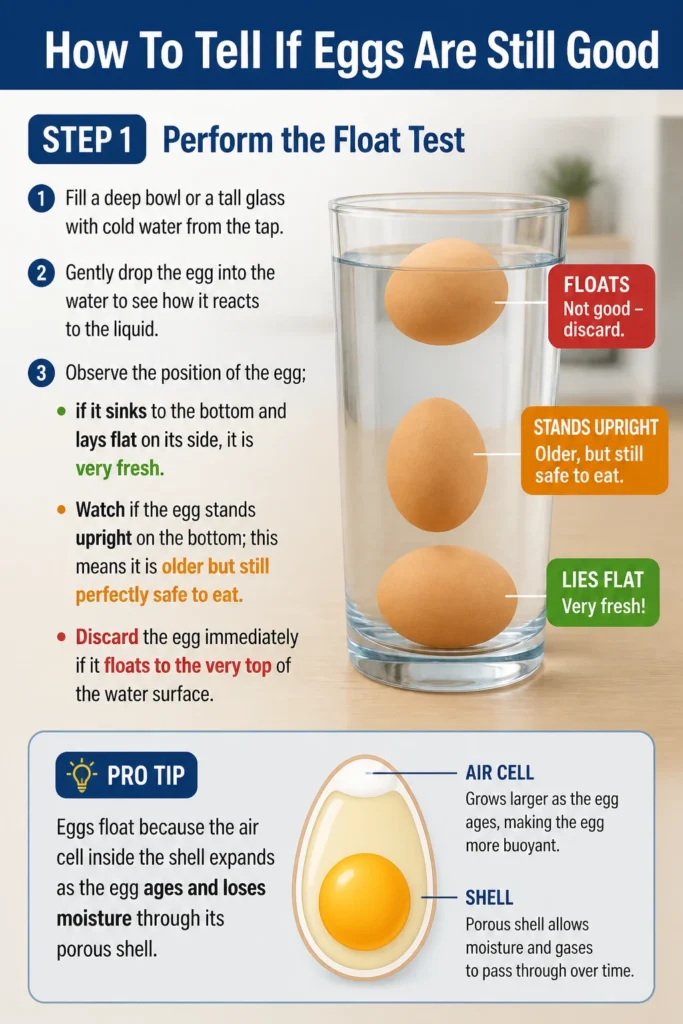
Gently drop the egg into the water to see how it reacts to the liquid.
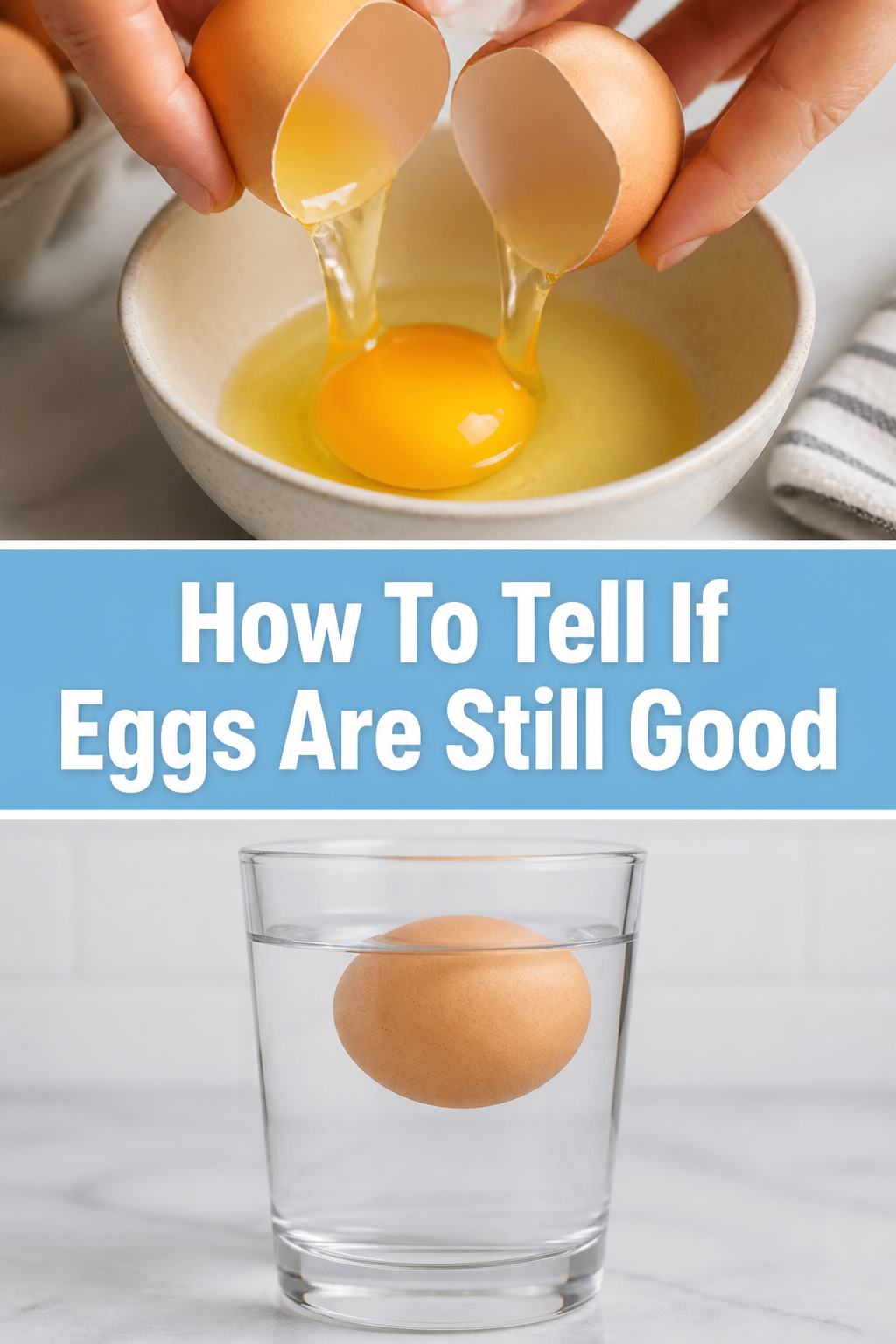
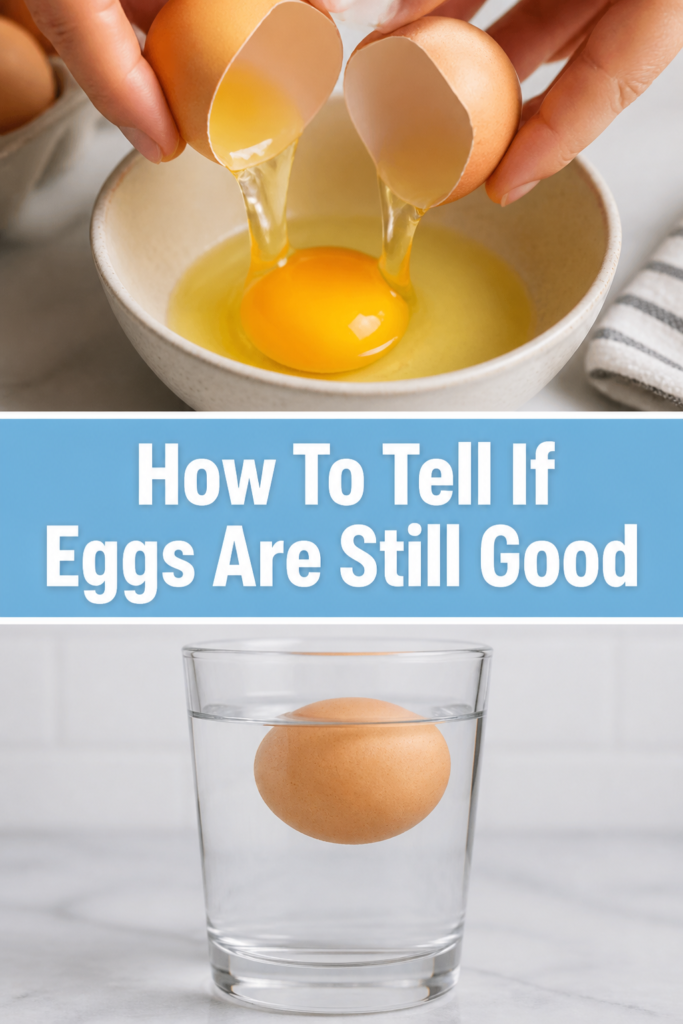
Observe the position of the egg; if it sinks to the bottom and lays flat on its side, it is very fresh.
Watch if the egg stands upright on the bottom; this means it is older but still perfectly safe to eat.
Discard the egg immediately if it floats to the very top of the water surface.
Pro Tip: Eggs float because the air cell inside the shell expands as the egg ages and loses moisture through its porous shell.
Step 2: Use the Sniff Test
Trust your nose above all other methods because it is the most reliable indicator of spoilage.
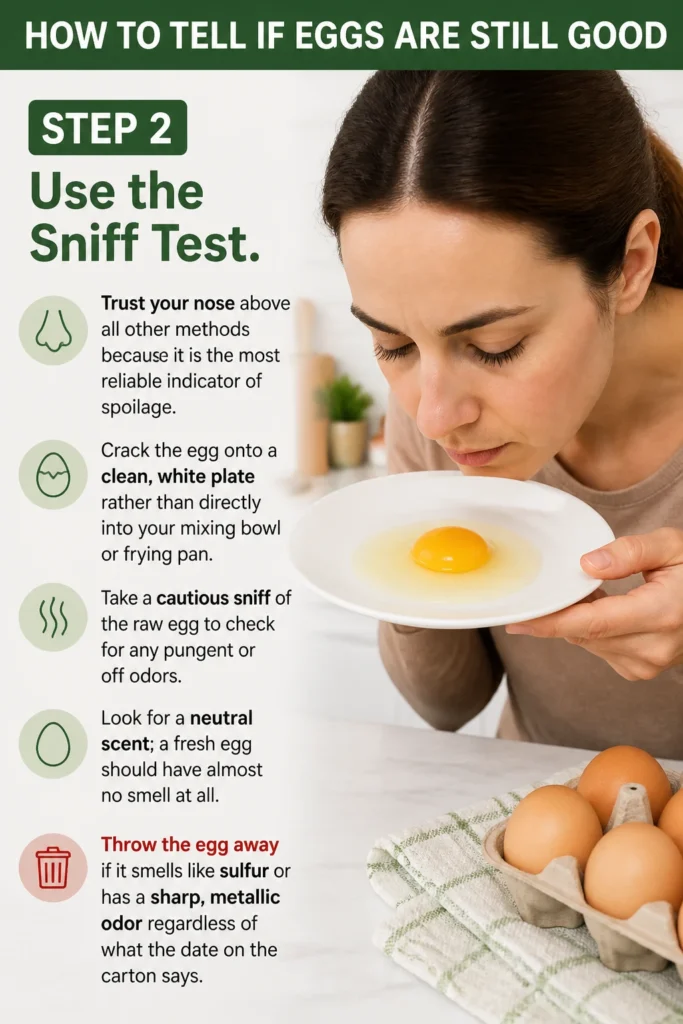
Crack the egg onto a clean, white plate rather than directly into your mixing bowl or frying pan.
Take a cautious sniff of the raw egg to check for any pungent or “off” odors.
Look for a neutral scent; a fresh egg should have almost no smell at all.
Throw the egg away if it smells like sulfur or has a sharp, metallic odor regardless of what the date on the carton says.
Step 3: Check the White and Yolk Consistency
Examine the egg after cracking it onto a flat surface to see how the structures hold up.
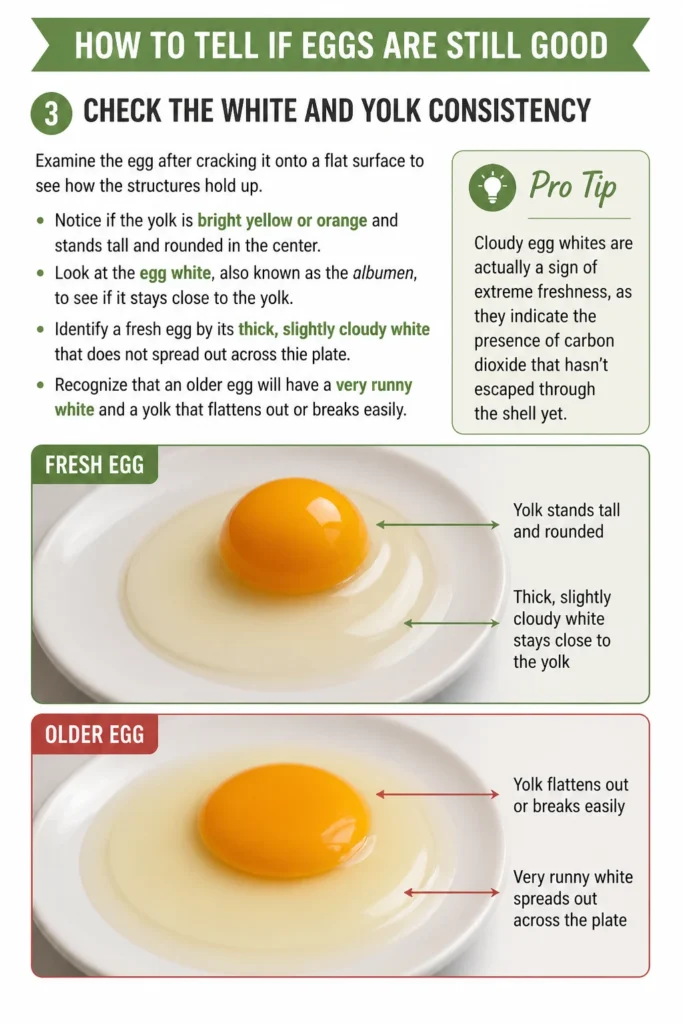
Notice if the yolk is bright yellow or orange and stands tall and rounded in the center.
Look at the egg white, also known as the albumen, to see if it stays close to the yolk.
Identify a fresh egg by its thick, slightly cloudy white that does not spread out across the plate.
Recognize that an older egg will have a very runny white and a yolk that flattens out or breaks easily.
Pro Tip: Cloudy egg whites are actually a sign of extreme freshness, as they indicate the presence of carbon dioxide that hasn’t escaped through the shell yet.
Step 4: Conduct a Visual Shell Inspection
Pick up the egg and look closely at the exterior surface under a bright light.
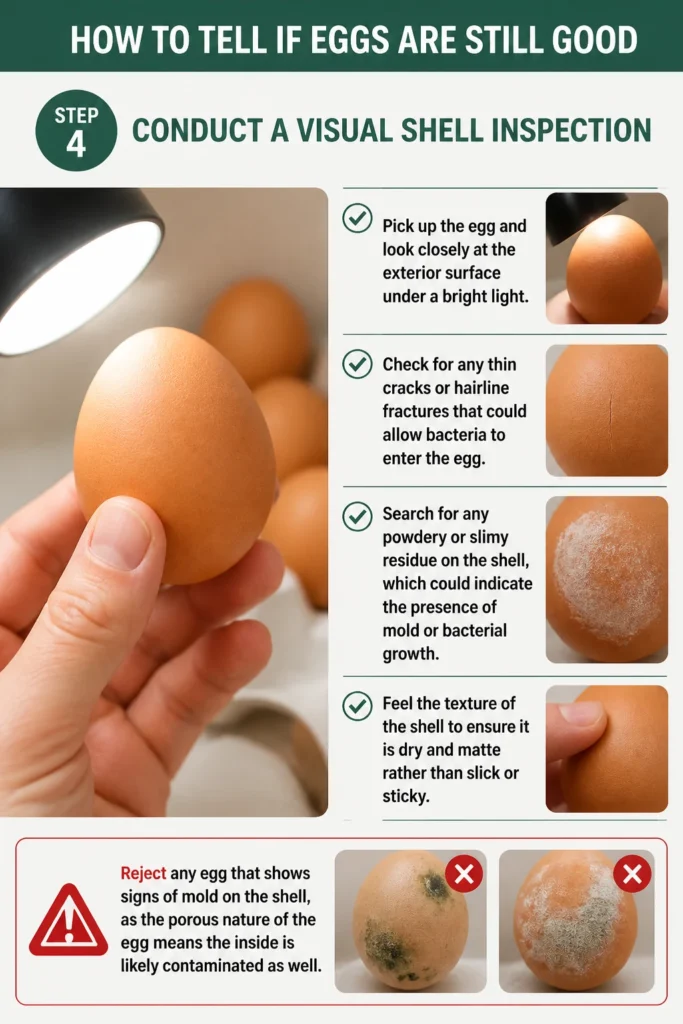
Check for any thin cracks or “hairline” fractures that could allow bacteria to enter the egg.
Search for any powdery or slimy residue on the shell, which could indicate the presence of mold or bacterial growth.
Feel the texture of the shell to ensure it is dry and matte rather than slick or sticky.
Reject any egg that shows signs of mold on the shell, as the porous nature of the egg means the inside is likely contaminated as well.
Step 5: Try the Slosh Test
Hold the egg up to your ear between your thumb and forefinger.
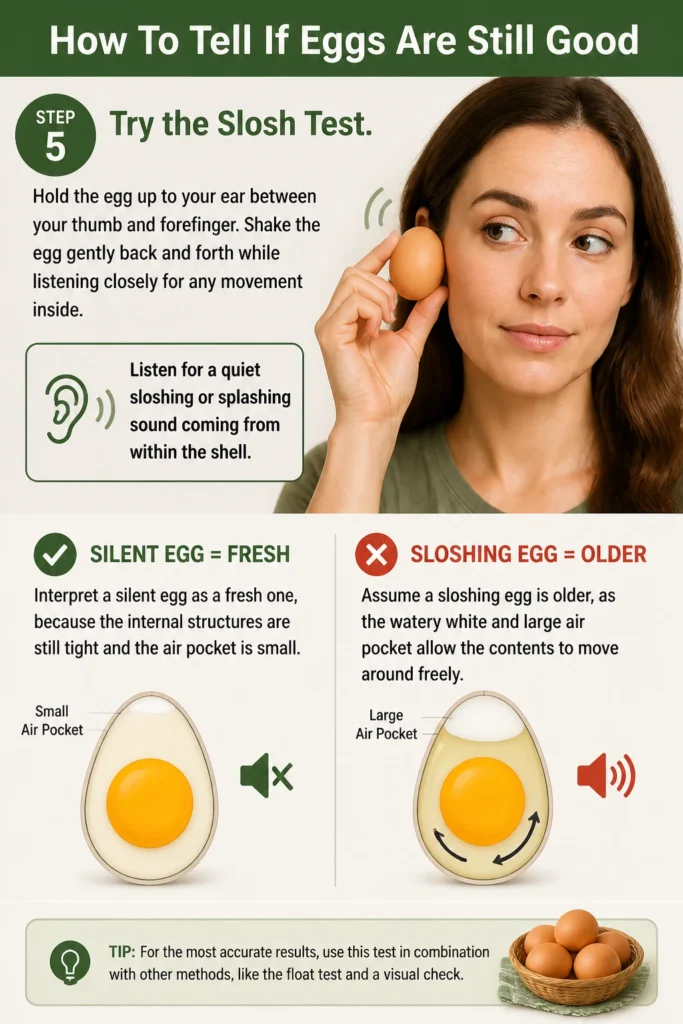
Shake the egg gently back and forth while listening closely for any movement inside.
Listen for a quiet sloshing or splashing sound coming from within the shell.
Interpret a silent egg as a fresh one, because the internal structures are still tight and the air pocket is small.
Assume a sloshing egg is older, as the watery white and large air pocket allow the contents to move around freely.
Step 6: Decode the Julian Date
Find the three-digit code printed on the side of the egg carton near the “Sell By” date.
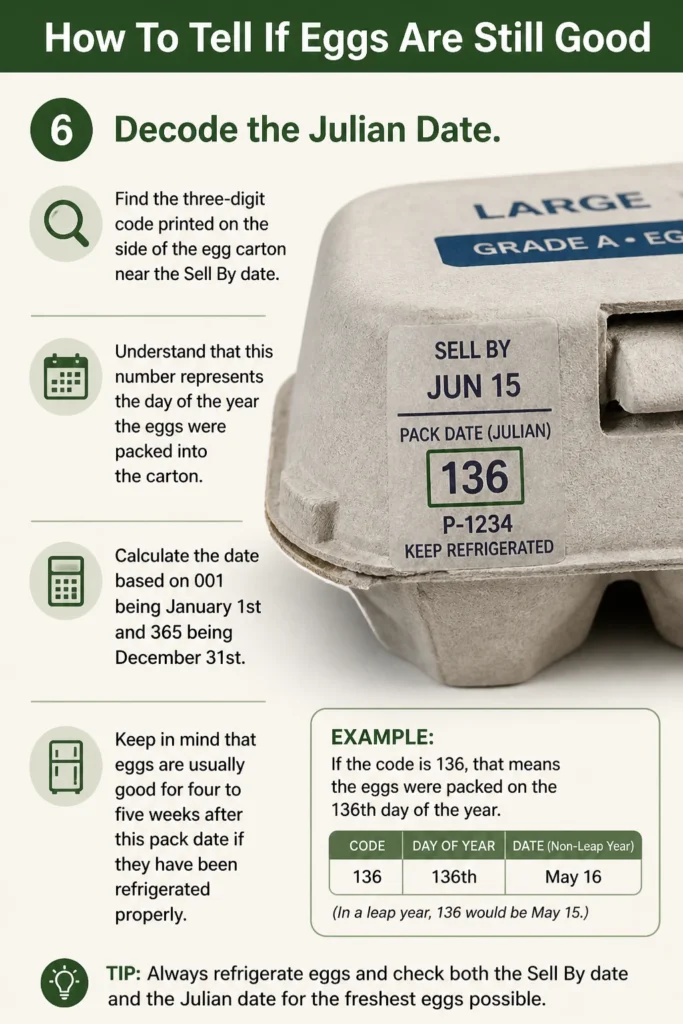
Understand that this number represents the day of the year the eggs were packed into the carton.
Calculate the date based on 001 being January 1st and 365 being December 31st.
Keep in mind that eggs are usually good for four to five weeks after this pack date if they have been refrigerated properly.
Step 7: Use the Flashlight Method
Go into a dark room and hold a small, bright flashlight up to the large end of the egg.
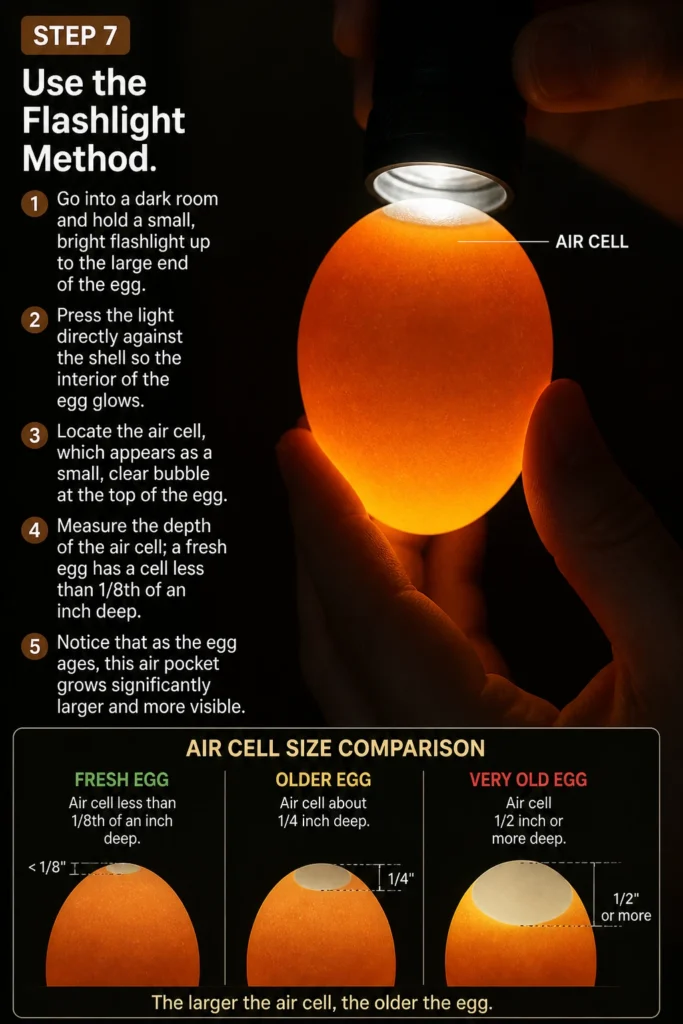
Press the light directly against the shell so the interior of the egg glows.
Locate the air cell, which appears as a small, clear bubble at the top of the egg.
Measure the depth of the air cell; a fresh egg has a cell less than 1/8th of an inch deep.
Notice that as the egg ages, this air pocket grows significantly larger and more visible.
Common Mistakes to Avoid
Relying Solely on the Expiration Date
Many people throw away perfectly good eggs because the “Best By” date has passed by a day or two. These dates are often about quality rather than safety, and eggs can frequently last several weeks beyond the printed date if kept at the right temperature.
Using your senses is far more accurate than following a printed number. The float test and the sniff test provide a real-time assessment of the egg’s condition that a label simply cannot offer.
Storing Eggs in the Refrigerator Door
The door is the warmest part of the refrigerator because it is exposed to room-temperature air every time you open it. This constant temperature fluctuation can cause eggs to age much faster than they should.
Always store your eggs in the main body of the fridge, preferably on a middle or bottom shelf toward the back. This keeps them at a consistent 40 degrees Fahrenheit or lower, which is the ideal environment for longevity.
Washing Eggs Before Storing Them
Commercial eggs in many countries are already washed, which removes the natural protective coating called the “bloom.” If you have farm-fresh eggs, you might be tempted to wash off bits of dirt or feathers before putting them in the fridge.
Washing eggs removes the bloom and opens up the pores in the shell, making it easier for bacteria like salmonella to enter. Only wash your eggs immediately before you plan to use them to keep the interior protected for as long as possible.
Troubleshooting
The Egg Floats But Doesn’t Smell
This is a common occurrence with eggs that are about four to six weeks old. The egg has lost enough moisture to float, but the proteins have not yet begun to rot or produce gas.
While these eggs are safe to eat, they are not ideal for poaching or frying because the whites will be very thin. Use these “floaters” for hard-boiling, as the large air pocket makes them much easier to peel once they are cooked.
The Yolk Has a Red Spot
Finding a tiny red or brown spot on the yolk can be startling, but it does not mean the egg is bad or fertilized. These are called blood spots or meat spots, and they are caused by a ruptured blood vessel in the hen’s ovary during the laying process.
These eggs are perfectly safe to consume and do not indicate spoilage. If the spot bothers you, simply use the tip of a clean knife to remove it before cooking the egg as usual.
The Egg White Is Pink or Iridescent
If you crack an egg and notice the white has a pearly, pink, or iridescent hue, do not eat it. This is a sign of contamination by Pseudomonas bacteria, which is a common cause of spoilage in eggs.
This type of spoilage often comes with a very foul odor, but even if it doesn’t smell yet, the color change is a definitive warning sign. Toss the egg and the shell into the trash and wash your hands and the plate thoroughly.
Key Takeaways
- The float test is the fastest way to check for age, but the sniff test is the only way to confirm safety.
- Fresh eggs sink and lay flat, while older but safe eggs stand upright on the bottom of the bowl.
- Always crack eggs into a separate bowl first to avoid ruining a whole recipe with one bad egg.
- Storage temperature is the most important factor in keeping eggs fresh for up to five weeks.
- Avoid washing farm eggs until you are ready to cook them to preserve their natural protective layer.
- Hard-boiling is the best use for older eggs that have started to float or stand upright.
Frequently Asked Questions
How long do eggs actually last in the fridge?
When kept at a consistent temperature of 40°F, most eggs remain high quality for three to five weeks after you bring them home. Even after this period, many eggs are still safe to eat, though their texture and leavening power in baking will begin to decline.
Why do some eggs peel easier than others?
Older eggs are much easier to peel because the pH of the egg white increases over time, causing it to bond less tightly to the inner shell membrane. Additionally, the larger air pocket in older eggs provides a starting point for your fingers to get under the shell.
Can you freeze eggs that are about to go bad?
Yes, you can freeze eggs to extend their life, but you must never freeze them in the shell as they will expand and burst. Crack the eggs into a bowl, whisk them together until just combined, and freeze them in an airtight container or ice cube tray for up to a year.
What does a green ring around a hard-boiled yolk mean?
A green or grayish ring around the yolk of a hard-boiled egg is not a sign of spoilage. It is a chemical reaction between the sulfur in the white and the iron in the yolk, usually caused by overcooking the egg or using water with high iron content.
Our Top Recommended Finds
- Egg Sorter and Storage Bin: A clear, stackable plastic bin helps you see your inventory and keeps eggs in the coldest part of the fridge.
- Precision Egg Timer: These color-changing gadgets sit in the water with your eggs to ensure you get the perfect soft or hard boil every time.
- High-Lumen Flashlight: A small, powerful LED flashlight is perfect for “candling” eggs to check the size of the air cell and look for internal cracks.
Master Your Kitchen Skills Today
Now that you know how to distinguish a fresh egg from a dud, you can cook with total confidence. Knowing these simple tests saves money by preventing unnecessary waste and protects your family from foodborne illness.
If you found this guide helpful, you might want to explore the science of egg temperatures for baking or learn the best ways to store other dairy products. Start by checking that carton in your fridge right now and see which ones are ready for the boiling pot!