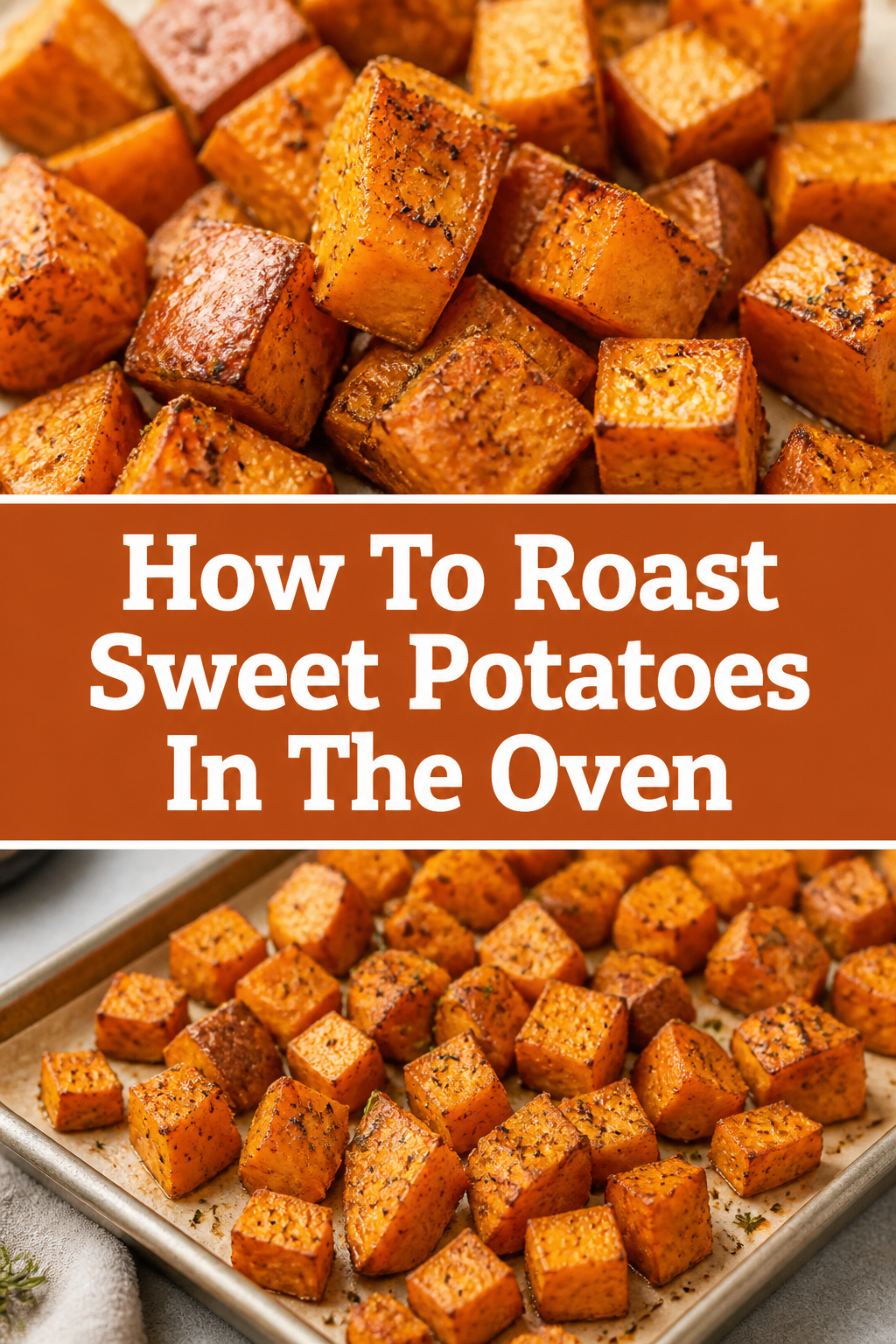
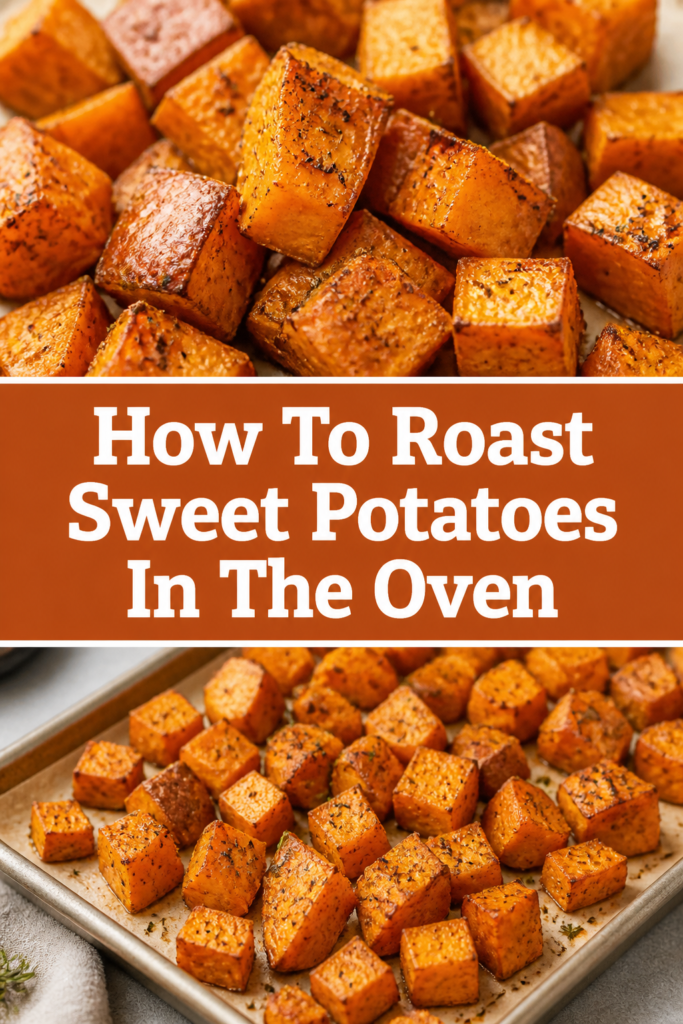
🍠 How To Roast Sweet Potatoes In The Oven
There’s something truly magical about perfectly roasted sweet potatoes. They transform from humble roots into caramelized, tender bites.
I’ve roasted countless batches over the years, experimenting with temperatures and techniques. This guide distills all that experience into a foolproof method, ensuring you get golden-brown perfection every time.
Quick Overview
Get ready to transform simple sweet potatoes into a delectable side dish or meal component. This process is straightforward and yields incredible results.
- Time needed: 40-50 minutes (10 min prep, 30-40 min cook)
- Difficulty: Beginner
- What you’ll need: Sweet potatoes, olive oil, salt, pepper, baking sheet, large bowl, sharp knife, cutting board.
Step-by-Step Instructions
Achieving that ideal balance of crispy edges and a creamy interior is easier than you think. Follow these steps for sweet potato perfection.
Step 1: Preheat Your Oven
Heat is crucial for roasting. A hot oven ensures the sweet potatoes begin to caramelize immediately upon contact.
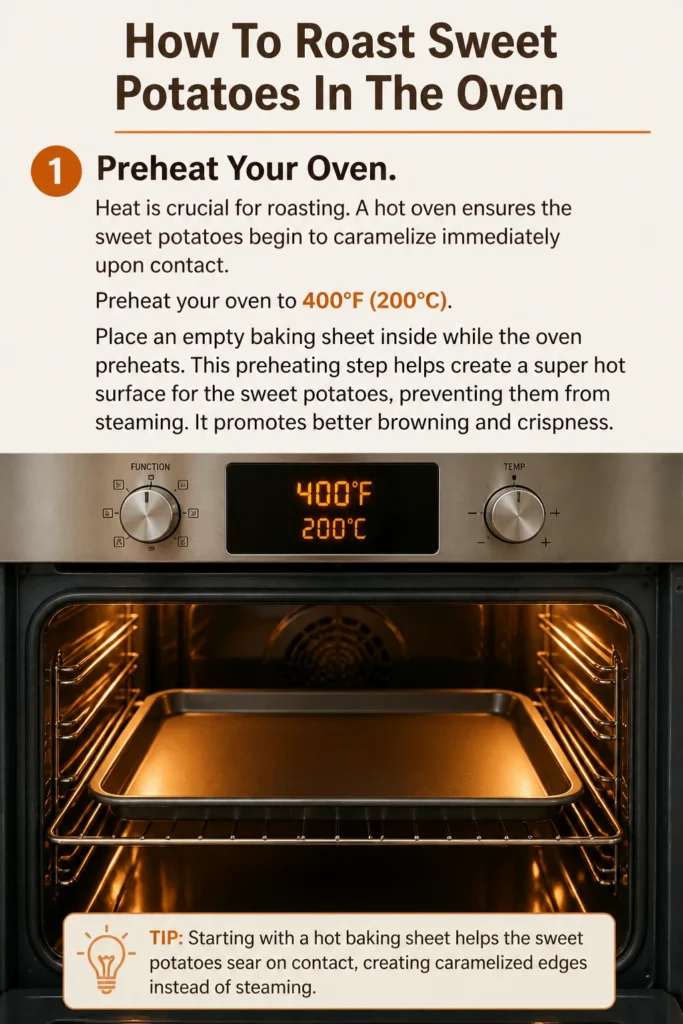
Preheat your oven to 400°F (200°C). Place an empty baking sheet inside while the oven preheats.
This preheating step helps create a super hot surface for the sweet potatoes, preventing them from steaming. It promotes better browning and crispness.
Step 2: Wash and Scrub Your Sweet Potatoes
Start with clean produce. Even if you plan to peel them, a good wash is essential.
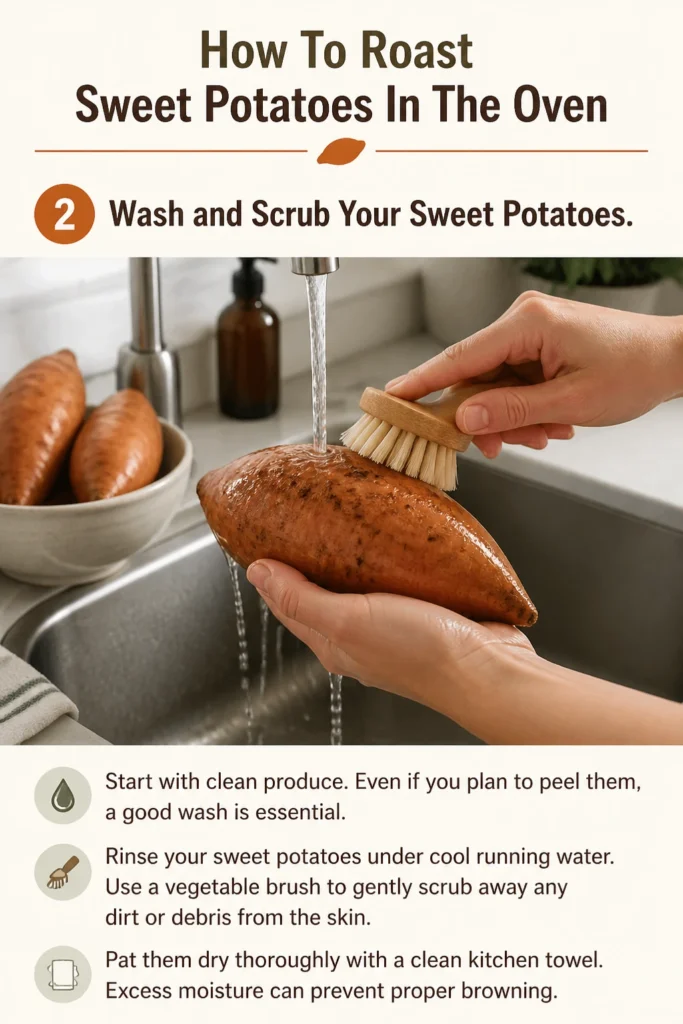
Rinse your sweet potatoes under cool running water. Use a vegetable brush to gently scrub away any dirt or debris from the skin.
Pat them dry thoroughly with a clean kitchen towel. Excess moisture can prevent proper browning.
Step 3: Decide on Peeling (or Not)
The skin of sweet potatoes is edible and nutritious. It also adds a rustic texture to your roasted dish.
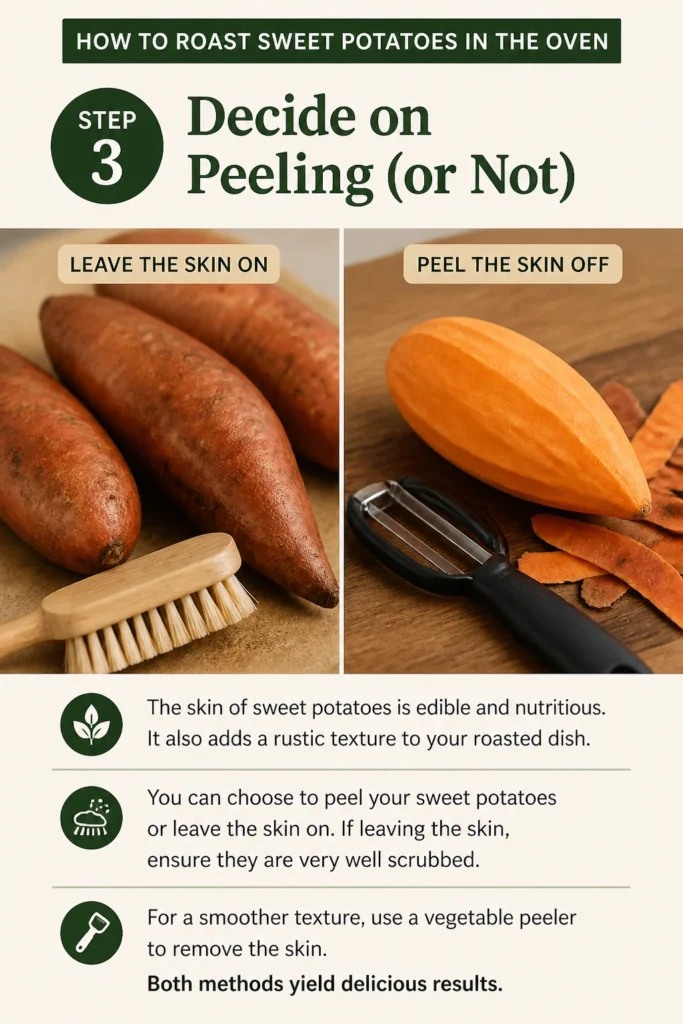
You can choose to peel your sweet potatoes or leave the skin on. If leaving the skin, ensure they are very well scrubbed.
For a smoother texture, use a vegetable peeler to remove the skin. Both methods yield delicious results.
Step 4: Cut Your Sweet Potatoes Evenly
Consistency in size is the key to even cooking. Irregular pieces will cook at different rates.
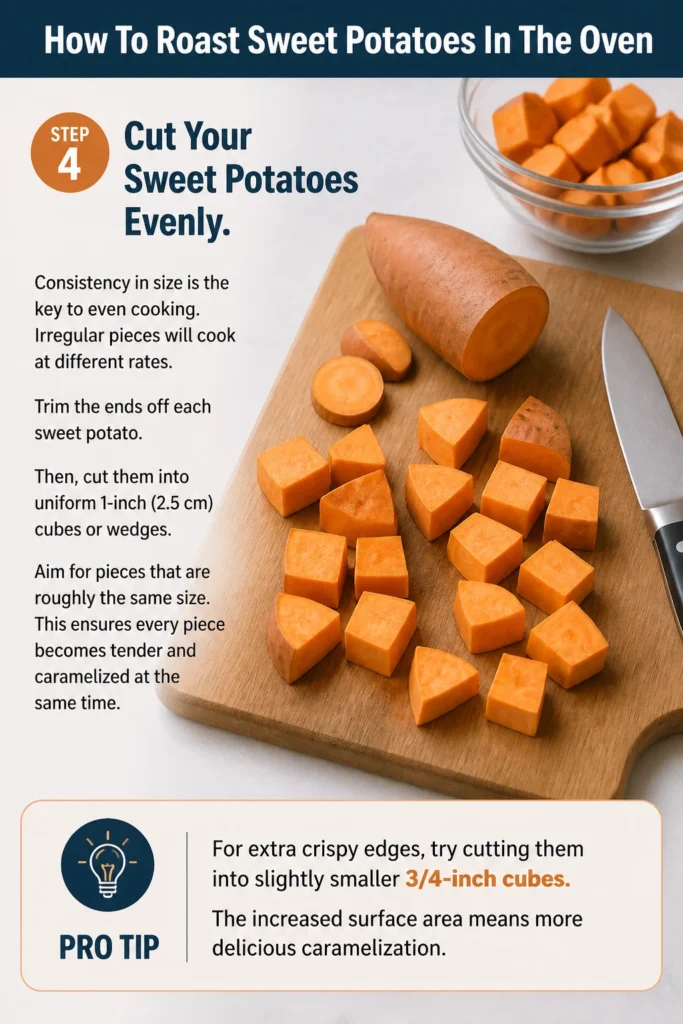
Trim the ends off each sweet potato. Then, cut them into uniform 1-inch (2.5 cm) cubes or wedges.
Aim for pieces that are roughly the same size. This ensures every piece becomes tender and caramelized at the same time.
Pro Tip: For extra crispy edges, try cutting them into slightly smaller 3/4-inch cubes. The increased surface area means more delicious caramelization.
Step 5: Season Your Sweet Potatoes
Flavor development starts here. A good coating of oil and seasoning is essential for taste and texture.
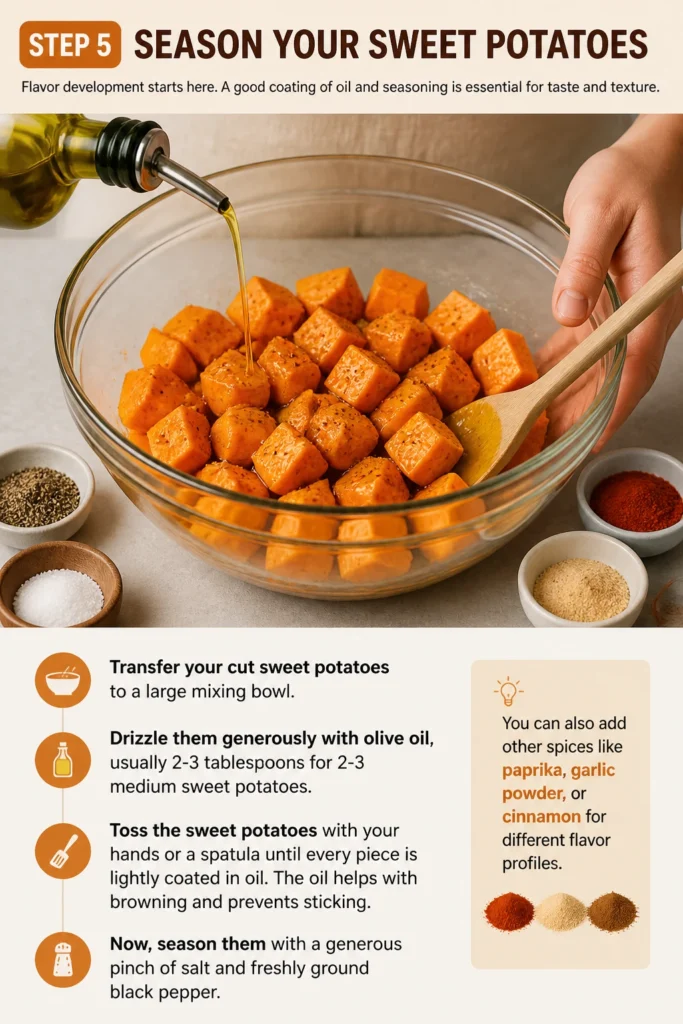
Transfer your cut sweet potatoes to a large mixing bowl. Drizzle them generously with olive oil, usually 2-3 tablespoons for 2-3 medium sweet potatoes.
Toss the sweet potatoes with your hands or a spatula until every piece is lightly coated in oil. The oil helps with browning and prevents sticking.
Now, season them with a generous pinch of salt and freshly ground black pepper. You can also add other spices like paprika, garlic powder, or cinnamon for different flavor profiles.
Step 6: Arrange on the Hot Baking Sheet
Proper spacing is critical for roasting, not steaming. Do not overcrowd the pan.
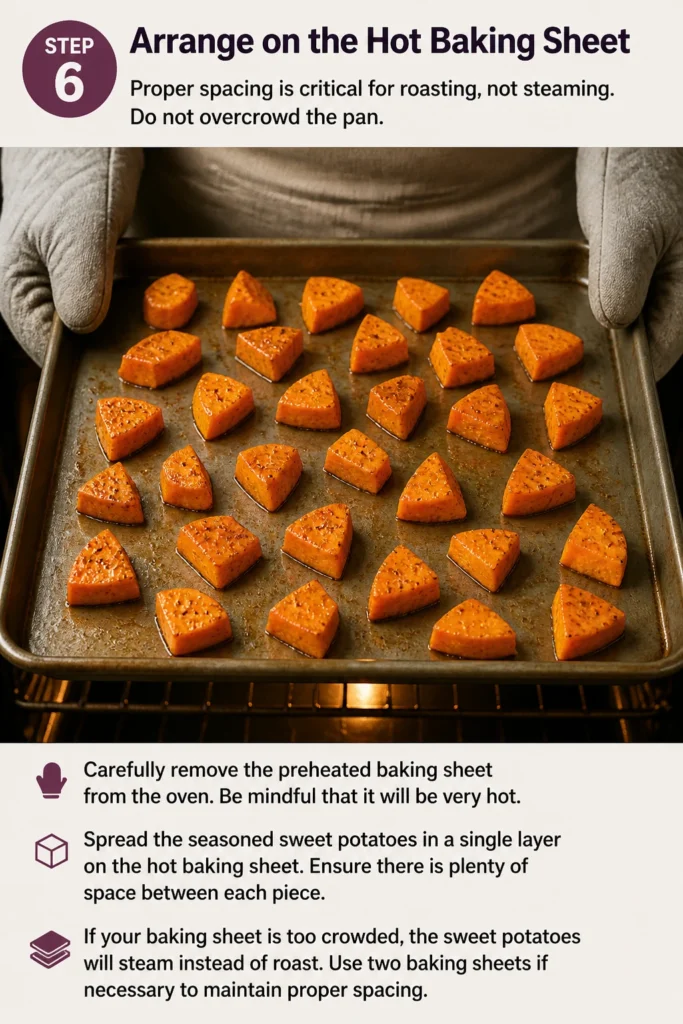
Carefully remove the preheated baking sheet from the oven. Be mindful that it will be very hot.
Spread the seasoned sweet potatoes in a single layer on the hot baking sheet. Ensure there is plenty of space between each piece.
If your baking sheet is too crowded, the sweet potatoes will steam instead of roast. Use two baking sheets if necessary to maintain proper spacing.
Step 7: Roast Until Tender and Caramelized
Patience is a virtue when waiting for perfectly roasted vegetables. Let the oven do its work.
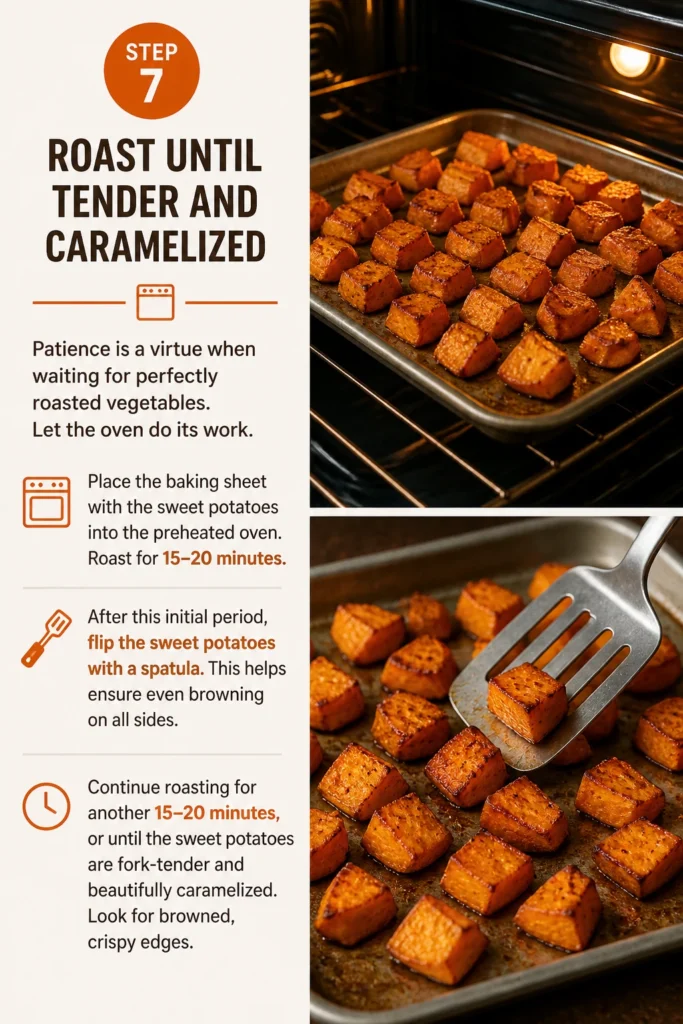
Place the baking sheet with the sweet potatoes into the preheated oven. Roast for 15-20 minutes.
After this initial period, flip the sweet potatoes with a spatula. This helps ensure even browning on all sides.
Continue roasting for another 15-20 minutes, or until the sweet potatoes are fork-tender and beautifully caramelized. Look for browned, crispy edges.
Step 8: Check for Doneness and Serve
The final assessment ensures your sweet potatoes are ready to enjoy. Trust your senses.
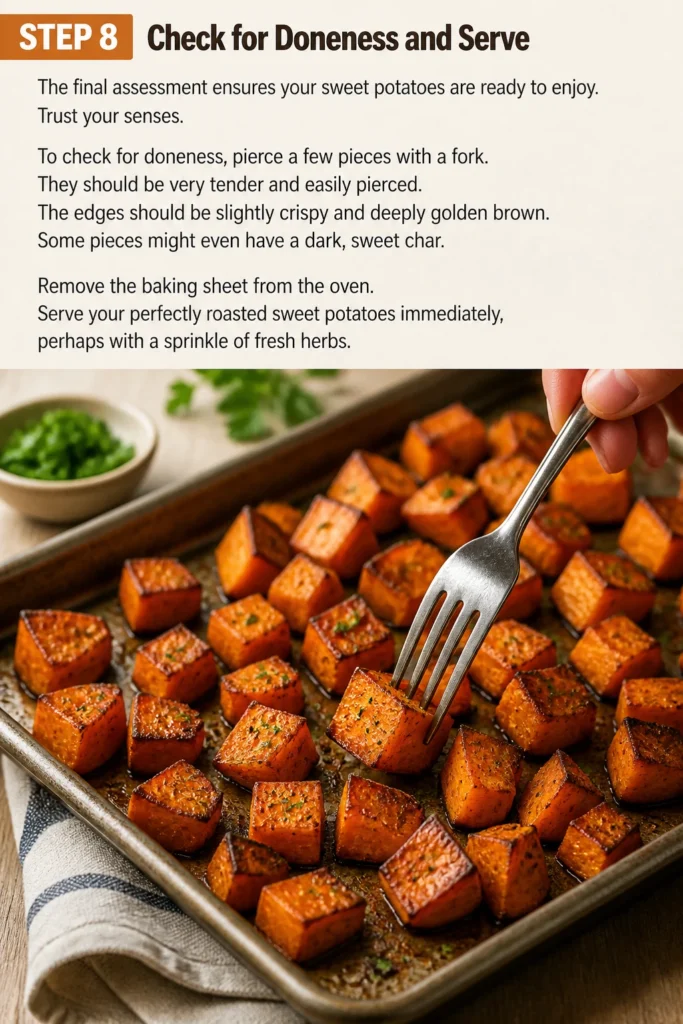
To check for doneness, pierce a few pieces with a fork. They should be very tender and easily pierced.
The edges should be slightly crispy and deeply golden brown. Some pieces might even have a dark, sweet char.
Remove the baking sheet from the oven. Serve your perfectly roasted sweet potatoes immediately, perhaps with a sprinkle of fresh herbs.
Common Mistakes to Avoid
Even simple dishes have pitfalls. Knowing what to watch out for will elevate your roasting game.
Overcrowding the Pan
This is perhaps the most common mistake. When you pile too many sweet potato pieces onto a single baking sheet, they release steam.
Instead of roasting, the sweet potatoes end up steaming in their own moisture. This results in soft, mushy pieces with no crispy edges or caramelized flavor. Always use multiple baking sheets if needed, ensuring a single layer with space between pieces.
Not Preheating the Baking Sheet
Starting with a cold pan means the sweet potatoes take longer to heat up. This delay prevents immediate caramelization.
A cold pan can also cause the sweet potatoes to stick more easily. Always place your baking sheet in the oven while it preheats to ensure a hot surface from the start.
Unevenly Cut Pieces
If your sweet potato chunks are different sizes, they will cook inconsistently. Some pieces will be burnt while others remain raw or undercooked.
Take the time to cut all your sweet potatoes into uniform pieces. This guarantees that every bite will be perfectly tender and cooked through.
Insufficient Oil or Seasoning
Skimping on oil means the sweet potatoes won’t brown properly and might stick to the pan. Lack of seasoning results in bland flavors.
Ensure every piece is lightly but thoroughly coated in oil. Don’t be shy with salt and pepper, and consider other spices to enhance the natural sweetness.
Troubleshooting
Even with the best intentions, sometimes things don’t go exactly as planned. Here’s how to fix common issues.
My Sweet Potatoes Are Soft and Mushy, Not Crispy
This almost always points to overcrowding the baking sheet. When there isn’t enough space, the sweet potatoes steam instead of roast.
Next time, use two baking sheets if necessary. Ensure the sweet potato pieces are in a single layer with ample room between them. A higher oven temperature can also help promote crispiness.
My Sweet Potatoes Are Burnt on the Outside, Raw on the Inside
This issue often occurs when the oven temperature is too high for the size of your sweet potato pieces, or if they are cut too large. The exterior cooks much faster than the interior.
Try reducing the oven temperature slightly (e.g., to 375°F/190°C) and cutting your sweet potatoes into smaller, more uniform pieces. Flipping them halfway through cooking also helps distribute the heat.
My Sweet Potatoes Are Sticking to the Pan
Sticking can happen if there isn’t enough oil or if the pan wasn’t hot enough when the sweet potatoes were added. Using parchment paper can also prevent sticking.
Always ensure your sweet potatoes are well-coated in oil. Preheating the baking sheet is crucial. For extra insurance, line your baking sheet with parchment paper before adding the sweet potatoes.
Key Takeaways
Mastering roasted sweet potatoes is about a few simple, consistent practices. Keep these points in mind for perfect results every time.
- Preheat your oven and the baking sheet for immediate browning.
- Cut sweet potatoes uniformly to ensure even cooking.
- Oil and season generously for flavor and proper texture.
- Avoid overcrowding the pan; use multiple sheets if needed.
- Flip halfway through for consistent caramelization.
- Roast until fork-tender with crispy, golden-brown edges.
Frequently Asked Questions
Here are answers to some common questions about roasting sweet potatoes. These insights will help you fine-tune your technique.
Can I use parchment paper or foil?
Yes, you can absolutely use parchment paper. It helps prevent sticking and makes cleanup a breeze. Foil can also be used, but sometimes sweet potatoes stick to it more readily than to parchment. Ensure to still oil the sweet potatoes well.
How do I store leftover roasted sweet potatoes?
Store any leftover roasted sweet potatoes in an airtight container in the refrigerator for up to 3-4 days. They are delicious reheated in the oven or even in a pan, or cold in salads. For best results, reheat them in a hot oven to crisp them up again.
Can I add other vegetables to the pan?
Yes, you can roast other vegetables alongside sweet potatoes. Just ensure they have similar cooking times and temperatures. Root vegetables like carrots, parsnips, or even Brussels sprouts often work well. Make sure to still avoid overcrowding the pan.
What are some good seasonings for sweet potatoes?
Beyond salt and pepper, sweet potatoes pair beautifully with a variety of spices. Consider cinnamon, nutmeg, or allspice for a sweeter profile. For savory notes, try paprika, cumin, chili powder, garlic powder, onion powder, or a touch of cayenne for heat. Fresh rosemary or thyme also adds a lovely herbaceous touch.
Our Top Recommended Finds
Having the right tools can make your roasting experience even more enjoyable and efficient. These are some essentials we love.
- Large, Heavy-Duty Baking Sheets: Sturdy sheets that won’t warp in high heat are crucial for consistent roasting. They conduct heat evenly for better browning.
- Silicone Baking Mats (or Parchment Paper): These prevent sticking and make cleanup incredibly easy. They also promote even cooking and browning.
- Sharp Chef’s Knife and Sturdy Cutting Board: Essential for safely and efficiently cutting sweet potatoes into uniform pieces. A good knife makes prep work much faster and safer.
Your Next Culinary Adventure Awaits
You now have all the knowledge and confidence to roast sweet potatoes like a pro. This simple technique opens up a world of delicious possibilities for your meals.
Imagine them as a vibrant side dish, tossed into a hearty salad, or even as a base for a grain bowl. Don’t hesitate to experiment with different seasonings to match your meal.
Go ahead, grab those sweet potatoes and get roasting today. Your taste buds will thank you for the perfectly caramelized, tender results!