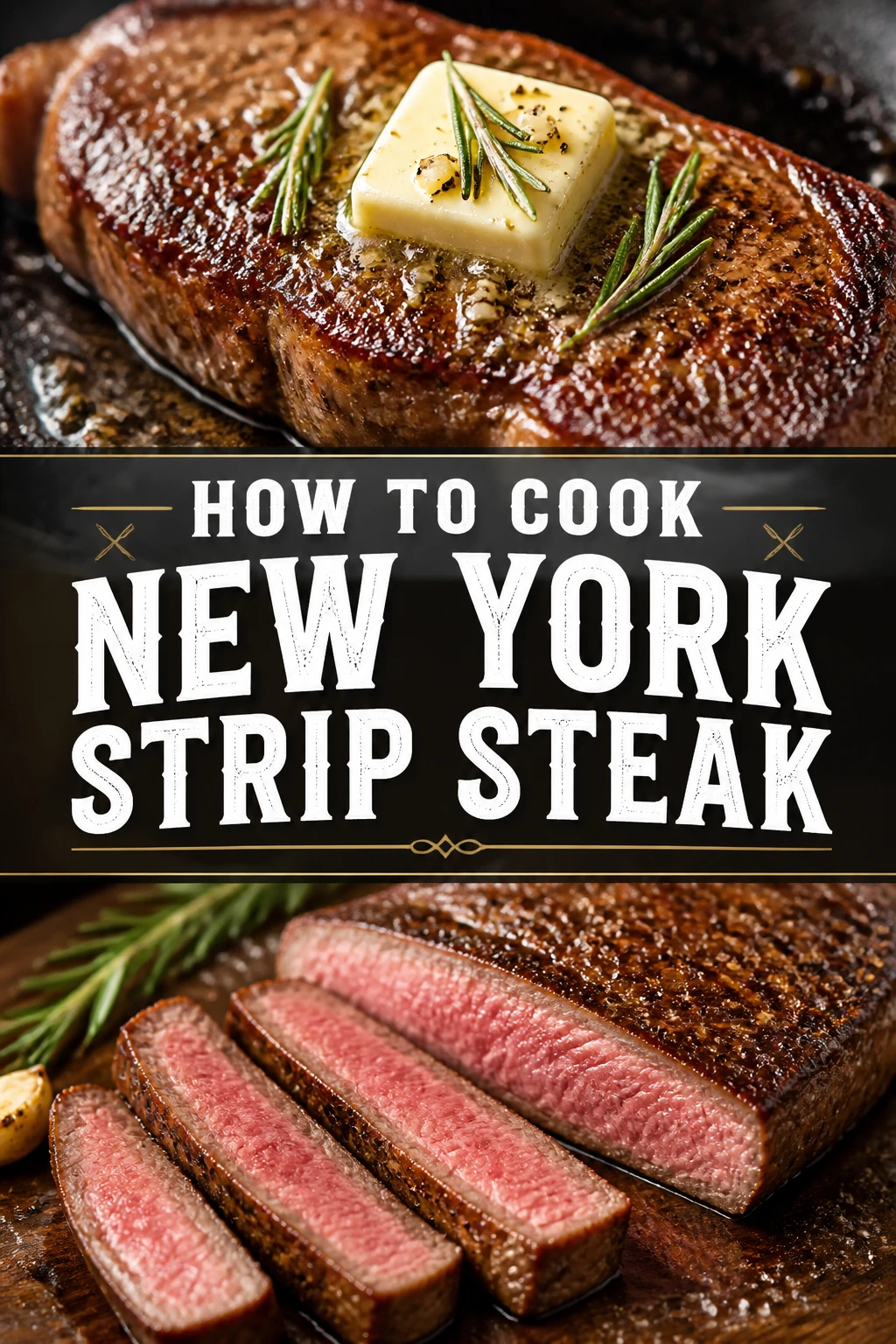
🥩 How To Cook New York Strip Steak
Cooking a perfect New York Strip steak at home might seem intimidating at first glance.
I remember my first attempt years ago, resulting in a steak that was either raw in the middle or tough as shoe leather.
After countless hours in the kitchen, experimenting with different techniques, I’ve refined a method that consistently delivers a restaurant-quality steak right from your stove.
Quick Overview
This guide will show you how to prepare a juicy, tender New York Strip with a beautiful, flavorful crust.
You’ll learn the essential steps to achieve a perfectly cooked steak, tailored to your preferred doneness.
- Time needed: 30-45 minutes (including resting)
- Difficulty: Beginner
- What you’ll need: New York Strip steak, salt, pepper, high-smoke-point oil, butter, fresh herbs, garlic, cast iron skillet, meat thermometer.
Step-by-Step Instructions
Step 1: Choose Your Steak Wisely
Select a New York Strip steak that is at least 1.5 inches thick.
Look for good marbling, which refers to the small flecks of fat distributed throughout the muscle.
This marbling melts during cooking, providing moisture and flavor.
Pro Tip: Thicker steaks are easier to cook to your desired doneness without overcooking the exterior. A thinner steak cooks too quickly, making it harder to control the internal temperature.
Step 2: Bring Steak to Room Temperature
Remove your steak from the refrigerator at least 30-60 minutes before cooking.
Allowing the steak to come closer to room temperature promotes more even cooking.
A cold steak hitting a hot pan can lead to a steak that is well-done on the outside and still raw in the center.
Step 3: Season Generously
Pat the steak completely dry with paper towels.
Moisture on the surface prevents a good sear, so this step is critical for developing that desirable crust.
Season both sides of the steak very generously with coarse sea salt and freshly cracked black pepper.
Don’t be shy; much of the seasoning will fall off during cooking.
Pro Tip: For an extra layer of flavor, consider adding a pinch of garlic powder or onion powder to your seasoning mix. Avoid adding herbs at this stage, as they can burn in the high heat.
Step 4: Preheat Your Skillet
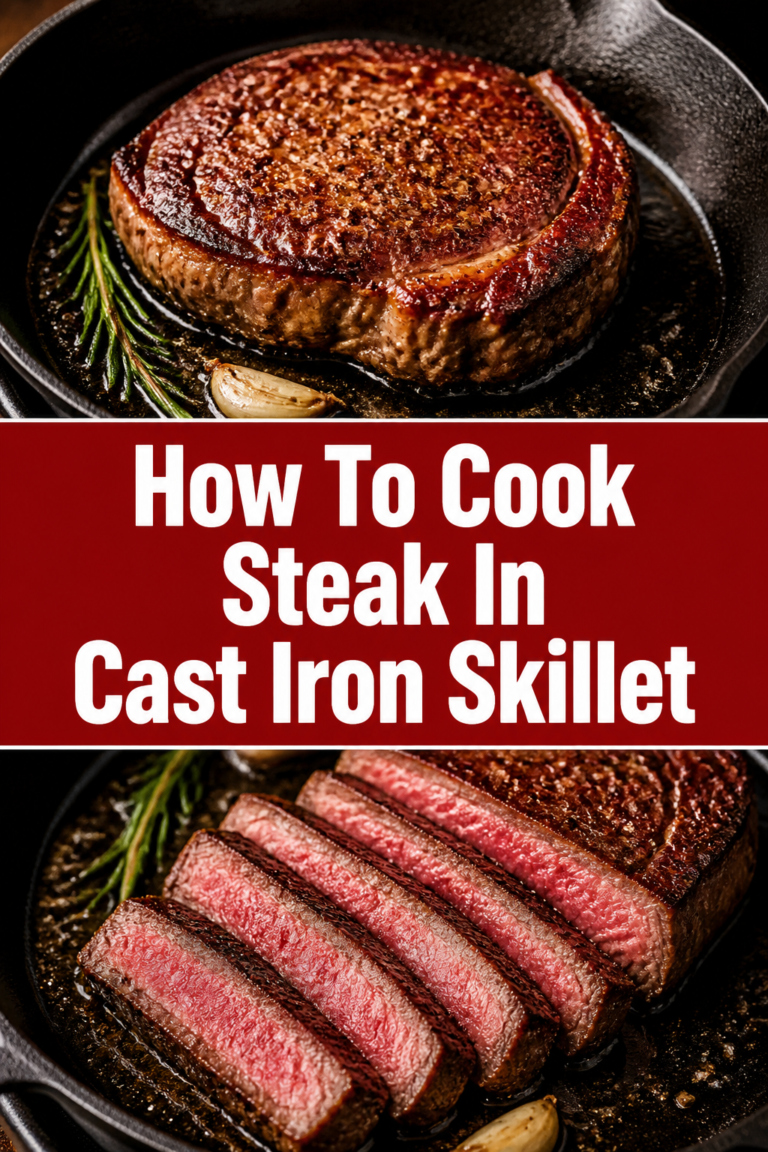
Place a heavy-bottomed pan, preferably a cast iron skillet, over medium-high heat.
Allow the pan to preheat for 5-10 minutes until it is smoking hot.
A properly hot pan is essential for achieving a perfect sear.
Add a high-smoke-point oil, such as grapeseed, avocado, or canola oil, to the hot pan.
Use just enough oil to coat the bottom of the pan lightly.
Step 5: Sear the Steak
Carefully place the seasoned steak into the screaming hot pan.
You should hear a distinct sizzle immediately.
Sear the steak for 2-3 minutes per side, without moving it, until a deep brown crust forms.
This initial sear is what gives the steak its incredible flavor and texture.
Use tongs to turn the steak, ensuring all sides get a good sear, including the edges.
Pro Tip: If your kitchen gets smoky, open a window or turn on your range hood. High heat is necessary for a good sear, so some smoke is expected.
Step 6: Baste with Butter and Aromatics
Reduce the heat to medium-low after the initial sear.
Add 2-3 tablespoons of unsalted butter, a few sprigs of fresh rosemary or thyme, and 2-3 smashed garlic cloves to the pan.
As the butter melts, it will foam and infuse with the aromatics.
Tilt the pan slightly and use a spoon to continuously baste the melted butter and infused oil over the steak.
Continue basting for 2-4 minutes, or until the steak reaches your desired internal temperature.
Basting adds moisture, flavor, and helps cook the steak evenly.
Step 7: Check for Doneness
Insert an instant-read meat thermometer into the thickest part of the steak, avoiding any bone or large pockets of fat.
Remember that the internal temperature will rise by 5-10 degrees Fahrenheit as the steak rests.
Remove the steak from the pan when it’s 5-10 degrees below your target temperature.
For medium-rare, aim for 125-130°F (52-54°C) off the heat.
For medium, aim for 130-135°F (54-57°C).
Step 8: Rest the Steak
Transfer the cooked steak to a cutting board or a warm plate.
Tent it loosely with aluminum foil.
Allow the steak to rest for 5-10 minutes.
This resting period is crucial; it allows the juices to redistribute throughout the meat, ensuring a tender and flavorful steak.
Cutting into the steak too soon will cause all the delicious juices to run out, leaving you with a dry piece of meat.
Step 9: Slice and Serve
Remove the foil after resting.
Slice the New York Strip against the grain into thick, even pieces.
Slicing against the grain shortens the muscle fibers, making each bite more tender.
Serve immediately, perhaps with a sprinkle of flaky sea salt or a drizzle of pan juices.
Common Mistakes to Avoid
Not Drying the Steak
Many home cooks skip the crucial step of patting the steak dry before seasoning.
Any moisture on the surface of the steak will steam rather than sear, preventing that beautiful, crispy crust from forming.
Always use paper towels to remove all surface moisture for a superior sear.
Using a Cold Pan
Putting a steak into a pan that isn’t hot enough is a recipe for a gray, unappealing crust.
A cold pan prevents the Maillard reaction, which is responsible for the rich, browned flavors.
Ensure your pan is smoking hot before the steak ever touches it.
Overcrowding the Pan
If you’re cooking multiple steaks, resist the urge to cram them all into one pan.
Overcrowding lowers the pan’s temperature significantly, leading to steaming instead of searing.
Cook steaks in batches if necessary, allowing enough space for proper browning.
Not Resting the Steak
Cutting into a steak immediately after cooking is a common mistake that sacrifices juiciness.
During cooking, muscle fibers contract and push juices to the center.
Resting allows these juices to redistribute throughout the entire steak, resulting in a more tender and flavorful experience.
Troubleshooting
Steak is Tough and Chewy
A tough steak often indicates it was overcooked or not rested properly.
Overcooking dries out the meat, making the muscle fibers seize up.
Ensure you’re using a meat thermometer and letting the steak rest for the full 5-10 minutes after cooking.
Crust is Not Crispy
If your steak lacks a crispy crust, it’s likely due to excess moisture on the steak or an insufficiently hot pan.
Always pat your steak thoroughly dry with paper towels before seasoning.
Preheat your cast iron skillet until it’s smoking hot before adding the oil and steak.
Steak Cooked Unevenly (Raw in Center, Burnt Outside)
This issue usually stems from starting with a steak that is too cold, or cooking at too high a heat for too long.
Let your steak come to room temperature for 30-60 minutes before cooking.
Adjust your heat after the initial sear, and baste to promote even cooking while finishing.
Key Takeaways
- Always start with a thick, room-temperature steak for even cooking.
- Pat your steak completely dry before seasoning to achieve a perfect crust.
- Use a smoking hot cast iron skillet for an excellent initial sear.
- Baste with butter, herbs, and garlic for added flavor and moisture during the cooking process.
- An instant-read meat thermometer is your best friend for precise doneness.
- Resting the steak for 5-10 minutes is non-negotiable for juiciness.
- Slice against the grain to ensure every bite is tender.
Frequently Asked Questions
What’s the best oil for searing steak?
The best oils for searing steak are those with a high smoke point, such as grapeseed oil, avocado oil, or canola oil.
These oils can withstand the high temperatures needed for a good sear without burning and imparting off-flavors.
How do I know when my steak is medium-rare without a thermometer?
While a thermometer is highly recommended for accuracy, you can use the “touch test” as an approximation.
Press the center of your palm below your thumb (relaxed) for rare, then touch your thumb to your index finger for medium-rare, middle finger for medium, and so on.
Match the steak’s firmness to these points.
Can I cook New York Strip in an oven instead of a pan?
You can certainly finish a New York Strip in the oven after an initial sear on the stovetop.
This is often called the “reverse sear” method or “sear-roast” method, particularly useful for very thick steaks.
Sear the steak on the stove, then transfer the pan to a preheated oven (around 375-400°F or 190-200°C) to finish cooking to your desired internal temperature.
Should I put butter on my steak while it’s resting?
Adding a pat of butter to your steak as it rests can enhance its richness and flavor.
The residual heat from the steak will melt the butter, allowing it to permeate the meat.
This is an optional but highly recommended step for an even more luxurious steak.
Our Top Recommended Finds
- Cast Iron Skillet: Essential for retaining and distributing heat evenly, creating that perfect sear.
- Instant-Read Meat Thermometer: Takes the guesswork out of cooking, ensuring your steak is perfectly done every time.
- Heavy-Duty Tongs: For easy flipping and handling of your steak in a hot pan.
Elevate Your Home Cooking Today
Cooking a truly great New York Strip steak is a rewarding experience.
It transforms a simple cut of meat into a centerpiece meal, perfect for any occasion.
Armed with these steps, you have everything you need to confidently create a steak that rivals your favorite steakhouse.
Don’t just read about it; go ahead and pick up a beautiful New York Strip.
Put these techniques into practice and taste the difference for yourself.