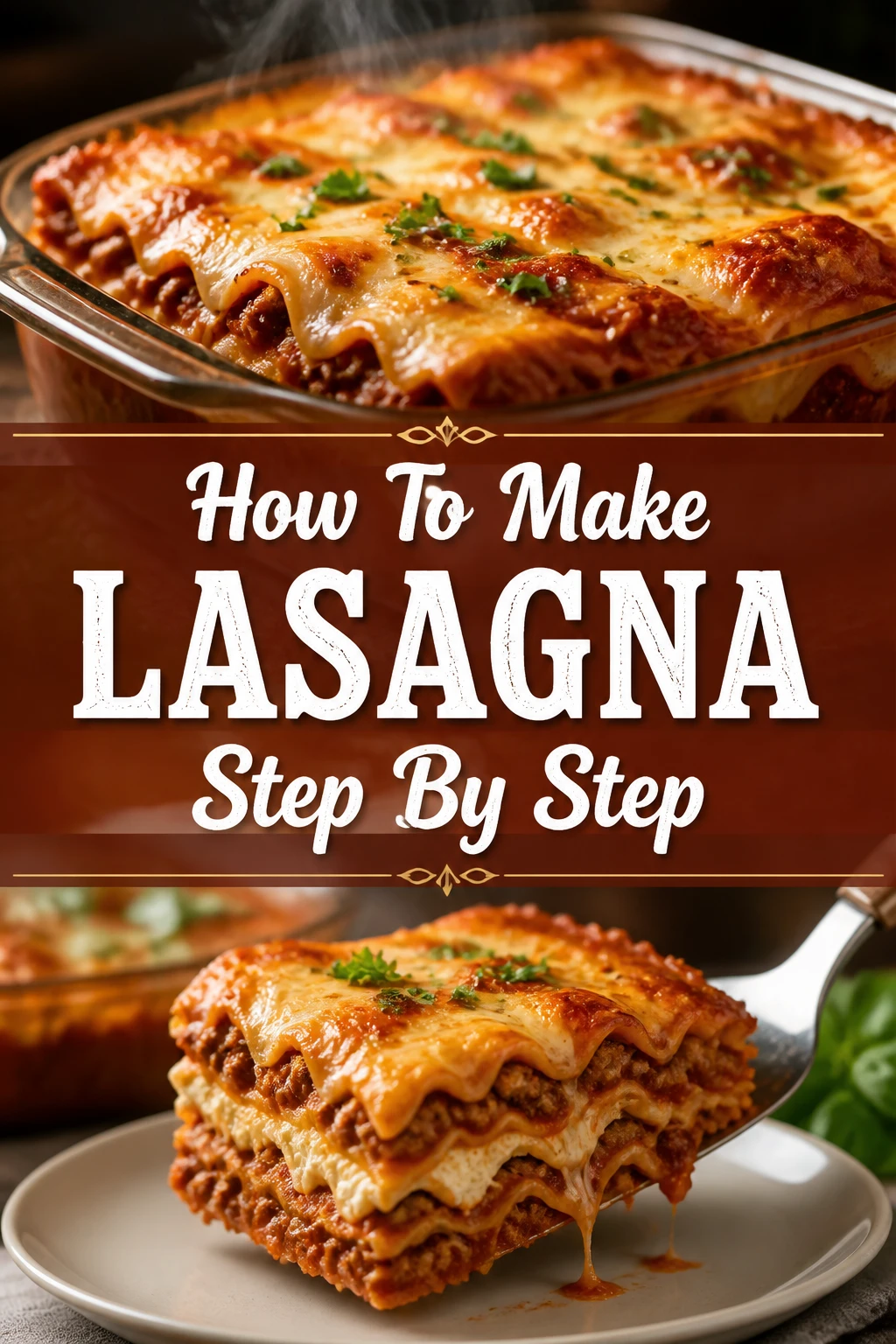
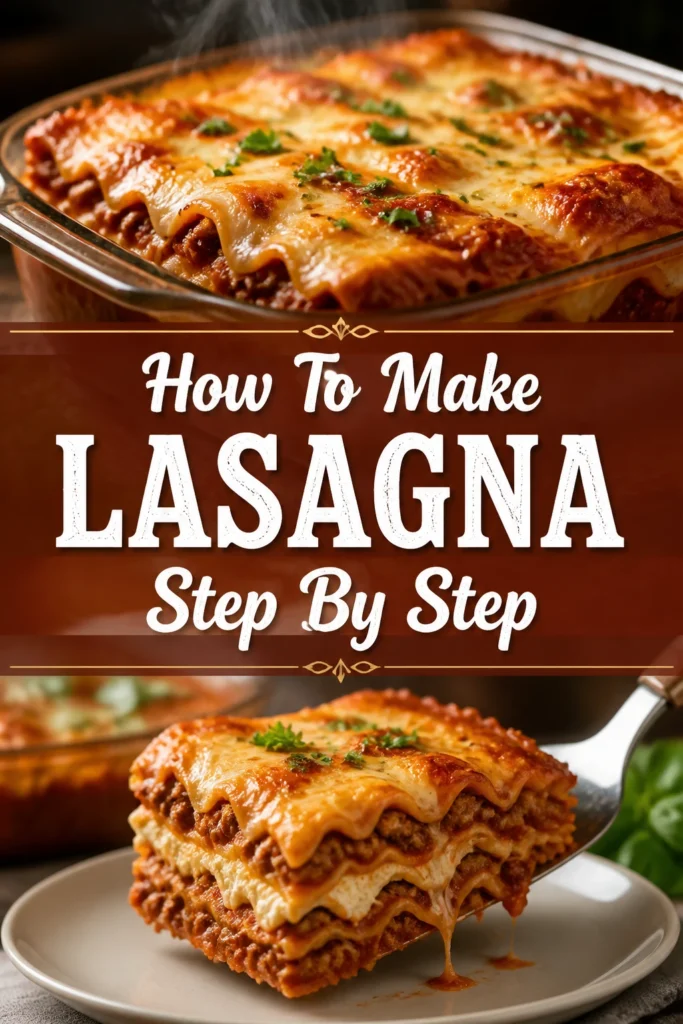
💡 How To Make Lasagna Step By Step
Making lasagna might seem like a grand culinary endeavor, but with the right guidance, it’s a deeply rewarding experience.
I’ve perfected my lasagna recipe over countless Sunday dinners and family gatherings, learning the nuances that transform good into truly great.
This guide shares all my best tips and a foolproof method to create a comforting, layered masterpiece right in your own kitchen.
Quick Overview
You’re about to embark on a journey to create a classic, delicious lasagna, complete with rich meat sauce, creamy ricotta, and perfectly melted cheese layers.
It’s a dish that truly impresses, perfect for sharing or savoring yourself.
- Time needed: Approximately 2 hours 30 minutes (1 hour 15 min prep, 1 hour bake, 15 min rest)
- Difficulty: Intermediate
- What you’ll need: A large baking dish, a sturdy pot for sauce, a mixing bowl, and common kitchen utensils.
Step-by-Step Instructions
Step 1: Prepare Your Rich Meat Sauce
A great lasagna starts with an exceptional sauce. This will be the foundation of flavor.
You can use either a classic Bolognese or a robust marinara if you prefer a vegetarian option. For this guide, we’ll focus on a meat sauce.
Gather your ingredients: 1 lb ground beef (or a mix of beef and Italian sausage), 1 large onion, 3-4 cloves garlic, 28 oz crushed tomatoes, 6 oz tomato paste, 1/2 cup red wine (optional), herbs like oregano and basil, salt, and pepper.
Chop the onion finely and mince the garlic. If using sausage, remove it from its casings.
Heat a large, heavy-bottomed pot or Dutch oven over medium-high heat. Add a touch of olive oil.
Brown the ground meat, breaking it up with a spoon as it cooks. Drain any excess fat once browned.
Add the chopped onion to the pot and cook until softened, about 5-7 minutes. Stir in the minced garlic and cook for another minute until fragrant.
Stir in the tomato paste and cook for 2-3 minutes, letting it deepen in color. If using, pour in the red wine and let it simmer until mostly evaporated.
Pour in the crushed tomatoes. Add your dried herbs, salt, and pepper. Bring the sauce to a gentle simmer.
Reduce the heat to low, cover, and let the sauce simmer for at least 45 minutes to an hour. This slow cooking allows the flavors to meld beautifully. Stir occasionally to prevent sticking.
Pro Tip: For an even richer flavor, prepare your meat sauce a day ahead. The flavors deepen overnight, making your lasagna even more delicious. Just reheat gently before assembling.
Step 2: Create the Creamy Ricotta Filling
This layer adds a wonderful creaminess and balances the richness of the meat sauce.
In a large mixing bowl, combine 15 oz (about 2 cups) whole milk ricotta cheese.
Add 1 large egg. The egg helps bind the mixture and prevents it from being too runny.
Stir in 1/2 cup grated Parmesan cheese. This adds a salty, nutty depth.
Include 1/4 cup chopped fresh parsley (or 1 tablespoon dried parsley) for a touch of freshness and color.
Season the mixture with 1/2 teaspoon salt and 1/4 teaspoon black pepper. A pinch of nutmeg can also elevate the flavor subtly.
Mix all the ingredients thoroughly until well combined. Cover and refrigerate until you’re ready to assemble.
Step 3: Prepare Your Lasagna Noodles
The noodles are the structural backbone of your lasagna.
You have a choice between traditional boil-before-use noodles or convenient no-boil varieties.
For traditional noodles: Bring a large pot of salted water to a rolling boil. Carefully add the lasagna noodles, ensuring they don’t stick together.
Cook the noodles according to package directions, but aim for al dente. They should still have a slight bite as they will continue to cook in the oven.
Drain the noodles and immediately rinse them with cold water to prevent sticking. Lay them flat on parchment paper or a clean kitchen towel to cool slightly.
For no-boil noodles: Simply follow the package instructions. These noodles absorb moisture directly from the sauce during baking, saving you a step. Ensure your sauce is adequately moist if using these.
Step 4: Grate Your Cheeses
Good cheese is paramount for a perfect lasagna. Freshly grated cheese melts better and tastes superior to pre-shredded options.
You’ll need 8 oz (about 2 cups) low-moisture, part-skim mozzarella cheese and 1/2 cup grated Parmesan cheese.
Grate the block of mozzarella cheese using the large holes of a box grater. This creates even shreds that melt beautifully.
Finely grate the Parmesan cheese, if not already done. Keep the cheeses separate until assembly.
Pro Tip: Avoid full-fat mozzarella, as it can release too much oil during baking, making your lasagna greasy. Part-skim melts perfectly without excess oil.
Step 5: Assemble Your Lasagna Layers
This is where all your hard work comes together. Layering correctly ensures every bite is balanced and delicious.
Preheat your oven to 375°F (190°C). Have your 9×13 inch baking dish ready.
Spread a thin layer of meat sauce (about 1/2 cup) on the bottom of the baking dish. This prevents the first layer of noodles from sticking and burning.
Arrange a layer of lasagna noodles over the sauce. Overlap them slightly if needed to cover the bottom completely. Break noodles to fit if necessary.
Spread half of the ricotta cheese mixture evenly over the noodles. Use a spatula or the back of a spoon to create a smooth layer.
Sprinkle about one-third of the shredded mozzarella cheese over the ricotta layer.
Ladle another generous layer of meat sauce (about 1.5-2 cups) over the mozzarella.
Repeat the layering process: noodles, remaining ricotta, mozzarella, and meat sauce.
Add a final layer of noodles. Top this with the remaining meat sauce, ensuring the noodles are fully covered to prevent them from drying out.
Finish with a generous layer of mozzarella cheese and a sprinkle of Parmesan cheese. This will create a beautiful golden-brown crust.
Step 6: Bake Your Lasagna to Perfection
Baking allows all the flavors to meld and the cheese to melt into a bubbly, golden crust.
Cover the baking dish tightly with aluminum foil. This helps the lasagna cook evenly and prevents the top from browning too quickly.
Bake for 45 minutes with the foil on. This allows the internal temperature to rise and the noodles to finish cooking.
Remove the foil and continue baking for another 15-20 minutes, or until the cheese is bubbly, golden brown, and slightly caramelized.
Check for doneness by inserting a knife into the center; it should go in easily, indicating the noodles are tender.
Step 7: Rest and Serve Your Masterpiece
The resting period is crucial for a perfectly structured lasagna that doesn’t fall apart when sliced.
Once baked, remove the lasagna from the oven.
Let it rest on a wire rack for at least 15-20 minutes before slicing and serving. This allows the layers to set and prevents a messy collapse.
Slice into generous portions with a sharp knife.
Serve hot, perhaps with a side salad and some crusty garlic bread. Enjoy the fruits of your labor!
Common Mistakes to Avoid
Overcooking the Noodles
If you boil traditional lasagna noodles until they are very soft, they will become mushy and fall apart during baking. This results in a watery, indistinct texture.
Always cook traditional noodles only to an al dente stage. They should still have a slight firmness as they will absorb more liquid and soften further in the oven.
Too Much Liquid or Soggy Lasagna
Excess moisture comes from a watery sauce, under-drained ricotta, or not allowing the lasagna to rest. This leads to a soupy, unappetizing dish.
Ensure your meat sauce simmers down to a thick consistency. Drain any excess liquid from the ricotta if it seems watery. Crucially, let the lasagna rest for at least 15-20 minutes after baking.
Not Enough Seasoning
A bland lasagna is disappointing. Each component, from the meat sauce to the ricotta, needs proper seasoning to build layers of flavor.
Taste your meat sauce as it simmers and adjust salt and pepper. Season the ricotta mixture generously. Don’t rely solely on cheese for flavor; herbs and spices are key.
Cutting Lasagna Too Soon
Impatience is the enemy of a beautifully presented lasagna. Cutting it straight from the oven will cause the layers to slide apart and the cheese to ooze everywhere.
Always allow your lasagna to rest for a minimum of 15 minutes, ideally 20-30 minutes, after it comes out of the oven. This time allows the cheese and sauce to set, resulting in clean, firm slices.
Troubleshooting
Lasagna is Watery
This often happens if your sauce was too thin, your ricotta wasn’t drained, or the lasagna didn’t rest long enough.
Next time, simmer your sauce longer to reduce it. If using store-bought ricotta, consider draining it in a colander for 30 minutes. Always allow the finished lasagna to rest for 15-20 minutes before serving.
Cheese Isn’t Melted or Browned Enough
If your cheese looks pale and hasn’t fully melted, it likely needs more time in the oven uncovered.
After baking with foil for the initial period, remove the foil and continue baking until the cheese is bubbly and golden. If it’s still not browning, you can briefly place it under the broiler for 1-2 minutes, watching it very carefully to prevent burning.
Edges are Burnt, Center is Cold
This indicates uneven baking, possibly due to a too-hot oven or the lasagna not being covered long enough initially.
Ensure your oven temperature is accurate. Always cover the lasagna tightly with foil for the first 45 minutes of baking to promote even cooking throughout. If your oven has hot spots, rotate the dish halfway through the covered baking time.
Key Takeaways
- A robust, well-simmered meat sauce is the heart of a great lasagna.
- Season each layer – the sauce, ricotta, and even the noodles – for maximum flavor.
- Cook traditional noodles to al dente, as they will soften further during baking.
- Always allow your lasagna to rest for at least 15-20 minutes before slicing to ensure neat, firm layers.
- Freshly grated mozzarella and Parmesan cheese make a noticeable difference in taste and texture.
- Don’t be afraid to customize with your favorite herbs or a blend of ground meats.
Frequently Asked Questions
Can I make lasagna ahead of time?
Absolutely! You can assemble the entire lasagna, cover it tightly, and refrigerate it for up to 2 days before baking. Let it come closer to room temperature for about 30 minutes before baking, and add an extra 10-15 minutes to the covered baking time.
Can I freeze lasagna?
Yes, lasagna freezes beautifully. You can freeze it unbaked or baked. If unbaked, wrap it tightly in plastic wrap and then foil. If baked, let it cool completely before wrapping. It can be frozen for up to 3 months. Thaw overnight in the refrigerator before baking or reheating.
What kind of noodles should I use?
Both traditional boil-before-use and no-boil noodles work well. Traditional noodles offer a slightly chewier texture, while no-boil noodles save time. If using no-boil, ensure your sauce is moist enough to hydrate them properly.
How do I make a vegetarian lasagna?
Simply swap the meat sauce for a rich marinara sauce. You can also add sautéed vegetables like spinach, mushrooms, zucchini, or bell peppers to the marinara or ricotta layer for added flavor and texture.
Our Top Recommended Finds
- Large Ceramic or Glass Baking Dish (9×13 inch): Essential for even baking and a beautiful presentation.
- Box Grater: Perfect for shredding block cheeses, ensuring better melt and flavor than pre-shredded options.
- Heavy-Bottomed Dutch Oven or Pot: Ideal for simmering your meat sauce slowly and evenly, preventing scorching.
Your Lasagna Adventure Awaits
You now have all the knowledge and detailed steps to create a truly memorable lasagna. It’s a dish that brings people together, a testament to the joy of homemade food.
Don’t hesitate to personalize it with your favorite ingredients or a unique blend of spices.
Gather your ingredients, put on some music, and transform your kitchen into an Italian trattoria today!