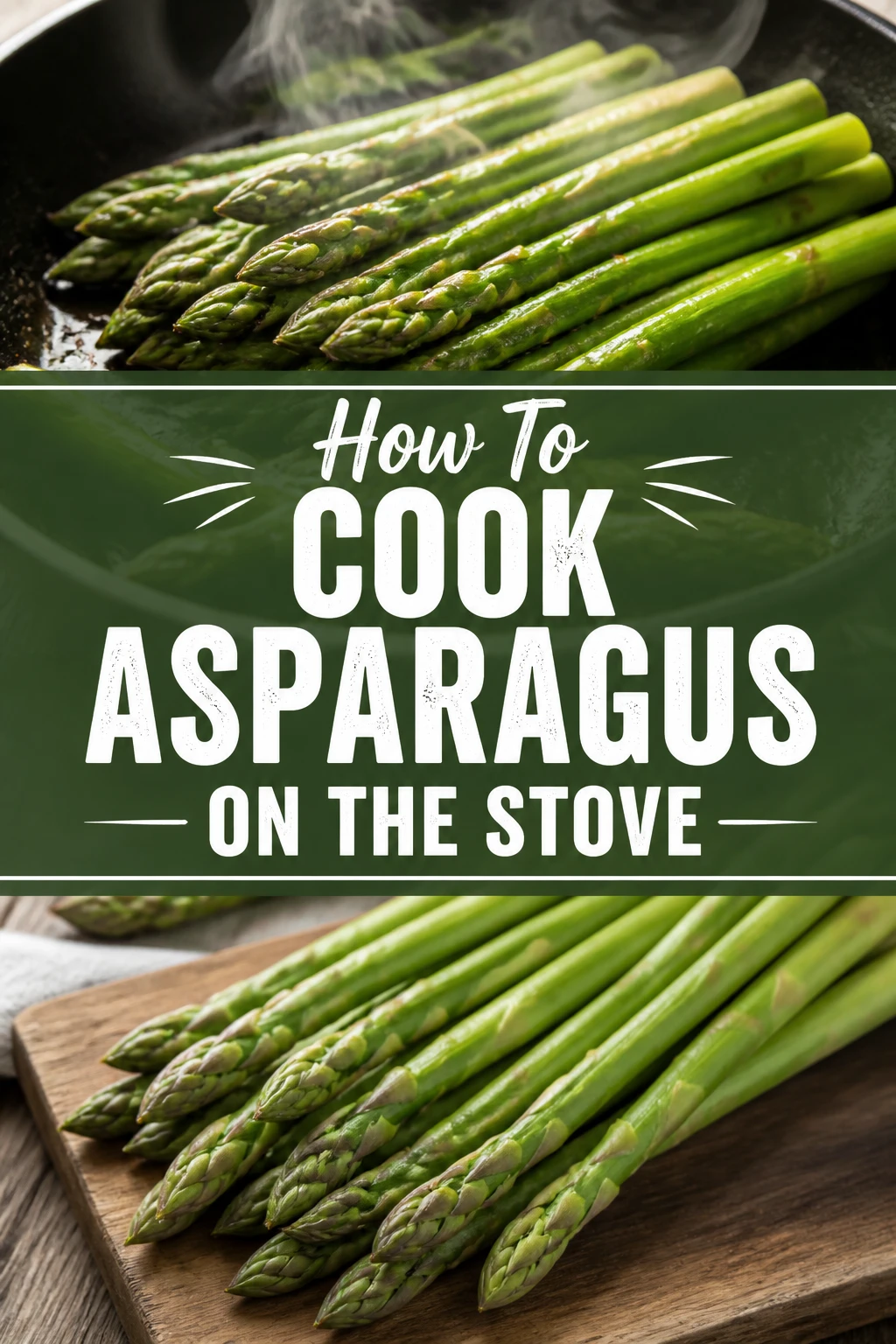
🌱 How To Cook Asparagus On The Stove
Cooking asparagus on the stove is a simple pleasure, transforming fresh green spears into a tender, vibrant side dish.
I’ve prepared asparagus countless times, perfecting a method that consistently delivers delicious results without fuss.
This guide will walk you through each easy step, ensuring your asparagus turns out perfectly every time.
Quick Overview
You’re about to learn how to cook beautiful, tender-crisp asparagus right on your stovetop. This method is quick, requires minimal equipment, and yields a fantastic side dish for any meal.
- Time needed: 10-15 minutes (prep included)
- Difficulty: Beginner
- What you’ll need: Asparagus, skillet, cutting board, knife, olive oil, salt, pepper.
Step-by-Step Instructions
Step 1: Choose and Prepare Your Asparagus
Select fresh, firm asparagus spears. Look for bright green stalks with tight, closed tips. Avoid any that look limp, wrinkly, or have open, flowering tips.
Rinse the asparagus under cool running water. Gently rub the spears to remove any dirt or grit, especially around the tips.
Pat the asparagus dry with a clean kitchen towel or paper towels. Excess water can prevent proper browning and dilute flavors during cooking.
Pro Tip: Thicker spears tend to be more fibrous and may require a slightly longer cooking time. Thinner spears cook very quickly and are often more tender.
Step 2: Trim the Woody Ends
Identify the natural breaking point of each spear. Hold an asparagus spear with both hands, one near the bottom and one closer to the middle.
Bend the spear gently until it snaps. It will naturally break at the point where the tough, woody end meets the more tender part of the stalk.
Trim the remaining spears using the snapped piece as a guide. Line up the asparagus on a cutting board and cut off the woody ends with a sharp knife.
Step 3: Cut if Desired (Optional)
Decide if you want whole spears or shorter pieces. For a more elegant presentation, whole spears are ideal.
Cut the spears into 1-2 inch pieces if you prefer them shorter. This can make them easier to eat and integrate into certain dishes like stir-fries or pasta.
Ensure all pieces are roughly the same size if cutting. This promotes even cooking, preventing some pieces from being overcooked while others remain undercooked.
Step 4: Season the Asparagus
Place the trimmed asparagus in a medium bowl or directly on your cutting board. Drizzle lightly with olive oil, about 1-2 tablespoons for a standard bunch.
Toss the asparagus gently to coat all the spears evenly with the oil. The oil helps distribute heat, promotes browning, and allows seasonings to adhere.
Season generously with salt and freshly ground black pepper. These basic seasonings enhance the natural sweetness of the asparagus.
Pro Tip: For extra flavor, consider adding a pinch of garlic powder, onion powder, or red pepper flakes at this stage. Lemon zest also adds a wonderful brightness.
Step 5: Heat the Skillet
Choose a large skillet or frying pan that can accommodate the asparagus in a single layer. A non-stick skillet works well, but stainless steel or cast iron are also excellent choices.
Place the skillet over medium-high heat. Allow it to preheat for 1-2 minutes until it’s hot but not smoking.
Add a tablespoon of olive oil (if not already coated on the asparagus) or butter to the hot pan. Swirl to coat the bottom evenly.
Step 6: Cook the Asparagus
Arrange the seasoned asparagus in a single layer in the hot skillet. Avoid overcrowding the pan, as this can steam the asparagus instead of searing it.
Cook for 3-5 minutes, stirring or tossing occasionally. You’re looking for bright green spears with a slight char or browning in spots.
Test for doneness by piercing a spear with a fork. It should be tender-crisp, offering a slight resistance but not feeling tough or mushy.
Pro Tip: For thicker spears, you can add a tablespoon or two of water to the pan and cover it for the last minute of cooking. This steams them slightly, ensuring tenderness without over-browning.
Step 7: Finish and Serve
Remove the asparagus from the heat once it reaches your desired tenderness. Overcooking will result in limp, dull green spears.
Transfer the cooked asparagus to a serving platter. A final sprinkle of flaky sea salt can add a pleasant textural contrast.
Serve immediately as a delicious side dish. A squeeze of fresh lemon juice just before serving brightens the flavor beautifully.
Common Mistakes to Avoid
Overcooking the Asparagus
Many people cook asparagus until it’s soft and dull green. This strips away its vibrant color and pleasant snap.
Asparagus cooks quickly, especially thinner spears. Aim for tender-crisp, where it’s yielding but still has a slight bite.
Keep a close eye on it during the last few minutes of cooking and taste-test often to prevent it from becoming mushy.
Overcrowding the Pan
Trying to cook too much asparagus in a small skillet is a common error. This drops the pan’s temperature significantly.
When the pan is overcrowded, the asparagus steams rather than sears. You’ll miss out on those desirable caramelized spots and a more intense flavor.
Cook in batches if necessary, ensuring each batch has enough space to brown properly. This yields much better texture and flavor.
Not Trimming Woody Ends
The very bottom of an asparagus spear is tough, fibrous, and unpleasant to eat. Leaving it on makes the entire dish less enjoyable.
Snapping the ends is the most reliable method for finding the natural breaking point. This ensures you remove only the inedible part.
Taking a moment to trim properly elevates the eating experience significantly, ensuring every bite is tender.
Under-Seasoning
Plain asparagus, even perfectly cooked, can taste a little bland. Salt and pepper are essential for bringing out its natural flavors.
Don’t be shy with the salt and pepper. A good initial seasoning makes a big difference. You can always add more at the table.
Consider a squeeze of lemon juice or a sprinkle of herbs at the end for an extra layer of flavor that complements asparagus wonderfully.
Troubleshooting
Asparagus is Limp and Mushy
If your asparagus turned out limp and lost its vibrant color, it was likely overcooked. Asparagus cooks very quickly, especially thin spears.
Next time, reduce the cooking time by 1-2 minutes. Start checking for doneness earlier, looking for tender-crisp texture and bright green color.
Ensure your heat is medium-high, not too low, to achieve a quick sear without extended cooking that leads to mushiness.
Asparagus is Tough and Fibrous
This usually indicates that the asparagus was undercooked, or you didn’t trim enough of the woody ends.
Make sure you’re snapping or cutting off the tough bottom portion of each spear. If the spears are thick, they may need an extra minute or two of cooking.
For very thick spears, adding a splash of water and covering the pan for the last minute of cooking can help them tenderize without burning the outside.
Asparagus Lacks Flavor
If your cooked asparagus tastes bland, it’s probably due to insufficient seasoning or lack of flavor enhancers.
Ensure you’re seasoning generously with salt and pepper before cooking. A good initial seasoning is crucial.
Try adding a squeeze of fresh lemon juice, a pat of butter, or a sprinkle of garlic powder or grated Parmesan cheese just before serving to boost its taste.
Key Takeaways
- Always start with fresh, firm asparagus spears with tight tips.
- Properly trim the woody ends by snapping them where they naturally break.
- Season well with olive oil, salt, and pepper before cooking for best flavor.
- Cook asparagus in a single layer in a hot skillet to achieve a tender-crisp texture.
- Avoid overcooking; aim for bright green spears with a slight bite, not limpness.
- A squeeze of lemon juice at the end brightens the dish and enhances its natural taste.
Frequently Asked Questions
Can I cook asparagus from frozen on the stove?
Yes, you can cook frozen asparagus on the stove. Do not thaw it first. Add the frozen spears directly to a hot skillet with oil, cooking for 5-7 minutes. It might release more water and have a slightly softer texture than fresh asparagus.
What’s the best way to store fresh asparagus?
To keep asparagus fresh, trim the very bottom ends and stand the spears upright in a glass or jar with about an inch of water, like a bouquet of flowers. Cover the tops loosely with a plastic bag and store in the refrigerator for up to a week.
Can I add garlic to my stovetop asparagus?
Absolutely! Garlic is a fantastic addition. Add minced garlic to the skillet during the last minute or two of cooking the asparagus. This prevents the garlic from burning and becoming bitter, allowing its fragrant flavor to infuse the dish perfectly.
What are some good variations for stovetop asparagus?
You can experiment with many flavors. Try adding a dash of balsamic glaze, a sprinkle of red pepper flakes for heat, a dusting of Parmesan cheese, or a handful of toasted slivered almonds for crunch. Lemon zest also adds a lovely aromatic touch.
Our Top Recommended Finds
- Large Non-Stick Skillet: Essential for even cooking and easy cleanup, ensuring your asparagus doesn’t stick.
- Sharp Chef’s Knife: Makes quick work of trimming ends if you prefer cutting over snapping, and for any other prep.
- Tongs: Perfect for easily flipping and tossing asparagus in the hot pan, ensuring even browning and cooking.
Embrace Delicious Simplicity
You now have all the knowledge to transform humble asparagus into a star side dish. This simple stovetop method truly brings out its best.
Don’t wait for a special occasion; fresh asparagus is available year-round and cooks up in minutes.
Grab a bunch today and savor the vibrant flavors and satisfying texture you’ve mastered. Your taste buds will thank you!